Apparently for employees who are neither at the top nor the bottom of the food chain, a LinkedIn entry and resume is the answer to making good connections for work. Linked In for Employers and Employees


Apparently for employees who are neither at the top nor the bottom of the food chain, a LinkedIn entry and resume is the answer to making good connections for work. Linked In for Employers and Employees
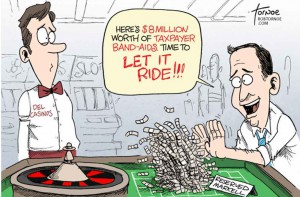
David Shipley reports: The expected relationship between gambling and government has not worked out. They have not been a savior for state and local governments in the US. They have not revitalized moribund communities. Where will dirty money go now? Casinos Disappoint Government Revenue Collectors
India’s new CSR law sparks debate among NGOs and businesses
India is the first country to mandate a minimum amount spent on corporate social responsibility initiatives. In a country facing multiple socio-economic challenges – can it work? India’s CSR Law
Key findings include:
Small firms report rising costs, including financing costs, as key growth challenge in 2013
40 percent of firms applied for credit in 2013 – not a significant change from 2012
Firms continue to report small credit needs and high application costs
Overall approval rates remained constant from a year ago; credit market continues to be favorable for profitable and experienced firms
Credit demand will remain strong in 2014
About the Small Business Credit Survey
The Small Business Credit Survey (SBCS) is a semi-annual survey of establishments conducted by the Federal Reserve Bank of New York’s Outreach Team, reporting information about business performance, financing needs and choices, and borrowing experiences. Responses to the SBCS provide insight into the dynamics behind aggregate lending trends and shed light on noteworthy segments of the small business credit market (as reported by borrowers). The SBCS captures the perspectives of businesses with fewer than 500 employees in New York, New Jersey, Connecticut, and Pennsylvania. Results are weighted to reflect the full population of small businesses in the four states of coverage.
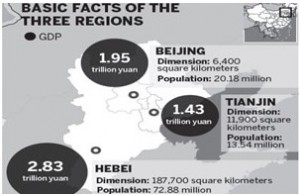
A leading team and office to promote the synergetic development of Beijing, Tianjin and Hebei province has been set up by China’s cabinet, with Vice-Premier Zhang Gaoli appointed director, people.cn reported on Aug 8.
Integration of Beijing with its two neighboring provincial areas will be speeded up after the creation of this office, said Hu Cunzhi, vice-minster of the Land and Resources Ministry.
The three regions are new engines that will boost China’s economy growth, said Xu Yaotong, professor of China National Administration School. The integration of these areas will get a substantial boost, he added.
The State Council, China’s cabinet, has decided to exempt 45 more items from central government approval to reduce intervention in the economy.
In a statement released Tuesday, the cabinet noted most of these items, either removed or devolved to lower levels, concern investment, employment and innovation. They include the verification of small companies for tax relief, approval of PhD research funds in higher education institutes and the approval of Web domain registration service providers.
Fewer approvals by the central government will give more power to local governments and freedom to enterprises, which is believed to stimulate vitality and creativity in the market and society.
The central government has cut or delegated to lower governments nearly 400 administrative approval items since the new leadership took office in March last year.
In Tuesday’s decision, the cabinet also canceled official certifications for 11 professions, covering a wide range of fields including international commerce, taxation, asset evaluation and land registration.
The statement said the move aims to lower the thresholds for employment, create a sound environment for talent development and further stimulate people’s passion for starting up businesses.
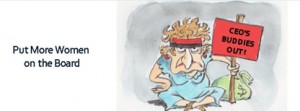
Some organizations, including the EU, make an economic argument for the integration of women in leadership. They say gender diversity better reflects a world where females make 70 percent of the economic choices and results in better decision making. Companies with three or more women on boards at least four or five years outperformed those with zero, according to the advocacy group Catalyst. Other research shows that company performance isn’t closely correlated with directors’ gender, and that awarding “golden skirts” for the sake of parity may compromise a board’s quality. (An academic analysis found that Norway experienced a drop in the value of its companies’ shares after its gender-equality mandate was enacted.) Advocates say women shouldn’t have to prove their impact to the bottom line to justify a seat at the table. In this view, it’s just the right thing to do. Women on Corporate Boards
Politicians wanted upfront cash from a legal victory over Big Tobacco, and bankers happily obliged. The price? A handful of states promised to repay $64 billion on just $3 billion advanced.
In November 1998, attorneys general from across the country sealed a historic deal with the tobacco industry to pay for the health care costs of smoking. Going forward, nearly every cigarette sold would provide money to the states, territories and other governments involved – more than $200 billion in just the first 25 years of a legal settlement that required payments to be made in perpetuity. What happened? What Did Tobacco Companies Pay

This collection of speeches by eloquent women can inspire, direct and comfort you, depending on your need.
Some surprises: Amelia Earhart
Profound and stirring as have been accomplishments in the remoter fields of pure research, it is in the home that the applications of scientific achievement have perhaps been most far-reaching, and it is through changing conditions there that women have become the greatest beneficiaries in the modern scheme….Although women as yet have not taken full advantage of its use and benefits, air travel is available to them as to men. As so often happens in introducing the new or changing the old, public acceptance depends peculiarly upon women’s friendly attitude. In aviation, they are arbiters of whether or not their families shall fly, and as such, are a potent influence. And lastly, there is a place within the industry itself, for women who work.
Brene Brown on vunerability:
“In order for connection to happen, we have to allow ourselves to be seen, really seen. And you know how I feel about vulnerability. I hate vulnerability. And so I thought, this is my chance to beat it back with my measuring stick. I’m going in, I’m going to figure this stuff out, I’m going to spend a year, I’m going to totally deconstruct shame, I’m going to understand how vulnerability works, and I’m going to outsmart it.”
And many more.

BofA rewarded Mairone for creating Countrywide’s “Hustle” fraud by hiring her. So far that woman’s criminal expertise contributed toward mounting costs to BofA of $70 billion. Quite an accomplishment!
Her portrait ought to hang right next to CEO Ken Lewis’s at corporate headquarters as among the bank’s most costly mistakes in its history. As CEO, Lewis bought Countrywide for $4 billion, but the $70 billion of fines directly related to that purchase bring the direct cost up to $74 billion and counting.
As Bloomberg notes, Moraine’s Hustle program:
“lasted only nine months yet managed to write almost 30,000 subprime mortgages, which Fannie Mae and Freddie Mac bought for about $5 billion. Defect rates on stated-income loans (in which the borrower’s income isn’t verified) reached 70 percent.”
Mairone is now at JPMorgan, and one must wonder how much she’s going to cost that bank.
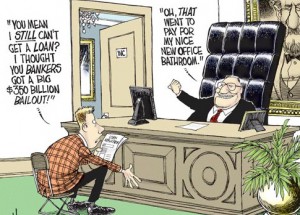
A Bloomberg editorial notes that these settlements provide no incentive to the Banksters to change behavior. First, they’ve insured themselves against their frauds, so insurance companies pay much of the fine. Second, while the fines sound big, they are peanuts compared to what the banks raked-in as they sucked wealth out of the housing sector. Banksters view this as a cost of doing (fraudulent) business. Third, at worst, stockholders suffer, not top management. Fourth, the Attorney General refuses to go after the top management, so none of those who actually benefited from the control frauds have been prosecuted for criminal activity. Indeed, they haven’t even been held personally liable for civil fines. And Fifth, all these negotiations and the settlement details are Top Secret-so no one really knows what was admitted. That is no way to make an example of fraudsters.
Mairone was the exception, and the judge in the case clearly meant to make an example of her. As Bloomberg reports:
“[Judge] Rakoff said the Countrywide loan-approval program was ‘the vehicle for a brazen fraud by the defendants, driven by a hunger for profits and oblivious to the harms thereby visited, not just on the immediate victims but also on the financial system as a whole.'”
Bloomberg goes on to argue that this case against BofA and Mairone disproves all the conventional arguments against prosecuting the fraudsters. It is often claimed that the cases will be too hard to win: they are too complex for juries to understand; or it is too hard to prove that individuals are culpable.
Bloomberg rejects all that:
“This case is the only one in which a large bank has had to defend its conduct in the housing boom, and it challenges the idea that bringing fraud prosecutions in this area is a hopeless endeavor. Apparently juries can cope with financial complexity after all. An assistant U.S. attorney explained what went on at Countrywide without needing to dwell on the arcana of collateralized mortgage obligations….
Other reasons, aside from complexity, have been advanced to justify the lack of prosecutions. One is that the U.S. government was itself involved because of its housing policies. The trial showed it was Countrywide, not a U.S. official, who told loan officers not to screen out risky borrowers and to fill their quota of applications before going home at night. It was Countrywide that rewarded bankers with the speediest approval rates, no matter how poorly underwritten their loans.
The idea that well-shielded executives can’t be implicated also got debunked. Testimony emerged that Mairone silenced and penalized bankers who complained about the quality of hustle loans. Rakoff is requiring Mairone to personally pay her $1 million penalty. Perhaps most important, the case suggests that midlevel employees could have been persuaded to give evidence against their seniors, enabling prosecutors to move up the chain….
The jurors in last year’s trial sent out a note during deliberations asking why more senior Countrywide executives weren’t being sued with Mairone. Many American taxpayers, homeowners and investors cannot be blamed for wondering the same thing.”
Exactly. Why isn’t Eric Holder going after the senior executives? Start with Bob Rubin, Hank Paulson, Bryan Moynihan, Ken Lewis, and Jamie Dimon. Seek prison terms on conviction. That would incentivize the banks.