Biggest Unions in South Africa Get Pay Hike


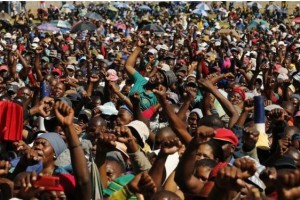
The main employer body in South Africa’s metals and engineering federation has accepted a government proposal to raise wages by as much as 10 percent, it said on Tuesday, raising hopes of an end to a strike by more than 200,000 workers.

The Steel and Engineering Industries Federation of South Africa said unions led by the National Union of Metalworkers of South Africa are reported to have accepted the offer.

The proposal of wage raises put forward by Labor Minister Mildred Oliphant under which SEIFSA agreed to increase wages by between 7 to 10 percent in next three years.  National Union of Metalworkers of South Africa (NUMSA) declared strike on July 2 where more than 200,000 worker affiliated to NUMSA put their tools down to convince employers to fulfill their demand of 12-15 percent wage increases.

The strike is hitting economy of SA as many auto mobiles companies have shut down their vehicle assembly lines due to the unavailability of car parts.  Construction work in power supply companies was also effected by the ongoing walkout of labors.

South Africa is trying to avoid deeper recession which started five months ago when the platinum workers struck.  The GDP is expected to fall nearly 5 percent in this fiscal year as the result of strikes.

When unions produce raw materials required by manufacturing in the same country they have clout.

Mine and Construction Workers Settle in South Africa


Bank Accounts for People Who Don’t Have Them

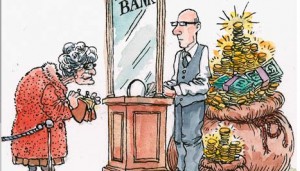
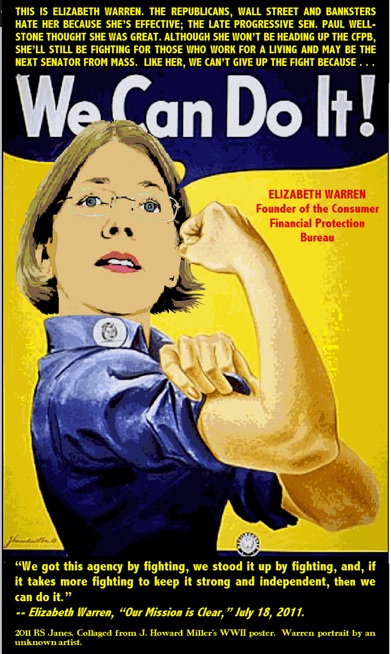
Senator Elizabeth Warren has suggested giving the post office a banking function in the US.  Already they supply money orders.  In England, basic bank accounts are offered.  In the UK a million people can’t get a regular bank account.  But there is a solution called a ‘basic bank account’. This product is designed for those with poor credit scores.

As the name suggests, a basic bank account offers a place to store your money and pay your money from, without overdraft facilities or any in-credit interest.  Most basic bank accounts will give you a debit card, so you can make payments in shops and online, and all allow you to set up direct debits – which is great, as this can make bills cheaper than paying by cash or cheque.

Overdraft charges occur when you attempt to make a payment and don’t have enough money in your account.  This is called a transaction fee even though no transaction has taken place.

UK banks don’t publicize these accounts because there is a use charge built in, and most other accounts don’t have this, so they can be called ‘free.’  Also, banks can’t’ make money on these accounts unless you try to use more money than you have.

What  Warren is calling for in the US, and Silicon Valley may consider as they look into the banking business, is a way for lower end customers to bank.

Banks for People Who Don't Bank


Elizabeth Warren on the Hustings for 2014 Elections

Make no mistake.  Elizabeth Warren is a middle of the road progressive.  Her central mantra is clear and uncontroversial:  if you work hard and play by the rules you should be able to succeed.  Given the PIketty formula,  r>g, it is unlikely that this can happen.  Warren wants to make sure America returns to its origins as a land of opportunity. Here she is in a recent article.  Reining in Big Banks

Warren

Zephyr Teachout, Anti-Corruption Expert, Runs for Governor of New York

We interviewed Teachout over two years ago  and her article on the idea of corruption in the US constitution is available on the site. The Anti-Corruption Principle.

Teachout originally supported Governor Cuomo, but has been deeply disappointed.  While it is unlikely that she can win, she casts light on issues important to many Americans.  Elizabeth Warren may serve this function too.  Or perhaps she will play a bigger role in 2016.  Both women are extremely concerned with banks that are too big to fail.  Teachout for Governor of New York

Corruption

Policies to Combat Income Inequality

Kemal Dervis calls for strong policies to combat income inequality.  Without potent policies aimed at counteracting these trends, inequality will almost certainly continue to rise in the coming years. Restoring some balance to the income distribution and encouraging social mobility, while strengthening incentives for innovation and growth, will be among the most important – and formidable – challenges of the twenty-first century.   Inequality

Apparently one big problem going forward is that very wealthy men and very wealthy women are marrying each other.

Marriage

New Banks for Customers?

Elizabeth Warren has proposed that the post office be used for banking.  Kevin Roose writes about interest in Silicon Valley.

“I am dying to fund a disruptive bank,” venture capitalist Marc Andreessen tweeted earlier this year. Financial start-ups—known collectively as “fintech”—are spreading like kudzu, each with a different idea about how to usurp the giants of Wall Street by offering better services, lower fees, or both. Bitcoin and other digital currencies are the tech scene’s infatuation du jour. But a number of other companies are finding success by innovating within the monetary system we already have. “When I go to Silicon Valley … they all want to eat our lunch,” lamented ­JPMorgan Chase CEO Jamie Dimon this year.  Creative New Ideas for Customer-Friendly Banks

New Banking Ideas


China Begins to Solve Pollution Problems with Nuclear Energy

China’s top energy regulator on Thursday announced 164 industry standards, about half of which are related to nuclear power, a signal that the country will support its nuclear sector with new approvals for plants.  The National Energy Administration is putting an emphasis on the nuclear industry with detailed standards for upstream and downstream segments such as primary coolant pumps, a key reactor component, as well as instrument and control systems.  Experts said the standards pertain to the third-generation nuclear power technology used in the Westinghouse Electric Co’s AP1000 and the domestically developed CAP1400.

“Clearly, these measures will provide a stimulus and introduce standard practices for the entire industry chain of China’s nuclear power sector, including fuel suppliers, equipment manufacturers and power transmission and distribution enterprises,” said Chai Guohan, chief engineer of the Ministry of Environmental Protection’s nuclear and radiation safety center.

The move comes at a crucial time, with many speculating that the NEA’s action may expedite the resumption of new approvals for inland nuclear projects.
Earlier this month, China General Nuclear Power Group signed a 38 billion yuan ($6.1 billion) contract to build two nuclear power plants in Southwest China’s Guizhou province.

China’s largest nuclear power operator will spend 35 billion yuan by 2020 on two 1.25 gigawatt generating units for a nuclear plant in the city of Tongren in Guizhou province, as well as 3 billion yuan on a smaller plant with two units.
“We will usher in a new era of inland nuclear power development,” Tan Jiansheng, CGN’s vice-general manager, said during the signing ceremony.  Apart from Guizhou, other inland regions such as Jiangxi, Hunan and Hubei provinces are also eager for approvals.  Hunan has two nuclear power projects on the drawing board – the Taohua River power station and the Xiaomoshan project.

Wang Liangfang, director of the Hunan Provincial Energy Bureau, said construction could start on both because much preparatory work has been done on engineering and documentation.  China National Nuclear Corp, CGN’s major rival, is the parent company of the project.  However, Chai warned that new inland nuclear projects won’t start operating until 2015.

Nuclear Plants Not So Endangered in China

China’s State Owned Enterprises to Diversify Shareholders

Global rating agency Moody’s said reform of China’s six big State-owned enterprises (SOEs) is credit positive, calling it a prudent, yet concrete, step toward broader reform.

China to diversify SOE shareholding “The kickoff of the programs is credit positive for central SOEs, even those not included in this pilot,” Moody’s Investors Service said in a report released on Friday. It said the pilot program is a concrete step toward execution of reforms outlined at the plenary session.

In China, SOEs administered by the central authority are usually larger and more important than those owned by local governments. Moody’s said SASAC has acknowledged challenges of reforming central SOEs and is taking “a prudent approach” by focusing on a limited number of companies.  The targeted approach will reduce execution risk and allow the government to maintain strong control over the central SOEs, and in turn help central SOEs retain stable credit quality as the government implements more widespread reform, the agency said.

According to SASAC, companies involved in this round of reform are the State Development & Investment Corporation, China National Cereals, Oils and Foodstuffs Corporation, China National Building Materials Group, China Energy Conservation and Environmental Protection Group, Xinxing Cathay International Group and China National Pharmaceutical Group.  For mixed-ownership reform, SOE giants like China National Petroleum Co and China Telecom have previously announced their own plans to diversify corporate ownership and attract social funds.

Cartoon by Claudio Munoz

Cartoon by Claudio Munoz

Fed Chairperson Yellen’s Commitment to Employment

Although the exact relationship between the US Federal Reserve’s commitment to full employment and its Congressional mandate to achieve this, little evidence has been provided to demonstrate how this happens.

Yellen’s plans for community support were spelled out in the first big trip and speech after her appointment.   A recent New Yorker article suggests how deep the commitment of the new Fed chair is to jobs, but does not describe how she plans to help matters in a beleaguered US labor market.

Here is a synopsis of the points made about jobs in the article by Nicholas Lemann. Both Yellen and her husband George Akerlof (a Nobel-prizewinning economist) grew up in families where everyone wanted to work hard and at times could not find a job.  She is fierce in her determination to see that wiling workers can find jobs. In the 1990s as a Fed governor, when she thought she had made a dent on a Greenspan position, she said to another governor:  “I think we might have saved five thousand jobs.”  Now she might save a million or even two.

How she proposes to do this is evident on a trip to Chicago in late March.  Addressing a community on Chicago’s beleaguered South Side, she said the following:  “The Fed supports the work you do in communities because you make a difference. You help ensure that credit is available for families to buy homes and for small businesses to expand. Your organizations sponsor programs that help make communities safer and families healthier and more financially secure. One of the most important things you do is to help people meet the demands of finding a job in what remains a challenging economy. And that help is crucial, but I also believe it can’t succeed without two other things.”  She goes on to ask for grit and also community help in locating jobs.  She points out that low interest rates help people buy homes, for businesses to expand.  “We are trying to lower the costs of buying a car that can carry a worker to a new job and kids to school, and our policies are also spurring the revival of the auto industry. We are trying to help families afford things they need so that greater spending can drive job creation and even more spending, thereby strengthening the recovery.”

In sum, Yellen clearly is a passionate jobs’ advocate, but do the Fed’s policies really count in the jobs’ figures?  Why has the Fed become the prime force in setting fiscal policy?  Does a Fed Chairman, even the most brilliant one, really have the clout to get banks to help out?  Can a mature person with undeveloped political skills deal with the wolves of Wall Street?  This is Yellen’s challenge and we shall see.

Yellen Chicago Speech on the Job Market Yelen and Jobs


Worldwide Variations in Approach to Finance

We all know that men and women behave differently in myriad ways, including when it comes to money. Visa’s International Barometer of Women’s Financial Literacy survey, conducted with 25,000 male and female participants in 27 countries, confirmed the point: Men and women have different financial priorities.

But it’s not just men and women who differ in how they approach family finances. The study reveals some interesting findings that go beyond gender differences and reveal widely different priorities across countries and cultures, too.

For example, mothers in Mexico, Brazil, Bosnia and Serbia talk to their kids about finances more often than moms in any other nations. Mexican mothers, on average, have such conversations at least once a week during 41.7 weeks a year. Indonesian mothers talked to their children about money the least, averaging just 3.9 weeks a year. American mothers ranked eighth, talking to their kids about money management just a bit more often than once every two weeks.

The overall scores on Visa’s Financial Literacy survey are based on rankings in individual categories including budgeting, emergency savings, frequency in talking to children about money, perception of young peoples’ money skills, and the desired age for beginning formal personal finance lessons.

For many women, raising their children to be financially savvy is extremely important, particularly if they come from an economically stressful situation. More than likely, this is because the parents want their kids to be better off financially than they are.

Interestingly, the survey found that mothers, rather than fathers, spent the most time talking with their children about money management, budgeting, saving, responsible spending, and debt. On the other hand, men are slightly more likely to have a budget and emergency savings — two key indicators of economic stability for a family.

Women in Brazil rank highest overall on the survey, primarily because they earned high scores for having a budget, talking to their kids about money, and starting their children’s financial educations early. In each of those categories, Brazilian women were equal with Brazilian men.  The one area in which these women lag behind men is saving for emergencies, with more than half (51 percent) having no savings at all.

Mexican women ranked low when it comes to having a budget and emergency savings, but they came in third overall because of their emphasis on teaching their children about money management. All those money talks must be working, though, because only a minority of Mexican women thought that young people and teens lack money skills. Compare that to Australian women (No. 2 overall), 64 percent of whom think young people lack basic knowledge about money.

Women in Indonesia and Pakistan were ranked lowest for financial literacy overall and hovered near the bottom in every category. And on every score, Pakistani women lagged behind Pakistani men.  Women in Pakistan report having nearly no savings at all. And those who do don’t have enough to last one month. Indonesian women ranked last when it comes to talking to their kids about money and near the bottom for having a budget and emergency savings.

Women from the United States are fourth among the top five countries in the world for overall financial literacy, with men and women in this country virtually on equal footing when it comes to financial savvy.  But American women only ranked among the top five in one category: budgeting. While 53.4 percent said they follow a budget, 24.2 percent said they don’t have a budget or they don’t have enough money for a budget.  In 23 of the countries, a majority of women either have no budget or think they are unable to budget for economic reasons. In Canada, Russia and Belarus, women are more likely to have a budget than men.

Financial planners recommend that everyone have emergency savings of three to six months’ worth of expenses, but in only a handful of countries did the majority of women say they had three months’ of savings.  Women from Taiwan and China averaged the biggest savings cushions at 3.7 months, and women in Hong Kong, Canada, and Australia each had an average of three months’ expenses or more in savings.  Men, on the other hand, have saved more for emergencies in all but one country: Australia.  The lack of emergency savings among women could be tied to the fact that in many countries, men control the household budget and women may not have any income of their own. In 22 countries, a majority of women have less than three months’ savings or none at all. In Egypt, Serbia and the Ukraine, more than 90 percent of women have less than three months’ savings. Pakistani women had the least savings, with an average of 0.7 months of expenses saved.

The survey’s findings reinforce the dismal reality that we’re already aware of: Most of the world’s population is dangling by a financial thread, one that could snap far too easily. But as women across the world continue to talk to their children about finances, it’s a trend that can be reversed in the future.


Women and Finance