Inequality: Will Taxation Solve the Issue

Rachel Black, writing in Fortune, makes these suggestions:  Economist Thomas Piketty is proposing a global wealth tax to battle inequality, but that won’t help Americans build wealth. It’s time U.S. policymakers helped all households save more. It’s not often that a lengthy economics book gets very much attention, but by now, many have heard of French economist Thomas Piketty’s Capital in the Twenty-First Century. The 685-page book has unexpectedly become a bestseller; Piketty analyzes hundreds of years of tax records throughout the world and arrives at a harsh reality: The rich are indeed getting richer.

A lot of attention has been paid to incomes, but as Piketty highlights, the divide is much wider when it comes to wealth. While he has broadened the debate about inequality, what’s often been missing from the discussion is what should we do about it?

At least in the U.S., the prescriptions have overwhelmingly focused on raising incomes; hardly a day goes by when the media, a city mayor or Washington lawmakers make the case for raising workers’ minimum wage. While that might help equalize incomes, it does nothing to help Americans build wealth.

Piketty suggests levying a global wealth tax, but taxing the rich isn’t necessarily the answer. What could help average Americans, particularly low-income households, is policies that help them build wealth by helping people to save more. This is an approach recently articulated by my New America Foundation colleague, William Elliott. In his report, Harnessing Assets to Build an Economic Mobility System, he argues that the richest Americans already enjoy extensive government subsidies on their savings. This year, the top 20% of income earners will capture two-thirds of the $140 billion in subsidies for retirement, according to estimates by the Congressional Budget Office.

Lower-income Americans don’t have this type of support. In fact, they’re explicitly discouraged from saving more if you look at rules over federal food and income assistance programs that can make families with less than $1,000 in the bank ineligible to participate.

As a result, higher income families are rewarded for long-term planning and investment and low-income families are penalized for doing so. The point is that it takes money to make money, so how about making sure that everyone starts out with some?

There are multiple ways: Senator Ron Wyden (D-OR) has recently voiced his support for a universal savings accounts for children, modeled on the ASPIRE Act. ASPIRE would provide all children born in the U.S. with a $500 savings account that could be put toward the cost of college, buying a home or retirement. Up to $2,000 could be deposited into the account annually on a tax-free basis, and lower-income families would quality for a federal match of up to $500 a year. Representative Joe Crowley (D-NY) has supported a similar approach.

There are certainly other measures that need to take place to make sure that an approach like that is successful, such as getting rid of asset limits that cast savings as a liability in the minds of low-income families, as well as helping families build a financial cushion in the form of flexible savings, as the Financial Security Credit would do.

As Piketty rightly observes, the continued consolidation of wealth is deeply problematic. This is true on a macro scale as well as in the day-to-day lives of families trying make ends meet and get a few steps ahead. Replacing our flawed public policies that exacerbate this problem with a system that facilitates the creation of new wealth would go a long way toward allowing more Americans to share in such a powerful driver of economic success.


Savings?


Commodities Traders: Speculating on Their Own Behalf

Are commodities traders running the world?  Kate Kelly has written a new book about them:  The Secret Club that Runs the World.

Nestled deep in the towers of banking and finance are the commodities traders who spend their days gambling with oil, gold and grain contracts.  Their astonishing wealth has been created in near obscurity, but if the individuals in the commodities boom have gone largely unnoticed, their impact has not. Prices of raw materials have exploded.  Are the big traders hiking up the cost of petrol, food, and essentials bought by people around the world? How did such immense power end up in the hands of a few?  The Commodities Futures Trading Commission has been trying to cap the number of speculators, but they have not been successful, largely because there is debate on whether or not speculation is good.  Dodd Frank limits positions.  CFTC has tried to impose them.  In the meanwhile, people who use gas can be hurt.

Commodities Prices

Modi an Equal Partner with the US?

The US has demanded over recent years that India buy defense weapons, allow big US corporate banks into the country, and ease patents helping Big Pharma.    Prime Minister Modi, who was banned from the US six years ago, has a long memory.  He will demand parity with the US.  President Obama says that this relationship is a big US priority?  Can we move forward?  Modi wants investors to flock to the manufacturing sector.  He is looking to China and Japan.

Modi

Women in South African Mining Join Forces

Concerned about the future of mining in Africa, and wanting to place more women in the business, South African Women In Mining (SAWIMA) was launched in December 1999, when Ms Phumzile Mlambo-Ngcuka, was appointed Minister of then Minerals and Energy. Shortly after herappointment, she expressed concern at the alarming absence of women in the mining industry.

Current programs:  Economic Transformation & Change Management (annually and continuously monitor & evaluate Economic Transformation & Change Management Progress in the Mining Sector)  Stakeholder Relationship Management (implement and adhere to the Stakeholder Relationship Management Matrix Model); Marketing, Advocacy, Publicity & Communications Unit/Desk (introduce Information Technology System, Multi-Media and Social Media Platforms)  SAWIMA – a Women Chamber of Mines South Africa (launch SAWIMA Women Chamber of Mines South Africa Project), SAWIMA Women Mining Skills & Enterprise Development (co-ordinate Human Capital, Investment & Business Opportunities Development for Women in Mining; Corporate Governance, Compliance & Ethical Business Practice (launch annual SAWIMA Board of Directors Development Programme and refresher courses on Responsible Directorship); SAWIMA Investments Management (produce record of all SAWIMA Investments Portfolio, and submit official Investment Certificates).

An inspirational figure for women miners is Dr. Mamphlea Ramphele who created a mining company now worth over 50 million dollars.

Dr. Mamphela RampheleWomen Entrepreneurs in Africa

Fast Tracking Agriculture Grants in Africa

The Agriculture Fast Track is the first and only project preparation fund focused exclusively on agriculture in Africa. Building on the commitments under the New Alliance for Food Security and Nutrition, the Agriculture Fast Track develops and advances a pipeline of bankable food security projects that support Africa’s agriculture transformation agenda.  African entrepreneurs and particularly women are invited to apply for grants.

Recent projects receiving grants are:  An irrigation system for small shareholder production, a hulling facility to create stronger market links for small shareholders; power source for center to train small shareholders.  Currently open to citizens of Burkina Faso, Cote d’Ivoire, Ethiopia, Ghana, Mozambique, and Tanzania.

A project of the Africa Development Bank.

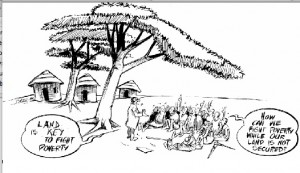
Agriculture in Africa

Premier Li’s Balancing Act in China

Zhang Jun writes about the premier’s balancing act between conventional credit and overissuance of currency and the government’s response to overheating.

But the latest round of deflation-fighting policies, together with the massive stimulus package that the government launched in the wake of the global economic crisis, has led to oversupply in the housing market and idle capital in the manufacturing sector. Making matters worse, demand for Chinese exports in Europe and the United States has weakened considerably, and is not expected to rebound. All of this has diminished short-term investment opportunities in China, raising fears of a hard landing.

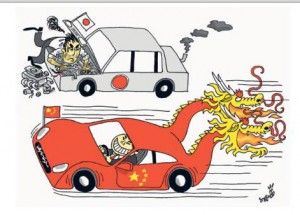
Chinese Economy Revving Up?

Gender Balance of the Boards of New Zealand Companies

Right Honprable Jo Goodhew, Minister of Women’s Affairs in New Zealand, comments:  The 120th anniversary of women’s suffrage last year reminded us that New Zealand led the world in recognising that women should have an equal rights to men.

One of our goals is to achieve more gender balance in leaders
hip across New Zealand. This brings benefits not only to boards and their organisations, but also to the economy.  Leadership talent is always in demand, in New Zealand and globally.

Since 1994 women have been graduating with tertiary qualifications at higher rates than men. They now comprise 65 percent of university graduates. Yet at every successive management level more talented women drop out, or their career stalls, compared to men.

I want to see a greater number of women in leadership and governance roles in New Zealand. There is compelling evidence that gender balance leads to better decisions and organisational performance, providing economic and productivity gains.  Women represent increasing market power. Research evidence tells us they make most of the retail decisions, worldwide.

Gender balance in leadership can also promote increased innovation and effective problem solving, and more effective risk management.  We must create more opportunities for women in governance positions, especially in the private sector. We must achieve a step change in the percentage of women that currently sit on boards, head organisations, and contribute as Members of Parliament or other democratically elected roles.

Organisations need to look at the issues and challenges they face in attracting, developing and retaining women at all levels in the leadership pipeline. Research shows that addressing cultural and structural issues, such as unconscious bias and flexible work practices, removes barriers for women.

Senior leaders, particularly chief executives, need to set long-term goals for women in leadership in their organisations and regularly measure results towards that goal.

In the state sector, I encourage women seeking governance roles to contact the Ministry of Women’s Affairs. The Ministry manages a database with over 800 women who are actively growing their careers in governance.  New Zealand’s Diiversity Rule requires companies listed on the stock exchange to report on gender balance on their boards and in their senior management teams each year.  Women comprise 12 percent of directors on the 109 New Zealand companies.  covered by this Rule.   By increasing women’s participation and having more diversity on boards, we can further grow our productive economy. To do this and achieve the progress required, each of us must take action today.

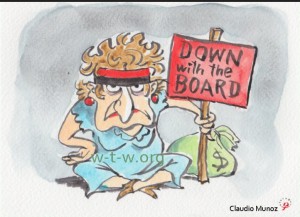
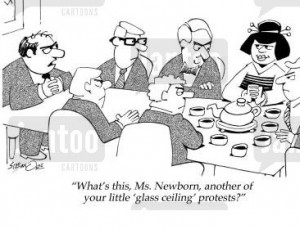
More Women on Boards


Chinese Optimistic About New Swiss Transparency Policy

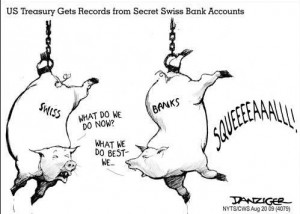
Emma Dai writes in the China Daily:  A decision by Switzerland to hand over details of secret bank accounts in the country to other nations will benefit China’s ongoing anti-corruption campaign, financial specialists say.  The Swiss pledged on Tuesday to provide details of foreign bank accounts, marking a breakthrough in the global crackdown on tax evasion.
The Financial Times reported that Switzerland committed itself to signing a new global standard on automatic exchange of information. The move is being viewed as a decisive break away from traditional Swiss protection of banking clients’ privacy.
“The move will definitely help anti-corruption efforts in China, as Switzerland is the world’s largest offshore financial center,” said Shen Minggao, head of China research at Citibank.  “It will become much easier for the Chinese authorities to collect information on overseas accounts relating to corrupt officials.”

The Swiss policy change pledge was made at a meeting of the Organization for Economic Cooperation and Development in Paris.  The declaration was signed by more than 40 countries, including other member countries of the OECD and G20 nations.  It requires the collection and exchange of information on bank accounts and the beneficial ownership of companies and other legal entities such as trusts.

The policy change by the Swiss authorities will contribute to international anti-corruption cooperation efforts.  Late Philippine president Ferdinand Marcos had billions of dollars in secret Swiss bank accounts, and imprisoned former Taiwan leader Chen Shui-bian also had deposits in Swiss banks.  Improving transparency may be a global trend.

Transparency?

Opportunities for Women in a Changing Japan

Higuchi Yoshio of Keio University writes: Facing a decrease in potential growth due to the aging of the population coupled with a low birthrate, the Japanese economy has slipped into a downward spiral of continued shrinking. We should maintain and increase the per-capita national income even amidst the population decline and realize a society in which a matured and enriched lifestyle can be enjoyed. The economy should shift to creating and expanding value added.

In order to increase their international competitiveness, Japanese businesses must rid themselves of the inward-looking attitude based on a rather homogeneous Japanese society which is typical of Japanese organizations. By increasing the transparency of their operations and evaluations and reviewing their business culture and labor practices, companies can recruit high quality personnel domestically and abroad irrespective of gender, age, and nationality.

Some of the driving powers for value creation are knowledge and experiences in different fields, respect for different values, and an increase in the labor force participation. We should create a society in which more people participate in value creation and enjoy working in accordance with their respective surroundings and abilities through diversification.

The project aims to clarify the impact of women’s participation and leadership on economic growth and business competitiveness. We address this issue from the following two directions. First, using an econometric approach, we will clarify the impact of women’s participation and leadership on firms’ performance or productivity. Second, using a case study approach, we discuss recruiting high quality personnel by taking full advantage of women’s ability and promoting diversity and work-life balance management.

Japanese Business Women

IMF Chief Says Banks Haven’t Changed Since Financial Crisis

Our correspondent Andreas Frank writes: The head of the International Monetary Fund has warned that a persistent violation of ethics among bankers and rising inequality pose a major threat to growth and financial stability.

Christine Lagarde told the audience at the inclusive capitalism conference that six years on from the deep financial crisis that engulfed the global economy, banks were resisting reform and still too focused on excessive risk taking to secure their bonuses at the expense of public trust.

She said: “The behaviour of the financial sector has not changed fundamentally in a number of dimensions since the crisis. While some changes in behaviour are taking place, these are not deep or broad enough. The industry still prizes short-term profit over long-term prudence, today’s bonus over tomorrow’s relationship.

“Some prominent firms have even been mired in scandals
that violate the most basic ethical norms – Libor and foreign exchange rigging, money laundering, illegal foreclosure.”

Lagarde warned the too-big-to-fail problem among some of the world’s largest financial institutions was still unresolved and remained a major source of systematic risk, with implicit subsidies of $70bn in the US, and up to $300bn in the eurozone.

In a speech littered with quotations from Winston Churchill to Pope Francis and Oscar Wilde, Lagarde said international progress to reform the financial system was too slow. “The bad news is that progress is too slow, and the finish line is still too far off. Some of this arises form the sheer complexity of the task at hand. Yet, we must acknowledge that it also stems from fierce industry pushback, and from the fatigue that is bound to set in at this point in a long race.”

Lagarde told that rising inequality was also a barrier to growth, and could undermine democracy and human rights.

“One of the leading economic stories of our time is rising income inequality, and the dark shadow it casts across the global economy,” Lagarde said.

Borrowing from Oxfam research, she noted that the world’s richest 85 people, who could fit into a single London double-decker bus, control the same wealth as the poorest half of the global population of 3.5 billion people.

Options to address inequality include more progressive tax systems and greater use of property taxes, she said.
“We must recognise that reducing inequality is not easy. Redistributive policies always produce winners and losers. Yet if we want capitalism to do its job – enabling as many people as possible to participate and benefit from the economy – then it needs to be more inclusive. That means addressing extreme income disparity.”

Lagarde compared the rising awareness of social responsibility tied into the financial system with the world’s expanding environmental consciousness. “Just as we have a long way to go to reduce our carbon footprint, we have an even longer way to go to reduce our ‘financial footprint’. Yet we must take those steps.”
IMF Lagarde Speech 27.5.14

Derek Easterby

Derek Easterby