Elizabeth Warren Cautions Against Giving the Banks a Free Pass

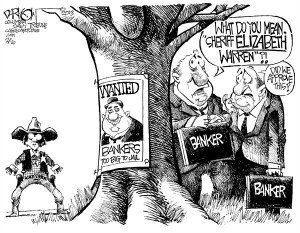
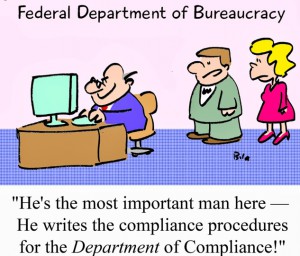
Warren’s speech was an indictment not only of the financial institutions that “have fought to delay and hamstring the implementation of financial reform,” after “exploiting consumers, larding their books with excessive risk, and making bad bets,” but also of the regulators and lawmakers—many from her own party—who are refusing to hold the financial sector to account.

Stanford economist Anat Admati in a new book argues with Warren that banks should fund their investments by selling a lot more stock and borrowing a lot less, especially in the form of run-prone short-term debt, as most other companies do.   Elizabeth Warren on Banks Free Pass

Warren


Japan’s Debt and Abe-Economics

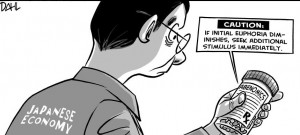
Prime Minister Abe appears to be increasing Japanese competitiveness and its total share of global demand, but not by increasing Japanese productivity, which is the high road to growth, but rather by reducing the real Japanese household income share of what is produced. Japan (like Germany and China have done over the past decade) is attempting to increase employment by reducing wages, and this means that its workers will be able to purchase a declining share of what they produce. This effectively means Japan will be growing at the expense of its trading partners. As the Japanese become less able to consume all they produce, the excess must be exported abroad.  Will Debt Derail Abe’s Economics?

Abenomics

Adaptation: Blackberry, Apple, Google, Twitter and You

A tech giant rises as another falls reported on the Financial Times. It juxtaposed Twitter’s initial public offering (IPO), which is set to raise more from the market than Google did in 2004, with the chaotic events at BlackBerry, which dropped a plan to sell itself got 4.7bn, jettisoned its chief executive and said it would raise 1bn in cheap debt.

Is that how it goes? Is the technology business a sort of one-in, one-out game? It’s certainly hard to find a company with more enthusiastic investors ahead of the bell than Twitter – though let’s see how things go once the shares are traded – nor one that has been more heftily dumped than BlackBerry, which in June 2008 boasted shares topping $144. Now they languish at $6.50.  Lessons from Blackberry

Adaptation

SEC Severely Penalizes Auditor

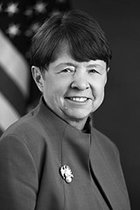
secSEC Biography:  Chair Mary Jo White

U.S. regulators on Thursday barred a New York firm and four of its employees from auditing public companies, saying they failed to audit properly three Chinese companies traded in the U.S.

The sanctions against Sherb & Co. and the four employees represent the Securities and Exchange Commission’s latest action against so-called gatekeepers: auditors, advisers, financiers and other professionals who work with Chinese companies and have helped them gain access to U.S. markets.
SEC_Sherp_PressRelease_7.11.13
SEC_Sherp_Admin_CAD_Order_7.11.13

SEC Chair Mary Jo White


Deutsche Börse To Pay $152M To Settle Iran Allegations

Deutsche Börse, Europe’s largest exchanges operator by market value, has agreed to pay $152m to settle allegations by Washington that its Clearstream settlement business may have violated US sanctions on Iran.

The Frankfurt-based group accepted an offer made last week by the Office of Foreign Assets Control, part of the US government, to end an investigation. The sum is less than half the $340m Deutsche Börse had indicated to investors in January the settlement could total.

The OFAC had been examining Deutsche Börse’s Clearstream settlement and custody business, which settles trades for customers by swapping assets for cash. The agency, which enforces economic and trade sanctions, was looking at transfers within an omnibus account in the US run by Clearstream after it decided to close its Iranian customers’ accounts.

It is the latest settlement levied by the OFAC on financial institutions around the world over alleged sanctions violations. Last year Standard Chartered, the British bank, paid $132m to settle allegations.

The OFAC had offered Deutsche Börse a choice of receiving a “pre-penalty notice” – often a prelude to a civil financial penalty – of $168.8m. Alternatively, it would apply a 10 per cent discount for a total settlement. In response last week, the exchanges operator said: “A settlement with OFAC would not constitute a final determination that a violation has occurred.”

Deutsche Börse made a provision of €114.8m in its third-quarter results last week. Clearstream is central to its growth strategy as tighter regulations require more derivatives trades to be backed by collateral, or insurance for trading. Clearstream has more than €11tn of assets under custody.

Deutsche Börse 07.11.2013.doc

Clearstream settlement

Small Business Opportunities in Africa

The international aid for Africa is a $40-billion-a-year industry.  Smart startups, suggests an African entrepreneur, would be wise to explore the needs of this huge international organizations full of people in search of someone to do their job for them or make their life easier. Here is a list of 10 ideas to create customized services or application for their use:  Small Business Possibilities in Africa
Small Business