5 Most Powerful Indian Women In Financial Institutions


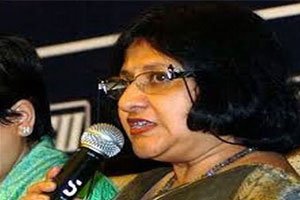
Bangalore: In the previous union budget, when Finance Minister P. Chidambaram proposed an idea to have exclusive banks for women he never thought he would appoint Arundhati Bhattacharya as the chairperson for the country’s biggest bank- State Bank of India. There has been increased number of women in the banking sector that was previously a male dominated industry.


Here is a list of those women achievers in the world of government-run financial institutions, compiled by Economic Times.
5 Most Powerful Indian Women In Financial Institutions

Arundhati Bhattachary chairperson of State Bank of India.

Endless Natural Resources in Africa

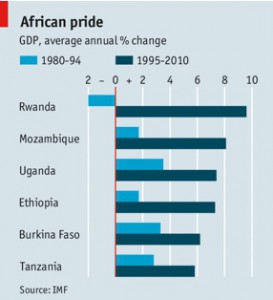
  A study published by the International Monetary Fund (IMF) finds that eight of the 12 fastest-growing economies in Africa in recent years did not rely on natural resources. Together these economies grew more quickly even than the group of oil producers.     The climate for private business is also much improved. Price controls and state-backed monopolies have been swept away. Rwanda stands out for its progress. Its coffee farmers once had little incentive to produce for export. The state set a single price for beans and took the lion’s share of any profits. But from the mid-1990s it granted private enterprise a bigger role. Now gourmet coffee from Rwanda is sold in posh grocery stores around the world.       Free exchange

Improvement in Africa

Gender Gap in Wages: US

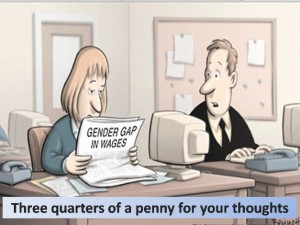
Men still get paid more than women for doing the same work.  Some industries and businesses are more discriminatory than others.  Sometimes the wage gap has to do with work done:  Male doctors are often surgeons who work longer hours than internists who keeps regular office hours.  But even factoring in real differences, men still get paid more than women for the same work.  Gender Wage Gap

Gender Gap in Wages

Are Bitcoins Inevitable?

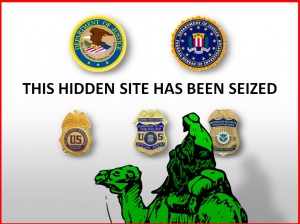
New Silk Road drug bazaar opens a month after FBI bust

A new anonymous Internet marketplace for illegal drugs debuted on Wednesday, with the same name and appearance as the Silk Road website shut down by U.S. law enforcement authorities a month ago.

Like its predecessor, the new Silk Road listed hundreds of advertisements for marijuana, cocaine, ecstasy and other illegal drugs available for purchase from independent sellers using the anonymous Bitcoin digital currency.

On October 1, the Federal Bureau of Investigation shut down the original Silk Road and arrested its alleged mastermind, Ross William Ulbricht, 29, known online as “Dread Pirate Roberts,” in San Francisco.

“It took the FBI two-and-a-half years to do what they did … but four weeks of temporary silence is all they got,” a site administrator wrote, also using the “Dread Pirate Roberts” moniker.

The FBI declined to comment on the new version of the Silk Road. For more than two years, the original site acted like an eBay of vice, allowing users to buy and sell illegal goods and services on the assumption that they were safe from the law. Deliveries were made through the mail in discrete packages.

U.S. authorities also say Ulbricht had tried to call out a hit on a user who had threatened to expose the identities of thousands of Silk Road users.

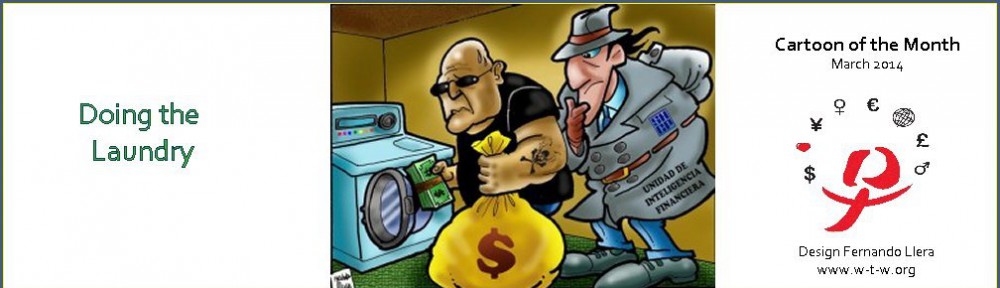
Ulbricht’s lawyer on Wednesday said his client would plead not guilty to drug trafficking, hacking and money laundering charges.

The charges against Ulbricht said his website generated sales of more than 9.5 million Bitcoins, roughly equivalent to $1.2 billion.

The new website improves on technology from the previous Silk Road meant to keep identities secret, including measures to keep users from losing their Bitcoins in case the site shuts down, according to the new Dread Pirate Roberts.

Senator Tom Carper, a top lawmaker on the Homeland Security committee, who plans to hold a hearing on digital currencies this month, said the new Silk Road site shows that government needs to adapt to fast-moving technology.

“Rather than play ‘whack-a-mole’ with the latest website, currency, or other method criminals are using in an effort to evade the law, we need to develop thoughtful, nimble and sensible federal policies that protect the public without stifling innovation and economic growth,” Carper said in a statement.

A week after authorities shut down the Silk Road, British police said they arrested four men accused of being significant users of the site.

Two weeks ago, federal prosecutors said 144,336 Bitcoins were discovered on Ulbricht’s confiscated computer, adding to more than 30,000 Bitcoins previously seized.

With the digital currency trading at an all-time on Wednesday, those Bitcoins were worth close to $50 million, according to the Mt Gox trading website.

Like the original Silk Road, users access the new site using a no-cost, anti-surveillance service known as the Tor network instead of traditional web browsers.

The relaunched Silk Road will soon hire staff to handle marketing for the site, the administrator mentioned in his post.

“The Silk Road has risen once more. … Open communication with your old suppliers and customers, let this wonderful news be taken to all corners of the Tor Network and beyond,” the person wrote.
Bitcoins Silk Road Rises Again

Venezuela Tightens Currency Control

Venezuelan President Nicolas Maduro is tightening control of the foreign exchange system to fight what he calls an “economic war” being waged against his government.

Maduro is creating a centralized agency to administer the nation’s dollars to ensure the supply of needed imports and prevent speculation by those he refers to as the “parasitic bourgeoisie.”

He is also creating a joint civilian-military task force of inspectors that will be given the job of stamping out what the government alleges is price gouging and the hoarding by businesses of scarce goods like toilet paper and milk.

Since Maduro took over from the late Hugo Chavez in April, inflation in Venezuela has soared to 49 percent while the bolivar has plunged on the black market to a sixth of its official value.

Price Gouging

Does Britain Lead the World in Tax Havens?

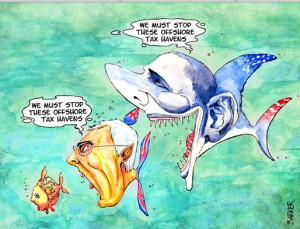
TJN’s appeal to the Queen seeks to draw a link between the contrasting prospects of those Commonwealth nations battling against poverty and those UK-linked tax havens that have attracted capital oversea because of the low tax and secrecy on offer.

“The victims of this secrecy include, among others, 2 billion Commonwealth citizens,” Christensen tells the Queen. “A recent study of 33 African countries found that they lost over $1tr in capital flight since the 1970s, of which $640bn came from 16 Commonwealth countries. These losses dwarf the external debts of ‘just’ $190bn for the 33 countries.”

The Queen is known to take a particular interest in her crown dependencies and overseas territories, which operate as largely self-governing jurisdictions. UK ministers have long been aware of the reputational risks of association with pariah tax havens but have frequently looked the other way, claiming their constitutional powers to intervene are negligible.  Does the UK Lead Financial Secrecy Havens


Tax Havens?

Getting into Oil and Gas in Kenya

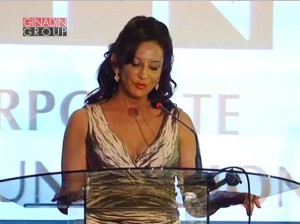
Gina Din-Kariuki is the local shareholder of CAMAC Energy, a US-based New York Stock Exchange-listed company involved in the exploration, development and production of oil and gas.  “We are going to be exploring for oil in this region. So one of these days you will see me with a hard hat.”  Her entry into the energy sector makes Din-Kariuki one of very few women in Africa to actively invest in the energy sector.

“Maybe I will bring a little bit of glamour to the oil industry,” she says with a chuckle.  But beyond bringing glamour, Din-Kariuki hopes to influence policies that will see Kenyans benefit from the country’s resources. This is also a serious long-term investment for her.   Entrepreneurship in Kenya

Into Oil and Gas in Kenya

Ireland and the EU: Austerity Works?

The Irish have a long history of being tyrannized, exploited, and oppressed-from the forced conversion to Christianity in the Dark Ages, to slave trading of the natives in the 15th and 16th centuries, to the mid-nineteenth century “potato famine” that was really a holocaust. The British got Ireland’s food exports, while at least one million Irish died from starvation and related diseases, and another million or more emigrated.

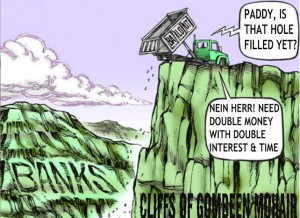
Today, Ireland is under a different sort of tyranny, one imposed by the banks and the troika-the EU, ECB and IMF. The oppressors have demanded austerity and more austerity, forcing the public to pick up the tab for bills incurred by profligate private bankers.  Bank Guarantee Bankrupts Ireland

Bailout