Carly Fiorina discusses giving a leg up to women. Video

Carly Fiorina discusses giving a leg up to women. Video
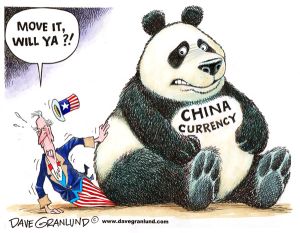
TESCO, a supermarket chain, has changed the way people shop in Britain and a dozen other countries. It is also planning a change in its own shopping habits. Like many multinationals, it buys a lot of stuff from China, and, like most foreign firms, it pays its Chinese suppliers in hard currency. But now it wants to pay them in China’s own coin, the yuan. Article
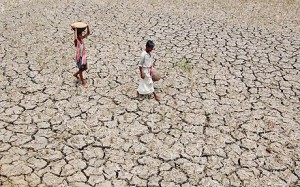
Imagine India in 2033. It has overtaken China as the most populous nation. Yet with 1.5 billion citizens to feed, it’s been three years since the last monsoon. Without rain, crops die and people starve. Article
Reform should thus focus on rich-world financial centres as well as Caribbean islands, and should distinguish between illegal activities (laundering and outright tax evasion) and legal ones (fancy accounting to avoid tax). The best weapon against illegal activities is transparency, which boils down to collecting more information and sharing it better. Thanks in large part to America’s FATCA, small offshore centres are handing over more data to their clients’ home countries—while America remains shamefully reluctant to share information with the Latin American countries whose citizens hold deposits in Miami. That must change. Everyone could do more to crack down on the use of nominee shareholders and directors to hide the provenance of money. And they should make sure that information about the true “beneficial” owners of companies is collected, kept up-to-date and made more readily available to investigators in cases of suspected wrongdoing. There are costs to openness, but they are outweighed by the benefits of shining light on the shady corners of finance. Article
The best opera reviewer in the US talks about the Metropolitan Opera’s new Rigoletto, set in Las Vegas. Eli Jacobson reports that Michael Mayer’s reset offers both inventiveness and misfires. Article

Call them the “whatever-it-takes” central bankers. As the world’s advanced economies grow at half the speed of the pre-crisis years amid persistently high unemployment, governments are turning to a new set of monetary-policy makers who in word — and they hope deed — are more aggressive than their predecessors. Article

Inevitably, climate change has risen up the agenda – not least because although the region is not a main contributor of the emissions causing global warming, it is likely to be a disproportionately affected by them. Estimates suggest the region has so far generated only about 4-6% of global emissions, yet it could suffer annual damage of a $100 billion by 2050r of due to declines in agricultural yields, the disappearance of glaciers, floods, droughts, and other problems caused by global warming. Article
On January 31st America’s Department of Justice surprised investors by saying it would challenge a planned merger between Anheuser-Busch InBev, the world’s largest brewer, and Grupo Modelo, a Mexican one. European governments seem keener than ever to protect their national champions. Italy’s government, for example, recently set up a fund to invest in companies of “major national interest”. Meanwhile, China’s antitrust arm in the Ministry of Commerce is starting to make a nuisance of itself, not least by taking ages to make its mind up. It claims the power to review any deal in which the combined company would have $63m in Chinese sales and $1.5 billion of global sales—a ridiculously low threshold. Article

Mrs. Moneypenny, the internationally read columnist at the Financial Times, has some harsh advice for women: You can’t have it all. Not even Mrs. Moneypenny. The successful columnist, author, TV personality, philanthropist and businesswomen says she’s made big sacrifices to get where she is, sacrifices that include skipping the gym and seeing less of her three children. article
The Russian economy hemorrhaged more than $200 billion to illicit financial outflows from 1994 through 2011, a new research report by Global Financial Integrity found.
Russia has also had a massive inflow of more than $550 billion over the same time span, which is drawn from the earliest year for which data are available following the dissolution of the Soviet Union, the report said…article
Report 