Making Money on Music in the Digital Age

Elliott Morss writes on the changes in the music business.  Where once artists made their money from sales of records and sheet music, today you have to go on the road to make big bucks.

 Unit and Value Sales of Music Products

The 12 Largest Grossing Tours of All Time

Classical music is struggling to be a live draw.

Percent of American Adults Attending Classical Music Events


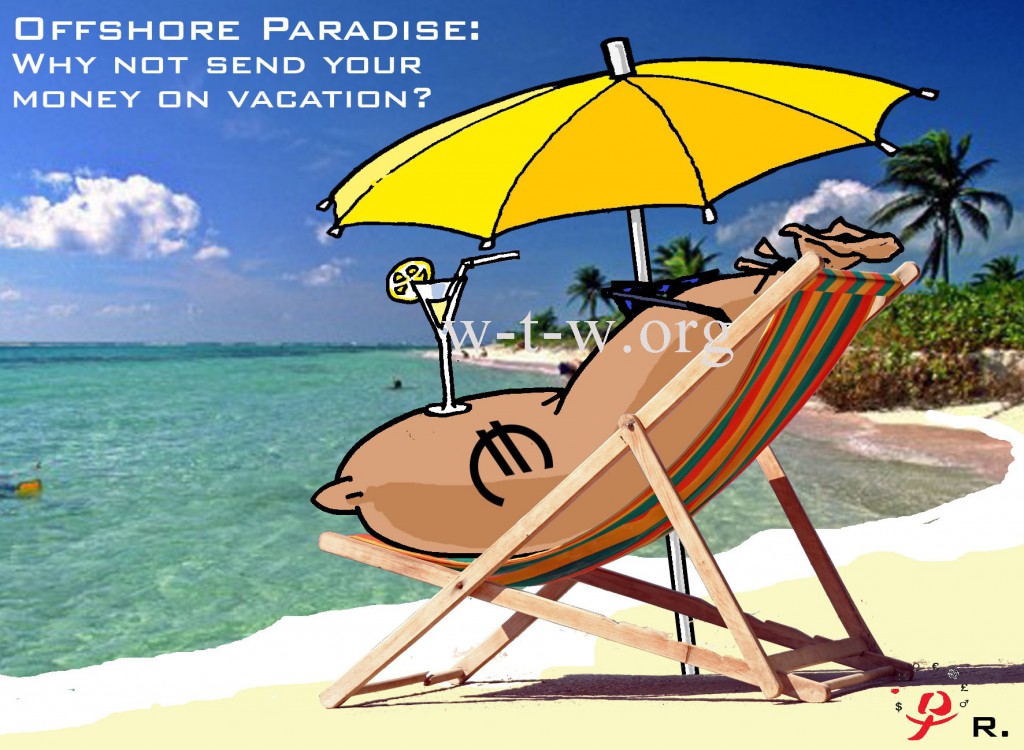
Ratcheting up the Consequences of Money Laundering

Christie Smythe writes:  Lawyer Patrick Poulin says he helped clients set up offshore corporations in the Caribbean. And that’s what he was working on when he flew to Miami from the Turks and Caicos last year to meet with two Americans who wanted him to invest $2 million from a real estate deal.  Instead, they arrested him at the airport.

The clients, who went by the names of “Bob” and “Abraham,” according to Poulin, were really federal agents who were targeting him as part of a money laundering sting. Poulin eventually pleaded guilty to conspiracy and spent a year in prison.

The U.S. has since brought charges against at least four other businessmen working as “incorporators” — people who help clients establish offshore shell companies for tax planning or other reasons. The cases come amid a campaign by U.S. prosecutors to pursue suspect foreign incorporators in countries where corporate secrecy laws and the demands of extradition have stifled investigative efforts. The strategy: Lure the service providers out of their overseas havens to the U.S. with aggressive techniques such as undercover operations, wiretaps and stings, case filings show.

This new front in the long-running battle against money-laundering is opening as part of a broader U.S. crackdown on tax evasion. Taxpayers who seek amnesty under Internal Revenue Service disclosure programs are snitching on the incorporators, as well as naming Swiss banks and the bankers who aided them.

More than 50,000 U.S. taxpayers have avoided charges since 2009 in the offshore tax evasion crackdown; the program required them to disclose which banks and advisers helped them hide assets, according to the U.S. Internal Revenue Service..

The aggressive strategies are likely meant to send a message to incorporators that they’re being watched, said Jeffrey Neiman, a former federal prosecutor who worked on the groundbreaking 2009 tax evasion case against UBS Group AG and whose law firm represented an associate of Poulin.

“It plants the seed around the world that just maybe the government is listening to this conversation,” he said.

By luring incorporators to the U.S. to make an arrest, authorities also avoid often-complicated and lengthy extradition battles, and it’s easier to resolve a case, Neiman said.

About 30 Swiss advisers, for example, have been indicted in the U.S. since 2008, part of a broad probe of tax evasion and undeclared offshore accounts. At least 21 are still at large, among them, Josef Beck. The financial adviser was indicted in 2012 for allegedly conspiring with UBS to help Americans evade taxes. Yet he has never come to the U.S. to face the charges.


Prosecutors are moving up the chain and targeting even bigger operations. U.S. officials last year brought charges against Belize-based IPC Corporate Services founder Robert Bandfield, his employee Andrew Godfrey and several associates at brokerages and other firms. Prosecutors accused them of helping clients, including as many as 100 Americans, profit off of illegal stock trades and launder about $500 million.

An undercover investigator, posing as a corrupt stock promoter, paid the incorporator and his associates $9,600 for help setting up a corporate structure designed for illegal trading and money laundering, prosecutors said in court papers in Brooklyn. Bandfield and Godfrey told the investigator they might be able to return laundered funds on prepaid debit cards in $50,000 installments, the government alleged.

“We can make it so it’s not attached to you,” both men told the investigator during a 2013 meeting in Belize, according to prosecutors.

The government’s crackdown comes as offshore tax shells proliferate. President Barack Obama said in a 2009 speech that one Cayman Islands address had as many as 12,000 corporations registered to it. Bloomberg News found the number was closer to 19,000.

Design Rachel Gold @wtwfinance

Design Rachel Gold
@wtwfinance

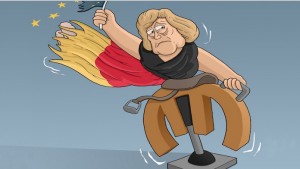
Should Germany Exit Euro?

Michael Heise writes:  The debate about whether Greece should leave the eurozone has revived the idea that Germany, and other similarly strong economies, would best serve the rest of the continent if they exited the monetary union.

Any serious discussion of exit would cause chaos in financial markets.  Even more important are the argument’s economic flaws, three of which are immediately apparent. First, the proponents of a German exit argue that if Germany left, the rest of the eurozone would devalue and that this devaluation would restore growth. This is unlikely.

The result of Greece and Spain’s devaluing their currencies in the 1980s was inflation with little growth. It was precisely the painful consequences of their sliding currencies that enticed these countries to join a monetary union with Germany.

Currency devaluation can boost exports in the short term, but it also makes imports more expensive, eroding households’ purchasing power. Workers then demand higher wages to compensate.  The result is often a wage-price spiral that quickly offsets the competitiveness gains of a weaker currency.

Second, advocates of a German exit argue that its economy is too competitive to share a currency with weaker players.  Flattering but wrong. Since 2000, France’s cumulative GDP growth has been the same as Germany’s. Ireland and Spain have done even better, despite the deep slumps they had to endure during the crisis.

Competitiveness does not depend only, or even primarily, on the exchange rate. Fundamentals such as productivity, education, research and development, and the tax system are more important. In these areas, Germany is far from being in a league of its own.

To be sure, the eurozone does not fully meet all of the conditions of an optimal currency area (which include an open and diversified economy, free movement of capital and labor, and flexible prices and wages). But, although the eurozone certainly has plenty of room to improve, the crisis has brought much progress in terms of integration and flexibility. The eurozone may not be perfect, but it is good enough to last.

One of the most important – but often ignored – conditions for a successful currency union is its members’ ability to agree on certain fundamentals of economic policy. Most notably, countries must agree that it is the private sector, rather than the state, that is responsible for creating jobs, and that sustainable economic growth requires open product and labor markets.

In the case of Greece, these fundamental ideas do not appear to have been universally accepted.

Greek wages and prices have already fallen sufficiently to restore competitiveness; the country now needs a framework in which private economic activity can thrive.

The eurozone’s survival requires, first and foremost, that all of its member countries have strong and flexible economies, which means that all of them must undertake continuous efforts to remain competitive.

Should Germany Exit Euro?

Refugees are Good for Business

Lucy P. Marcus writes:  In the face of the largest influx of refugees into Europe in decades, the responses and policy proposals from the European Union and its member governments have varied enormously, and the debate has become deeply politicized.  But one group’s voice has been conspicuous by its absence: business.

While governments, charities, and donor organizations actively discuss how to share responsibility for refugees on all steps of their journey – from camps in Jordan, Lebanon, and Turkey to transit to settlement – European business has been strangely silent. But, at a time when business is more powerful than ever, with multinational corporations stretching around the world, the private sector must work with governments and NGOs to help address the short-term and long-term challenges posed by the massive refugee inflows.

Indeed, industry leaders in all sectors owe it to themselves to be involved from the start. Only by turning the challenges into opportunities can social, political, and economic risks be mitigated.

There has been one notable exception to the pattern of private-sector silence. Just as German Chancellor Angela Merkel has been at the political forefront of the migration crisis, the Federation of German Industries (BDI) has been at the business forefront. The BDI has spoken clearly and decisively about the benefits of refugees for business and has proposed changes to Germany’s labor laws and regulations, including fast-tracking the newcomers’ right to work. In order to make business engagement and investment sustainable, the BDI has also sought assurances that migrants who find employment will not be deported.

Now it is time to hear from other countries’ business associations. How do the Confederation of British Industry or France’s MEDEF intend to respond? And what of individual multinational corporations? What legislative changes do they think they will need to aid governments and the EU in addressing the refugee crisis and ensuring long-term stability in Europe?

The challenge, everyone agrees, is not confined to managing the huge inflows and processing asylum applications. In the coming months and years, destination countries must lay the foundations for integrating refugees into their workforces. To wait too long is to miss an important opportunity to be involved in developing a strategy that works for businesses, governments, and societies alike.

Becoming involved early in the process of assessment, education, and integration planning would allow the private sector to help shape policy from the outset, rather than complaining about the government’s failures after the fact. Business leaders can help identify the skills and abilities that would most benefit their sectors, establish guidance and training programs, and offer apprenticeships.

The benefits are clear. The refugees arriving on Europe’s shores are often young, well educated, skilled, and eager to integrate quickly into society. They are an antidote to aging populations and low birth rates, and many come ready to work. By collaborating with the public sector, business can help to ensure that they get the training and jobs they need.

Business also has a role to play in helping to shape societal attitudes toward refugees. This is particularly true of public-facing organizations. Football clubs across Europe are not only donating money, but also taking concrete steps to encourage a welcoming atmosphere, with welcome banners, training camps for refugees, and, in the case of Bayern Munich, language lessons.

Not all of these refugees will remain in Europe permanently. One day, many may return to their homeland. When they do, they will have the skills to help rebuild their societies and economies, as well as provide strong ties to the country where they sought refuge. The importance of this investment in future state building, as well as business relationships, cannot be underestimated. Although the payoff may seem distant, investing in today’s refugees could make all the difference in building tomorrow’s strong, stable trading partners.

Europe’s refugee crisis continues to be viewed solely as a political problem, in part because that is how the media portray it. The only business coverage tends to focus on the financial impact caused by the disruption of transport links such as the port of Calais. But Europe’s refugee crisis is also a business problem. By addressing it now, business can turn that problem into an opportunity for allf.

 Refugees are Good for Business

Refugees: An International Issue

The Rocky Road to Globalization

Refugees may be the first issue that the world has to deal with as a whole.

EU members are considering a call from the European Commission for mandatory refugee quotas for each country – as the bloc looks to find a solution to the influx of migrants.

Syria’s neighbors have been dealing with this refugee crisis for much longer.

For its part – Jordan’s king says the country has taken in 1.4 million people who’ve fled the Syrian civil war.

Jordan’s Queen Rania discussed Jordan’s contribution to the crisis.

“I think as an international community this is no longer a Middle East problem nor is it exclusivity European dilemma.  This is for the whole international community to deal with and we need to come together for collective action. We need to come up with a comprehensive and cohesive policy in order to deal with this,” she said.

Queen Rania


Poroshenko Gets Ready for Loans

Mariana Antonovych writes:   Ukraine sidestepped default and now faces an opportunity to raise social standards for 3.5 million public sector employees, 7.5 million retirees and 1.5 million people who get different kinds of social aid from the state, Poroshenko said.  The government plans to spend Hr 10 billion – or $440 million – on the increases.

Social Policy Minister Pavlo Rozenko promised that more than 80 kinds of social aid, compensation, scholarships and other payments are set to increase. The minimum payments per person will increase for Hr 160 and will amount to Hr 1,378 ($62), while the minimum pension rate will constitute Hr 1,074 ($48).

Ukraine’s total budget is expected to reach less than $25 billion this year on gross domestic product of $75 billion this year.

Parliament will consider these changes to the 2015 state budget during the next week, said Verkhovna Rada’s speaker Volodymyr Groisman, noting that this is a part of “social contract with Ukrainian people Ukraine’s government has to execute in good faith.”

“This is a symbol of commitment of Ukraine’s authorities to its duties,” Poroshenko said. “This is a signal that painful reforms bring benefits.”

This result was not easy to achieve, though. It required restructuring debt, fighting corruption and increasing revenues to the state budget, Poroshenko admitted.

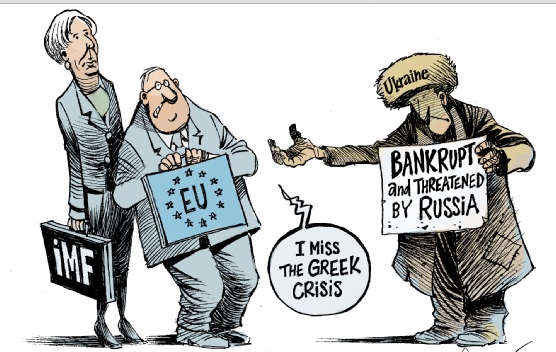
During a meeting with Poroshenko, International Monetary Fund Managing Director Christine Lagarde said that Ukraine “has surprised the world, surprised with what it managed to achieve during such a short term,” according to the president.

Given Ukraine’s previous practice of repeated violations of its commitments, Largarde’s words “delighted” Poroshenko. “This is an international recognition of efforts of our country,” he said.

“Lagarde also recognized that in difficult circumstances ‘Ukrainians achieved a macroeconomic stability, while Ukraine’s economy already demonstrates signs of recovery,’ ” Poroshenko said noting that IMF does not waste words.

The first and second loan tranches issued by IMF to Ukraine in March and August – part of a $17.5 billion loan commitment – helped stabilize Ukraine’s payment balance, harmonize export and import, and stabilize banking system.

While debt restructuring deal concluded on Aug.27 didn’t merely write off 20 percent of Ukraine’s debt before foreign creditors, but also delayed exorbitant burden for state’s budget for the next four years, said Poroshenko.

According to Ukraine’s Finance Minister Natalie Jaresko, this deal saved Ukraine some $9.2 billion, including the amount of loans and costs needed for their servicing.

Given the IMF’s forecasts regarding growth of Ukraine’s gross domestic product by 4 percent, Ukraine will be able to reach the level of Swiss economy by 2040, Jaresko added.

However, it doesn’t mean that Ukraine has overcome all challenges. Russia’s military threat, instability in the world’s economy and rising political tensions within Ukraine are the main challenges Ukraine is facing now.

“Ukraine has to stay united,” Poroshenko said, referring to the clashes near parliament on Aug. 31 in which three National Guard members were killed by a grenade, allegedly thrown by a former soldier during a demonstration against proposed constitutional changes.


“We agreed with Lagarde that it would be preferable if IMF decides to loan Ukraine $1.7 billion in October,” said Poroshenko, noting that borrowing from international donors is no substitute for attracting direct foreign investment in Ukraine.

To achieve this goal, Ukraine has to speed up reforms in all sectors: deregulation, liberal tax reform, introduction of visa-free regime and full operation of free trade zone with the European Union.

Ukraine on the Move


Paying for the Refugees?

The New York Times editorilaizes on paying for refugees  The world’s attention has been riveted on the refugee crisis unfolding in Europe, and on the shift in Europe as leaders, finally, take steps to deal with it. But one of the reasons Syrians are risking their lives to reach Europe is that life has become unbearable in the countries closer to home.

About 12 million Syrians — more than half the country’s prewar population — have been displaced since fighting began in 2011. More than four million have fled the country, with most going to neighboring Jordan, Turkey and Lebanon. In Lebanon, Syrian refugees are now a quarter of the population.

These countries are overwhelmed and, as numbers have swelled, conditions for refugees have deteriorated sharply. One reason is that the United Nations agencies that provide vital food, medical care and shelter are, as the United Nations high commissioner for refugees, António Guterres, bluntly warned in July, “financially broke.”

As a direct result, the World Food Program has had to cut rations for 1.6 million Syrians, with refugees in Lebanon allocated just $13 a month.

There is also scant money for emergency medical care — including treating bullet and shrapnel wounds — let alone for treating preventable and other diseases. Many Syrian refugees are being forced to sacrifice housing or medical care to try to feed their families. Only 30 percent of Syrian children in Lebanon are in school. No wonder refugees who can gather the money to pay smugglers are risking the fraught journey to Europe.

We support welcoming refugees, but we also need to understand who is financing their movements.  Mexican drug lords collect money for the journey.  They are the ones who profit.  We need to address this problem at its root, as well as the humanitarian needs of families.

Refugee Problem

US Russia Trade in the Aleutians

Greg Schuessler writes:  Patricia Lekanoff-Gregory remembers when a delegation of American Unangax flew to Russia’s Komandorski Islands to meet their kin in the early 1990s.

Lekanoff-Gregory has traveled to the Komandorski Islands five times since her father’s journey. She’s hoping to go again in the coming months to help teach Russian Unangax traditional hat making.

While some other Native communities that straddle the Russia-U.S. border have protections that allow for direct visa-free travel between the countries, no such arrangement exists for the Unangax.

Signpost on Komandorski Island showing distances and directions to (among others): San Francisco, Nome, Sitka, Honolulu, Dutch Harbor and Pitcairn Island.

Signpost on Komandorski Island showing distances and directions to (among others): San Francisco, Nome, Sitka, Honolulu, Dutch Harbor and Pitcairn Island.

While the Iron Curtain divided Europe during the Cold War, the so-called Ice Curtain split indigenous communities straddling the U.S.-Russia border. During the Cold War, Russia’s Unangax in the Komandorskis were among the indigenous groups cut off from their kin in Alaska.

That all changed in 1989. The Iron Curtain fell, and the Ice Curtain melted. Alaskan and Russian Natives started traveling back and forth to each other’s communities.

About 17,000 people in the U.S. are Aleut. According to a 2010 census, there are only about 500 Aleuts in Russia.

Bringing Russian Unangax to cultural camps held each summer in the Aleutians is “a primary focus for us,” Gamble said, “because it’s a way for the folks in Russia to experience these camps and take what they learned back to Russia.”

Big Diomede Island in Russia, right background, as seen from Little Diomede Island in the U.S. state of Alaska, left foreground.
Big Diomede Island in Russia, right background, as seen from Little Diomede Island in Alaska, left foreground.

But now, Unangax leaders say, escalating tensions between Russia and the United States have hampered their efforts to reconnect across the border. Visas are taking longer to process, taking four to five weeks rather than two to three, and Gamble said he has heard reports that Russian Unangax doing work funded by his Anchorage-based association are facing government scrutiny and even harassment. Efforts to reach out to Unangax leaders in Russia were unsuccessful.

Russian visas for American citizens cost at least $160, and to visit the Russian Unangax, Lekanoff-Gregory will have to fly from her home in Unalaska to Anchorage before heading south to Los Angeles, then across the Pacific and north to Russia, where she will catch a flight to the Komandorskis, which are only 500 miles west of her home.

Another effort to reach across the border hampered by deteriorating relations between Russia and the U.S. The National Park Service has recently granted more than $80,000 to Iñupiat residents of the Alaskan village of Little Diomede — a tiny island in the Bering Sea separated by just 3 miles from Big Diomede, which is part of Russia — who are looking to reconnect with their relatives in Russia.

The Iñupiat residents of Big Diomede, who are related to those in Little Diomede, were moved to the Soviet mainland in 1948.

Igor Krupnik, an anthropologist with the Smithsonian Institution, said that it would have been easier to bring the Diomede residents together several years ago, before relations between Russia and the U.S. soured. It takes time to navigate the now rocky relations between the two countries, and time is something in short supply for the   Diomedes’ Iñupiat.Delores Gregory, Lekanoff-Gregory’s daughter, is active in traditional dance and has always wanted to visit the Russian Unangax.

Zimbabwe Needs Cash. Terms?

Should Zimbabwe reform its labor laws and revive the country’s industrial capacity if the country is to start experiencing an economic boom.

 Hundreds of companies have shut down since the disputed 2013 elections while more than 25,000 employees have lost their jobs this year alone, according to the Zimbabwe Congress of Trade Unions.

Re-opening industries and reforming labor laws might act as catalysts in reviving the country’s moribund economy.

Meanwhile, Finance Minister Patrick Chinamasa said the government has asked for a meeting with international creditors that include the IMF, World Bank and the African Development Bank on the sidelines of the World Bank annual general meeting in Peru’s capital, Lima, so that Zimbabwe can present its case for fresh funding that it badly needs to inject into the economy.

The minister said the country is battling to clear its debt arrears that now amount to $1.8 billion. Authorities say the country’s debt overhang is hovering around $10 billion.

As a result of Zimbabwe’s failure to clear its debt, Harare is no longer accessing fresh lines of credit from international money lending institutions.

Chinamasa said the economic slowdown in China is also affecting trade between Harare and Beijing.

Zimbabwe's economy?

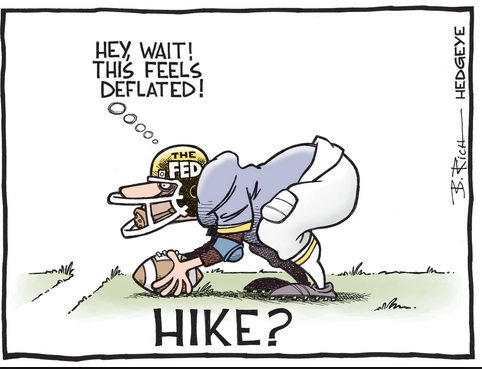
Will They or Won’t They? US Interest Rate Hike

Christine Lagarde comments on US Fed’s interest rate hike.  “The Fed has not raised interest rates in such a long time, that it should really do it for good, not give it a try and then have to come back,” Lagarde said.  “The IMF thinks that it is better to make sure that data are absolutely confirmed, that there is no uncertainty, neither on the price stability front nor on the employment and unemployment front, before it actually makes that move,” she said. Traders are torn on when the Fed will raise interest rates. The Fed could raise or hold rates when it meets on Sept. 16 and Sept. 17.

Investors scaled back expectations for the US’s first rate increase since 2006 after a sell-off in China became a global stock-market rout. The Fed’s key interest rate has been frozen since  2008. Fed Vice Chairman Stanley Fischer gave a mixed review of the latest US jobs report in a briefing to G20 officials, Luxembourg Minister of Finance Pierre Gramegna said:  “He told us that the numbers in the US are excellent because unemployment went down from 5.3% to 5.1%, which is an excellent number, but then he immediately cautioned that the number of 173,000 additional jobs was an August figure and that the August figure wasn’t very reliable,” Gramegna said. Emerging-market officials at the G20 were divided on whether it is better for the Fed to tighten its policy this month or later on, saying that there were “both sentiments in the room,” he said.

The gain in payrolls, while less than forecast, followed advances in July and June that were stronger than previously reported, the US Department of Labor.  The jobless rate was the lowest since April 2008. The strength of the economy and the jobs market has yet to lift inflation up to the Fed’s 2% target. Prices in the U.S. rose 0.3% in the 12 months through July, measured by the Fed’s preferred gauge. Inflation has lingered below the Fed’s target for more than three years.

US Fed Interest Rate Hike