Peace in Cyprus?

Martti Ahtisaari writes: The division of Cyprus may be moving toward resolution. For the first time since 2004, there is a fragile alignment of the political stars over the eastern Mediterranean.

There has been little reason for optimism during the decade that has passed since the last serious attempt to overcome the island’s division. The proposal in 2004 by then-UN Secretary-General Kofi Annan would have united the island by creating a federation of two states. But while Turkish Cypriots embraced the so-called Annan Plan, Greek Cypriots rejected it in a referendum one week before the Republic of Cyprus entered the European Union.

In 2008, there was an attempt to revive the peace effort, after the moderate Demetris Christofias replaced Tassos Papadopoulos as the Greek Cypriot president; but the process soon lost steam. In 2014, the discovery of vast energy reserves in the waters between Cyprus and Israel led some to hope that peace would soon be at hand; but the potential energy bonanza ended up aggravating tensions. Last fall, Greek Cypriot President Nicos Anastasiades called a halt to the peace process, citing Turkish brinkmanship over rights to gas exploration.

This time, it is a political development on the Turkish side that has improved the outlook for peace. The election in April of Turkish Cypriot President Mustafa Akinci has brought a breath of fresh air to the island. Akinci, a former leftist mayor of northern Nicosia, known for his steadfast commitment to peace in Cyprus, immediately brought about a change in the relationship between the two communities.

Anastasiades had, in 2004, campaigned in favor of the Annan Plan, and Akinci’s election seems to have reawakened his counterpart’s desire for an accord. Over the last few months, the two leaders have agreed on a package of confidence-building measures, including two new crossing points along the Green Line that divides the island; improved mobile, radio, and electricity connections; and mechanisms for business and cultural cooperation. In an unprecedented move, the two presidents, strolled together in Nicosia’s old town, crisscrossing the Green Line. Above all, they vowed to resume peace negotiations.

When talks resumed in earnest in May, both presidents were directly involved, their participation having been facilitated by UN Special Adviser on Cyprus Espen Barth Eide. Anastasiades and Akinci are committed to reaching an agreement within months, and Turkish President Recep Tayyip Erdoğan has called on them to forge an accord by the end of 2015.

To be sure, there is no guarantee that a deal will be struck. Plenty of details remain to be hammered out. The agreement is likely to entail greater territorial adjustments than were called for under the Annan Plan, as well as modernized security guarantees, a phasing out of settlement and property restrictions, and clearer and more decentralized governing arrangements. But, though the negotiations will be tough, even the conflict’s most hardened observers recognize that peace may now be within reach.  

Cyprus

How Large are China’s Investments in Africa?

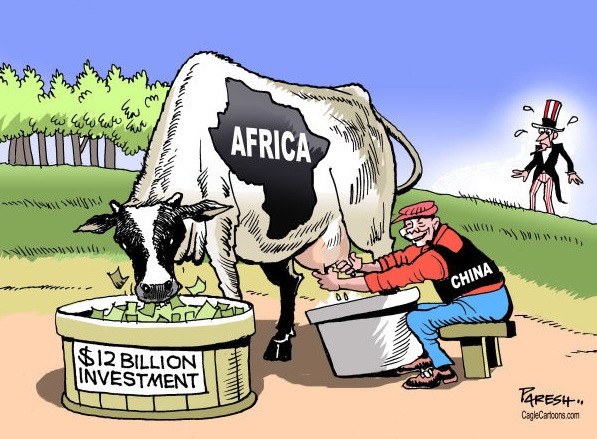
Wenjie Chen, David Dollar and Heiwei Tang write:  China continues to generate controversy with its rapidly growing investments in Africa. However, new research reveals that some of the West’s biggest concerns over Chinese investment—its true size, its focus on natural resources, and its disregard for good governance—are not always well grounded.

China has emerged as Africa’s largest trading partner, providing demand for the continent’s energy and minerals. At the same time, there is a growing volume of Chinese direct investment in Africa. Some of it has taken the form of high-profile natural resource deals in countries with poor track records of governance (e.g., Angola and Sudan). These developments have given rise to a number of ideas about Chinese investment in Africa:  That it is on the same enormous scale as China’s trade; that it is aimed primarily at natural resources; and that it is concentrated in countries with poor governance.First, on the scale of China’s direct investment in Africa,

Chinese statistics on what they call “overseas direct investment” (ODI) show a stock of $26 billion in Africa as of the end of 2013. This number would amount to about 3 percent of total foreign direct investment (FDI) on the continentSecond, concerning natural resources, in our paper we examine the allocation across African countries of the stock of Chinese ODI and the stock of total FDI (which, as noted, mostly comes from Western countries). Other things equal, African countries that are more resource rich attract more Chinese investment. However, this effect is about the same for Western investment, and it is only one factor determining investment. For example, Chinese ODI is also influenced by the size of the domestic market, indicating that some of it is aimed at serving that market.

We go beyond the aggregate data and also work with the firm-level data compiled by China’s Ministry of Commerce (MOFCOM). capital-scarce countries, suggesting its importance as a source of external financing to the continent.  China’s Investment in Africa

China in Africa


Gender Equality Boosts Workforce

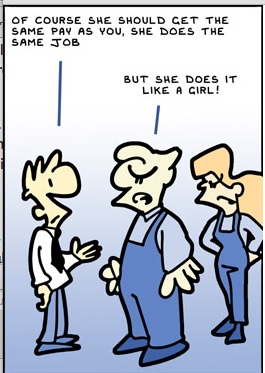
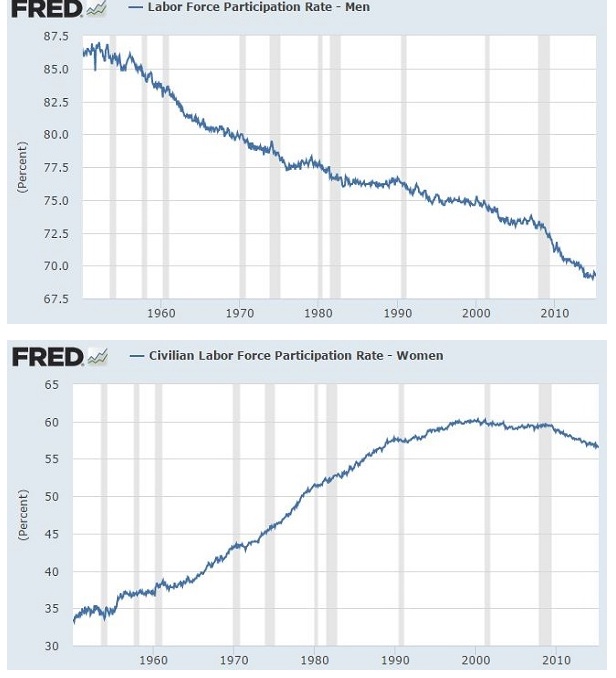
Christine Lagarde says gender parity can boos workforce by 27%.  India’s GDP can expand by a whopping 27 per cent if the number of female workers increases to the same level as that of men, International Monetary Fund’s chief Christine Lagarde said today.

This is much higher than the positive impact a 50-50 gender parity in workforce can have on the economies of the US and Japan at 5 per cent and 9 per cent respectively.

Speaking at the launch of W20, a grouping of women leaders from the world’s 20 largest economies including India,

Gender Equality

..

Jail Bankers. Put Muscle in Criminal Pleas

Is it in the interest of senior bankers to violate the law?  William K. Black writes:  The parent organizations of five of the world’s biggest banks will plead guilty to rigging global currency markets rattled the financial markets. But it also raised concerns about whether fines and settlements are effective deterrents to fraudulent behavior.

The five banks will pay the U.S. Justice Department and the Federal Reserve fines totaling $5.6 billion as they agreed to plead guilty to colluding to manipulate currency and interest rate markets. Yet, they could continue to do business as usual, thanks to settlement terms and waivers against stiffer actions from the Justice Department and the Securities and Exchange Commission (SEC).

At  UBS, the latest case is the third act of rigging it has confessed to in the last five years. “The only thing that could save UBS is to have a crackdown by somebody external that gets rid of this assorted group of managers.”

Here is a snapshot of what the four banks detailed in their plea agreements, according to a U.S. Justice Department press release: “Members of ‘The Cartel’ manipulated the euro-dollar exchange rate by agreeing to withhold bids or offers for euros or dollars to avoid moving the exchange rate in a direction adverse to open positions held by co-conspirators. By agreeing not to buy or sell at certain times, the traders protected each other’s trading positions by withholding supply of or demand for currency and suppressing competition in the FX market.”

The foreign exchange and Libor bid-rigging cases individually are the largest cartels by three orders of magnitude in world financial history.

Here is how the fines add up to $5.6 billion: The banks will pay $2.5 billion in criminal penalties for manipulating currency rates, plus another $1.6 billion in fines payable to the Federal Reserve. The remainder will come from penalties of $1.3 billion that Barclays will pay U.S. and British regulators and $203 million that UBS will pay for manipulating interest rates.

The whiff of big money is a factor to think about for regulators.  said Nichols.  The amount of money that moves through the foreign exchange market in one day is almost twice the value of the economic output of the U.K. in one year.

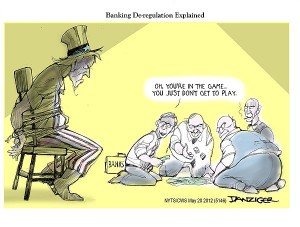
U.S. regulators protect bankers from winding up in jail.  Banks negotiate in advance that a guilty plea will not be what a guilty plea would normally be.

Was stronger action was warranted in the case of UBS?  Should banks secure waivers against stern action. “The rule with large banks is that the SEC always waives – it doesn’t matter how bad [the violations are],” he said. “This is a serial recidivism.” He noted that one SEC commissioner is working to prevent routine waivers that the SEC grants.


Possible remedies:  Put a fraudulently controlled bank in receivership.  Receivership should probably be an option only for banks that seem irredeemable, and it might make more sense for most banks to just create a better internal culture.

Unlike with bribers, bankers do not face the risk of imprisonment. The material rewards for violating the rules and the trust of clients are huge, while the risk is almost nonexistent.

Jail Bankers?


Warren and Corruption in US

  • Pam Martens and Russ Martens write:  The Insurance Industry Pays Incentives Like a Mercedes-Benz Lease to Push Annuity Sales

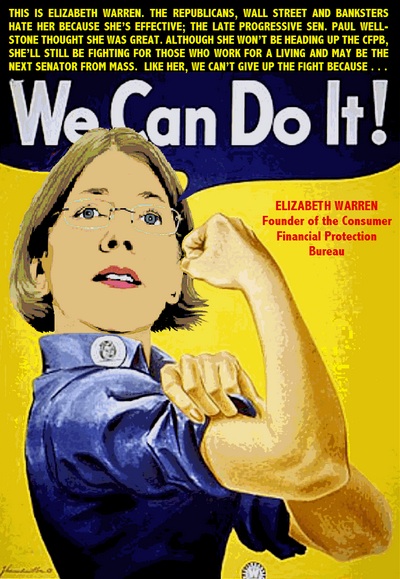
Increasingly it feels to Americans that the bulk of the news about scams to separate them from their life savings is coming from one Senator from Massachusetts — Elizabeth Warren.

Ripoffs in financial services, insurance, and real estate – known as F.I.R.E. on Wall Street – are being exposed by Warren, typically in bold pronouncements in Senate Banking hearings where Warren has a chair and a respected voice, and are rapidly amplified in the media.

In 2013, it was only because of Senator Warren that we learned that the so-called Independent Foreclosure Reviews to settle the claims of 4 million homeowners who had been illegally foreclosed on by the bailed out Wall Street banks were a sham. The “independent” consultants were hired by the banks, paid by the banks, and the banks themselves were allowed to determine the number of victims.

It was Senator Warren who put the high frequency trading scam described in the Michael Lewis book, “Flash Boys,” into layman’s language.

“High frequency trading reminds me a little of the scam in Office Space. You know, you take just a little bit of money from every trade in the hope that no one will complain. But taking a little bit of money from zillions of trades adds up to billions of dollars in profits for these high frequency traders and billions of dollars in losses for our retirement funds and our mutual funds and everybody else in the market place. It also means a tilt in the playing field for those who don’t have the information or have the access to the speed or big enough to play in this game.”

In 2013, Warren, together with Senators John McCain, Maria Cantwell and Angus King, introduced the “21st Century Glass-Steagall Act.” Warren explained why the legislation is critically needed:

“By separating traditional depository banks from riskier financial institutions,” said Warren, “the 1933 version of Glass-Steagall laid the groundwork for half a century of financial stability. During that time, we built a robust and thriving middle class. But throughout the 1980’s and 1990’s, Congress and regulators chipped away at Glass-Steagall’s protections, encouraging growth of the megabanks and a sharp increase in systemic risk. They finally finished the task in 1999 with the passage of the Gramm-Leach-Bliley Act, which eliminated Glass-Steagall’s protections altogether.”

Nine years later, the financial system crashed, leaving the economy in the worst condition since the Great Depression.  Warren and Wall Street

Elizabeth Warren Against Corruption

Trade with Africa a Win/Win

Michael From an and Dana J. Hyde write: Africa’s rise challenges the imagination. During the last decade, Sub-Saharan Africa was home to six of the world’s ten fastest-growing economies. During the next five years, the region’s GDP is expected to grow 30% faster than that of the rest of the world. And, during the next 35 years, the continent will account for more than half of the world’s population growth, according to the United Nations.

The African Growth and Opportunity Act (AGOA) has been tremendously effective since its enactment in 2000. By removing tariffs on exports to the United States from 39 Sub-Saharan countries, it has stimulated growth, encouraged economic integration, and created opportunity where it otherwise might not have existed.

Tariffs are no longer the biggest constraint on trade in Africa. Today, the chief impediments are supply-side constraints, which require well-designed strategies and capacity-building efforts so that AGOA’s members can take full advantage of the program’s benefits.

Making the most of AGOA will also require improvement in the infrastructure – physical and institutional – necessary for promoting investment and facilitating trade. The issues that need to be addressed include the lack of reliable, affordable electricity, high transportation costs, and weak and inefficient trade-related facilities.

Consider the challenges faced by Brazzaville, in Congo, and Kinshasa, in the neighboring Democratic Republic of Congo. These two cities, separated by the Congo River, are expected to grow to a combined total of nearly 20 million residents by 2025. But, because of poor infrastructure and inefficient customs procedures, only 1.1% of Congo’s imports come from its neighbor.

According to the World Bank, getting a container across the Congo River costs almost $4,500, and the total can top $10,000 once the cost of inland transportation is added. By contrast, moving an identical container with the same cargo from Malaysia to Singapore costs less than $1,000.

Africa needs to build its capacity to trade competitively in today’s global economy.

Even as we consider how to make the most of AGOA’s historic renewal, we need to look beyond 2025 and imagine what a deeper, more mature economic partnership might entail.

As President Obama made clear at the US-Africa Leaders Summit in Washington, DC, a year ago, the US is not new to Africa. We have been engaged in Africa for decades, not as a colonial power, but as a partner. And that partnership is based not on extracting resources from the region, but on unlocking growth for all.

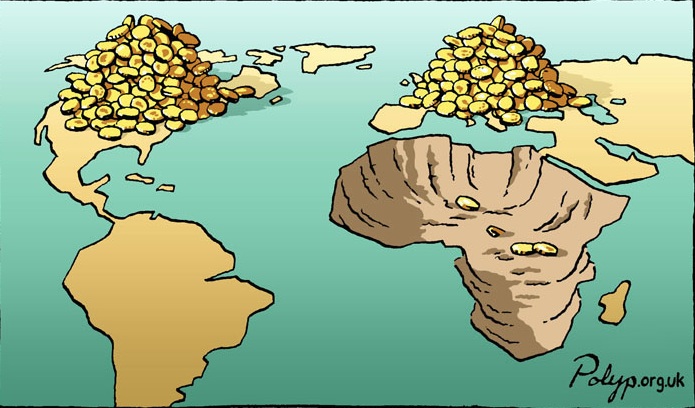
Design by Polyp

Design by Polyp

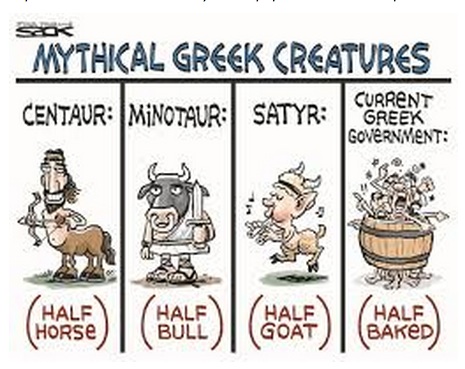
Does Greece Need a New Business Culture?

Edmund S. Phelps writes:   Too many politicians and economists blame austerity – urged by Greece’s creditors – for the collapse of the Greek economy. But the data show neither marked austerity by historical standards nor government cutbacks severe enough to explain the huge job losses. What the data do show are economic ills rooted in the values and beliefs of Greek society.

Greece’s public sector is rife with clientelism (to gain votes) and cronyism (to gain favors) – far more so than in other parts of Europe.

There are serious ills in the private sector, too – notably, the pervasive influence of vested interests and the country’s business and political elites. Profits as a share of business income in Greece are a whopping 46%.  Insiders receive subsidies and contracts, and outsiders find it hard to break in. Astoundingly, young Greek entrepreneurs reportedly fear to incorporate their firms in Greece, lest others use false documents to take away their companies.

This stunted system springs from Greece’s corporatist values, which emphasize social protection, solidarity instead of competition, and discomfort with uncontrolled change.

Greece saw productivity gains after World War II – but mostly from increases in education and capital per worker, which can go only so far. Two important sources of broad prosperity are blocked by Greece’s system. One is an abundance of entrepreneurs engaged in detecting and exploiting new economic opportunities.  The other source of broad prosperity is an abundance of business people engaged in conceiving and creating new products and processes.

Some economists believe that these structural considerations have nothing to do with Greece’s current crisis. In fact, a structuralist perspective illuminates what went wrong – and why.

For several years, Greece drew on the EU’s aptly named “structural funds” and on loans from German and French banks to finance a wide array of highly labor-intensive projects. Employment and incomes soared, and savings piled up. When that capital inflow stopped, asset prices in Greece fell, and so did demand for labor in the capital-goods sector.

With competition weak, entrepreneurs did not rush to hire the unemployed. When recovery began, political unrest last fall nipped confidence in the bud.

The truth is that Greece needs more than just debt restructuring or even debt relief. If young Greeks are to have a future in their own country, they and their elders need to develop the attitudes and institutions that constitute an inclusive modern economy – which means shedding their corporatist values.

Europe, for its part, must think beyond the necessary reforms of Greece’s pension system, tax regime, and collective-bargaining arrangements. While Greece has reached the heights of corporatism, Italy and France are not far behind – and not far behind them is Germany. All of Europe, not just Greece, must rethink its economic philosophy.

 Greek Entrepreneurs

Changing the Culture of Banks?

Jean Claude Trichet writes:   Banks and banking rely on trust. But while trust takes years to establish, it can be squandered abruptly if a particular bank’s ethics are weak, its values poor, and its behavior simply wrong.

The events that triggered the 2008 global financial crisis, together with the subsequent scandals that have emerged – from the rigging of the London Interbank Offered Rate (Libor) to sanctions-busting and money-laundering – amount to a catalog of cultural failures within our financial institutions. Yes, extensive measures have been taken since the crisis to strengthen the financial system. But a profound weakness remains: To be blunt, it concerns the risk-taking culture that still prevails within some departments of global banks and in the financial system itself.

We fail to start our examination of banks with definition of what a bank is.  A bank takes in other peoples’ money, which is why banks have to be regulated.  They hold and invest that money.  Earning 10-12 percent if considered reasonable.  Banks now try to earn %25 percent. They simply can’t do that legally.

Too often, bank bosses’ promises to change the “corporate culture” and ensure their employees’ good conduct have not been matched by fully effective implementation. In too many cases, banks are still failing to fulfill their obligations in serving their communities and the public at large.

More regulation is not necessarily the best path forward: The rules and norms that define a “right” and “wrong” culture are beyond the wit of regulators and supervisory bodies  It is not enough to strengthen legal compliance.  Real change must go to the core of an institution’s day-to-day operations. Banks must change compensation practices that reward excessive risk; protect whistleblowers; recruit and train staff to reflect proper ethics; and ensure that their boards of directors play a more active oversight role.

Employees must understand instinctively what may be done and what should never be done. They must internalize a culture that values strict adherence to high ethical standards of conduct.

Banking regulators and supervisors also have a decisive role to play. They need to work with boards and senior management to ensure that major reforms are implemented and then consistently applied. Regular exchanges of views between oversight officials and the banks should be regarded as a crucial component of this process.

Bank Regulation


Interest Rates and Deflation

Carmen Reinhart writes:   For the 189 countries for which data are available, median inflation for 2015 is running just below 2%, slightly lower than in 2014 and, in most cases, below the International Monetary Fund’s projections.

Most of the other half are not doing badly, either. In the period following the oil shocks of the 1970s until the early 1980s, almost two-thirds of the countries recorded inflation rates above 10%. According to the latest data, which runs through July or August for most countries, there are “only” 14 cases of high inflation (the red line in the figure). Venezuela (which has not published official inflation statistics this year) and Argentina (which has not released reliable inflation data for several years) figure prominently in this group. Iran, Russia, Syria, Ukraine, and a handful of African countries comprise the rest.

The risk for the world economy is actually tilted toward deflation for the 23 advanced economies in the sample, even eight years after the onset of the global financial crisis. For this group, the median inflation rate is 0.2% – the lowest since 1933.

While we do not know what might have happened were policies different, one can easily imagine that, absent quantitative easing in the United States, Europe, and Japan, those economies would have been mired in a deflationary post-crisis landscape akin to that of the 1930s.

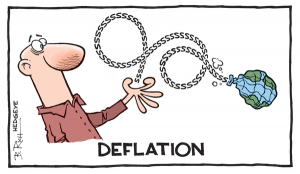
Falling prices mean a rise in the real value of existing debts and an increase in the debt-service burden, owing to higher real interest rates. As a result, defaults, bankruptcies, and economic decline become more likely, putting further downward pressures on prices.

The  2.2% price decline in Greece for the 12 months ending in July – the most severe example of ongoing deflation in the advanced countries and counterproductive to an orderly solution to the country’s problems.

Median inflation rates for emerging-market and developing economies, which were in double digits through the mid-1990s, are now around 2.5% and falling. The sharp declines in oil and commodity prices during the latest supercycle have helped mitigate inflationary pressures, while the generalized slowdown in economic activity in the emerging world may have contributed as well.

But it is too early to conclude that inflation is a problem of the past, because other external factors are working in the opposite direction.

Given that most emerging-market countries’ trade is conducted in dollars, currency depreciation should push up import prices almost one for one.

At the end of the day, the US Federal Reserve will base its interest-rate decisions primarily on domestic considerations. While there is more than the usual degree of uncertainty regarding the magnitude of America’s output gap since the financial crisis, there is comparatively less ambiguity now that domestic inflation is subdued. The rest of the world shares that benign inflation environment.

Deflation