Normal Investors in the Art and Real Estate Markets

On the Rocky Road to Globalization

Kenneth Rogoff writes:  What impact will China’s slowdown have on the red-hot contemporary art market? That might not seem like an obvious question, until one considers that, for emerging-market investors, art has become a critical tool for facilitating capital flight and hiding wealth. These investors have become a major factor in the art market’s spectacular price bubble of the last several years. So, with emerging market economies from Russia to Brazil mired in recession, will the bubble burst?

Just five months ago, Larry Fink, Chairman and CEO of BlackRock, the world’s largest asset manager, said that contemporary art has become one of the two most important stores of wealth internationally, along with apartments in major cities such as New York, London, and Vancouver. Forget gold as an inflation hedge; buy paintings.

Pablo Picasso’s “Women of Algiers” sold for $179 million at a Christie’s auction in New York, up from $32 million in 1997. Okay, it’s a Picasso. Yet it is not even the highest sale price paid this year. A Swiss collector reportedly paid close to $300 million in a private sale for Paul Gauguin’s 1892 “When Will You Marry?”

For economists, the art bubble raises many fascinating questions.  Art is the last great unregulated investment opportunity.

Doesn’t China have a regime of strict capital controls that limits citizens from taking more than $50,000 per year out of the country? Yes, but there are many ways of moving money in and out of China, including the time-honored method of “under and over invoicing.” Many estimates put capital flight from China at about $300 billion annually in recent years.

For example, to get money out of China, a Chinese seller might report a dollar value far below what she was actually paid by a cooperating Western importer, with the difference being deposited into an overseas bank account. It is extremely difficult to estimate capital flight. Identifying capital flight is akin to the old adage about blind men touching an elephant: It is difficult to describe, but you will recognize it when you see it.

The art may well be spirited off to a temperature- and humidity-controlled storage vault in Switzerland or Luxembourg. Reportedly, some art sales today result in paintings merely being moved from one section of a storage vault to another, recalling how the New York Federal Reserve registers gold sales between national central banks.

So how, then, will the emerging-market slowdown radiating from China affect contemporary art prices? In the short run, the answer is ambiguous, because more money is leaking out of the country even as the economy slows. In the long run, the outcome is pretty clear, especially if one throws in the coming Fed interest-rate hikes. With core buyers pulling back, and the opportunity cost rising, the end of the art bubble will not be a pretty picture.

Capital Flight

Robert Frost: Something There is That Doesn’t Love a Wall

The Rocky Road to Globalization

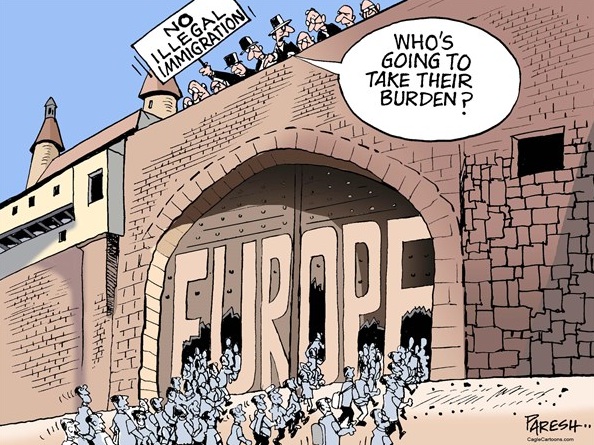
Patrick Kingsley writes:  When you’re facing the world’s biggest refugee crisis since the second world war, it helps to have a sober debate about how to respond. But to do that, you need facts and data.

Far from being propelled by economic migrants, this crisis is mostly about refugees. Fleeing poverty is not considered by the international community as a good enough reason to move to another country. Whereas in fact, by the end of July, 62% of those who had reached Europe by boat this year were from Syria, Eritrea and Afghanistan, according to figures compiled by the UN. These are countries torn apart by war, dictatorial oppression, and religious extremism – and, in Syria’s case, all three. Their citizens almost always have the legal right to refuge in Europe. And if you add to the mix those coming from Darfur, Iraq, Somalia, and some parts of Nigeria – then the total proportion of migrants likely to qualify for asylum rises to well over 70%.
T
The migrants at Calais account for as little as 1% of those who have arrived in Europe so far this year. Estimates suggest that between 2,000-5,000 migrants have reached Calais.

Do migrants speed the collapse of the European social order? In reality, the number of migrants to have arrived so far this year (200,000) is so minuscule that it constitutes just 0.027% of Europe’s total population of 740 million. The world’s wealthiest continent can easily handle such a comparatively small influx.

The most obvious example is Lebanon, which is the-countries-with-the-most-refugees-per-1000-inhabitants. Lebanon is a country that is more than 100 times smaller than the EU has already taken in more than 50 times as many refugees as the EU will even consider resettling in the future.

This year, according to UN figures, 50% alone are from two non-African countries: Syria (38%) and Afghanistan (12%). When migrants from Pakistan, Iraq and Iran are added into the equation, it becomes clear that the number of African migrants is significantly less than half.

The EU opted to suspend full-scale maritime rescue operations in the Mediterranean in the belief that their presence was encouraging more migrants to risk the sea journey from Libya to Europe. In reality, people kept on coming. In fact, there was a 4% year-on-year increase during the months that the rescue missions were on hiatus. Over 27,800 tried the journey in 2015, or died in the attempt, until operations were reinstated in May, according to figures from the International Organisation for Migration. Only 26,740 tried it in 2014.

Is the solution to migration is to increase deportations? A billion has been blown on Europe-wide coordination efforts to secure European borders – money that could have been spent on integrating migrants into European society.

The proportion of refugees housed by developing countries in the past 10 years has risen, according to the UN, from 70% to 86%.

Immigration Issue

Natural Gas Boon for Egypt?

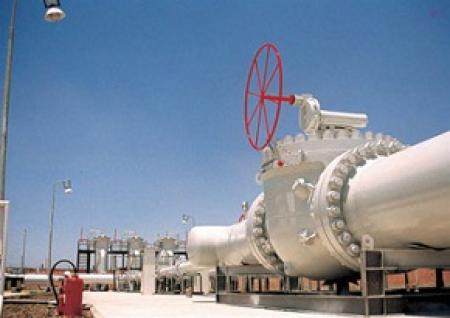
Keith Johnson writes:  The discovery of a giant natural gas field off the coast of Egypt is great news for that energy-starved nation, but it threatens to upend the grandiose energy dreams of neighbors like Israel and Cyprus.

Eni, an Italian energy firm, announced this week that it had discovered the largest gas field ever found in the Mediterranean, a “supergiant” basin that could hold as much as 30 trillion cubic feet of gas. If those early estimates are correct — and optimistic appraisals often give way to more sober analyses — it would be even larger than Leviathan, the giant offshore gas field that has fueled Israeli dreams of becoming a regional energy exporter. The new field, known as Zohr, will take at least three years to come online — and potentially longer if the country’s security situation continues to worsen — but it could then meet Egypt’s energy needs for decades and provide both an economic and political boost to President Abdel Fattah al-Sisi.

Fresh supplies of natural gas could help Sisi keep power plants and factories running, no small matter in a place where electricity blackouts sparked the political turmoil that helped bring down two of Egypt’s former leaders.

Eni’s new discovery, coupled with an announcement earlier this year by BP that it will invest $12 billion to develop existing Egyptian gas fields, amounts to a corporate endorsement of the economic reforms that Sisi has steadily pushed through. That includes paying off debt to foreign energy firms and starting to overhaul the domestic energy market by, for example, rolling back politically popular but ruinously expensive fuel subsidies.

If the gas find is potentially great news for Egypt, it could represent a blow to Egypt’s neighbors. Israel still has plans to turn its own massive offshore gas resources into a source of energy for the rest of the region. Israel and Egypt signed a deal last year under which Israel would export gas from the huge Leviathan field to Egypt; Israel inked similar deals to export gas to Jordan.


Cyprus, which had grand plans of its own to tap offshore gas fields and export fuel to Egypt and others, is putting a brave face on the news. Cypriot leaders, burned by disappointing drilling results in their waters so far, figure the massive Egyptian discovery augers well for the island’s own energy future because the Zohr prospect is just a few miles away from Cypriot waters and likely shares the same geology.

And the Zohr discovery won’t slam the door shut on Egyptian imports right away, leaving a few years of juicy prospects for other suppliers. Though Eni and Egyptian officials pledged to fast-track development of the field, it will take years to finance and build the infrastructure needed to fully tap it. Even that timeline could grow longer if Egypt’s security situation worsens, which could put a damper on foreign investment.


One final ripple from the Egyptian discovery could be a revival of talk about eastern Mediterranean countries supplying Turkey with natural gas. Both Cyprus and Israel looked at Turkey as a potential market, but politics as much as economics seemed to doom any deals.

Egypt's Natural Gas

The Economics of Aging

The economics of long lives

Gerardo P. Sicat writes: My comments are occasioned by the passing away of my mother-in-law last Saturday, at the age of 102 years and eight months. My own mother, who passed away a few years back, had lived up to the ripe age of 96 years.

Both mothers were born in the decade of the 1910s when life expectancy at birth was likely well below 60 years. Then, antibiotics and public health standards were very low and incomes and facilities also much worse.

Long lives. Barring the occurrence of accidents, catastrophes, wars and other life-shortening natural events , the economic and social milieus in which we live, in addition to one’s genes, have much to do on how long one eventually lives.

The improvement of incomes (through economic development and growth) help to lengthen lives, for this affords the individual better nutrition, infrastructure (social, physical and economic), and improved leisure and comfort.

At the other end, developments in the medical sciences and the advancement of public sanitation have life-extending influences on everyone.

The economics of life. Economists have advanced the proposition that in general, people balance the incomes they earn against their total expenditures in their lifetime. However, during specific stages of their lives, the patterns of income and expenditure differ.


In the last stage of life, that income earning capacity declines and eventually stops. As one lives beyond those productive years, the net earnings beyond the expenses of the past (which are savings) represent the sustenance that tide us over to the end of life.

Development and the improvement of social networks. The network of support for old age in traditional societies is often the family or the clan. As productive life ends and infirmities develop, the family becomes the principal support for their old folks.

With economic development, society through government, finds ways of extending social support networks to supplement the role of the family.

The most important feature of such social support networks are social security and universal medical insurance. Social security is paid for by taxation of individuals, otherwise, it becomes unsustainable for a society to bear.

Universal medical insurance is often undertaken through the insurance principle of actuarial equivalence. In this setup, the premiums collected are calculated to match the benefits received.

Government-sponsored social support networks affect the life cycle income. They help to augment the capacity to generate savings for the individual. For instance, social security contributions can raise the saving process. As a result, they enlarge the stream of pension incomes in the post-retirement stage.

In the Philippines,the social security fund thus generated can only provide a stream low pension payments.

The average pensioner in the Philippines receives less pension incomes compared to the “miracle” economies in East Asia.  Her husband was hardworking, competent and brilliant. He would become the chief magistrate of the land. He had also taught law for years to supplement his government pay. After the husband died, she continued to receive his social security pension.

Two decades later, as if by an act of God, legislation granting pensions for survivors of members of the judiciary. For my mother-in-law, this changed the situation very much. The cost of senior sustenance was more than adequately covered. However, when her final illnesses worsened and her medical condition became serious, that pension and previous savings from it were easily and totally consumed.

My mother’s case was uniquely different from my mother-in-law’s. From the beginning, she was the traditional housewife. Her life’s income was integrated with that of my father who was a small proprietorial businessman.

When my father died,  my mother continued the business. But she had no no social security pension like most small businessmen. She survived on what little remained.

During the 1970s, my mother migrated to the US where she joined my sisters who had migrated right after John F. Kennedy’s immigration liberalization.

In the US, my mother was very useful although she did not secure formal employment. As an elderly person, she received some welfare benefits from the State where she lived enabling her to sustain her own upkeep in old age even as she lived with her children.

 Bad Boss Pic 5

Does the EU Need a Circular Economy?

EU’s circular economy can help the union thrive.

Europe’s economy has generated unprecedented wealth over the past century. Part of the success is attributable to continuous improvements in resource productivity—a trend that has started to reduce Europe’s resource exposure. At the same time, resource productivity remains hugely underexploited as a source of wealth, competitiveness, and renewal. Our new study, Growth within: A circular economy vision for a competitive Europe,1 provides new evidence that a circular economy, enabled by the technology revolution, would allow Europe to grow resource productivity by up to 3 percent annually. This would generate a primary-resource benefit of as much as €0.6 trillion per year by 2030 to Europe’s economies. In addition, it would generate €1.2 trillion in nonresource and externality benefits, bringing the annual total benefits to around €1.8 trillion compared with today.

This would translate into a GDP increase of as much as seven percentage points relative to the current development scenario, with an additional positive impact on employment. Looking at the systems for three human needs (mobility, food, and the built environment), our study concludes that rapid technology adoption is necessary but not sufficient to capture the circular opportunity. Instead, circular principles must guide the transition differently from those that govern today’s economy. Pursued consistently, the economic promise is significant and the circular economy could qualify as the next major European political-economy project.

Europe’s economy remains very resource dependent. Views differ on how to address this against an economic backdrop of low and jobless growth as well as the struggle to reinvigorate competitiveness and absorb massive technological change.

Proponents of a circular economy argue that it offers Europe a major opportunity to increase resource productivity, decrease resource dependence and waste, and increase employment and growth. They maintain that a circular system would improve competitiveness and unleash innovation, and they see abundant circular opportunities that are inherently profitable but remain uncaptured.  Towards a Circular Economy

Solar Power Up in Hawaii. Pricing Bias?

Brittany Lyle writes:  Hawaii’s electricity prices are higher than anywhere else in the nation. The burdensome cost of power, paired with the island state’s plentiful sunshine, has led to an unparalleled adoption of residential rooftop solar energy. On the island of Oahu, where 80 percent of the state’s population lives, more than 12 percent of Hawaiian Electric Co. (HECO) customers have rooftop solar systems — about 20 times the solar penetration rate of any mainland utility. As homes increasingly morph into mini power plants, some residents are winding down their HECO bills to net zero.

The problem is this: When solar customers provide their own power, they don’t pay for the fixed costs the utility has outside of electricity generation. As more and more people switch to solar, an ever-shrinking pool of utility customers still connected to the grid are left to cover these operating and maintenance expenses. This causes bills to spike for traditional customers, which incentivizes even more people to switch to solar, raising bills for nonsolar customers even more. Every new rooftop solar installation added to the grid contributes to this cost shift.

‘It could be that all of the people living in apartments are going to be subsidizing the millionaires with their huge estates covered in rooftop solar. I don’t think we’re quite at that point yet, but we need to change or that’s where we’re headed.’
Oahu’s solar energy boom is unleashing what’s known in the industry as the utility death spiral. The prediction is that it will overwhelmingly hurt the most vulnerable people — namely those without control over their roof space, such as renters and apartment and condominium owners, as well as low- and moderate-income homeowners who can’t afford the high up-front cost of a rooftop solar installation.

“It could be that all of the people living in apartments are going to be subsidizing the millionaires with their huge estates covered in rooftop solar,” said Michael Roberts, an economics professor who studies electricity pricing at the University of Hawaii at Manoa. “I don’t think we’re quite at that point yet, but we need to change or that’s where we’re headed.”

In 2014, HECO’s nonsolar customers picked up the tab for an extra $53 million in operating and maintenance costs because so many people switched to solar. It is estimated that they will pay an additional $80 million in 2015.

As the island grapples with the task of making a biased energy pricing system more equitable, mainland utilities with large and growing solar energy bases in states like California, Arizona, New Jersey and Colorado are looking at Oahu and watching their future unfold.

In the basement of the faded 1934 cottage where he was raised, Kong thumbed through a filing cabinet in search of his utility bill records. Vintage Hawaiian slack key guitar music buzzed on an old radio. A small electric fan circulated warm air in the room.

A retired Pearl Harbor security guard, Kong inherited his childhood home. But he lives next door in a newer, five-bedroom house that he shares with his wife, two daughters, son-in-law, grandson and the occasional foreign exchange student. The house stands on a corner lot in Honolulu’s Kaimuki section, once an ostrich farm owned by the Kingdom of Hawaii’s royal doctor. Bordering the iconic Diamond Head volcano, it is one of the city’s oldest neighborhoods.

He pulled from his files his HECO bill from February. In time with the music, he tapped a finger next to the figure for the total due: $336. That’s a 53 percent increase from his bill for the same month two years earlier.

“I think about shutting the power down, putting the two refrigerators on a generator and using flashlight and candles,” Kong said. “If it wasn’t for the refrigerators, I’d shut the power off now when we go to sleep.”

solar panels, hawaii


IMF and Indonesia

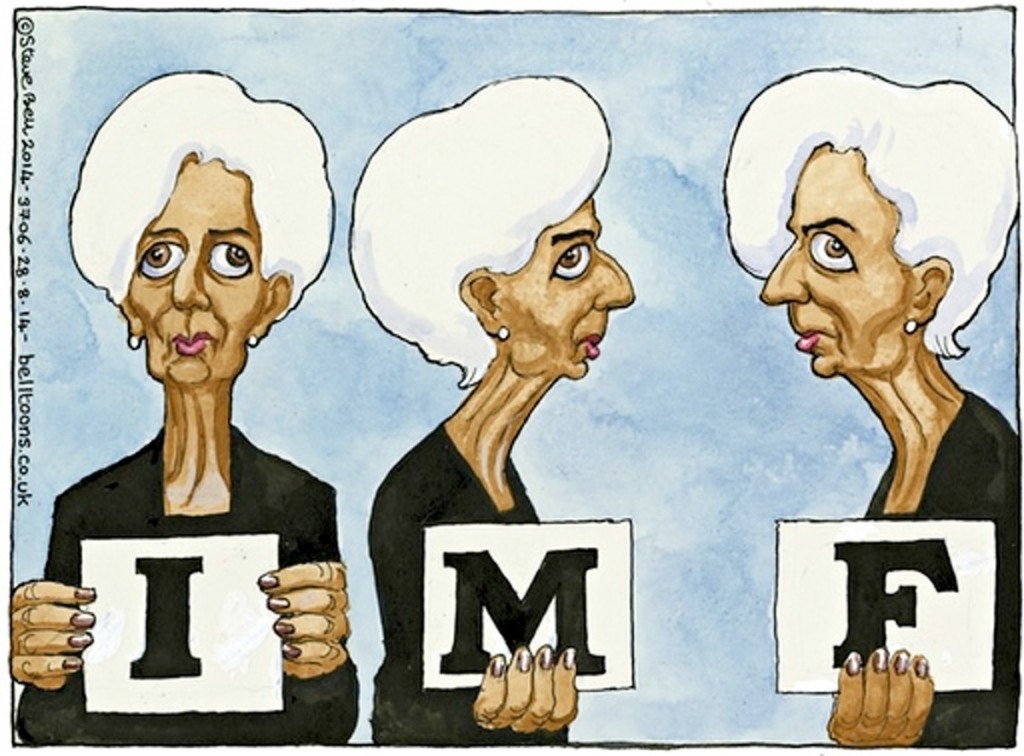
The International Monetary Fund managing director Christine Lagarde warned that greater resilience would be needed from the world’s emerging economies to handle China’s slowdown, warning the road ahead could be “somewhat bumpy”.

The IMF chief also cautioned that global growth this year would be “likely weaker” than previously anticipated, less than two months after the IMF cut its global forecast for 2015 to 3.3%.

Emerging markets from Indonesia to Brazil have been bruised by the slowdown in the world’s second largest economy.

Lagarde’s two-day visit has nothing to do with the financial market turbulence and the steep rupiah depreciation Indonesia has been experiencing for the past few weeks. This visit has been in preparation since last year in light of a high-level international conference on the future of Asia’s finance that the IMF jointly organizes with the central bank, Bank Indonesia.

President Jokowi and the economics ministers may seize this opportunity for sharing views about the current turbulence in the global financial market and reiterate the urgent need for the IMF to be more responsive to regional needs. They should bring home a stronger message to Lagarde that three major emerging Asian economic powerhouses should be given a greater share of the spotlight in managing the multilateral agency.

The IMF’s  shortcomings may be the market still trusts this institution more than the Indonesian government when it comes to economic, especially monetary, management. The IMF remains an opinion leader for creditors and investors. This is the market perception, however painful it may appear to the country’s political leaders.

Lagarde

Fiat Embracing GM?

Edward Niedermeyer  writes:  Fiat Chrysler would normally be prey for a larger competitor. But its audacious chief executive officer, Sergio Marchionne, has seen a flash of weakness in the eye of one of the great whales, and seems intent on attempting to reverse the natural order by forcing a takeover of General Motors. What once seemed to be Marchionne’s search for a love match has revealed itself to be far more about fear than attraction. With his advances to just about every automaker in the industry going unanswered, Marchionne has settled on the target that shows the most managerial weakness.

Though General Motors is far bigger and more profitable than Fiat Chrysler, its plodding leadership has revealed a lack of strategic creativity and tendency to buckle to shareholder pressure. Forget the industrial logic that Marchionne says makes a GM-FCA tie-up inevitable; he is pursuing the much larger firm because he thinks he can get away with it. This weakness starts at the top: After her initial laudatory tour of the press as the industry’s first female CEO, GM’s Mary Barra has shrunk from the public eye as GM’s massive quality and safety crisis has overtaken its image. Unable to defuse concerns about a GM culture that she has never been outside of, and battered by opportunistic investors seeking to raid GM’s giant post-bailout cash pile, Barra’s media appearances have been markedly controlled by her PR people. Sensing weakness, Marchionne has asked repeatedly to meet with Barra about a merger, yet her handlers have refused to let the two CEOs into the same room.

Through sheer audacity, Marchionne the squid may yet bag his whale, yet the struggle is likely send both firms sinking to the depths, teeth and tentacles wrapped in a deadly embrace.

Fiat's Embrace of GM

Currencies: China, US and Japan

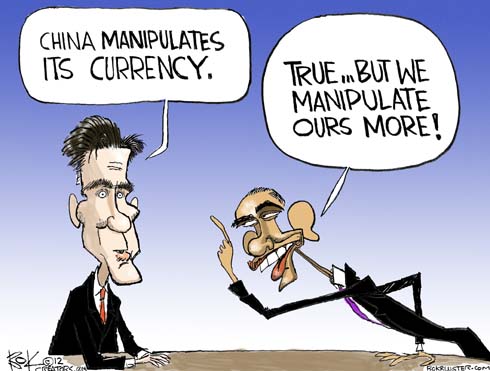
William Pesek writes:  In recent years, China’s relationship with the U.S. has resembled nothing so much as a hostage situation. Beijing’s enormous holdings of US treasuries  gave it immense leverage over Washington, which lived in perpetual fear of China choosing to not finance any new debt, or sell off its current holdings.

Beijing has been trimming its holdings of Treasuries in recent months in order to prop up the yuan. Over the past year, its overall foreign-exchange reserves have fallen by about $315 billion to $3.7 trillion. But the scale of these sales have been relatively modest. And there are at least three reasons that a more massive Chinese selloff of Treasuries is exceedingly unlikely.

The first reason is China’s rickety economy. In the current economic environment, as Chinese growth sputters and traders begin to short Shanghai stocks. China needs every growth engine it can muster. And that means enticing U.S. consumers to spend by ensuring their government enjoys low interest rates.

The second reason China will hesitate to sell off Treasuries is Japan. Beijing knows that if it ends its unique relationship with the U.S., Tokyo would gladly step in to take its place. With about $1.2 trillion of Treasuries, Japan is already only marginally behind China in the dollar-leverage department. And two of Prime Minister Abe’s signature policies are especially relevant in this context: keeping the yen weak and Barack Obama happy.

If Abe’s economic revival program has experienced any measure of success, it’s because of the yen’s 30 percent drop since late 2012. That’s why Abe will want to make sure the yen doesn’t rise on a trade-weighted basis against the recently devalued yuan. If that means offsetting Chinese dollar sales, then so be it.

Abe has been as compliant a Japanese partner as Washington has encountered in decades.  In the wake of a major Chinese selloff, Abe is sure to oblige any request from Washington that Tokyo do something to save the U.S. bond market.

The third reason that China won’t sell Treasuries is there’s nothing else it can buy. It turns out the Pentagon was right in 2012 when it concluded “China has few attractive options for investing the bulk of its large foreign exchange holdings out of U.S. Treasury securities.”

China and US Treasuries

Should Bribery be Legalized?

Should bribery be legalized?   Leonid Bershidsky writes:  The first step toward getting rid of bribery may be to legalize it. Romania could soon try that controversial approach with its underfunded health care system. For the many countries without the money to finance modern public services, or the political will to privatize them, it will be an important case to watch.

Romania is one of the European Union’s most corrupt countries, according to Transparency International. Informal payments seem to be especially widespread in health care, with about a quarter of Romanians reporting that they’ve recently been asked for a bribe by a doctor or nurse. A recent court decision declared gratitude payments to doctors illegal, because the medics are government employees. Subsequent protests by doctors and nurses forced the government to give them a 25 percent raise in salary, but everyone knows that won’t be enough to stop envelopes from changing hands.

That is a common problem for post-Communist countries, which have inherited vast, centralized health care systems that they could only afford when their governments had full control of the economy. Privatization seems an obvious answer, and it has worked in some countries such as Georgia, where most hospitals are now privately owned and the government only subsidizes the treatment of relatively poor citizens. Yet it’s not always politically feasible, and running a private hospital in a poor country isn’t a particularly attractive business proposition, either.

So some reformers have relied on the formalization of informal payments. In Cambodia, out-of-pocket payments made up 82 percent of all health spending in 1999. After the government introduced an official fee schedule, locals soon found medical services were more cheaply available than before. The cost of surgical hospitalization, for example, dropped from a minimum of $40 to $26.70. Doctors welcomed the system because it guaranteed them higher incomes without having to engage in ad hoc negotiations with their patients. In Albania in the early 2000s, the introduction of official price lists quadrupled doctors’ official incomes in some hospitals.

In 2012 Anders Sundell of the University of Gothenburg described how Sweden — now one of the world’s least corrupt countries — went from a system based on bureaucrats’ right to charge direct fees, or sportler, for their services to one that established official schedules for such fees, then one that imposed stamp taxes for specific actions, before arriving at its contemporary system of entirely tax-financed government. Every stage logically followed the previous one, with bureaucrats gradually giving up their freedom to charge as much as they wanted for a slightly smaller but officially mandated income.


The radicalism of this idea goes further than Indian economist Kaushik Basu’s 2011 proposal  to decriminalize bribe-giving in order to encourage whistleblowing among people with first-hand knowledge about corrupt officials. Basu, who went on to become chief economist of the World Bank, was still thinking in terms of monitoring and punishment, and his idea, if anyone ever implemented it, would probably have struggled to overcome the long-term relationships between bureaucrats and the business people who enable their corruption.

The biggest problem in taking this approach beyond health care is that it would require a government to inventory its services and decide which ones are unnecessary. Otherwise citizens could be forced to pay one bureaucrat for a certificate required for no good reason by another one or purchase licenses to breathe state-owned air. Health care is a convenient place to start because the list of necessary services is well-known. Even a government that doesn’t really know what it’s doing can work out a reasonable price list. And that’s guaranteed to work better than trying to jail doctors who are simply trying to make ends meet.

Legal Bribery?