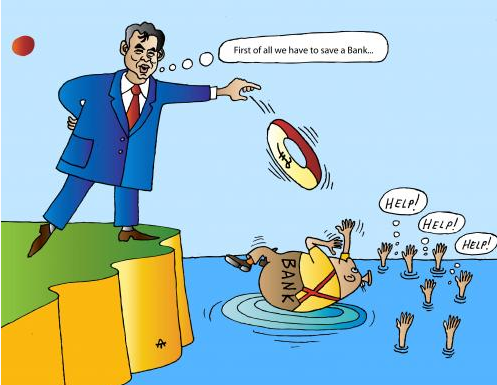
Bankers Go Scot Free. Shareholders Pay the Bill

William D. Cohan writes:  On May 27, in her first major prosecutorial act as the new U.S. attorney general, Loretta Lynch unsealed a 47-count indictment against nine FIFA officials and another five corporate executives. She was passionate about their wrongdoing.

Lost in the hoopla surrounding the event was a depressing fact. Lynch and her predecessor, Eric Holder, appear to have turned the page on a more relevant vein of wrongdoing: the profligate and dishonest behavior of Wall Street bankers, traders, and executives in the years leading up to the 2008 financial crisis. How we arrived at a place where Wall Street misdeeds go virtually unpunished while soccer executives in Switzerland get arrested is murky at best.

Since 2009, 49 financial institutions have paid various government entities and private plaintiffs nearly $190 billion in fines and settlements, according to an analysis by the investment bank Keefe, Bruyette & Woods. That may seem like a big number, but the money has come from shareholders, not individual bankers. In early 2014, just weeks after Jamie Dimon, the CEO of JPMorgan Chase, settled out of court with the Justice Department, the bank’s board of directors gave him a 74 percent raise, bringing his salary to $20 million.

After the savings-and-loan crisis of the 1980s, more than 1,000 bankers were jailed.
The more meaningful number is how many Wall Street executives have gone to jail for playing a part in the crisis. That number is one. (Kareem Serageldin, a senior trader at Credit Suisse, is serving a 30-month sentence for inflating the value of mortgage bonds in his trading portfolio, allowing them to appear more valuable than they really were.)

Do:Wall Street bankers make it their daily business to figure out ways to abide by the letter of the law while violating its spirit. Much of the behavior that led to the crisis involved recklessness and poor judgment, not fraud.

Any narrative of how we got to this point has to start with the so-called Holder Doctrine, a June 1999 memorandum written by the then–deputy attorney general warning of the dangers of prosecuting big banks—a variant of the “too big to fail” argument that has since become so familiar.

A serious national investigation of the practices of Wall Street’s pre-crash mortgage-banking activities did not begin in earnest until mid-2012—at least five years after the worst of the bad behavior had occurred—following President Obama’s call to action in the State of the Union address that January and the issuance of subpoenas to Wall Street’s biggest banks. The five-year statute of limitations for ordinary criminal fraud charges had passed while the Justice Department dithered, but civil prosecution of banks and individual bankers, which has a 10-year statute of limitations under a particular banking law, was still a possibility. Holder gave his various U.S. attorneys around the country responsibility for investigating.

In November 2013, as part of a deal that kept Wagner’s complaint from becoming public—and the specifics of Fleischmann’s revelations from being widely disseminated—JPMorgan Chase agreed to a $13 billion settlement with various federal and state agencies, then the largest of its kind. Holder heralded the settlement as an important moment of accountability for Wall Street. But extracting large settlements paid with shareholders’ money is not the same as bringing alleged wrongdoers to justice.

The Justice Department reached agreements with other Wall Street banks, among them Citigroup and Bank of America, using a similar playbook.

In February, shortly before Lynch succeeded him, Holder gave federal attorneys and their staffs a deadline: they had 90 days to bring any new prosecutions against individual bankers, traders, or executives on Wall Street before probes against them would be closed. That deadline came and went in May.
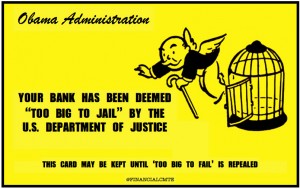
TooBigToJailCard_806

Yuan Moves

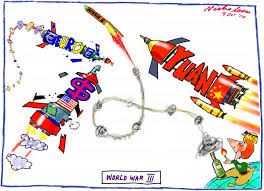
Daniel Atlmann writes: The People’s Bank of China, led by Governor Zhou Xiaochuan, has been slowly liberalizing currency and capital markets for several years now. Last week, though, it made a monetary policy move that surprised people around the world. A week later, those same people can’t seem to agree on what it means.

The central bank has long allowed the exchange rate of the dollar and the renminbi, China’s currency, to move within a band that has gotten slightly wider from year to year, until reaching its current range of 2 percent on either side of a fixed opening rate. Every morning when trading began, the midpoint of the new band would be similar to the closing rate from the previous day.

Some China hands pointed out that Beijing has been trying to gussy up the renminbi in advance of the International Monetary Fund’s (IMF) decision in November on whether to include the yuan in the basket that forms its own distinct currency, the Special Drawing Right. Inclusion would make little difference to China’s economy in itself, but it would be a stamp of approval that the renminbi was on its way to being “convertible” — freely usable and tradable around the world.

The only way to know the Chinese central bank’s true intentions is to find out exactly what it was up to last week. If the bank was injecting renminbi into the market in order to increase its supply, then the fall in the exchange rate was probably deliberate. But if the bank was sucking renminbi out of the market all along in order to support the currency — and then stopped last week — then the dip was just the currency finding its fair value. In that case, any boost for exporters was just a convenient bonus.

Pundits can claim all the expertise they want, but the answer still has to come from the mouth of a Chinese central bank official. And the bank is sticking with the market forces story. Bank officials say the currency isn’t undervalued and is unlikely to drop further.

This episode is likely to be a footnote in Chinese economic history. The overall trends are more liberalization of currency and capital flows, and more focus on domestic demand rather than exports.

Still plenty of people are still betting on short-term currency moves, and stock markets around the world are reacting to the prospect of more globally competitive Chinese exports.

Yuan Moves?

Adaptability and Flexibility Key to Emerging Countries’ Growth?

Bill Emmott writes:  Something has gone badly wrong in the emerging economies that were supposed to be shaping, even dominating, the future of the world. The search for culprits is under way: commodity prices, fracking, US interest rates, El Nino, China, these and others lead the field. But the answer is simpler and more traditional. It is politics.

Look at Brazil. There an economy once tipped for ever-lasting boom has barely grown for more than two years, and is currently shrinking. Falling prices for its commodity exports haven’t helped, but Brazil’s economy was supposed to be about far more than just harvests and extractive industries.

Or look at Indonesia. That economy is still expanding, but at a rate – 4.7% annually in the latest quarter – that is disappointing in terms both of previous expectations and of population growth. The same can be said of Turkey, where growth has sagged to 2.3% in the latest quarter – which at least beats population growth but is meager compared with the country’s go-go years of 2010 and 2011, when it expanded by 9%. Or South Africa, where economic progress has constantly been too slow, whether in boom years for gold and other resources or busts, to make any real dent in poverty levels.

Then there is China itself, whose slowdown is everybody else’s favorite explanation for their own sluggishness. There, private economists are back enjoying their favorite pastime during periods of economic stress, namely trying to construct their own indices for GDP growth as at such times they do not believe the official statistics. Officially, Chinese growth is rock-steady at 7% per year, which happens to be the government’s declared target, but private economists’ estimates mostly range between 4% and 6%.  Slowdown in Emerging Economies

Slowdown?

A Solution to Public Debt?

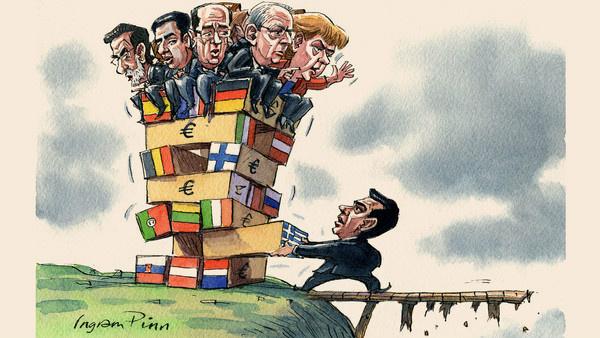
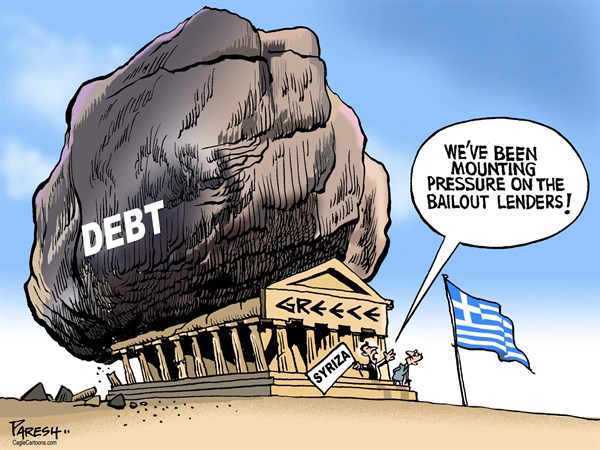
Yanis Varoufakis writes: Greece’s public debt has been put back on Europe’s agenda. Indeed, this was perhaps the Greek government’s main achievement during its agonizing five-month standoff with its creditors.

What does all of this mean for the eurozone as a whole.

The eurozone is unique among currency areas: Its central bank lacks a state to support its decisions, while its member states lack a central bank to support them in difficult times. Europe’s leaders have tried to fill this institutional lacuna with complex, non-credible rules that often fail to bind, and that, despite this failure, end up suffocating member states in need.

The problem with debt restructuring in the eurozone is that it is essential and, at the same time, inconsistent with the implicit constitution underpinning the monetary union. When economics clashes with an institution’s rules, policymakers must either find creative ways to amend the rules or watch their creation collapse.

The ECB could announce tomorrow morning that, henceforth, it will undertake a debt-conversion program for any member state that wishes to participate. The ECB will service (as opposed to purchase) a portion of every maturing government bond corresponding to the percentage of the member state’s public debt that is allowed by the Maastricht rules. Thus, in the case of member states with debt-to-GDP ratios of, say, 120% and 90%, the ECB would service, respectively, 50% and 66.7% of every maturing government bond.

To fund these redemptions on behalf of some member states, the ECB would issue bonds in its own name, guaranteed solely by the ECB, but repaid, in full, by the member state. Upon the issue of such an ECB bond, the ECB would simultaneously open a debit account for the member state on whose behalf it issued the bond.

The member state would then be legally obliged to make deposits into that account to cover the ECB bonds’ coupons and principal. Moreover, the member state’s liability to the ECB would enjoy super-seniority status and be insured by the European Stability Mechanism against the risk of a hard default.

Such a debt-conversion program would offer five benefits. For starters, it would involve no debt monetization. Thus, it would run no risk of inflating asset price bubbles.

Second, the program would cause a large drop in the eurozone’s aggregate interest payments.

Third, Germany’s long-term interest rates would be unaffected, because Germany would neither be guaranteeing the debt-conversion scheme nor backing the ECB’s bond issues.

Fourth, the spirit of the Maastricht rule on public debt would be reinforced, and moral hazard would be reduced.

Finally, GDP-indexed bonds and other tools for dealing sensibly with unsustainable debt could be applied exclusively to member states’ debt not covered by the program and in line with international best practices for sovereign-debt management.

There are ways in which debt could be sensibly restructured without any cost to taxpayers and in a manner that brings Europeans closer together. Taking the step proposes here  would help to heal Europe’s wounds and clear the ground for the debate that the European Union needs about the kind of political union that Europeans deserve.

Solution?

Has the IMF Failed Greece?

Arvind Subramanian writes:  Greece was offered two stark choices: Leave the eurozone without financing, or remain and receive support at the price of further austerity.

The benefits of Grexit would have included a massive devaluation, which would have restored some dynamism to what was once a fast-growing economy. But the costs were terrifying. The government would have had to default, the banks would have been ruined, and both would have struggled for years to regain the trust of financial markets. As a result, interest rates would have remained high for a long time to come, impeding efforts to restore growth. Is it any wonder that the Greek government shrank from this horror and chose the “safe” option of austerity?

The IMF could have offered the third option of an orderly exit. Greece should have been told that it could reap the benefits of devaluation, while the international community would act to minimize the attendant costs.

The  IMF would have needed to offer generous financing, covering the country’s import requirements for, say, two years while providing the liquidity to manage the transition to a new currency. Of course, this would have increased the IMF’s already-large exposure to Greece; but this would have been a worthwhile trade-off, because it would have served a strategy that would have had a much better chance of success.

The reason why an assisted Grexit was never offered seems clear: Greece’s European creditors were vehemently opposed to the idea. But it is not clear that the IMF should have placed great weight on these concerns.

Ccreditor countries have been concerned about the financial costs to member governments that have lent to Greece. But Latin America in the 1980s showed that creditor countries stand a better chance of being repaid (in expected-value terms) when the debtor countries are actually able to grow.

From an Asian perspective, by defying its European shareholders, the IMF would have gone a long way toward heralding the emergence of a new institution: a truly International Monetary Fund, in place of today’s Euro-Atlantic Monetary Fund.

All is not lost. If the current strategy fails, the third option of assisted Grexit remains available. The IMF should plan for it. The Greek people deserve some real choices in the near future.

Grexit: Third Option

Ladies’ Day for Greece: Merkel and Lagarde

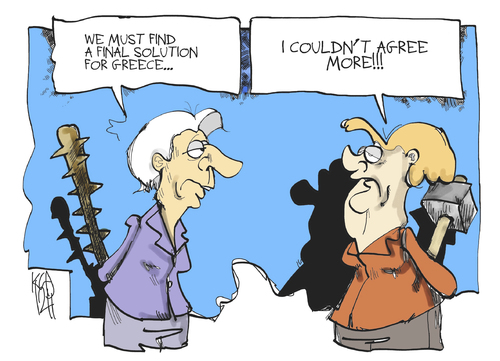
Aug 16 German Chancellor Angela Merkel said  that she expected the IMF to participate in a new rescue package for Greece, saying the Washington-based institution’s chief Christine Lagarde had promised to lobby for this with the IMF board.

“The IMF took part in the negotiations. It suppports (the Greece deal),” Merkel told German public broadcaster ZDF. “I have no doubts that what Mrs. Lagarde said will become reality.”

Merkel ruled out a so-called “haircut” on Greece’s debt but said there were other ways to provide relief by extending debt maturities and reducing interest rates.

Lagarde and Merkel

IMF Chief Lagarde: Greek Deal Good, but…

IMF chief Christine Lagarde on Friday welcomed Europe’s decision to agree a new 86-billion-euro bailout for Greece, but warned that Athens’ debt is still too high.

“I remain firmly of the view that Greece’s debt has become unsustainable and that Greece cannot restore debt sustainability solely through actions on its own,” she said.

And, while Lagarde called the agreement hammered out in Brussels “a very important step forward,” she warned it was too soon to say whether the IMF would provide funds to take part in the bailout.

“We look forward to working closely with Greece and its European partners in the coming months to put in place all the elements needed for me to recommend to the fund’s executive board to consider further financial support for Greece,” she said.

For this to be the case, she said, Greece’s European creditors would themselves have to provide “significant debt relief, well beyond what has been considered so far.”

Greek Debt

Is China’s Slowdown Real?

Elliot Wilson write: In a factory building wind turbines in China, workers have been given the day off.  The factory, has not run at close to full capacity for a year. 

The company’s woes are a microcosm of the daunting challenges that face China’s stuttering economy, the world’s second largest after the United States. This week China devalued its currency by 3.6 per cent in a dramatic bid to encourage exports.  Even the threat of a significant slowdown in China’s economy could be enough to send the rest of the world tumbling back into recession. 

From the polluted central metropolis of Zhengzhou, to Shenyang in the rustbelt northeast, the overwhelming sense is one of pessimism and urban decay. Idle cranes and vacant building sites dot the landscape. The ghost towns of legend — such as Ordos City in Inner Mongolia — are all too real, and remain a silent, cautionary reminder of the perils of engineered growth. 

Over the past year, every key indicator has begun pointing to bad times ahead. Electricity consumption, usually the most reliable single gauge of economic health in the mainland, expanded at the slowest rate in three decades in the year to June. Because of falling Chinese industrial demand, global commodity prices have slumped, threatening growth in producer countries from Australia to Zambia. Chinese house prices have stagnated, while the last time rail-freight volumes were higher than the year before was last September. Last week brought yet more bad news, with exports sliding 8.3 per cent in July from last year’s figures, imports falling for the ninth month in a row, and data pointing to further weakness in industrial output, capital investment and retail spending. China’s Slowdown

China's Slowdown

What Are Banks? Investing for the Good?

What are Banks?

Joseph E. Stieglitz writes:  The Third International Conference on Financing for Development recently convened in Ethiopia’s capital, Addis Ababa. The conference came at a time when developing countries and emerging markets have demonstrated their ability to absorb huge amounts of money productively. Indeed, the tasks that these countries are undertaking – investing in infrastructure (roads, electricity, ports, and much else), building cities that will one day be home to billions, and moving toward a green economy – are truly enormous.

At the same time, there is no shortage of money waiting to be put to productive use. Just a few years ago, Ben Bernanke, then the chairman of the US Federal Reserve Board, talked about a global savings glut. And yet investment projects with high social returns were being starved of funds. That remains true today. The problem, then as now, is that the world’s financial markets, meant to intermediate efficiently between savings and investment opportunities, instead misallocate capital and create risk.

There is another irony. Most of the investment projects that the emerging world needs are long term, as are much of the available savings – the trillions in retirement accounts, pension funds, and sovereign wealth funds. But our increasingly shortsighted financial markets stand between the two.

Much has changed in the 13 years since the first International Conference on Financing for Development was held in Monterrey, Mexico, in 2002. Back then, the G-7 dominated global economic policymaking; today, China is the world’s largest economy (in purchasing-power-parity terms), with savings some 50% larger than that of the US. In 2002, Western financial institutions were thought to be wizards at managing risk and allocating capital; today, we see that they are wizards at market manipulation and other deceptive practices.  Savings and Investment

How are Savings Used?

What Works in Oil Pricing?

Jeffrey Frankel writes: World oil prices have fallen more than 50% over the past year. The economic effects have been negative overall for oil-exporting countries, and positive for oil-importing countries. But what about the environment, which benefits from higher prices and less use.

The answer is that countries should seek to do both: Lower the price paid to oil producers and raise the price paid by oil consumers, by cutting subsidies for oil and refined products or raising taxes on them.

Consider this: America’s roads and bridges are crumbling, and the national transportation infrastructure requires investment and maintenance. And yet the US Congress shamefully continues to evade its responsibility to fund the Federal Highway Trust Fund and put it on a sound long-term basis, owing to disagreement over how to pay for it. The obvious solution, which economists have long advocated, is an increase in America’s gasoline taxes. The federal gas tax has been stuck at 18.4 cents a gallon since 1993, the lowest among advanced countries. And yet, on July 30, Congress adopted only a three-month stopgap measure, kicking the gas can down the road for the 35th time since 2009.

Fossil-fuel pricing is a striking exception to the general rule that if the government has only one policy instrument, it can achieve only one policy objective. For starters, the money saved from a reduction in subsidies or an increase in taxes in the oil sector could be used either to reduce budget deficits or to fund desirable spending (such as US highway construction and maintenance). At the same time, lower oil consumption would reduce traffic congestion and accidents, limit local air pollution and its adverse health effects, and lower greenhouse-gas emissions, which lead to global climate change. Fuel taxes are a more efficient way to achieve these environmental goals than most of the alternatives.

There is also a national-security rationale. If the retail price of fuel is low, domestic consumption will be high. High oil consumption leaves a country vulnerable to oil-market disruptions arising, for example, from instability in the Middle East. If gas taxes are high and consumption is low, as in Europe, fluctuations in the world price of oil have a smaller effect domestically.

Finally, although fuel subsidies are often misleadingly sold as a way to improve income distribution, the reality is more nearly the opposite. Worldwide, fossil-fuel subsidies are regressive:.  Poor people are not the ones who do most of the driving; rather, they tend to use public transportation (or walk).

The conventional wisdom is that it is politically impossible in the US to increase the gas tax. But other countries have political constraints, too. Indeed, some developing-country governments have faced civil unrest, even coups, over fuel taxes or subsidies. Yet Egypt, Ghana, India, Indonesia, Malaysia, Mexico, Morocco, and the United Arab Emirates have all reduced or abolished various fuel subsidies in the last year.

Besides raising taxes on fuel consumption, the US should also stop some of its subsidies for oil production. Oil companies can immediately deduct a high percentage of their drilling costs from their tax liability, which other industries cannot do with their investments. Likewise, the oil industry has often been able to drill on federal land and offshore without paying the full market rate for the leases. Most politicians know that sound economics would call for these benefits to be eliminated; but those who complain the loudest that the government must not pick corporate winners and losers seem to be the least able to summon the political will to act.

The US Congress will have to come back to highway funding in September. If other countries have found that what was politically impossible has suddenly turned out to be possible, why not the UOil PricesS?