Pakistan’s Debt Problems

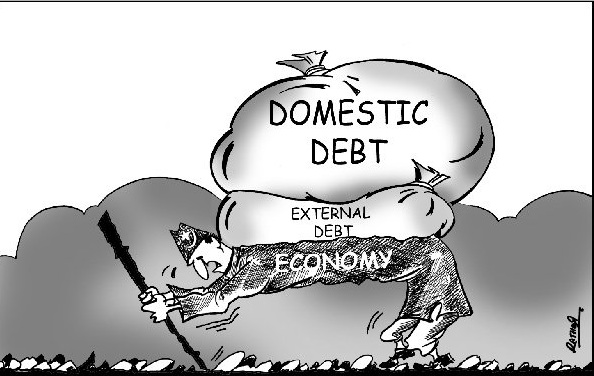
Pakistan’s current debt burden has placed their economy in a very delicate situation. The government of Pakistan has borrowed almost $950 million from banks in the past year. Pakistan is relying on it domestic debt which is adversely affecting the fiscal outlook of the country resulting in very little fiscal stability. The country’s government debt to GDP ratio is 64.30 as of December 2014. This figure is alarming because the government isn’t doing much in terms of raising tax revenues to improve the fiscal outlook.

Factors behind the debt crisis for Pakistan. Firstly, Pakistan has bee politically unstable over the past few years. The increasing debt ­to ­GDP ratio isn’t helping the stumbling nation’s cause either. This is a result of a massive decline in tax revenue over the years. Corruption has played a huge role in this aspect as only a fraction of people pay their taxes. In Pakistan, corruption occurs at the highest of levels which has a negative impact on economic growth and other business operations. Pakistan’s fiscal deficit is increasing day by day due to a major energy crisis and growing security concerns that lead to high defense spending. As a result, this causes the foreign debt to further pile up.

A developing nation such as Pakistan, where more than 60% of the people live below the poverty line cannot withstand the effects of these debts as it further worsens standard of living and well being of Pakistani citizens.

The ever rising burden of debt is one of the prime factors hampering the growth of Pakistan’s economy.
Pakistan's Economy

Immigration Update

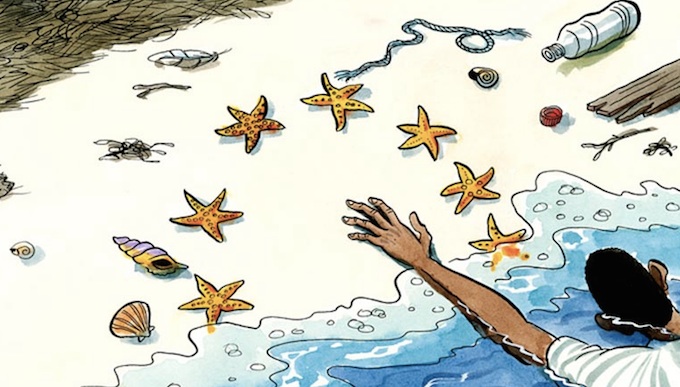
Around 50,000 people arrived in Greece in July.  Greek Prime Minister Alexis Tsipras said the problem “surpasses” Greece’s abilities, and that his country’s economic problems meant it was facing a humanitarian “crisis within a crisis”.

Save the Children says refugee children are at risk of exploitation and disease in Greece because of the lack of facilities.  “The risk to a child forced to sleep on the street of being abused, or of a baby dying of heatstroke, is very real,” said Kitty Arie from the charity.  “This is Europe in 2015. We can’t leave these children in this desperate situation.”

European Director of a UN organization said facilities for the refugees on the Greek islands were “totally inadequate”, after more migrants arrived in Greece in July 2015 than in the whole of the previous year.

Greece’s EU partners must do more to ease the burden, he said, but Greece must “lead and co-ordinate. On most of the islands there is no reception capacity, people are not sleeping under any form of roof. So it’s total chaos on the islands. After a couple of days they are transferred to Athens, there is nothing waiting for them in Athens,” he complained.

Separately, Italian police arrested five suspected traffickers over the deaths of about 200 people after a migrant boat sank on Wednesday.

They included two Libyans, two Algerians and a Tunisian, held on suspicion of multiple murder and people trafficking.

Survivors have said that traffickers used knives to slash the heads of African migrants and belts to thrash Arabs to keep them in the hull.

  • Some 380 people rescued from a fishing boat were brought to Sicily, a day after being rescued
  • The UNHCR strongly criticised the British and French governments over the situation in Calais, where 3,000 migrants are living in makeshift camps, saying it should be treated as a “civil emergency”
  • A Sudanese national has been charged after allegedly walking nearly the full 50.5 km (31-mile) length of the Channel Tunnel towards the UK
  • Austrian authorities have stopped taking any more migrants at the country’s main reception camp in Traiskirchen, The UNHCR says nearly all new arrivals in Greece are refugees from the wars in Syria, Iraq and Afghanistan.

     Immigration Crisis

Entrepreneur Alert: Demos for the US President

It’s rare that anyone, including even an MIT computer scientist, is extended an invitation to the Oval Office. Even rarer, still: the opportunity to fall on your face in front of the “Leader of the Free World.”

Researchers from MIT’s Computer Science and Artificial Intelligence Lab (CSAIL) were part of a select group of entrepreneurs that gave President Obama an in-person demo about their innovation — a device that uses radio waves to detect, predict, and prevent falls among the elderly.

Professor Dina Katabi and CSAIL graduate students Fadel Adib and Zachary Kabelac presented “Emerald,” a system that can monitor breathing, heart rate, and changes in gait and body elevation with such precision that it may soon be able to predict declines in health and increased risk of falling.

Katabi says that every year 2.5 million elderly Americans are treated in emergency rooms because of falls, costing over $34 billion annually.

A more traditional way to try to solve this problem is with wearable technology, but most older people don’t want to have to always wear a special watch or pendant. Instead, Emerald uses one in-home sensor and data analytics to track a person’s movements from the radio waves that reflect off their body, without requiring the monitored person to wear any sensor on their body

If a fall is detected, the device immediately contacts the individual’s caregiver and, after a period of three minutes, calls an ambulance. Similar to a Wi-Fi router, Emerald works even if the person is in a different room than the device.

The technology is based on the CSAIL researchers’ work on “WiTrack,” which uses wireless signals to detect movement and vital signs.

Katabi says that she’s hopeful that the device can help “empower the elderly to live safely and independently,” and is also eager to see whether it may have other key applications in personal health, baby monitors, and even search-and-rescue.

More generally, she says the Demo Day itself made apparent how important it is to promote diversity in the world of innovation and entrepreneurship.

Innovation

Putin’s Food Shortages?


Leonid Bershidsky writes:  Russian President Vladimir Putin has mounted a new campaign in his propaganda war with the West: The highly publicized destruction of imported food, which the government banned last year in retaliation for Western economic sanctions. This time around, though, his constituents aren’t quite with him.

The ban, aimed at the U.S. and European countries that imposed sanctions on Russia over its aggression in Ukraine, covers a long of items, including fruit, vegetables, most kinds of meat, fish and dairy products. 

The local replacements often aren’t all that great. In a taste test of one of the bizarre cheeses that have filled Russian store shelves since the embargo, the Guardian’s Moscow correspondent Shaun Walker concluded that “the disintegrating texture is unnerving, and feels as if hundreds of tiny globules of parmesan have been left out on the pavement for a couple of weeks and then stuck back together with glue.”

To satisfy demand for the real thing, embargoed goods have been filtering into Russia. Some arrive by circuitous routes to establish acceptable provenance, or are repackaged in neighboring Belarus to pretend they originated there (I’ve seen Belorussian salmon in stores, though the landlocked country doesn’t produce it). Others are simply smuggled in: Russian customs inspectors are not known for their incorruptibility.

In a rare act of defiance, the Magnit chain of discount supermarkets, one of the country’s biggest retailers, sued the government agency charged with keeping embargoed items out of stores, claiming Putin’s decree on the food sanctions bans only their import, not their sale. 

Putin, however, won’t have it. He wants his food embargo to work as effectively as before, boosting local producers and punishing Western companies that have already seen their Russian business shrink. 

The Russian Orthodox Church doesn’t look kindly upon the destruction of food, either. More than 280,000 people — an unusually large number for Russia — have signed a Change.org petition asking the Kremlin to repeal the food destruction decree and hand over any confiscated food to the needy. “If something can simply be eaten, why destroy it?” the petition says.

Putin’s government, however, is like a tank without a reverse gear. 

Russians have seen a lot of strange things on state TV under Putin, but never before have they been treated to a public cheese execution. I expect the campaign will be as ineffectual as it is grotesque. Installing incinerators at customs and crushing wheels of Gouda is not going to make customs officials any less willing to turn a blind eye for the right reward. 

Food Embargos in Russia

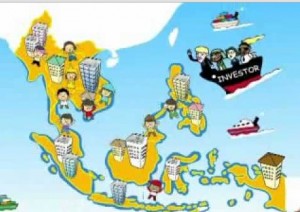
Progress in Indonesian Economy?

William Pesek writes:  Indonesia has come a long way since Oct. 20, when Joko Widodo was sworn in as president. Unfortunately, the distance the country has traveled has been in the wrong direction.

Expectations were that Widodo, known as Jokowi, would accelerate the reforms of predecessor Susilo Bambang Yudhoyono — upgrading infrastructure, reducing red tape, curbing corruption. Who better to do so than Indonesia’s first leader independent of dynastic families and the military?

In 10 years at the helm, Yudhoyono dragged the economy from failed-state candidate to investment-grade growth star.  After 291 days, however, Jokowi seems no match for an Indonesian establishment bent on protecting the status quo.

Investors are already voting with their feet. The Jakarta Composite Index has fallen 13 percent from its April 7 record high, one of Asia’s biggest plunges in that time. And foreign direct investment underwhelmed last quarter, coming in at $7.4 billion, little changed from a year earlier in dollar terms.

Jokowi has plenty of time to turn things around; 1,535 days remain in his five-year term. But the “halo effect” MasterCard’s Matthew Driver says Jokowi carried into office is fast fading as Indonesia’s 250 million people flirt with buyer’s remorse.

First, Jokowi must step up efforts to battle weakening exports. I

Next, Jokowi must decide what kind of leader he wants to be: a craven populist or the modernizer Indonesia needs. That means taking on entrenched interests and thinking bigger. Take Jokowi’s industrialization push. Understandably, he wants to support the development of manufacturing to boost exports and cut a persistent current-account deficit. But Jokowi needs to complement that policy with investments in education and training. 

While it’s still early for Jokowi, Indonesia is already paying a price for his mismanagement. The rupiah is down 13 percent over the past 12 months — and the Federal Reserve’s first post-quantitative-easing rate hike is still looming on the horizon. 

This is a moment to question how far the entire Southeast Asia region has come in recent decades. Thailand is fast losing steam as the latest military junta to rule the nation neglects the economy. Malaysia’s currency is at 17 year lows as Prime Minister Najib Razak tries to explain $700 million that allegedly made its way into a bank account he controls. And now Indonesia is losing the investment it worked so hard to win back since Suharto’s ouster. Jokowi can still turn things around, but he’s got a lot of convincing to do — both inside Indonesia and out.

Indonesia

Gold Held by Central Banks

Gold reserves are viewed as being crucial to actually putting in a real value that aims to support a nation’s currency. The decline in the price of gold has gotten even worse since the end of June, but five central banks were buyers of gold in the first half of 2015.

New data released by the World Gold Council (WGC) shows central bank purchases and holdings for the month of August.   Five nations that added handily to their gold reserves in the first half of 2015. These were China and Russia for the lion’s share, followed by Kazakhstan, Mongolia and Jordan. Turkey had been classified as a net-adder of gold previously due to reserves for its bank sector, but it has been decreasing net gold holdings in 2015.

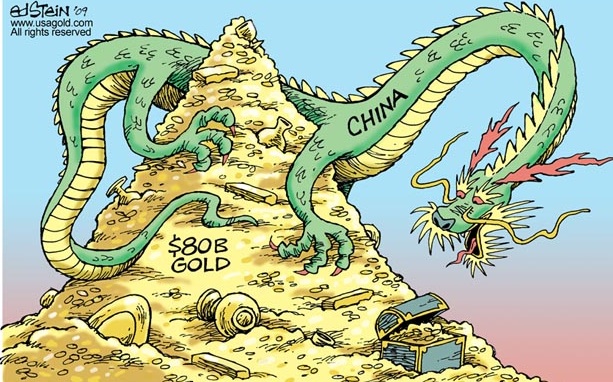
 China has been trying to curb a stock market meltdown, yet China has to maintain large reserves of real assets to keep its currency up. IChina added a whopping 604 tons of gold in the month of June.

The WGC shows that China is ranked sixth in central bank holdings in the world, but that would be fifth if you remove the International Monetary Fund.  China’s big move here appears to be the culmination of multiyear gold buying that had been reported but had not been tabulated.

If one nation needs to do what it can to bolster its currency, it is Russia. It has been under financial pressure since its Crimea invasion.  Russia’s central bank official gold holdings were listed as being 1,275 tons. That ranks it as number 7 in the world’s gold holdings, sixth if you do not count the International Monetary Fund. Russia is a gold producer and most central bank gold acquisitions there actually take place out of that domestic market rather than on the international metals markets.

Kazakhstan has added gold in the past, and it added close to 14 more tons of gold in the first six months of 2015. The nation ranks as the 23rd largest holder of gold by central bank, but Kazakhstan would be ranked the 21st largest central bank holding gold if you account for the European Central Bank and the International Monetary Fund.

Jordan did not add to its gold holdings in the central bank in the second quarter, but the first three months of 2015 saw 14 tons added so far in 2015. The WGC did not have any special notes about what this was for, but Jordan was also shown be a net acquirer of gold during both halves of 2014.

The WGC showed that Mongolia added a mere 0.7 tons via trading activity in the month of June. Its gold had fluctuated throughout 2014, also due to trading activity. What stood out was that June was the one month of gains, with 0.7 tons added — with twice as much “out” or down in the other months combined for 2015. Again, Mongolia may be an anomaly. Still the nation wants to grow its economic clout, after three years of high growth, and Mongolia even has an exchange traded fund tracking it now.

Gold Reserves

CEO Worker Pay Ratios

Drew Harwell writes;  Thousands of public U.S. companies are likely to soon be forced to share a number many would rather keep under wraps: how much more their chief executives make than their typical rank-and-file employees.

The Securities and Exchange Commission  is expected to finalize on Wednesday a long-delayed rule forcing businesses to share their “pay ratio,” a simple bit of arithmetic that would cast an unprecedented spotlight on one of corporate America’s thorniest debates.

Once the pay-ratio rule is in place, millions of workers will know exactly how their top boss’s payday compares with their own, revealing a potentially embarrassing disparity in corporate riches that many companies have long fought to keep hidden.

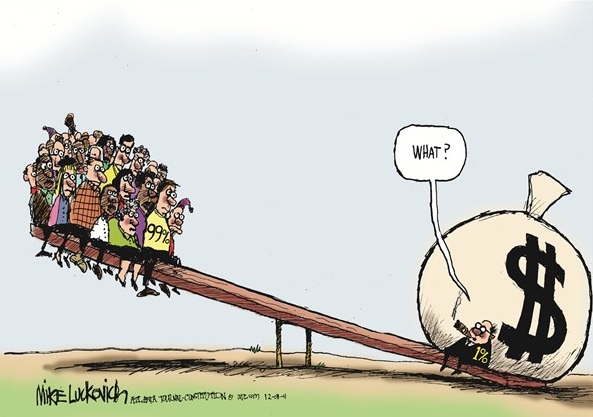
While the average American’s pay and benefits have been growing at the slowest pace in 33 years, executive wages have soared. Fifty years ago, the typical chief executive made $20 for every dollar a worker made; now, that gap is more than $300 to $1, and it’s growing.

The pay ratio, at the center of years of corporate arm-wrestling, could ratchet up the pressure on big companies to bring runaway executive pay under control. Boards and shareholders could use it to judge a firm’s high-priced leadership, and customers could opt to shop at companies where workforce pay seems more fair.

The effects could ripple far beyond the corporate suite.Out-of-balance pay ratios “will be public shaming, just as all adverse financial results are public shaming,” said Bartlett Naylor, a financial policy advocate with the consumer think tank Public Citizen. “If one reports low returns, skyrocketing expenses, that’s shameful, too. Welcome to capitalism.”  CEO Worker Pay Ratios

 CEO Worker Pay Ratios

Economics of Migration

The economics of Europe’s migrant problem.  The supply of migrants to Europe is fueled by waves of people fleeing the economic and social misery of their home countries – and, in some cases, political oppression, persecution and violence. They do so in hopes of a better future for themselves and their children. The temptation for some to try to make it all the way to the UK is amplified by the attractiveness of an economy with low unemployment, comprehensive social services and a country where many already know the language.  But as the supply of migrants has increased, the demand for migrant labor has gone the other way. Tougher laws have made it harder and more dangerous for employers to hire undocumented workers. And with a European unemployment rate of more than 10%, the demand is further damped.

Economics of migration


Gigs: The Future of Work?

The archetypal worker in an advanced economy used to be a man on a production line or a salaryman in a city office — a secure, yet repressed, cog in a machine.

There are still millions of these, including many women, but the new world of work is both more exciting and less secure. There is greater variety, in both pay and conditions. A job is more likely to be part-time, temporary, freelance or self-employed. It may not be a job at all, in the way it used to be defined.

The gig economy is only part of a shift in employment over the past three decades, unleashed by technology and global trade.

Yet this world of insecurity and risk is also one that many people seem to appreciate. More self-employed people in Europe and the US report enjoying their jobs than those who are employed. Many entrepreneurs, even those who run a tiny business that amounts to self-employment, like their freedom and self-reliance and the possibility that they could become wealthy.

The McKinsey Global Institute, the research arm of the management consultancy, estimates that what it calls “online talent platforms”, job sites such as Monster.com and platforms such as Uber, could add 2 per cent to global gross domestic product by 2025, increasing employment by 72m full-time equivalents.

The ideal working life for many millennials is not finding a safe job that will last them a lifetime but creating a technology start-up, a glamorous form of small business that is backed by angel investors. They dream of being Mark Zuckerberg of Facebook or Larry Page and Sergey Brin of Google, not an executive of a professional services firm or public company.

The new world of work must chart a course between the twin dangers of corporate conformism and worker exploitation  The dream can be just that; the average income from self-employment fell 22 per cent in the UK between 2009 and 2014, even as self-employment contributed 732,000 of the 1.1m rise in total employment.

The challenge for policymakers is to find a new form of employment contract that suits the changing workforce.

The Labor Commissioner’s Office in California ruled in June that Uber drivers were in effect employees, not independent contractors, as the company sees them. The UK government is raising the adult minimum wage and the New York Wage Board has recommended phasing in a $15 minimum wage for the state’s fast-food workers.

The task is to limit the downside of the new economy without curtailing job growth or preventing people from working in they way they prefer.

Few want to be a cog in a machine, even if they are given the chance. The new world of work must chart a course between the twin dangers of corporate conformism and worker exploitation.

Gig economy

German Bund Plummets as US FED Rate Hike Looks More Likely

German Bund futures fell on Wednesday after comments from a top U.S. Federal Reserve official revived expectations that interest rates in the world’s biggest economy would rise in September.  Atlanta Fed President Dennis Lockhart said it would take “significant deterioration” in the U.S. economy for him to not support a rate hike in September, according to the Wall Street Journal. He is considered a centrist on the Fed’s policy-setting Federal Open Market Committee and has a vote on the panel this year.

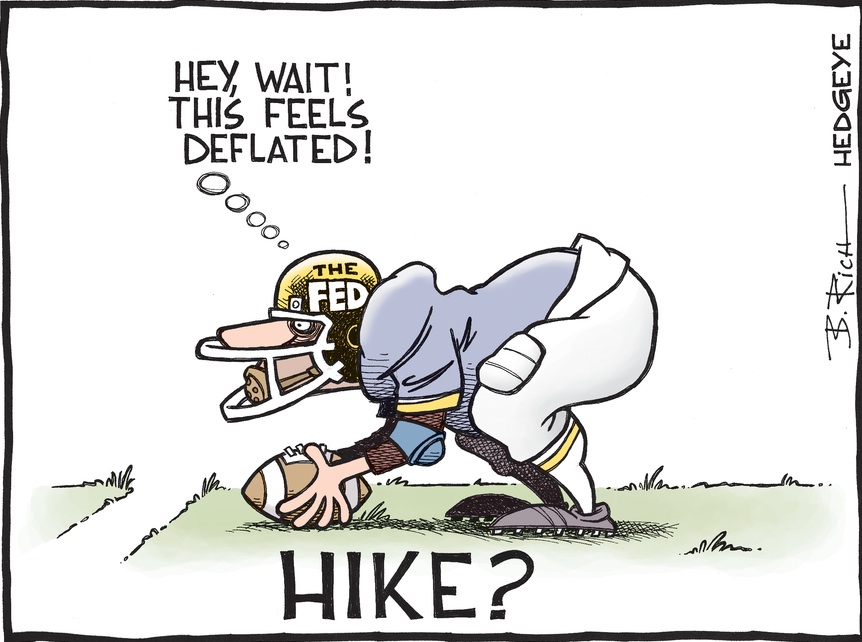
US Fed Rate Hike?