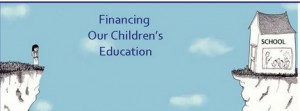
Lagarde Calls for Debt Relief for Greece

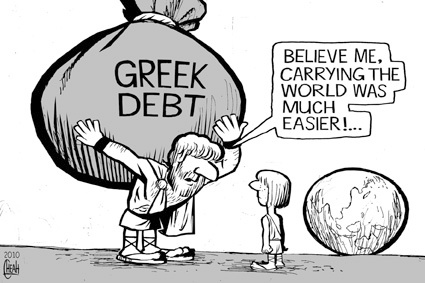
Heather Stewart writes: Christine Lagarde has warned that Greece needs “significant” debt relief – laying down the conditions for the IMF to take part in the third bailout. She said any rescue plan for Greece will be unworkable without some form of debt relief.

“For any programme to fly, a significant debt restructuring should take place.”

Lagarde added that a rescue plan would have to involve “four legs”:

  • sensible fiscal targets, that are delivered
  • structural measures to open up the Greek economy
  • sufficient financing to make the programme workable
  • debt restructuring

Lagarde added that the IMF would be looking at what the Greek government does, not what it says, promising to disregard what she called political “noise”, and focus on “deeds, not creeds”.

Greek Debt Relief

Smart Phone Addiction?

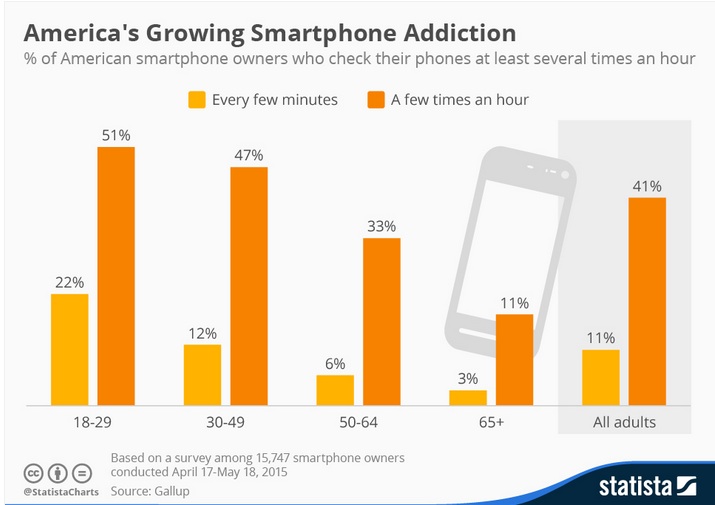
According to a recent Gallop poll, 81 percent of smart phone users keep them with them all the time.  Seventy-two percent said they checked the smart phone at least once an hour.

Ever since the first iPhone arrived in 2007, smartphones have gradually taken over our lives. We use them to listen to music, take photos, follow the news and sometimes even to make phone calls. They have become a constant presence in both our professional and our personal lives.

Especially young Americans can hardly keep their eyes away from their phone screen. 22 percent of 18- to 29-year-olds glimpse at their phone every few minutes and another 51 percent do so several times an hour.

Interestingly, most smartphone users don’t seem to consider their device usage excessive. 61 percent of the respondents claim to use their own device less frequently than the people around them – a misperception that is not entirely unlike addict behavior.

Smart Phone Addiction

Immigration Thru Channel Tunnel

The British government is facing calls for tough action to resolve the Calais crisis amid fears that up to 150 illegal immigrants are reaching Britain each night.

As Theresa May, the Home Secretary, led an emergency Cobra meeting Wednesday the Channel Tunnel operators turned on the British and French government for failing to act.

And in a further deepening of the crisis, Mrs May faced a serious set-back in the courts as senior judges banned a fast-track detention scheme used to process migrants who reach Britain and claim asylum.

The key ruling means it will be much harder for the Government to remove migrants, as it emerged more than 300 foreigners detained under the scheme have already had to be freed by the Home Office.

Britain’s borders are expected to come under renewed attack later on Thursday as French trade unions are poised to launch further wildcat strikes, leading to queues of lorries which are sitting targets for stowaways.

Immigrants at Calais heading for Britain

US Fed Rates: Strong Dollar, Slow Growth Around the World?

The Rocky Road to Globalization:

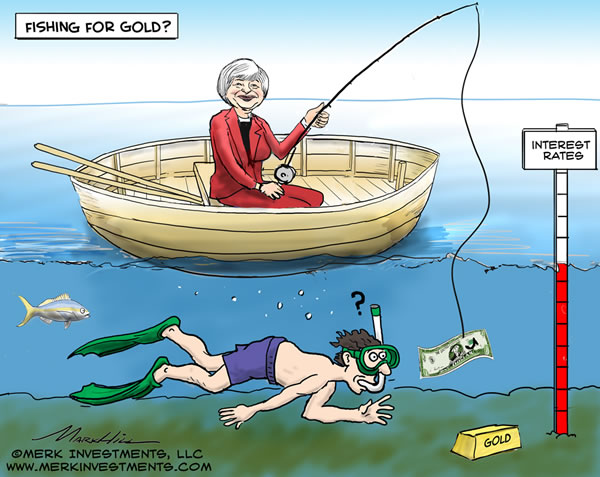
The Federal Reserve meeting in Maui hints interest rate rise later this year.

The Fed said economic growth continued to meet its expectations, and it indicated officials did not need to see much more progress before raising rates. The statement said officials wanted to see “some further improvement in the labor market,” suggesting the finish line is closer than at the Fed’s last meeting in June, when the central bank said it sought “further improvement.”

The decision to keep rates near zero for at least a few more weeks was unanimous, supported by all 10 voting members of the Federal Open Market Committee. But a number of those officials have said that they do not intend to wait much longer.  While growth remains disappointing by historical standards, the Fed said the economy continued to expand at a “moderate” pace, which was driving “solid job gains and declining unemployment.”

The statement also was notable for the absence of bad news. Although there was no mention of global problems, the Fed has to consider the impact of the strong dollar world wide.

The Fed has kept its benchmark interest rate near zero since December 2008, the centerpiece of its stimulus campaign to revive economic growth and increase employment since the recession. Officials have repeatedly extended that campaign as the economy disappointed their expectations, but in recent months, they have given clear signs they are becoming more worried about waiting too long to start raising interest rates than acting too soon.

Economic growth has increased after a rough winter, and employment expanded by an average of 208,000 jobs per month during the first half of the year. The unemployment rate fell to 5.3 percent.

Fed officials have said repeatedly that they plan to start raising rates this year as long as the economy keeps chugging along.

“If the economy evolves as we expect, economic conditions likely would make it appropriate at some point this year to raise the federal funds target,” Janet L. Yellen, the Fed’s chairwoman.

Surveys of economic forecasters show that most expect the Fed to start raising interest rates at its next meeting, in mid-September. Measures of market expectations point to a December liftoff, however.

Inflation remains sluggish. Prices rose just 0.2 percent over the 12 months ending in May, according to the Fed’s preferred measure, a Commerce Department index of personal consumption expenditures. It was the 37th consecutive month that inflation has remained below the Fed’s declared target of 2 percent annual growth.

Ms. Yellen and other Fed officials, however, say they are increasingly confident that continued growth will push up prices to a more desirable level.

Global economic slowdown complicates the rate rise.

Interest rate rise

How Big Should the Banks Cushion Be?

The Financial Stability Board (FSB) coordinates financial regulation for the Group of 20 economies and will finalize the rules by the end of September for endorsement by G20 leaders in November.

The FSB wants the top 30 banks to hold enough equity and long-term bonds so that if they fall into trouble they have enough resources without calling on taxpayers.

Major U.S. bank groups said in February the plan goes beyond what’s needed even at the lower end of the FSB’s range, but the calls appear to have been largely ignored.

“What we understand is that it will be going ahead largely as expected,” a senior banking industry source said.

“There will be tweaks here and there, but nothing substantial,” a G20 source added.

The buffer of “total loss absorption capacity” or TLAC would come on top of core capital requirements.

Standard & Poor’s has estimated that US$500 billion in bonds may have to be issued.

Mark Carney, the Bank of England Governor who chairs the FSB, has said the reform is crucial to ending “too big to fail” banks and drawing a line under the 2007-09 financial crisis.

Some banks like UBS and Bank of America have told analysts this month they are in a position to comply well ahead of the 2019 deadline, if not straight away.

“We’re going to start issuing TLAC in the current quarter, in 3Q, so we’re obviously not waiting to see the final regulations,” UBS Chief Financial Officer Tom Naratil told reporters on Monday.

“As we’ve indicated previously, it doesn’t really matter where it ends up, we feel that we’re well prepared to be able to address even the higher end of that band,” Naratil added.

Regulators in Continental Europe where some banks are still building up core capital cushions, want a final TLAC figure nearer 16 percent, while the Federal Reserve wants it around 20 percent, bankers said.

Settling for about 18 percent, as some bankers expect, will likely prompt the Fed to top this up with local requirements.

“Once the TLAC details have been finalised, the sector will be looking at how this is implemented in key jurisdictions, including whether any will gold plate,” said Oliver Moullin, a director at European banking lobby AFME.

The FSB, which had no comment, proposed that large banks from emerging markets like China be exempt from holding TLAC but bankers say the final rule will likely say this is temporary.

Banks with major units abroad must hold TLAC to reassure local regulators their taxpayers won’t be on the hook in a crisis. Under FSB proposals, these pools of TLAC could add up to well in excess of even 20 percent on a group basis.

“We have heard the FSB has found ways to mitigate that consolidation effect,” one senior European banker said.

Once a final TLAC figure is agreed, the banks will come under pressure to comply sooner rather than later, analysts said.

“I think banks will have to communicate as early as possible what their plans are to meet the requirements if they don’t meet them,” said Alexandre Birry, director, financial services ratings, at Standard & Poor’s.

SNL, a financial data company, said the next rung of lenders below the top 30 would also face investor pressure to meet the standards of the biggest players.

20110514_SRD003

Woman to Coach Football in US

In his two years as Cardinals coach, Bruce Arians has assembled an eclectic mix of young and old assistants, ranging in age from their 20s to their late 70s.

This year, that staff will be even more diverse, including a woman and the creation of the Bill Bidwill Coaching Fellowship.

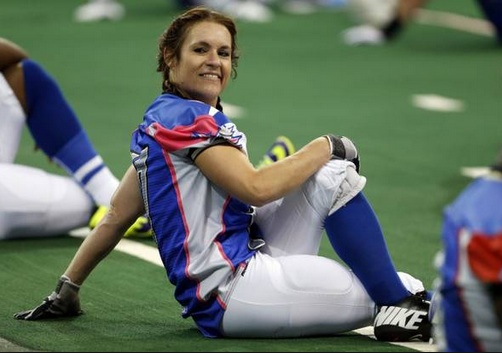
Jen Welter will work with the team’s inside linebackers throughout training camp and the preseason. It’s believed she is the first female to hold a coaching position of any kind in the NFL.

In addition, former Steelers linebacker Levon Kirkland becomes the inaugural participant in the fellowship named after the Cardinals owner.

Welter will be among seven coaching interns working with the team this summer. Her tenure in 2015 will be short, but meaningful.

Arians provided a hint last spring that such a move was possible, though he had no specific plans then.

Last spring, Arians was asked about Sarah Thomas becoming the NFL’s first female official. Arians mentioned that it would be reasonable to think a woman could also coach in the NFL.

Jennifer Welter football coach

Protect Lions

Adam Vaughan writes:  Conservationists and politicians have called on the EU to ban the import of lion heads, paws and skins as hunters’ trophies from African countries that cannot prove their lion populations are sustainable, following the killing of Zimbabwe’s most famous lion by a European hunter with a bow and arrow.

The death of a radio-tagged lion called Cecil in Hwange national park was described as a tragedy by wildlife groups. But the lion, whose head and skin were removed, is only one of about 200 such lion ‘trophies’ that hunters legally import to the EU each year. Germany, France and Spain are the biggest importers.

In February, scientific advisers to the EU banned imports from Benin, Burkina Faso and Cameroon for the first time, on the grounds that their wild lion populations were not sustainable.

Lions were classed as vulnerable  and critically endangered in western Africa due to over-hunting and a scarcity of prey.

MEPs said the Cecil incident showed that if hunters were desperate enough to lure lions out of national parks with bait rather than killing them in areas with a hunting quota, lion populations in Zimbabwe were clearly not sustainable.

They said the EU’s import ban should be extended to any African countries without independent, scientific data to show that lion hunting is sustainable.

Catherine Bearder, a Liberal Democrat MEP who on Monday submitted a written question to the European Commission on the issue, said: “The shooting of Cecil the lion was tragic and cruel, but it has at least shone a spotlight on the absurdity of the current situation. Despite the number of lions across Africa plummeting in recent years, hunters are still allowed to import lion hunting trophies into the EU from several African countries.”

“It’s outrageous that lions are being killed just so someone in Europe can decorate their home with the body parts. The European commission must immediately impose an EU ban on all imports of lion body parts,” he said.

When the SRG meets in September, it should ban imports from Zimbabwe.

Cecil was a 13-year-old lion with a distinctive black mane, and was reportedly lured out of the national park with bait earlier this month, before being killed with a bow and arrow and rifle, before being skinned and beheaded. Kat said that such baiting was legal in Zimbabwe, even on the edge of a national park, but it appeared the hunter had broken the law by killing the lion in an area without a hunting quota.

Lions

US Spends $3.2 Billion Bombing ISIS

The United States has spent more than $3 billion on the military campaign against the Islamic State in Iraq and Syria (ISIS), the Pentagon said in an update Monday.

The U.S. has spent $3.21 billion as of July 15, spokesman Bill Urban said. Since the campaign against ISIS began on Aug. 6, the military operations have cost an average of $9.4 million per day.

A bulk of the money, 53 percent, has been spent on airstrikes, according to the Defense Department. Just under a quarter of the money has been spent on weapons, with the rest spent on missions involving military carriers and other operations.
The average daily cost of the ISIS campaign has risen since September, ticking up to $9.9 million a day after costing around $5.6 million per day in the first few weeks.

The United States began launching airstrikes against ISIS in Iraq last August after the group seized large swaths of territory and began carrying out brutal executions of Americans and other captives.

The military expanded to Syria in September.

The cost of the ISIS fighting crossed the $1 billion mark in December and the $2 billion mark in April.

Cost of ISIS Attacks

Obama Ties Corruption to Economic Problems

President Barack Obama has warned that Africa will not advance if its leaders refuse to step down when their terms end.  He also called for an end to the “cancer of corruption”, saying it took money away from development .

Mr Obama made the comments in the first ever address by a US leader to the 54-member AU at its headquarters in the Ethiopian capital, Addis Ababa.

African leaders should respect their constitutions, and step down when their term ends.

Violence in Burundi following President Pierre Nkurunziza’s bid for a third term showed how stability could be threatened if constitutional rules were ignored, he said..

“Nobody should be president for life,” Mr Obama said.  “I don’t understand why people want to stay so long, especially when they have got a lot of money,” he added.

Democracy existed in name but not in substance when journalists were jailed and activists were threatened, he said.

Corruption was “draining billions of dollars” from Africa, he added.

The money could be used to build schools and hospitals, Mr Obama said.

The rapid economic growth in Africa was changing “old stereotypes” of a continent hit by war and poverty, he said.

But unemployment needed to be urgently tackled on a continent whose one-billion people will double in a few decades, Mr Obama said.

“We need only look to the Middle East and North Africa to see that large numbers of young people with no jobs and stifled voices can fuel instability and disorder,” he added.

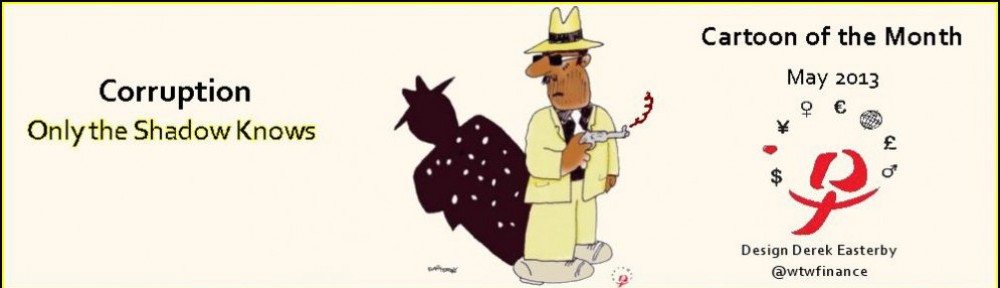
Corruption

IMF and Non Performing Loans

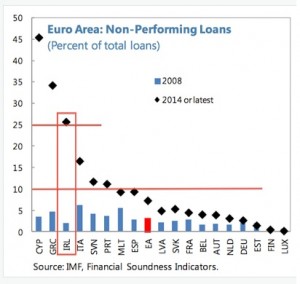
IMF Report:  “A more centralized approach would facilitate NPL resolution. The SSM [Single Supervisory Mechanism – or centralised Euro area banking authorities] is now responsible for euro area-wide supervisory policy and could take the lead in a more aggressive, top-down strategy that aims to:

  • Accelerate NPL resolution. The SSM should strengthen incentives for write-offs or debt restructuring, and coordinate with NCAs to have banks set realistic provisioning and collateral values. Higher capital surcharges or time limits on long-held NPLs would help expedite disposal. For banks with high SME NPLs, the SSM could adopt a “triage” approach by setting targets for NPL resolution and introducing standardized criteria for identifying nonviable firms for quick liquidation and viable ones for restructuring. Banks would also benefit from enhancing their NPL resolution tools and expertise.” So prepare for the national politicians and regulators walking away from any responsibility for the flood of bankruptcies to be unleashed in the poorly performing (high NPL) states, like Cyprus, Greece, Ireland, Italy, Slovenia and Portugal.
  • And in order to clear the way for this national responsibility shifting to the anonymous, unaccountable central ‘authority’ of the SSM, the IMF recommends that EU states “Improve insolvency and foreclosure systems. Costly debt enforcement and foreclosure procedures complicate the disposal of impaired assets. To complement tougher supervision, insolvency reforms at the national level to accelerate court procedures and encourage out-of-court workouts would encourage market-led corporate restructuring.”
  • There is another way to relieve national politicians from accountability when it comes to dealing with debt: “Jumpstart a market for distressed debt. The lack of a well-functioning market for distressed debt hinders asset disposal. Asset management companies (AMCs) at the national level could support a market for distressed debt by purchasing NPLs and disposing of them quickly. In some cases, a centralized AMC with some public sector involvement may be beneficial to provide economies of scale and facilitate debt restructuring. But such an AMC would need to comply with EU State aid rules (including, importantly, the requirement that AMCs purchase assets at market prices). In situations where markets are limited, a formula-based approach for transfer pricing should be used. European agencies, such as the EIB or EIF, could also provide support through structured finance, securitization, or equity involvement.” In basic terms, this says that we should prioritise debt sales to agencies that have weaker regulatory and consumer protection oversight than banks. Good luck getting vultures to perform cuddly nursing of the borrowers into health.   NPLs

Euro Area Non Performing Loans