EU Playing by No Rules?

Wolfgang Munchai writes: Whenever you are in a room with European officials and discuss the euro, there is usually somebody who raises his finger and says: “This is all well and good, but it is ‘against the rules’.” It then gets very quiet.

“Against the rules” is a big thing in Europe. Most people do not really know what the rules are. But they do know that rules have to be followed.

Rules of the mind is what we are dealing with in the European debate about the single currency. Many of these rules either do not exist, or they constitute some rather far-fetched interpretation of existing rules.

During the recent Greek crisis, I came across a completely new rule. I first heard it from Wolfgang Schäuble, the German finance minister. It says that countries are not allowed to default inside the eurozone. But a default was perfectly fine once they leave the euro, on the other hand.

I later read that Otmar Issing, the former chief economist of the European Central Bank, used almost exactly the same phrase as Mr Schäuble in an Italian newspaper interview. If so many important people say it, then surely it must be true, mustn’t it?

Actually, as it turns out, there is no such rule. There is only Article 125 of the European Treaty on the Functioning of the European Union. Article 125 says that countries should not take on the debt of other countries. This is also known as the “no-bailout” clause — though that, as it turns out, is a rather loaded interpretation.

In its landmark Pringle ruling — relating to an Irish case in 2012 — the European Court of Justice said bailouts are fine, even under Article 125, as long as the purpose of the bailout is to render the fiscal position of the recipient country sustainable in the long run.

In another landmark ruling, from June this year, the ECJ supported Mario Draghi’s promise to do whatever it takes to help a country subject to a speculative attack.

The ECB president’s pledge had previously been challenged by the German constitutional court. In both cases, the ECJ did not support the predominant German legal interpretation.

So what then can we infer from the previous ECJ rulings in the absence of an explicit ruling from the court on debt relief?

An interesting article by three authors from Bruegel, a European think-tank, concludes that debt relief is almost certainly consistent with current law.

The argument goes as follows: in the Pringle case, the court gave the go-ahead for bailouts in principle as long as they are intended to stabilise public finances. In the ruling on the ECB’s backstop, the court accepted the principle that the ECB could incur a loss on its asset purchases, as long as the bank follows its own mandate.

Add the two together, and you have debt relief. I am not sure whether the ECJ would follow this argument precisely if this ever came to court. The court would probably impose some constraints. But I would be surprised if the ECJ were to follow the German interpretation now when it rejected it previously.

Why do Germany and the ECJ disagree so much? The overt reason is that European law on monetary union is internally inconsistent, and thus open to different interpretation. It neither allows an exit, a default nor a bailout, and has therefore no clear procedure in the event of a financial crisis.

The German view is that the “no bailout” clause is the strongest of them all and must therefore take precedence. Others disagree.

In addition, German constitutional lawyers do not allow economic considerations to enter their legal arguments, while the ECJ justices do. At a deeper level, the disagreement is not about the law, but about politics and economics. The new “no-default” rule is a political aspiration dressed up as legal constraint.

What is really happening is that Germany does not want to grant Greece debt relief for political reasons, and is using European law as a pretext. Likewise, when Mr Schäuble proposes a Greek exit from the euro, ask yourself what rule that is consistent with.

The fact is they are making up the rules as they go along to suit their own political purposes.
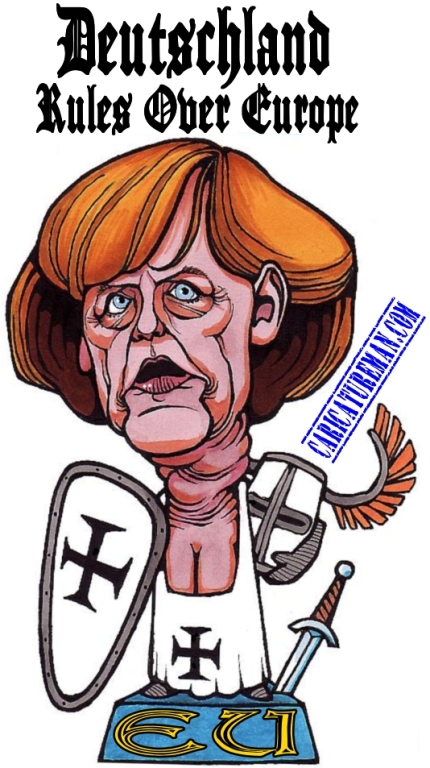
EU Making Up RUles

Next IMF Leader Not From Europe?

The next managing director of the International Monetary Fund (IMF) is likely to come from outside Europe when current leader Christine Lagarde eventually leaves, the deputy head of the Washington-based fund said in an interview broadcast on Saturday.

IMF First Deputy Managing Director David Lipton said the tradition by which a European heads the fund while an American leads the World Bank was coming under pressure and the next appointment would be “strictly merit-based”.

Described on the same radio programme as an “incredible anachronism” by former IMF Chief Economist Kenneth Rogoff, the convention that has ensured that Europeans lead the fund has been increasingly challenged during the euro zone crisis. Lipton said that when Lagarde steps down, her successor would probably come from a non-European country. “With candidates coming forward from around the world, I think it’s much more likely the next time around than it has ever been,” he said. “There are more and more eminently qualified people from outside Europe and the United States and I think the fact that there’s been so much focus on crisis in the United States right at the early stages of the global financial crisis and with Europe, is going to lead to a sense that there has to be a broader pool for the leadership role,” Lipton said.

Lagarde, a former French finance minister, took over as head of the IMF in 2011 after her predecessor, Dominique Strauss-Kahn was forced to resign over a sex scandal. Her five-year term comes to an end next year but she was quoted last month as saying she would consider a second term if she had the support of the IMF’s members. Although there is no formal requirement that the leader of the IMF come from Europe, it has been the practice ever since the institution was set up after World War Two, while the World Bank has always been led by an American.

Next Head of the IMF WIll Probably not come from Europe

Next Head of the IMF WIll Probably not come from Europe

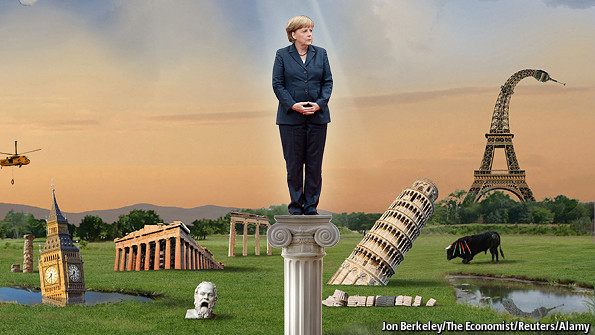
Has Germany Changed?

Joschka Fischer writes:  During the long night of negotiations over Greece on July 12-13, something fundamental to the European Union cracked. Since then, Europeans have been living in a different kind of EU.

What changed that night was the Germany that Europeans have known since the end of World War II. On the surface, the negotiations were about averting a Greek exit from the eurozone (or “Grexit”) and the dire consequences that would follow for Greece and the monetary union. At a deeper level, however, what was at stake was the role in Europe of its most populous and economically most powerful country.

Germany’s resurgence after World War II, and its re-establishment of the world’s trust (culminating in consent to German re-unification four and a half decades later), was built on sturdy domestic and foreign-policy pillars. At home, a stable democracy based on the rule of law quickly emerged. The economic success of Germany’s welfare state proved a model for Europe. And Germans’ willingness to face up to the Nazis’ crimes, without reservation, sustained a deep-rooted skepticism toward all things military.  Has Germany Changed?

Merkel?

Why Fight Corruption?

Why fight corruption?  Riccardo Hausmann writes:  Countries are poor because governments are corrupt. And, unless they ensure that public resources are not stolen, and that public power is not used for private gain, they will remain poor, right?

It certainly is tempting to believe so.

But consider the data. Probably the best measure of corruption is the World Bank’s Control of Corruption Indicator, which has been published since 1996 for over 180 countries. The CCI shows that while rich countries tend to be less corrupt than poor ones, countries that are relatively less corrupt, for their level of development, such as Ghana, Costa Rica, or Denmark, do not grow any faster than others.

Nor do countries that improve in their CCI score, such as Zambia, Macedonia, Uruguay, or New Zealand, grow faster. By contrast, the World Bank’s Government Effectiveness Indicator suggests that countries that, given their income level, have relatively effective governments or improve their performance, do tend to grow faster.

It is easier to mobilize against injustice than for justice. We are more enthusiastic to fight the bad – say, hunger and poverty – than to fight for, say, the kind of growth and development that makes food and sustainable livelihoods plentiful.

Sometimes switching from the “bad” to the corresponding “good” is simply a matter of semantics: to fight against racism is to fight for nondiscrimination. But, in the case of corruption, which is a bad that is caused by the absence of a good, attacking the bad is very different from creating the good.

The good is a capable state: a bureaucracy that can protect the country and its people, keep the peace, enforce rules and contracts, provide infrastructure and social services, regulate economic activity, credibly enter into inter-temporal obligations, and tax society to pay for it all.

Policemen may stop asking for bribes, but that will not make them any better at catching criminals and preventing crime. Curtailing side-payments does not imply the ability to manage concession contracts or collect taxes.

Aside from prosecuting some bad apples, measures to fight corruption typically involve reforming procurement rules, public financial-management systems, and anti-corruption legislation. The underlying assumption is that the new rules, unlike the previous rules, will be enforced.


All organizations need to be perceived as legitimate. They can create this perception by actually performing the function for which they were created, which is difficult. Alternatively, they can borrow from the natural world a strategy called isomorphic mimicry: just as non-poisonous snakes evolve to resemble a poisonous species, organizations can make themselves look like institutions in other places that are perceived as legitimate.

And this is what the anti-corruption agenda often ends up stimulating: the creation of organizations that are more obsessed with abiding by the new and burdensome processes than they are with achieving their stated goals.

The development of a capable state that is accountable and ruled by law is one of the crowning achievements of human civilization. It involves the creation of a shared sense of “us,” an imagined community on whose behalf the state acts.

This is not an easy task when societies are deeply divided by ethnicity, religion, or social status. After all, who is the state for? All Iraqis or just the Shia among them? All Kenyans or just the Kikuyu?

The fight against corruption mobilizes all of us because we want to do away with evil and injustice. But we should remember that casting the bad into the sea does not imply the sudden appearance on our shores of the good that we need.

Bribes


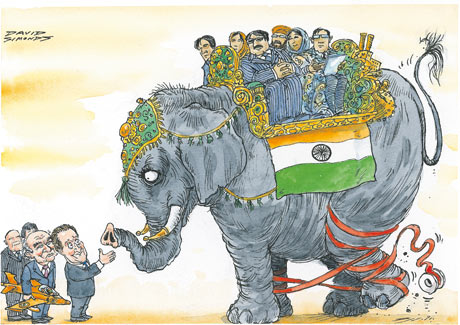
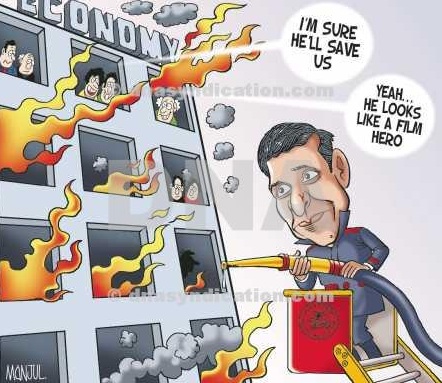
India: Take Interest Rate Control from Central Bank?

Victor Mallet writes: India’s government has signaled it will remove control of interest rates from the central bank, in a controversial plan that has been attacked by some economists and bankers as a threat to independent monetary policy but welcomed by others as an overdue modernization. The finance ministry proposal is the latest salvo in a long struggle between successive governments and central bank chiefs over the need to boost economic growth on the one hand and the urgency of curbing India’s consistently high inflation on the other. The 188­page draft Indian Financial Code — produced over the past India moves to reduce central bank powers on interest rates for four years by the financial sector legislative reforms commission and modified by the government after public feedback — envisages a seven ­person monetary policy committee, with four members appointed by the central government and three from the Reserve Bank of India. Under the present system, the RBI governor — Raghuram Rajan, the former International Monetary Fund chief economist — is appointed by the government and is ultimately answerable to the finance minister of the day. In practice, however, he controls monetary policy and has veto power over the existing advisory committee of RBI members and outside appointees that sets rates.

Some experts welcomed the draft code, including the provision for an MPC, and said it could even enhance the central bank’s influence over monetary policy given the absolute legal power over the RBI currently enjoyed by the finance ministry.

“Anyone who says the Indian Financial Code is taking power away from the governor is crazy . . . We should absolutely not make a fetish about having a powerful governor,” said Ajay Shah, professor at the National Institute for Public Finance and Policy, the research institution. Prof Shah said the current system was opaque and open to abuse through negotiated deals between the RBI and the finance ministry, and he dismissed as “public relations” the suggestion that Mr Rajan was running a tighter monetary policy than the government wanted.

Mr Rajan, he added, was doing the bidding of Prime Minister Narendra Modi in keeping the rupee strong and conducting the “most intensive exchange rate policy in the past 20 years”.

Under the proposed code, it would remain the responsibility of the RBI to ensure that inflation targets are met, even though central government members would have a majority of the votes on the MPC. “For the RBI to be accountable without having a majority in the MPC could eventually compromise the efficacy and credibility of the central bank, and hence we do not view this as a medium­term positive,” Nomura’s analysts said. Rajeev Malik, senior economist at broker CLSA, called the MPC proposal “disappointing” and said it appeared to reflect insecurity over monetary policy rather than the rumoured bad blood between members of the government and Mr Rajan.

Central Bank of India

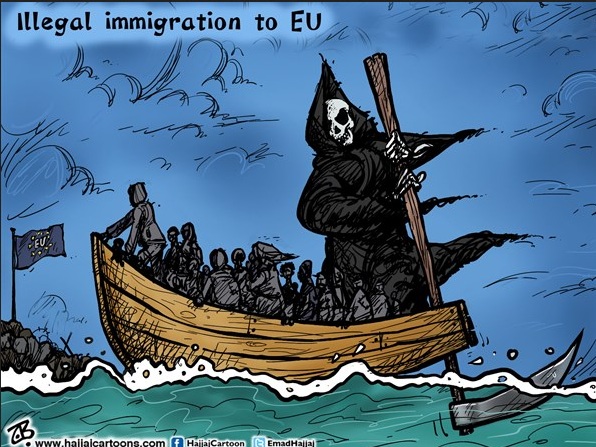
Italian Mafia Benefits from Immigration Crisis

James Politi writes: In one intercepted phone call released by Italian police last year, Salvatore Buzzi, a leftwing social activist who served time in jail for murder in the 1980s, remarked: “Do you have any idea how much I earn on immigrants? Drugs are less profitable.”

Mr Buzzi, who was arrested, denies any wrongdoing. This week brought a grim reminder of the human toll of the refugee crisis, after as many as 40 people drowned about 30 miles off the north African coast when their inflatable dinghy flooded. Those who reach land safely face huge obstacles to rebuild their lives in Europe. Criminal involvement in their lodging and care has only darkened their plight since it can often lead to reduced services for the refugees. It has also provided fodder for anti­immigrant groups seeking to block any form of public assistance to the new arrivals. “We must stop the departures and the landings, and block all the contracts,” Matteo Salvini, leader of the anti­immigrant Northern League, wrote last month on Facebook. According to Italian officials, the criminal enterprise that has come to dominate the business of lodging asylum seekers is a group based in Rome — known as Mafia Capitale — that has made public corruption one of its main sources of revenue.

The Roman organisation was unearthed by Italian prosecutors last December. Its top brass allegedly colluded with local politicians and government officials to have the migrant centres run by “cooperatives”, or charity groups, that could serve their interests. Mr Buzzi is alleged to have had close ties to such groups. Giovanni Salvi, the former chief prosecutor of Catania, in Sicily, the first Italian destination for many migrants, says organised crime gained a foothold in the migrant business because the flood of arrivals — some 170,000 people last year and as many expected this year — have left public officials scrambling each day to find accommodations, often with little oversight. But Mr Salvi, who became prosecutor­general of Rome this month, says the “new element that shook the Italian political tissue and public opinion” was that some NGOs were involved in the “exploitation”.

It emerged that this network was simply a way of making money.” Ignazio Marino, the mayor of Rome, this week highlighted the criminal infiltration at a Vatican event on climate change and slavery attended by many of his counterparts from around the world. “We’re working to restore legality and transparency. In recent years corrupt politicians and officials have taken advantage of the migration crisis.

Immigration to EU


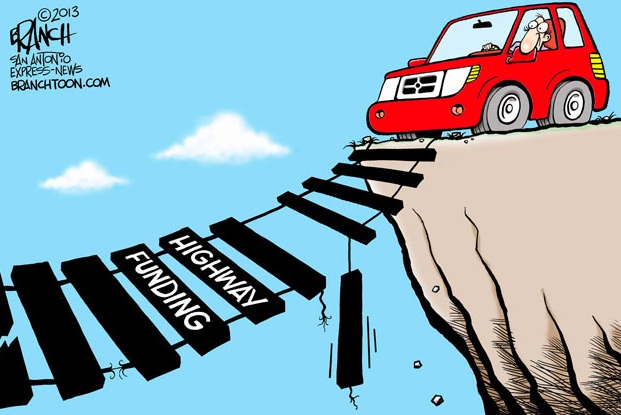
US Banks Panic Over Highway Funding Proposal

Peter Schroeder writes:  The banking industry is scrambling to kill a provision in the Senate highway-funding bill that would reap billions of dollars in revenue by cutting a century-old system that has reaped annual awards for banks.

Industry lobbyists say they were blindsided by the inclusion of the provision, which would help policymakers cover the bill’s cost by cutting the regular dividend the Federal Reserve pays to its member banks.

One lobbyist went so far as to reread the Federal Reserve Act of 1913 after getting wind of the proposal to determine what was at stake.

In a Congress where lawmakers are always hunting for politically palatable ways to raise revenue or cut costs to cover the expenses of additional legislation, the Fed provision was a novel, and rich, one. The proposal is estimated to raise $17 billion over the next decade, and is by far the richest “pay for” included in the bill.

Lobbyists said they were not aware of any previous time when lawmakers had attached the language to a piece of legislation, which would scrap a perk banks have come to expect for over a century.

When banks join the Federal Reserve system, they are required to buy stock in the central bank equal to 6 percent of their assets. However, that stock does not gain value and cannot be traded or sold, so to entice banks to participate, the Fed pays out a 6 percent dividend payment.

The Senate proposal says it would slash that “overly generous” payout to 1.5 percent for all banks with more than $1 billion in assets. While the summary language outlining the proposal said that change would only impact “large banks,” industry advocates argued that banks most would identify as small community shops could easily have assets in excess of that amount.

Banks are working to mobilize against the provision, even as lawmakers are pushing to pass a highway bill before program funding expires at the end of the month.

Senate Banking Committee Chairman Richard Shelby invited Fed Chairwoman Janet Yellen to opine on it when she appeared before his panel earlier this month.

She told lawmakers that if the dividend payment is reduced, some banks may not want to buy into the Fed.

“This is a change that likely would be a significant concern to the many small banks that receive the dividend,” she said.

While banking advocates make the policy argument, they also acknowledge they are facing a hard political reality — $17 billion is hard for members to pass up to help cover costs in a must-pass bill.

“It’s difficult to have a policy discussion when people are looking for a pay for,” said Ballentine. “That’s the issue we’ve been running into.”

The Senate bill is facing an uphill climb towards enactment, as House leaders from both parties have pushed the Senate to instead take up its short-term extension of highway funding and continue working on a longer-term proposal.

Inrastructure Funding?

Obama Goes Home to Africa to Address Security and Business Development

Carol E. Lee writes: President Barack Obama is set to visit his father’s native Kenya this weekend in a long-anticipated trip designed to highlight his personal ties to a continent that has largely been on the periphery of his foreign-policy agenda.

Mr. Obama plans to showcase initiatives he hopes will define his Africa legacy, such as steps to increase access to electricity.

He will move on to Ethiopia, meeting with the African Union on matters of trade, business and security, as U.S. officials have voiced growing concerns over the rise of extremism.

But his arrival in Nairobi on Friday is in itself a hallmark moment for his presidency. For Mr. Obama, it isn’t so much what he does, but who he is that ties him to the continent—and to Kenya in particular—and sets him apart from other U.S. presidents who have invested resources in Africa.

His two-day visit is widely seen as a homecoming of sorts, as the first African-American U.S. president returning to a country that considers him a native son.

Mr. Obama plans to spend time with members of his father’s family. He will meet with Kenyan President Uhuru Kenyatta, hold an event with young African leaders and reflect on his familial roots in a speech at an indoor sports arena.

A customer looked at a T-shirt displaying the image of President Barack Obama at a stall in Nairobi’s Kibera slum on Thursday, a day before the president’s scheduled arrival in Kenya.

Mr. Obama’s election in 2008 raised expectations across Africa for deeper American engagement. But his foreign-policy agenda has largely been consumed by unrest in the Middle East and efforts to strengthen U.S. ties in Asia.

During his first term, Mr. Obama spent about a day in sub-Saharan Africa, with a brief visit to Ghana.

His trip this week is part of a renewed focus on the continent in the homestretch of his presidency. It follows his gathering of African leaders in Washington last year, and his 2013 trip to Senegal, South Africa and Tanzania.

Mr. Obama is expected to use the platforms in Kenya and Ethiopia to highlight programs to combat hunger and his 2013 electricity initiative, Power Africa, which has been slow to expand. White House officials said he also plans to raise human rights, corruption and democracy concerns.

In Ethiopia, Prime Minister Hailemariam Desalegn’s ruling party won all seats in Parliament this year, a result the White House has said raises concerns about the integrity of that election.

Africa is also increasingly a security concern for the U.S., with the rise of al Qaeda-affiliated terrorist groups in the east and Islamic State’s expansion in the west and north.

Kenyan officials have said they hope Mr. Obama will focus on how Kenya and the U.S. can collaborate on business—both bringing in large U.S. companies and helping nurture Kenya as a location for film production.

But much of the two countries’ collaboration currently is in the realm of security—the U.S. trains Kenyan soldiers and shares intelligence in the effort to keep extremist militants from al Qaeda-linked al-Shabaab at bay.

Mr. Obama’s 49-year-old half-uncle, Said Obama, said his nephew’s visit to Kenya has been eagerly awaited.

“It would have looked very bad if he had left office without visiting Kenya,” he said, adding, “The people of Kenya are proud of him because of his achievements, though I can also say that there were very unrealistic expectations. People thought that being the president of America he was going to develop this place, do very many things.”

In Nairobi, a massive city-beautification effort has been under way for weeks in preparation for Mr. Obama’s arrival. New roads have opened, and highway medians have been adorned with flowers. Residents are jokingly calling the efforts “Obamacare.” Street hawkers, meanwhile, are selling American flags and T-shirts welcoming Mr. Obama “home.”

“There’s huge excitement in Kenya and perhaps excessive expectations of what this trip might deliver,” said Jennifer Cooke,director of the Africa program at the Center for Strategic and International Studies.


“I’ll be honest with you, visiting Kenya as a private citizen is probably more meaningful to me than visiting as president because I can actually get outside of a hotel room or a conference center,” Mr. Obama said last week. “But it’s obviously symbolically important.”

Will Greece Get Debt Relief?

Andrew Higgins writes:  To many Greeks, the debt the country has amassed is the evil fruit of austerity policies, imposed from the outside, that asphyxiated its economy and trampled on its sovereignty.

To the International Monetary Fund, the debt of more than 310 billion euros, or almost $339 billion, is more of a mathematical problem. After years in which it was a stern advocate of tough austerity policies, it now says that there is no way that Greece can reasonably pay its debts and needs to have a substantial amount of it forgiven.

Then there is Germany, Greece’s largest single creditor, which treats Greece’s debts as a sacrosanct commitment that must be paid as a matter of law and of principle.

Mr. Tsipras has for years been demanding a European Debt Conference modeled on the London Debt Agreement of 1953 that wrote off about half the pre- and postwar debt taken on by West Germany.

Persuading creditors to accept losses has never been easy or free of a political component. The London conference negotiations dragged on for two years and involved representatives of public and private creditors from 26 countries.

But the United States, Berlin’s biggest public creditor, pushed through the deal, largely out of strategic concerns heightened by the Cold War.

The Greeks, by contrast, “are just not important or powerful enough to make everyone want to rescue them,” said Timothy W. Guinnane, a professor of economic history at Yale University who has studied the 1953 London negotiations.

The contentious negotiations this month that produced the framework agreement for the new bailout of Greece offered only a vague pledge to consider the possibility of “longer grace and payment periods” on the condition that Greece first meets its own commitments to tightly control spending.

Chancellor Merkel, who continues to rule out debt forgiveness, said on Sunday that Germany would entertain a discussion about steps such as lower interest rates and longer payment terms, but only after the bailout agreement is finalized and Greece passes a first assessment of its progress in carrying out the policy changes demanded by the creditors.

Christine Lagarde, the managing director of the I.M.F., told a French radio station last week that the new Greek bailout now taking shape is “categorically not” viable without debt relief.

A big reason for the standoff is the nature of Greek debt. In many previous international negotiations — including those over money owed by Latin American countries during the region’s debt crisis in the 1980s and the €107 billion in debt that Greece got written off in 2012 — the creditors were mostly foreign banks and other investors.

A visual guide to why a deal with Greece is so critical to Europe.

When Germany and other eurozone nations fashioned their first bailout to Greece in 2010, they offered a package of bilateral loans, an approach that, according to Mr. Dallara, the American debt negotiator, “introduced an unusual level of politicization into debt negotiations.”

Germany’s contribution to the two initial bailouts was more than €50 billion, making Berlin the biggest contributor. But some experts believe that once German contributions to the European Central Bank and to other lenders are taken into account, Berlin is on the hook in Greece for upward of €100 billion.


EU Files Lawsuit Against Blocking Content Online and By Satellite

The Rocky Road to Globalization:

The European Union has filed antitrust charges against Sky’s UK arm and six major US film firms, Disney, Warner Bros, NBCUniversal, Paramount Pictures, Sony, and Twentieth Century Fox for their alleged geo-blocking of content.

The companies are accused by the EU of allegedly unfair licensing agreements between Sky and the TV and film companies.

The agreements between the parties require Sky UK to block access to films through its online or satellite payment services, withholding access for some EU customers based on their location.

Competition commissioner Margrethe Vestager said in a statement: “European consumers want to watch the pay-TV channels of their choice regardless of where they live or travel in the EU.”

“Our investigation shows that they cannot do this today, also because licensing agreements between the major film studios and Sky UK do not allow consumers in other EU countries to access Sky’s UK and Irish pay-TV services, via satellite or online.”

Micky Cut Off?