Illegal Logging in Myanmar

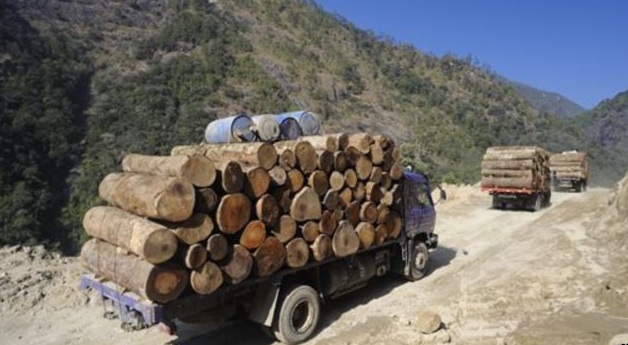
China on Thursday criticized long prison sentences in Myanmar given to more than 150 Chinese nationals convicted of illegal logging.

The Chinese foreign ministry, in a statement is calling for Myanmar to deal with its jailed nationals in a “lawful, reasonable and justified manner,” asking for all those convicted of illegal logging to be returned to China “as soon as possible.

A total of 156 Chinese were arrested in January for illegal activity in forests in Kachin state, along Myanmar’s border with China.

On Wednesday, all but three of the defendants were given what were termed as “life” sentences. Observers in Myanmar, also known as Burma, said prisoners typically serve 20 years for such sentences.

A judge, Myint Swe, justified the unusually long sentences in one of the largest known such crackdowns by Myanmar on the illicit timber trade.

The justice said the prison terms were decided because of the extent of potential destruction to the environment and the loss of forests based on the number of people involved and machinery used.

Authorities, at the time of the arrests, said they had seized 436 logging trucks, 14 pickup trucks loaded with timber logs, stimulant drugs, raw opium and Chinese currency. 

Environmentalists have long accused both Myanmar and China of ignoring lucrative smuggling networks of gems, drugs and numerous endangered natural resources along their shared border.

“Obviously we welcome enforcement of the law. And we think that these sentences are quite excessive and the fact that most of the believe, who were captured, were very much the small players really,” said Julian Newman,  campaigns director for the non-profit British-based Environmental Intelligence Agency.

Newman added the agreements with Chinese businesses for the illegal logging are brokered at very high levels of either the ethnic groups or the military in Myanmar.

“So unless we get starting getting up the chain to those people who are actually the authors of these illegal logging activities, rather than the people at the bottom of the chain, the problem will continue because, often, people who are the loggers or truck drivers are dispensable,” Newman stated.

Exiled Myanmar activist Maung Zarni said the harsh sentences appear to be retaliation for China rolling out the red carpet for opposition leader Aung San Suu Kyi’s recent visit to Beijing. “The Burmese military government has never lifted a finger against the Chinese traders, illegal or not. And, so, this is essentially tit-for-tat politics that the Burmese military leaders are well known for,” Maung Zarni noted.

The activist predicts Myanmar will eventually bow to Chinese pressure and those imprisoned will be released early and sent back home.
Illegal Logging Myanmar

Illegal Water Business in Delhi

Aman Sethi writes:  Down by the sandy banks of the Yamuna River, the men must work quickly. At a little past 12 a.m. one humid night in May, they pull back the black plastic tarp covering three boreholes sunk deep in the ground along the waterway that traces Delhi’s eastern edge. From a shack a few feet away, they then drag thick hoses toward a queue of 20-odd tanker trucks idling quietly with their headlights turned off. The men work in a team: While one man fits a hose’s mouth over a borehole, another clambers atop a truck at the front of the line and shoves the tube’s opposite end into the empty steel cistern attached to the vehicle’s creaky frame.

“On kar!” someone shouts in Hinglish into the darkness; almost instantly, his orders to “switch it on” are obeyed. Diesel generators, housed in nearby sheds, begin to thrum. Submersible pumps, installed in the borehole’s shafts, drone as they disgorge thousands of gallons of groundwater from deep in the earth. The liquid gushes through the hoses and into the trucks’ tanks.

Within 15 minutes, the 2,642-gallon (10,000-liter) containers on the first three rigs are full. The pumps are switched off briefly as drivers move their now-heavy trucks forward and another trio takes their place. The routine is repeated again and again through the night until every tanker is brimming with water.

The full trucks don’t wait around. As the hose team continues its work, drivers nose down a rutted dirt path until they reach a nearby highway. There, they turn on their lights and pick up speed, rushing to sell their bounty. They go to factories and hospitals, malls and hotels, apartments and hutments across this city of 25 million.

Everything about this business is illegal: the boreholes dug without permission, the trucks operating without permits, the water sold without testing or treatment. “Water work is night work,” says a middle-aged neighbor who rents a house near the covert pumping station and requested anonymity. “Bosses arrange buyers, labor fills tankers, the police look the other way, and the muscle makes sure that no one says nothing to nobody.” Tonight, that muscle—burly, bearded, and in tight-fitting T-shirts—has little to do: Sitting near the trucks, the men are absorbed in a game of cards. At dawn, the crew switches off the generators, stows the hoses in the shack from which they came, and places the tarp back over the boreholes. Few traces of the night’s frenetic activity remain.

Teams like this one are ubiquitous in Delhi, where the official water supply falls short of the city’s needs by at least 207 million gallons each day, according to a 2013 audit by the office of the Indian comptroller and auditor general. A quarter of Delhi’s households live without a piped-water connection; most of the rest receive water for only a few hours each day. So residents have come to rely on private truck owners—the most visible strands of a dispersed web of city councilors, farmers, real estate agents, and fixers who source millions of gallons of water each day from illicit boreholes, as well as the city’s leaky pipe network, and sell the liquid for profit.

A man fills a tanker while another drills a borehole at an illegal water-filling point in Delhi.    Water in Delhi


Is Cuba the new Singapore?

Debora L. Spar writes:  Sometime in the next few years, the Cuban people will be faced with a huge decision: how to develop their nation. As the Castro brothers fade from the scene and relations with the United States continue to thaw, a new generation of Cuban leaders will be forced to grapple with the inevitable challenges of political and economic reform. Like the governments of Eastern Europe after the fall of the Berlin Wall, they will have to plot a path from communism to capitalism; like their neighbors across Latin America and the Caribbean, they will have to juggle a historical distaste for Western (and particularly U.S.) imperialism with a desire for Western goods, technology, and capital. And like leaders everywhere, they will almost certainly have to strike a balance between the demands of economic prudence and political expedience, forming institutions that will serve their country over the long run while heeding their citizens’ call for more immediate change.

The Singaporean model is more powerful than dreaming and more likely to achieve results. And it is widely replicable, not with regard to the details of what Lee and his colleagues did, of course, but with regard to how. They were honest and clear about what their country did and did not have; methodical in their planning and execution; and steadfast in their follow-through. These are lessons that Cuba’s next generation of leaders, unshackled from their predecessors’ ambitious but ultimately unrealistic goals, would be well-advised to consider. They should build gradually from the assets that Cuba has—fertile land, an enviable location, and an eager and wealthy diaspora—rather than aim for utopia.   Can Cuba Be the Singapore of the Caribbean

Singapore to Cuba?


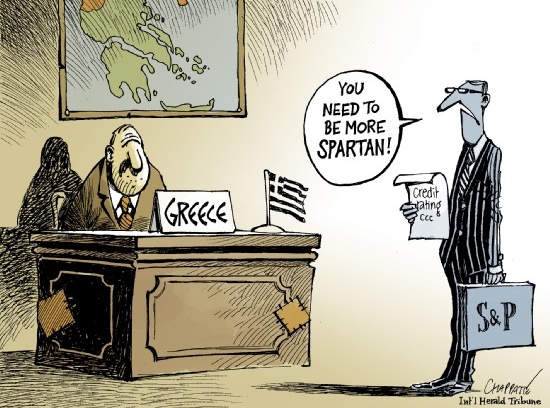
Greek Credit Upgrade by S&P

Tuesday’s upgrade of Greece is after the nation of Greece requested and received consent, in principle, from the Eurogroup for a 3-year loan program under the European Stability Mechanism whereby it received 7.16 billion in three month bridge financing. That was used on July to 20 clear its arrears with the International Monetary Fund (IMF) and the Bank of Greece, and was used to repay the European Central Bank.

S&P further went on to say that it now thinks Greece’s chances of leaving the Eurozone has now fallen to less than 50% within a horizon to 2018 but still is higher than one-in-three. Still, S&P does warn that the risk  of a Greek euro exit is still high if the Greek government fails to implement an ambitious program.

Lastly, S&P now believes that a Greek default on its commercial debt is no longer inevitable in the next six months to twelve months: It sees the opportunities for Greece to default on its commercial debt this year are few. Redemptions owed on commercial debt this year, excluding Greek Treasury bills, amount to a single payment of 176 million euro on a state-guaranteed Hellenic Railway bond which comes due in October. SP said that interest payments on commercial debt due in the last seven months of 2015 total 1.5 billion euro — less than 1% of GDP.

National Bank of Greece S.A. (NYSE: NBG) has been the real-time trader proxy for Greece, and its ADSs in New York trading were up 2.25 at $0.93 right after the news. NBG’s 52-week range is $0.85 to $3.69. NBG’s trading volume was 8.9 million shares as of 2:40 p.m. Eastern Time.

Global X FTSE Greece 20 ETF (NYSEMKT: GREK) was last seen up 1.4% at $10.07 against a 52-week range of $9.42 to $22.62. Volume there was only about 520,000 shares as of 2:40 p.m. Eastern Time.

A Greek debt upgrade may seem hard to fathom when you consider how close the nation came to being stuck with the drachma all over again. That being said, there are still no assurances that negative Greece news will not be right back in the media’s daily news flow in the days, weeks, or months ahead.

S&P said:

Greece’s financial commitments appear to us to be unsustainable over the long term, if and when the current official concessional loans are replaced by market funding and the current interest rate holiday on a significant part of Greece’s debt to official creditors lapses.

We believe the probability of Greece leaving the eurozone remains higher than one in three but less than 50%, although we think the agreement between Greece and its creditors announced last week has reduced this risk. The probability would increase if Greece doesn’t successfully implement the new ESM loan program. We see the risk of such non-implementation as high, given the weakness of the economy, and the implications this might have for further political and social instability.

Greek Credit?


Entrepreneur Alert: E-Commerce in Sperm

Alibaba, the Chinese internet giant – has spotted a way to profit from China’s spiralling infertility and dwindling birth rate by offering deals on an unusual product: sperm. Alibaba has been known to sell everything from Buddha-shaped pears to fat-freezing machines in 16-year history.

Earlier this month it posted a three-day promotion  for seven classes on its daily deals site.

Alibaba put its popularity down to the fact that donors were connected to sperm banks bypassing the need for what some might see as an awkward in-person consultation. Afterwards participants then had to agree to a physical check-up within three months.

The move follows the success of products such as paternity tests and sperm motility kits on the same site and reflects the company’s efforts push further into healthcare.

It also comes after a number of China’s sperm banks have reported shortages.

An Alibaba survey revealed that high intelligence and good features were the most sought after characteristics for donors.

Alibaba has already had success with pregnancy tests and sperm motility evaluations.

Selling Sperm

Coordinating Loose Monetary Policy

Alexander Friedman writes:  In his Pulitzer-Prize-winning book, Lords of Finance, the economist Liaquat Ahamad tells the story of how four central bankers, driven by staunch adherence to the gold standard, “broke the world” and triggered the Great Depression. Today’s central bankers largely share a new conventional wisdom – about the benefits of loose monetary policy. Are monetary policymakers poised to break the world again?

Orthodox monetary policy no longer enshrines the gold standard, which caused the central bankers of the 1920s to mismanage interest rates, triggering a global economic meltdown that ultimately set the stage for World War II. But the unprecedented period of coordinated loose monetary policy since the beginning of the financial crisis in 2008 could be just as problematic. Indeed, the discernible effect on financial markets has already been huge.   Banking Dominates FInancial Policy?

Loose Money Poilcy?


Making the Greece-EU Deal Work

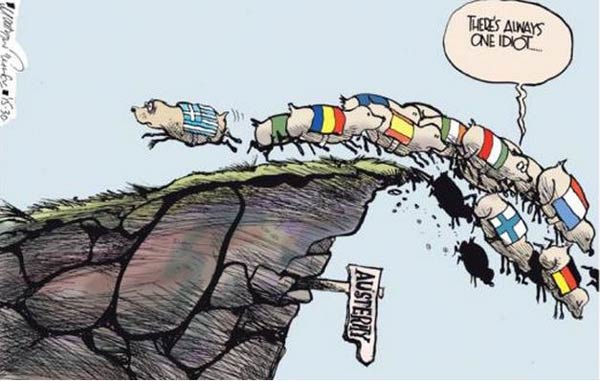
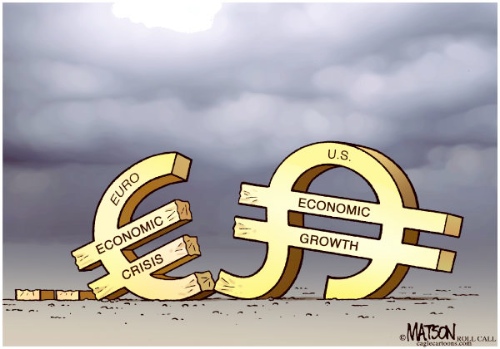
Lucrezia Reichlin writes:  Greece and its creditors are now enacting a deal that provides financial support in exchange for wide-ranging reforms. Although reservations about the agreement abound, political conditions did not permit a better one. But the deal can – and must – serve as the basis for saving Greece and the eurozone.

For the plan to work, Greek Prime Minister Alexis Tsipras must show real commitment to a reform program in which neither he nor many Greek citizens believe. And he must forge an alliance with Greece’s pro-European parties, because only a united government will be able to deliver.

The creditors must find the money to fund the bailout. And the International Monetary Fund must agree with the Eurogroup on how to restore debt sustainability in Greece, a precondition for the country to regain access to capital markets.

In this effort, a critical distinction must be made: though Greece has committed to deep and rapid reform, it must not be forced into hurried fiscal consolidation.

The recent agreement includes unrealistic proposals for fiscal adjustment. Before Greek banks closed and capital controls were imposed in late June, the European Commission put the primary budget deficit for this year at €4-6 billion ($4.3-6.5 billion), or 2-3% of GDP. Now, it looks like the primary deficit (which excludes interest payments) could reach 6% of GDP, with GDP falling by 4%.

Yet the new deal anticipates that Greece will make up for the year’s fiscal shortfall in just five months.

One of the key initiatives to address the fiscal shortfall is an increase in the value-added tax to 23% for almost all goods and services.  VAT evasion in Greece is as high as 50%.   Greece should therefore focus first on building the legal and technical infrastructure to combat tax evasion.

Despite pressure from Germany and other countries to participate in the new bailout program, the IMF will not get involved unless it judges Greece’s debt to be sustainable. That means making the economy’s debt stocks and fiscal flows consistent, with the right combination of tough but feasible fiscal targets and debt relief.

Fiscal discipline should not take priority over the important structural reforms included in the new deal, particularly measures to overhaul pensions, the legal system, product markets, public administration, and the judiciary.

The key to overcoming these challenges is for the Greek people to take ownership of the reforms, so that the public interest can prevail over vested interests.

Greek banks – which, given their huge volume of non-performing loans, are now more likely to be insolvent than illiquid – will require massive recapitalization, funded by the European Stability Mechanism, not the Greek state.

In this effort, there must be no bail-in of depositors, which would have damaging social consequences, or Greek state ownership of the banks, which would entrench clientelism in the financial system.

Greece’s humiliation in the negotiations evoked memories of the Indonesian president’s treatment by the IMF during the Asian financial crisis of 1997.

But the Greeks must put aside these emotional responses and recognize the need for many of the proposed reforms. Greece’s failure to implement them has allowed the clientelism, oligarchy, corruption, and tax evasion underpinning its economic and political dysfunction to continue practically unfettered.

The alternative is a Greek exit from the eurozone. (German Finance Minister Wolfgang Schäuble’s suggestion that Greece can just take a “time out” is a fiction.) Economists who pretend that this would be anything less than an economic and political catastrophe for Greece should look closely at the structure of Greek trade, the anemic response of exports to the already huge internal devaluation, and company and household balance sheets.

Some would welcome the damage this would do to European unity; we would not. The recent agreement is far from ideal. But Greece and its creditors must make it work.

Greece and the EU

US Fed President: Economy on a Roll?

John C. Williams, President of San Francisco Federal Reserve, comments: The U.S. economy is looking quite good. Growth is on a solid trajectory, and the FOMC’s maximum employment goal is in sight. Risks from abroad are unlikely to overturn strong U.S. fundamentals. Still, the exact timing of an initial interest rate increase will depend on convincing evidence that inflation is heading back toward target.   John C. Williams

USOnRoll

Only Goldman Understands Accounting?

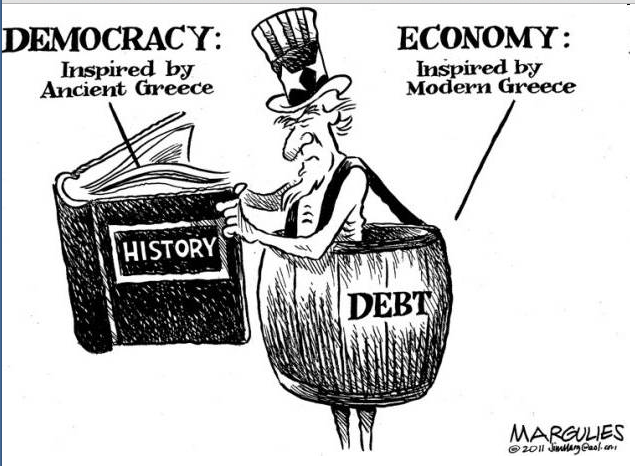
Robert Reich writes: The Greek debt crisis offers another illustration of Wall Street’s powers of persuasion and predation, although the Street is missing from most accounts.

The crisis was exacerbated years ago by a deal with Goldman Sachs, engineered by Goldman’s current CEO, Lloyd Blankfein.

Blankfein and his Goldman team helped Greece hide the true extent of its debt, and in the process almost doubled it. In 2001, Greece was looking for ways to disguise its mounting financial troubles. The Maastricht Treaty required all eurozone member states to show improvement in their public finances, but Greece was heading in the wrong direction.

Then Goldman Sachs came to the rescue, arranging a secret loan of 2.8 billion euros for Greece, disguised as an off-the-books “cross-currency swap”—a complicated transaction in which Greece’s foreign-currency debt was converted into a domestic-currency obligation using a fictitious market exchange rate.

As a result, about 2 percent of Greece’s debt magically disappeared from its national accounts. For its services, Goldman received a whopping 600 million euros ($793 million).  That came to about 12 percent of Goldman’s revenue from its giant trading and principal-investments unit in 2001—which posted record sales that year. The unit was run by Blankfein (who set up Hillary Clinton’s son-in-law in business).

In 2005, the deal was restructured and that 5.1 billion euros in debt locked in. Perhaps not incidentally, Mario Draghi, now head of the European Central Bank and a major player in the current Greek drama, was then managing director of Goldman’s international division.

Greece wasn’t the only sinner. Until 2008, European Union accounting rules allowed member nations to manage their debt with so-called off-market rates in swaps, pushed by Goldman and other Wall Street banks. In the late 1990s, JPMorgan enabled Italy to hide its debt by swapping currency at a favorable exchange rate, thereby committing Italy to future payments that didn’t appear on its national accounts as future liabilities.

But Greece was in the worst shape, and Goldman was the biggest enabler.

Meanwhile, the people of Greece struggle to buy medicine and food.

There are analogies here in America, beginning with the predatory loans made by Goldman, other big banks, and the financial companies they were allied with in the years leading up to the bust. Today, even as the bankers vacation in the Hamptons, millions of Americans continue to struggle with the aftershock of the financial crisis in terms of lost jobs, savings, and homes.

Goldman knows very well what it is doing. It knew more about the real risks and costs of the deals it proposed than those who accepted them. “It is an issue of morality,” said the shareholder at the Goldman meeting.

Blankfein


Lifting Sanctions: Heineken to Burma

The world’s third largest brewery, Heineken International, recently launched a US$60 million brewing facility in Hmawbi, near Rangoon, marking the Dutch company’s comeback to the Burmese market economic sanctions forced its exit in 1996.

The new Burma brewery is operated by a joint-venture called APB Alliance Brewery, between local Alliance Brewery Co. (ABC) and Heineken’s Asia Pacific Breweries. Dutch premium beer Heineken will be available in the market later this year, while its local brand—Regal Seven—will be distributed beginning in August. Heineken’s local beverage, with a five percent alcohol content, is dedicated to the seven people who established the APB Alliance Brewery.

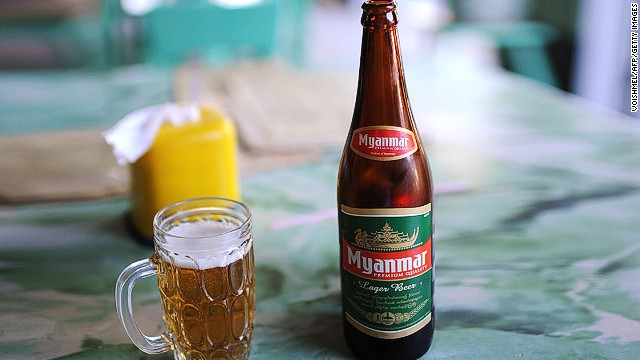
At a launch event earlier this week, The Irrawaddy spoke with the brewery’s managing director, Lester Tan, about how Heineken might fare in Burma’s battle of the beers, which has long been dominated by the locally loved Myanmar Beer, manufactured by the military-owned Myanmar Breweries. These days, however, it seems there’s always room for one more drink as new brands like Tuborg and Yoma start springing up at local watering holes.  Heineken Invests in Burma

Beer in Burma

Beer in Burma