Internet: Wave Three

Steve Case writes:  Most people didn’t see the need to be connected; only 3 percent of U.S. households were online when I started, averaging less than one hour of usage per week. It was not clear why people would want to communicate, buy things or gather information through a computer. Online services were pricey, slow, confusing and of limited usefulness.

It was a slow and steady ascension with many near-death experiences. We went through several layoffs and pivots, trying to identify a viable path forward. When we went public in 1992 — after seven years of hard work — we still had less than 200,000 subscribers.
But we stayed with it, and eventually people decided they did want to get connected. By 2000, when we celebrated our 15th birthday, we had 25 million subscribers and nearly 10,000 employees, and about half of the consumer Internet traffic,

But looking back 30 years later, with nostalgia and pride, I am struck by how our journey is about to be repeated by the next generation of entrepreneurs who are tackling some of the world’s most pressing challenges. Indeed, the Internet’s future may very well look a little like its past.

The first wave was the period of building the infrastructure, connections and awareness that ushered in a connected world. During this time, companies such as Cisco, WorldCom, IBM, Microsoft, Netscape and AOL were constructing the on-ramps to the information superhighway.

Iin the second wave, as the market shifted from narrow-band, dial-up phone connections to broadband and the disruption of media and commerce took hold.
That second wave  involved a shift from building the Internet to building on top of the Internet. The focus moved from connecting people to creating new ways for them to access information and one another. The sheer volume of information enabled Google to create a dominant search engine. Apple roared back to life with a vision of seamless integration of hardware, software and services. And the explosion in smartphones enabled the Internet to go mobile, unleashing the app economy.

The third wave of the Internet is about to break. The opportunity is now shifting to integrating it into everyday life, in increasingly seamless and ubiquitous ways. These third-wave companies will take on some of the economy’s largest sectors: health care, education, transportation, energy, financial services, food and government services. These third-wave sectors — all now ripe for disruption — represent more than half of the U.S. economy.

To be successful during the third wave they will need to remember the three P’s:
Perseverance: Overcoming long-term structural changes within regulated sectors won’t happen overnight; entrepreneurs (and investors) will need to be more patient.
Partnerships: Just as partnerships were key in the first Internet wave, they will be key again in the third. Entrepreneurs won’t be able to go it alone in the third wave; they must go together.
Policy: Entrepreneurs will need to understand public policy in a more nuanced way. Last year, 75 percent of venture capital went to just three states: California, Massachusetts and New York. But 75 percent of our Fortune 500 companies are located in the 47 other states, and many of them will play a pivotal role in the third wave, as a new generation of partner-friendly entrepreneurs seeks strategic alliances to gain credibility and accelerate growth.
Internet Wave Three

Oil: The Curse of Uganda?

May Jeng writes:  Roughly 120 miles northwest of the capital, Kampala, the asphalt road gives way to amber-colored soil and Uganda’s oil country begins. This remote region last captured the imagination of the West in the Victorian age, when gentlemen explorers arrived in search of the Nile’s source.

After the discovery of commercially viable oil reserves in 2006, companies including London-based Tullow, the French Total and the Chinese government-run CNOOC began drilling exploratory wells in the Lake Albert region. By 2009, the region’s reserves were estimated at 6.5 billion oil barrels, enough to potentially remake Uganda.

Nearly a decade after the discovery of oil, little of that promised infrastructure has been built. Meanwhile, exploratory drilling has ruined crops and killed off fish, eroding people’s livelihoods. Oil companies have made cash payouts to affected families, but that money has sometimes increased tensions.

Tullow spokesperson Conrad Nkutu said that the company expected to create as many as 150,000 jobs in the country.

The most dramatic consequence of the oil drilling so far has been the forcible eviction of 230 families last August to make way for a petroleum waste-management plant.

Villagers said they were not compensated for their lost property. The residents filed a lawsuit against the strongmen in November 2014, and the case is ongoing.

In Kaseta, a neighboring village of grass-thatched huts, the drilling has damaged the cassava crop and disturbed Lake Albert’s fish stock.

In the past few years, oil companies and the Ugandan government began compensating some of the farmers and fishermen who continue to tend to their cassavas and cast nets for tilapia in the lake.

The Ugandan government has yet to take meaningful steps to regulate the oil industry, according to George Boden, a campaigner with the watchdog group Global Witness. President Yoweri Museveni personally makes most of the decisions about the industry; he is widely believed to consider oil a means of supplying his personal coffers and maintaining power. Many of the production-sharing agreements, which outline how oil revenues will be distributed between the government and the companies, remain a secret. That’s unusual even by regional standards, which tend to favor oil companies.

Conservationists now worry that Murchison has no defense against the advances of oil companies: Already, drilling has commenced on park grounds. They point to neighboring Democratic Republic of Congo, where the government is considering redrawing the boundaries of Virunga National Park in order to accommodate the oil company SOCO International’s proposed exploration.

The discovery of oil in other African nations over the last half-century has largely failed to bring development. Nigeria, Angola and Equatorial Guinea have all been afflicted with the so-called “resource curse.” No longer dependent on taxes to stay solvent, governments became less accountable to their citizens.

Oil Well in Uganda

FIFA, Ethics and the Almighty Buck

The Rocky Road to Globalization

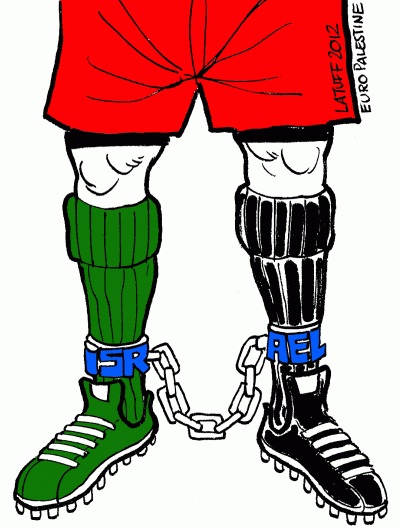
Lucy P. Marcus writes:  The arrest of FIFA executives on a raft of fraud and corruption charges has been front-page news in recent days. But the charges brought by the Swiss and American authorities focus on bribery and embezzlement, and do not address another egregious injustice: the treatment of the migrant workers in Qatar who are building the stadiums for the 2022 FIFA Football World Cup.

Amnesty International recently released a report on the abysmal conditions in Qatar. The workers are subject to unsafe construction sites, exploitative recruitment agencies, and little recourse to formal justice. Recently, Nepal’s labor minister publicly spoke out about the government of Qatar not allowing his country’s migrant workers to return home to mourn relatives who died in the April 2015 earthquake.

Beyond these examples, there have been many others. In technology, Apple and Foxconn have faced criticism for working conditions at their Chinese production sites. Even educational institutions, such as New York University’s new campus in Abu Dhabi, have been tainted by episodes of workplace exploitation and abuse.

The larger and more complex the company, the harder it is to track all of the firms with which it does business, the firms that they then subcontract to, and so on. Companies, not surprisingly, say that their responsibility extends only so far. But that is not an answer; it is a choice. Organizations can decide to extend their reach. They can even decide that they want to know the full provenance of all materials and components in their products, and that they will hold their extended suppliers to account.

In this sense, the larger the company, the greater its responsibility. But larger companies also have a larger ability to become a force for good, both locally and globally. If a company the size of US retailer Walmart decides that it will not allow wasteful packaging, its purchasing power will lead to changes in packaging for the entire retail sector. The same is true of wages and labor practices.

When sponsors like Coca-Cola or Adidas believe that their reputations will be tarnished by association with an organization engaged in corrupt practices like FIFA, they will take their brand-management dollars elsewhere.

Companies are made up of people. Paying fair wages, adopting ethical sourcing practices, and upholding the dignity of workers should be a part of the way they calculate their success. Those who disconnect themselves from the fate of others, who act without conscience or a sense of right and wrong, and who spurn ordinary human decency have no place running organizations or sitting on company boards. The things that make us happy must not come at an unforgivably high price.

FIFA Indictments

Clean Energy Initiatives

Clean Energy on the Rocky Road to Globalization

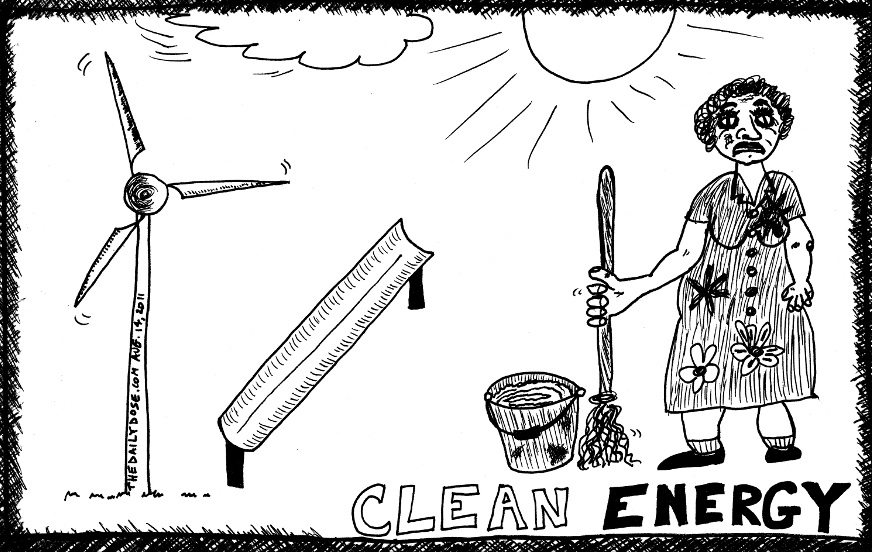
U.S. Energy Secretary Ernest Moniz launched several new initiatives with other global energy leaders at the Energy and Climate Partnership of the Americas (ECPA) and the sixth Clean Energy Ministerial (CEM6) this week in Merida, Mexico. These initiatives will further strengthen momentum in the Western Hemisphere and around the globe to combat climate change and accelerate clean energy technology and policies ahead of the December 2015 climate talks in Paris. At both ECPA and CEM6, energy ministers discussed technology solutions to grow low-carbon economies while helping to implement national commitments to reduce climate pollution.

At ECPA, Secretary Moniz met with energy ministers from across the Western Hemisphere to discuss areas of cooperation in the region. The ministerial established two new initiatives – the North American Energy Ministers Working Group on Climate and Energy with Canada and Mexico, and the ECPA Western Hemisphere Clean Energy Initiative with governments from around the region.

The new trilateral Working Group enhances a North American Energy Ministers’ Areas of cooperation include reliable, resilient, and low-carbon electricity grids; modeling and deployment of clean energy technologies; energy efficiency for equipment, appliances, industries, and buildings; carbon capture, use, and storage; climate change adaptation and resilience; and emissions reduction from the oil and gas sector.

At CEM6, Secretary Moniz and fellow ministers announced new efforts to increase the ambition and productivity of CEM – or “CEM 2.0.” They created a year-round steering committee made up of China, Denmark, the European Commission, France, India, Mexico, the United Arab Emirates, and the United States to guide the strategy for CEM.

Together with a series of hemispheric partners, Secretary Moniz also announced the ECPA Western Hemisphere Clean Energy Initiative, under which countries announced that they intend to work toward a collective doubling of renewable sources such as solar, wind, small-scale hydropower, sustainable biomass, and geothermal, by 2030.

billion high-efficiency, high-quality and affordable advanced lighting products as quickly as possible. With lighting accounting for 15 percent of global electricity usage, replacing the world’s existing

The United States also announced efforts to dramatically scale-up the Clean Energy Solutions Center, a CEM initiative that has already provided real-time, no-cost clean energy expert policy assistance to more than 80 countries around the world.

Clean Energy

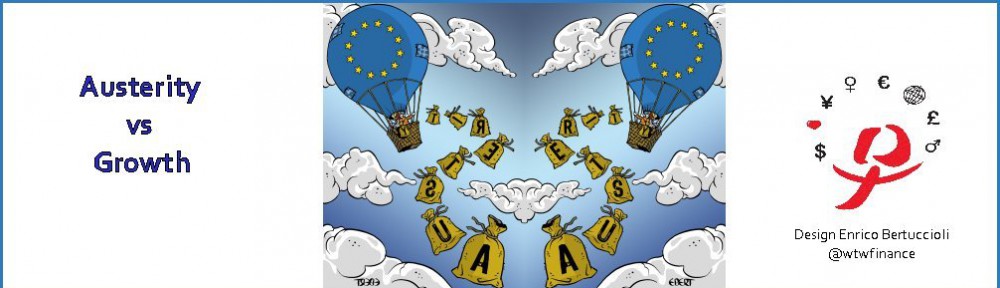
Greece Plays Plan A and Plan B

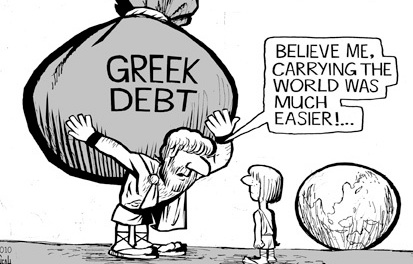
Hans-Werner Sinn writes: Game theorists know that a Plan A is never enough. One must also develop and put forward a credible Plan B – the implied threat that drives forward negotiations on Plan A. Greece’s finance minister, Yanis Varoufakis, knows this very well. As the Greek government’s anointed “heavy,” he is working Plan B (a potential exit from the eurozone), while Prime Minister Alexis Tsipras makes himself available for Plan A (an extension on Greece’s loan agreement, and a renegotiation of the terms of its bailout). In a sense, they are playing the classic game of “good cop/bad cop” – and, so far, to great effect.

Plan B comprises two key elements. First, there is simple provocation, aimed at riling up Greek citizens and thus escalating tensions between the country and its creditors. Greece’s citizens must believe that they are escaping grave injustice if they are to continue to trust their government during the difficult period that would follow an exit from the eurozone.

Second, the Greek government is driving up the costs of Plan B for the other side, by allowing capital flight by its citizens. If it so chose, the government could contain this trend with a more conciliatory approach, or stop it outright with the introduction of capital controls.

Other eurozone central banks are forced to create new money to fulfill the payment orders for the Greek citizens, effectively giving the Greek central bank an overdraft credit, as measured by the so-called TARGET liabilities. In January and February, Greece’s TARGET debts increased by almost €1 billion ($1.1 billion) per day, owing to capital flight by Greek citizens and foreign investors. At the end of April, those debts amounted to €99 billion.

A Greek exit would not damage the accounts that its citizens have set up in other eurozone countries – let alone cause Greeks to lose the assets they have purchased with those accounts.  A similar situation arises when Greek citizens withdraw cash from their accounts and hoard it in suitcases or take it abroad.

The ECB bears considerable responsibility for this situation. By failing to produce the two-thirds majority in the ECB Council needed to limit the Greek central bank’s self-serving strategy, it has allowed the creation of more than €80 billion in emergency liquidity, which exceeds the Greek central bank’s €41 billion in recoverable assets.

If the ECB finally removes Greece’s liquidity safety net, the Greek government would be forced to start negotiating seriously, because waiting would no longer do it any good. But, with the stock of money sent abroad and held in cash having already ballooned to 79% of GDP, its position would remain very strong.

In other words, thanks largely to the ECB, the Greek government would be able to secure a far more favorable outcome – including increased financial assistance and reduced reform requirements – than it could have gained at any point in the past.

Greek Debt

Entpreneurs Alert: Cheap Computing

The idea behind a tiny and affordable computer for kids came in 2006, when Eben Upton, Rob Mullins, Jack Lang and Alan Mycroft, based at the University of Cambridge’s Computer Laboratory, became concerned about the year-on-year decline in the numbers and skills levels of the A Level students applying to read Computer Science. From a situation in the 1990s where most of the kids applying were coming to interview as experienced hobbyist programmers, the landscape in the 2000s was very different; a typical applicant might only have done a little web design.

Something had changed the way kids were interacting with computers. A number of problems were identified: the colonisation of the ICT curriculum with lessons on using Word and Excel, or writing webpages; the end of the dot-com boom; and the rise of the home PC and games console to replace the Amigas, BBC Micros, Spectrum ZX and Commodore 64 machines that people of an earlier generation learned to program on.

There isn’t much any small group of people can do to address problems like an inadequate school curriculum or the end of a financial bubble. But we felt that we could try to do something about the situation where computers had become so expensive and arcane that programming experimentation on them had to be forbidden by parents; and to find a platform that, like those old home computers, could boot into a programming environment.

By 2008, processors designed for mobile devices were becoming more affordable, and powerful enough to provide excellent multimedia, a feature we felt would make the board desirable to kids who wouldn’t initially be interested in a purely programming-oriented device. The project started to look very realisable. Eben (now a chip architect at Broadcom), Rob, Jack and Alan, teamed up with Pete Lomas, MD of hardware design and manufacture company Norcott Technologies, and David Braben, co-author of the seminal BBC Micro game Elite, to form the Raspberry Pi Foundation to make it a reality. Three years later, the Raspberry Pi Model B entered mass production through licensed manufacture deals with element 14/Premier Farnell and RS Electronics, and within two years it had sold over two million units.

We don’t claim to have all the answers. We don’t think that the Raspberry Pi is a fix to all of the world’s computing issues; we do believe that we can be a catalyst. We want to see affordable, programmable computers everywhere. We want to break the paradigm where without spending hundreds of pounds on a PC, families can’t use the internet. We want owning a truly personal computer to be normal for children, and we’re looking forward to what the future has in store.

Raspberry Pi