Entrepreneur Alert: Smart Watches and Wearables

Following the release of the Apple Watch, 2015 looks more than ever to be the year that smartwatches reach a mainstream audience. Watches traditionally have been worn for fashion as well as practicality and the latest generation from tech manufacturers are looking to try to bridge that gap for the first time.

Apple have even made inroads into the high end luxury market with the release of Apple Watch “Edition” which sports a gold case and starts at $10,000. The concept of a smartwatch is not new as manufacturers have seen the potential for decades but haven’t had access to the technology required to make their pieces either desirable or functional. IHere is a look at the development of the smartwatch since the turn of the millennium.

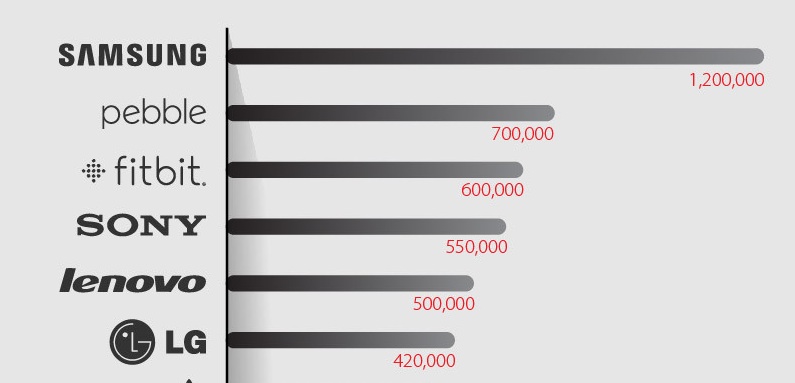
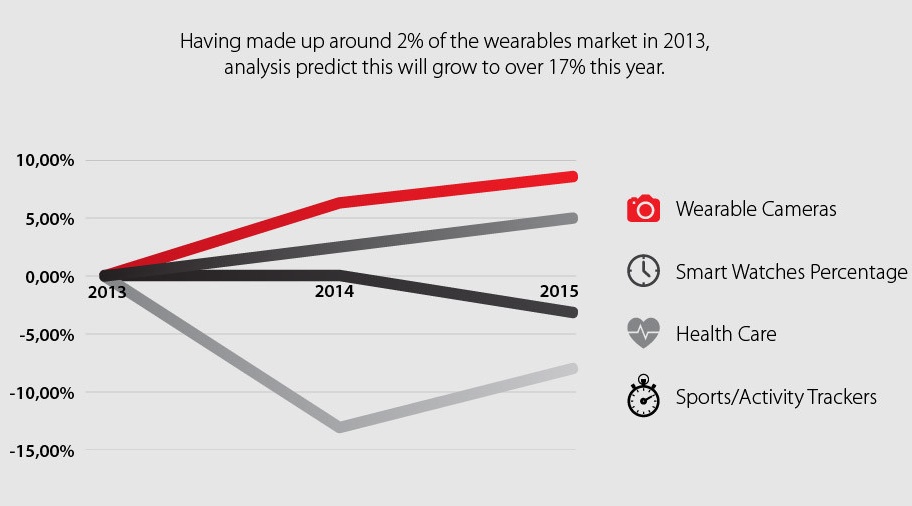
Smart Watch SalesSmart Watches Projected SalesWearables Market

Can The US Fed Supervise Too Big To Fail?

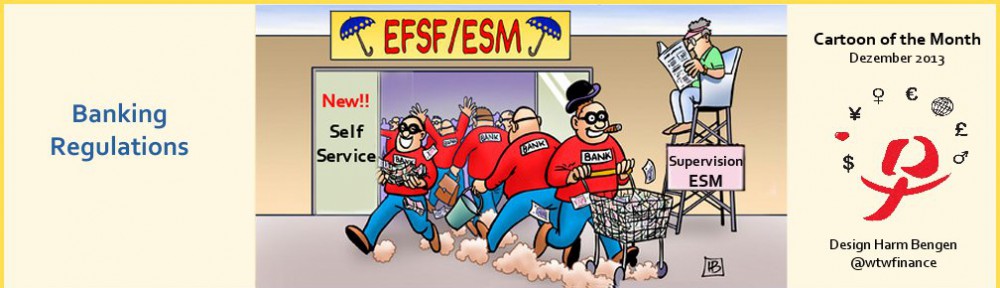
New York Federal Reserve comments   The Federal Reserve is responsible for the prudential supervision of bank holding companies (BHCs) on a consolidated basis, as well as of certain other financial institutions operating in the United States. Prudential supervision involves monitoring and oversight of these firms to assess whether they are in compliance with law and regulation and whether they are engaged in unsafe or unsound practices, as well as ensuring that firms are taking corrective actions to address such practices

Prudential supervision is inter-linked with, but distinct from, regulation of these firms, which involves the development and promulgation of the rules under which BHCs and other regulated financial intermediaries operate. The distinction between supervision and regulation is sometimes blurred in the discussion by academics, researchers and analysts who write about the banking industry, and the terms “supervision” and “regulation” are often used somewhat interchangeably. Moreover, while prudential supervision is a central responsibility of the Federal Reserve and consequently accounts for substantial resources, the responsibilities, powers and day-to-day activities of Federal Reserve supervision staff are often not very transparent to those outside of the supervision areas of the Federeal Reserve System.

The primary focus of this discussion is on the supervision of large, complex bank holding companies and of the largest foreign banking organizations (FBOs) and non-bank financial companies designated by the Financial Stability Oversight Council (FSOC) for supervision by the Federal Reserve. The paper focuses on oversight of these firms because they are the most systemically important banking and financial companies and thus prudential supervision of them is especially consequential. Given their size and complexity, the approach to supervision of these companies also differs from that taken for smaller and less complex firms. It is important to note that supervision of these large, complex firms is conducted through a comprehensive System-wide program governing supervisory policies, activities and outcomes.The discussion in this paper focuses solely on supervisory staff located at the Federal Reserve Bank of New York, whose activities are carried out as part of this broader program.  Supervising Too Big to Fail

Too Big to Jail

Lagarde: Restore Russia to G8

The international community functions best when all its members, Russia included, are working together to achieve good results, IMF Managing Director Christine Lagarde said.

The G8 format ensured the best results for the group of the world’s leading industrialized nations, Lagarde said in remarks, carried live by Germany’s ARD television on Thursday.Christine Lagarde is taking part in a meeting of G7 finance ministers in Dresden, Germany.

“I believe that the financial G7 has essentially been a strictly seven-nation club… Russian representatives occasionally joined in, but only rarely… However, the international community functions best only when all its members, Russia included, sit together at one table working hand in hand and achieving good results. I hope that, sooner or later, we’ll see this happening,” Christine Lagarde said.

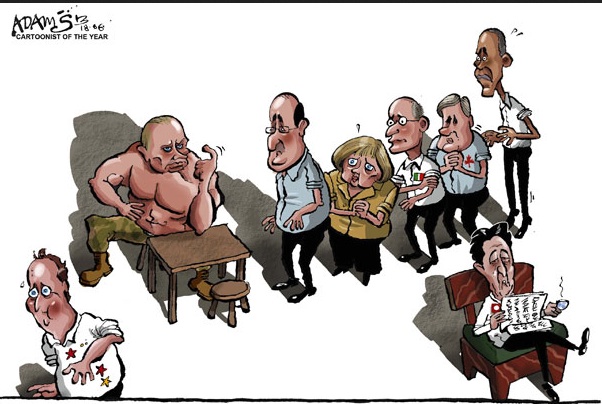
The Group of Eight reverted to its previous, seven-member, format in 2014 when, in the wake of Crimea’s reunification with Russia, the G7 leaders decided to stay away from their planned summit in Sochi and, instead, gathered in Brussels without Russia.

The G7 comprises Britain, Canada, France, Germany, Italy, Japan and the United States.

 G7 to G8?

Entrepreneur Alerts: Snapchat, a Good Name?

Brad Stone and Sarah Frier write:  Evan Spiegel begins a conversation in the offices of his startup, Snapchat, by propping a sneakered foot onto an Eames chair, leaning back, and acknowledging how infrequently he speaks to the press. “I literally have not done this in so long,” he says, before taking a sip from something called a Happy Juice—pineapple, pear, ginger, mint. When asked why, he chooses his words carefully. “I’ve been working,” he says. “This s— is hard!”

Spiegel is the co-founder, chief executive officer, and profane enfant terrible behind one of the largest and fastest-growing social networks on the Internet. At 24, he runs a startup with 330 employees and a valuation north of $15 billion, which claims more than 100 million mostly young users. He’s also incredibly secretive about his business plans and an unknown (and arguably underestimated) figure in the intersecting gossip circles of Silicon Valley and Hollywood.

Now he’s ready to talk about a major turning point for his company. More than three years after Spiegel founded Snapchat at Stanford with his fraternity brother, Bobby Murphy, 26, he’s trying to turn it into a real business. After starting to run select video ads earlier this year, Snapchat is about to begin soliciting other big advertisers with some new numbers that assert its audience is bigger, younger, and more obsessive than anything on television. In a 23-page sales pitch it’s sending to ad agencies this month, the company says more than 60 percent of 13- to 34-year-old smartphone users in the U.S. are active on the service and together view more than 2 billion videos a day. That’s already about half the number of videos people watch on Facebook, which is seven years older and has 10 times as many members. Spiegel’s Snapchat
Snapchat 1

Breaking a Swiss Taboo: Naming Names

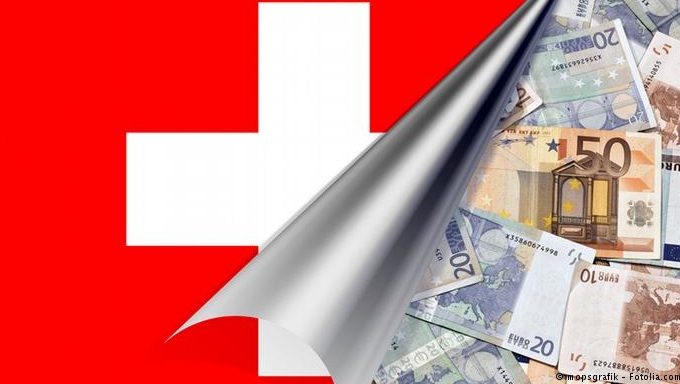
Reuters reports: The Swiss Sunday newspaper “Sonntagszeitung” said the alpine nation was flooded with formal tracing requests from foreign tax authorities. In response, Switzerland had resorted to listing names, birthdates and nationalities in its federal gazette, where official texts are published.

The official justification was that the publication gave those identified the chance to hire a lawyer and seek legal recourse, said the “Sonntagszeitung”, referring to recent roll-backs of Swiss bank secrecy, especially under US pressure.
Formal requests from abroad

The newspaper quoted Swiss federal tax authority official Alexandre Dumas as saying that banks had little interest in seeking customers who no longer kept their accounts in Switzerland.

Instead, foreign countries were sending formal judicial assistance requests, asking for help to trace their missing taxpayers via Switzerland’s federal tax administration in Berne.
In turn, Switzerland was demanding that such countries, when sent Swiss documentation on such suspects, keep their further details confidential.
Further ‘taboo break’

It amounted, however, to a further “taboo break” by Swiss authorities, “Sonntagszeitung” said, while also quoting a Swiss lawyer, Andreas Rüd, who said many suspects did not realize that they could seek Swiss legal recourse.

The Swiss federal gazette’s weekly editions in May contained several dozen decrees, naming citizens of Spain, India, the Netherlands, Germany, Britain, the USA and South Korea and companies registered in Panama, the Bahamas and Spain.
In the case of India and Germany, Dumas denied that their formal requests stemmed from tax authorities recent acquisitions of stolen data listing suspected tax evaders.

Last year in Germany, suspected tax evaders filed a record 40,000 self-disclosure notices on funds they had secreted abroad, prompted by a new law that allows backdated payment of overdue tax coupled with penalties.

In February, the International Consortium of Investigative Journalists (ICIJ) made public data files leaked to French authorities in the so-called SwissLeaks case. The London-based HSBC bank was accused of helping suspects in some 200 countries.
HSBC apologized and its Swiss branch said it had been “cooperately continuously” with Swiss authorities since it became aware of the data theft in 2008.
That followed agreements by Swiss giants UBS and Credit Suisse to pay fines in the US on allegations of helping Americans to evade taxes.

In March, Switzerland signed an accord to automatically share tax information with Australia. Similar accords are planned with the US and EU.

Whose Money?

FIFA Indictments and the Aftermath

Will Hobson writes:   A few years ago, FIFA made a move that seemed to indicate a desire for reform. Facing growing criticism after its controversial decisions involving the 2018 and 2022 World Cups, FIFA hired Michael J. Garcia, a former U.S. attorney, as an ethics investigator. Garcia spent more than a year investigating the bidding process, but resigned in protest after he said FIFA officials inaccurately summarized his findings. FIFA refused to release Garcia’s 450-page report, but announced that it found minimal rule violations. Garcia disagreed, alleging he had uncovered “serious and wide-ranging issues” regarding how FIFA awarded those two World Cups.

Who got hurt in the US? U.S. taxpayers, for one. Charles Blazer, a former FIFA official who pleaded guilty and cooperated with this investigation, admitted to evading taxes for years, and has paid $1.9 million in restitution. More charges of tax evasion could come. Also: poor children who want to play soccer around the world. Many youth soccer organizations in developing countries depend on FIFA grants, acting U.S. Attorney Currie said Wednesday, so money diverted into the pockets of FIFA officials was money not spent on youth soccer in poorer nations.

Is anyone in the US involved?  Attorney General Lynch accused an unnamed American sportswear company of being involved in a bribery scheme to obtain a sponsorship deal for the Brazilian national team. When a reporter asked her if the unnamed company was Nike – the Oregon-based superbrand that has long had a relationship with Brazil’s soccer team – Lynch declined to comment.   Fifa Indictment

FIFA Indictments

Jungle Camps for Trafficked Humans?

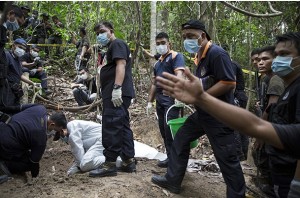
Malaysian police forensic teams, digging with hoes and shovels, began pulling out the remains of dozens of suspected victims of human traffickers on Tuesday from shallow graves discovered at a jungle camp near the border with Thailand.

The government said it was investigating whether local forestry officials were involved with the people-smuggling gangs believed responsible for nearly 140 such graves discovered around grim camps in the country’s northwest.

The dense forests of southern Thailand and northern Malaysia have been a major stop-off point for smugglers bringing people to Southeast Asia by boat from Burma, most of them Rohingya Muslims who say they are fleeing persecution, and Bangladesh

Apparently abandoned in haste, what remained of the camp was little more than a tangle of bamboo and tarpaulin, but one police official, who did not want to be identified, said it could have held up to 400 people.

Malaysian authorities said on Monday they had found 139 graves, some containing more than one body, around 28 camps scattered along a 50-km (30 mile) stretch of the border in the northern state of Perlis.

The grisly discoveries in Malaysia followed the uncovering of similar graves on the Thai side of the border at the beginning of May, which helped trigger a regional crisis. The find led to a crackdown on the camps by Thai authorities, after which traffickers abandoned thousands of migrants in overloaded boats in the Bay of Bengal and Andaman Sea.

Thousands of Rohingya Muslims are ferried by traffickers through southern Thailand each year, and in recent years it has been common for them to be held in remote camps along the border with Malaysia until a ransom is paid for their freedom.

The scale of the discoveries has raised questions about the level of complicity by officials on both sides of the border.

Malaysia’s Home Minister Ahmad Zahid Hamidi said on Tuesday that initial investigations revealed links between forest rangers and smuggling syndicates, Bernama reported, adding that some had been detained by police as part of the probe.

An official said 37 graves had been found at the site, a few hundred meters from the Thai border. As the police teams began to dig, a large supply of body bags and white cotton shrouds was piled on the ground.

Human Trafficking Deaths?

Maid Abuse in Asia?

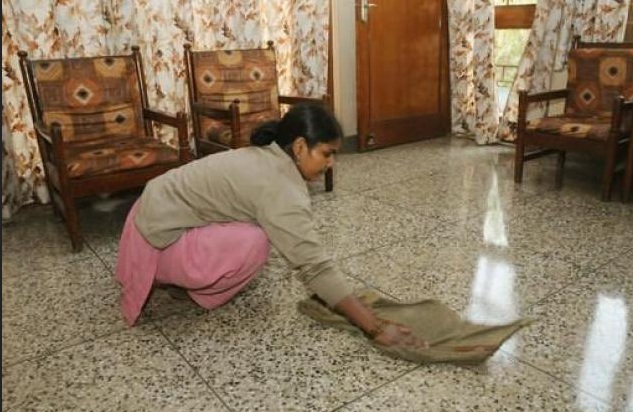
Astrid Zweynert writes:  The promise of a salary five times what she could make at home prompted Nabila to leave Indonesia and her family for a job as a domestic worker in Singapore.

What she did not realize was that it would be eight months before she earned a cent because of deductions made by the employment agency that brought her to Singapore.

With a 17-hour working day that started at 5am, a “very demanding” employer and dinners that consisted of leftovers, the 30-year-old said she was driven to despair.

Employment agencies are part of a complex web spun across Southeast Asia by brokers and agents that allow the domestic workers virtually no say in their working conditions.

Reports of domestic workers being burned, beaten and raped have sparked outrage in Asia, which has the largest share of the world’s domestic workers at more than 21 million.

The Philippines is the only Asian nation to have ratified the International Labour Organisation’s convention on domestic workers, which bans recruiters from taking money from workers’ wages to recoup placement fees, among other measures.

Activists say an example of discrimination against foreign domestic workers is their exemption from Singapore’s Employment Act, which regulates working conditions for locals.

Many domestic workers still work seven days a week even though the government introduced a compulsory weekly day off for them in 2013. Employers can opt out of this by offering to pay.

Often, workers dare not say ‘no’ even if they only get paid an average of S$17 if they work on their day off, Ummai Ummairoh, president of the Indonesian Family Network (IFN) said

Singapore’s maids are forbidden to live away from their place of work, which for many means being on call all the time.

Some said they have to share rooms with their employer’s children or elderly relatives and sleep in the hall or the living room, unable to sleep until the employer goes to bed.

At HOME’s shelter for domestic workers, a Filipina said she was dismissed without notice by her American employer after four months because she did not know how to cook Western food.

Still owing money to the employment agency, she now faces having her work permit cancelled and being forced to return to Mindanao, a particularly poor region of the Philippines.

Unlike in Hong Kong, another top Asian destination for domestic workers, those in Singapore are not allowed to form a union and must rely on informal networks and charities for help.

Ummairoh is proud that the IFN and its counterpart, the Filipino Family Network, provide classes in English, computer studies, hairdressing and make-up skills.

A plan by Indonesian President Joko Widodo to stop domestic workers from working abroad is unlikely to succeed unless there are better jobs available at home, said Ummairoh.
Singapore Maids

Iran Unfrozen?

Bijan Khajehpour writes: Of the issues currently debated among Iranian decision-makers and economists is how the country will use its sizable hard currency holdings once they are released by international banks in the process of sanctions relief. There are different calculations regarding Iran’s frozen assets in international accounts, but the most reasonable figure is $120 billion. Considering that the country’s total trade volume in 2014 was about $160 billion, it is clear that Tehran will have to make a few strategic choices on how to utilize the released funds so that it does not undermine its overall economic development.

So far, since the implementation of the Joint Plan of Action (initiated in January 2014), the Central Bank of Iran (CBI) has repatriated some $25 billion of released funds in the form of cash or gold back to the country. According to Valiollah Seif, the CBI governor, these funds have been used to regulate the domestic currency markets and provide for a stable exchange rate. However, experts agree that a quick repatriation of the remaining funds — an intuitive move to escape future sanctions — would increase liquidity and put pressure on the current value of the Iranian rial. Any repatriation should be paced and rational to avoid negative consequences for the economy.

Another meaningful strategic choice could be the provision of those funds for imports. For example, in some specific cases (such as Iranian funds that have been blocked in UK banks), Tehran seems to have opted for dedicating the funds to the importation of specific medical goods to respond to market requirements. This practice notwithstanding, the Iranian authorities need to be careful, as past experience has shown that importers tend toward importing consumer goods, which would have limited impact on the needed job creation and capital formation. The best example of this behavior pattern is the excessive importation of luxury cars during the Mahmoud Ahmadinejad years, flooding Tehran’s streets with little long-term benefit to the Iranian economy.

Even a concentration on the importation of capital goods would potentially be misplaced, as the country already possesses a substantial industrial base that is underutilized.  Iran Unfrozen

End of Iran Sanctions

When In Greece, Do as the Greeks Do?

Mohamed El_Erian writes:  International Monetary Fund Managing Director Christine Lagarde correctly said last week that the protracted negotiations between Greece and its official creditors required “a comprehensive approach, not a quick and dirty job.”

There are several reasons the “quick and dirty” approach has been the norm for Greece’s interactions with its European partner governments, European institutions and the International Monetary Fund (IMF). And the results have not been all bad.

This piecemeal muddle-through approach had the potential to buy time for Greece and the euro zone to pivot from the urgency of crisis management to thoughtful crisis resolution and effective crisis prevention. It allowed both sides to pursue the type of (internal and regional) political consensus and compromises needed for a comprehensive solution.

It also bought time for all sides to erect the internal defences that would be required if the hopes for a positive outcome gave way to the pressing reality of a more disorderly resolution, such as a forced Greek exit from the euro.

But too little was achieved during this transition period, and it has proved a costly bridge to nowhere.

A significant amount of potentially unpayable Greek debt has been transferred from private creditors to public balance sheets underpinned by European taxpayers. Many of these private entities had been paid handsomely for their willingness to take on the sovereign credit risk of Greece and, thanks to generous bailout funding from the official sector, quite a few have been able to exit without much cost.

Failing to see much sustainable improvement, Greek citizens have been pulling their cash out of banks. This has contributed to wider capital flight that sucks operating oxygen out of the country’s economy and puts a growing number of institutions at risk of bankruptcy.

Greece’s deep and persistent economic problems have caused significant human distress and worsened the structural impairments to future economic recovery and prosperity.

Negotiating tensions between Greece and its creditors have been compounded by co-ordination difficulties among the creditor group itself (what used to be called the Troika: the European Central Bank, European Union and IMF).

The cost-benefit calculation of the “quick and dirty” approach has become less favourable and now approaches acute levels. Yes, official creditors such as the ECB and IMF are under even greater pressure to make new loans to Greece if they hope to be repaid their prior loans.

But such financial engineering no longer fools anyone.

Lagarde’s plea for a comprehensive approach reflects a growing urgency as the inefficiency and cost of the successive Band-Aids have become clear. Yet with the odds favouring another muddle-through or – as is increasingly likely – a messy Graccident, she faces a considerable challenge.

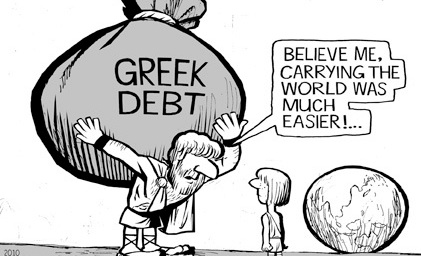
Greek debt