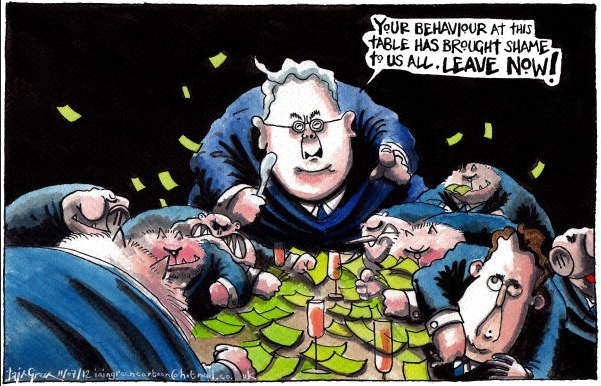
The ever clever Matt Levine suggests that the more banks you charge with crime, the less damaging the charge is. In Texas, the state employees’ pension fund stopped doing business with Credit Suisse last year because it had “a policy against hiring firms convicted of felonies,” but now that basically all the big banks have been convicted of felonies, it has tossed that policy. Welcome back Credit Suisse! We’ve talked before about how charging all the banks with crimes de-stigmatizes those crimes, and I won’t belabor the point.
Our associate Andres Frank testifified before the US Department of Labor on January 15, 2015 on the Credit Suisse exemption. Credit Suisse had pled guilty to a criminal charge of aiding and abetting tex evasion by US citizens. Credit Suisse was granted a temporary exemption, but Maxine Waters, Congresswoman from Callifornia, insisted that a permanent exemption be preceded by hearings.
Perhaps to make it seem that the ‘culture of corruption’ apparent in Credit Suisse could be cured, the CEO stepped down after this hearing. No final decision has yet been rendered.
Matt Levine, the ex-Goldman partner who knows whereof he speaks, writes for Bloomberg: In London, Tom Hayes’s Libor manipulation trial started yesterday and this isn’t exactly legal advice but probably don’t say stuff like this in recorded interviews with criminal investigators?
“I mean I probably deserve to be sitting here because, you know, I made concerted efforts to influence Libor,” Hayes said in a Feb. 1, 2013, interview.
Or:
“The point is you’re greedy,” Hayes said in a 2013 interview with U.K. investigators that Chawla played for the jury. “You want every little bit of money you can get because” that’s your performance metric, he said.
One of my strong beliefs about financial crime is that the words “greed” and “greedy” have no analytical value. In a fraud case — where the accusation is that someone made money — saying that he wanted to make money is just a superfluous appeal to jurors’ emotions, a way to deny the humanity of the bankster whose fate they’re deciding. “His motive was a simple one: greed,” said the prosecutor, annoyingly. But Hayes agreed, and on tape! Not helpful.
Andrea Migliano writes: Simulations are a simple mechanistic answer for the puzzle of why modern hunter-gatherers live with so few kin, but they have huge implications for our understanding of human evolution, and also of human nature.
The fact that we are able to live, interact and cooperate with unrelated individuals and not only with kin has been recently identified as the most fundamental difference between human societies and other animal societies.
Of course, humans have the capacity to be anything, from the most cruel and unequal species, with sex slavery and warfare, to the most cooperative and caring animal, with people donating blood to complete strangers. Good and evil are just the two extremes of our malleable nature. However, the few surviving hunter-gatherers groups show us that without the equality and cooperation between sexes that they share with our distant ancestors many of the characteristics that we like to call “uniquely human”, such as caring for others and fairness, would probably not have evolved.
Peter WIlson writes: Until recently, the potential for using timber in towers was very limited. Platform timber frame – the system used, for example, to construct more than 70% of Scotland’s housing, by my calculations – is effective up to seven storeys in height. In Scotland, we build four or five storeys in timber as a matter of course. But any higher than seven storeys and structural challenges and simple economics always made it less effective.
The game-changer reached the skyline in 2009, not in North America but in London. The Stadthaus in Hackney’s Murray Grove, designed by Waugh Thistleton Architects and Techniker engineers, is a nine-storey building comprising 29 apartments, constructed almost entirely from cross-laminated solid wood panels. These provide strength, stability and, importantly, a convenient way of locking in considerable volumes of atmospheric carbon dioxide.
This became possible following the commercial development of cross-laminated timber in Austria in the 1990s, its increasing application in the UK, and the decision by Hackney Council that the carbon agenda was more important than the strict application of fire regulations that related to old forms of timber technology.
Vancouver-based architect Michael Green is unequivocal:
“We grow trees in British Columbia that are 35 storeys tall, so why do our building codes restrict timber buildings to only five storeys?”
Until recently, the potential for using timber in towers was very limited. Platform timber frame – the system used, for example, to construct more than 70% of Scotland’s housing, by my calculations – is effective up to seven storeys in height. In Scotland, we build four or five storeys in timber as a matter of course. But any higher than seven storeys and structural challenges and simple economics always made it less effective.
The game-changer reached the skyline in 2009, not in North America but in London. The Stadthaus in Hackney’s Murray Grove, designed by Waugh Thistleton Architects and Techniker engineers, is a nine-storey building comprising 29 apartments, constructed almost entirely from cross-laminated solid wood panels. These provide strength, stability and, importantly, a convenient way of locking in considerable volumes of atmospheric carbon dioxide.
This became possible following the commercial development of cross-laminated timber in Austria in the 1990s, its increasing application in the UK, and the decision by Hackney Council that the carbon agenda was more important than the strict application of fire regulations that related to old forms of timber technology.
This ability to use a renewable material to provide a positive response to a key environmental issue facing the construction industry, namely global warming, is nothing short of transformational. The use of concrete is already responsible for 5% of global greenhouse-gas emissions.
The IC3 received 269,422 complaints consisting of a wide array of scams affecting victims of all demographic groups.
The most frequently reported crimes are broken down in the chart below, which also illustrates how different scams are targeted at different demographics. While confidence / romance scams, in which the criminal establishes an online relationship with its victim and later asks for money, are mostly targeted at middle-aged women, men are more likely to fall for too-good-to-be-true car listings and become victims of auto fraud.
For more information on the different kinds of online scams visit the IC3’s website or check out its latest annual report on Internet crime.
This graphic charts the financial losses suffered by victims of Internet crimes in the United States in 2014.
Amadou Sy writes: As they prepare for the fast-approaching Third International Conference on Financing for Development in Addis Ababa (July 13-16, 2015), policymakers, private sector actors, and other global leaders should examine the types of external financial flows (defined as the sum of gross private capital flows, official development assistance (ODA), and remittances) that different groupings of countries receive in order to best support the implementation of the post-2015 development agenda. Understanding how different sources of development finance flow to different parts of Africa can help identify priority areas of intervention.
External financial flows to sub-Saharan Africa have increased significantly over the past 20 years or so. In fact, the volume of external flows reached about $120 billion in 2012—from $20 billion in 1990.
But to what extent have these changes in the scale and composition of external flows to sub-Saharan Africa equally benefited countries in the region? Did the rising tide lift all boats? Is aid really dying? Are all countries attracting private capital flows and benefiting from remittances to the same degree? Finally, how does external finance compares with domestic finance?
We find that the type of external financial flow to non-resource-rich high-growth (NRRHG) and fragile states/low-income countries differs significantly from that of both middle-income and oil-exporting countries. Our main finding is that changes in both the scale and composition of external capital flows have not benefited all sub-Saharan African countries equally. We also find that the claim of the demise of aid is premature, the growth of private capital flows has benefited only a few countries, remittances have become significantly more important for some countries, and the rise of external flows means that sub-Saharan African countries will have to manage the volatility associated with such flows. In particular, we find that:
Fragile countries and LICs, not surprisingly, are regional laggards in terms of access to both external and domestic finance.
Even resource-rich countries, which are able to attract large volumes of private capital flows, fare relatively poorly when external financing flows are scaled to the size of their economies. In addition, these countries, although they raise more domestic government revenues than other countries, do so mostly because they benefit from fiscal revenues linked to volatile commodity prices.
Francophone countries both in the WAEMU and the CEMAC are not able to attract the same level of private capital flows as other sub-Saharan African countries. Remittances are high for middle-income countries. When external financing is contrasted with domestic financing, it seems that sub-Saharan African countries do not appear to have a natural hedge to the risks of reversal of external financial flows.
Andrew Sheng and Geng Wiao write: The People’s Bank of China has cut interest rates for the third time in six months, in order to lighten the debt burdens of companies and local governments. But the PBOC’s monetary easing – accompanied by complementary fiscal and administrative adjustments – has done little to increase demand for new loans. Instead, it has triggered a sharp rise in China’s stock markets. The question now is whether that could turn out to be a very good thing.
There is little doubt that China’s economy is shifting gears very quickly. Official statistics show a slowdown in real growth in the old manufacturing and construction-based economy, reflected in declining corporate profits, rising defaults, and an increase in non-performing loans in poorer-performing cities and regions.
With harder budget constraints imposed by the central government, local officials and state-owned enterprises (SOEs) have curbed their spending which could lead to localized balance-sheet recessions.
Increased innovation and the rise of the services sector have helped China move beyond its role as the world’s factory to develop its own version of the Internet of Things, driven by platform companies like Alibaba and Tencent.
Some 14.3 million new stock-market trading accounts were opened in China last year. The revival of China’s stock market in a low-interest-rate environment represents an important shift in asset allocation away from real estate and deposits. Roughly 50% of Chinese savings – amounting to as much as half of GDP – lie in real estate alone, with 20% in deposits, 11% in stocks, and 12% in bonds.
Rising stock-market capitalization also helps to reduce the real economy’s exposure to bank financing. The US is much more “financialized” than China, with stocks and bonds amounting to 133% and 205% of GDP, respectively, at the end of 2013. Those ratios were only 35% and 43%, respectively, in China.
But the rapid run-up in equity prices also carries considerable risks – namely, the possibility that the financial sector will misuse the newfound liquidity to finance more speculative investment in asset bubbles, while supporting old industries with excess capacity.
Even if Chinese retail investors begin to channel their money toward innovative ventures, identifying the companies and industries most likely to succeed will be difficult.
As China’s animal spirits are channeled, they will increasingly test the authorities’ resolve to resist price intervention, instead allowing market forces to propel the business cycle.
Indeed, at the end of last year, China still had CN¥22.7 trillion of statutory reserves, amounting to 36% of GDP, that had long been used to “sterilize” its large foreign-exchange holdings.
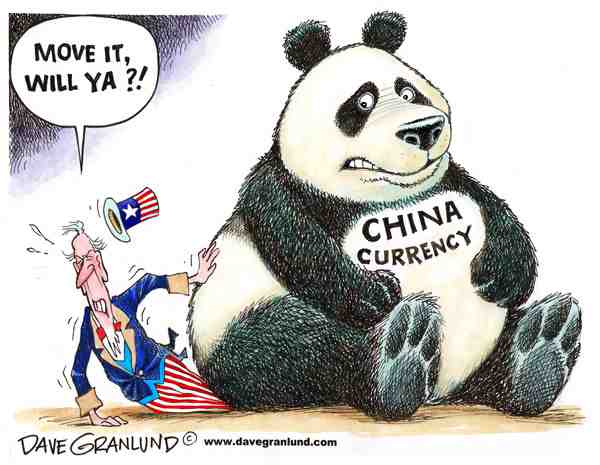
Lee Jong-Wha writes: By the end of this year, the International Monetary Fund will decide whether the Chinese renminbi will join the euro, the Japanese yen, the British pound, and the US dollar in the basket of currencies that determines the value of its international reserve asset, the Special Drawing Right (SDR).
The IMF created the SDR in 1969 to supplement existing reserve currencies, thereby providing the global financial system with additional liquidity.
To qualify for inclusion, the Chinese government has eased its capital controls and liberalized its financial markets considerably. Yet the US, in particular, reluctant to welcome China into the fold.
This is all the more problematic given that the 2008 financial crisis laid bare the international reserve system’s inadequacy when it comes to ensuring sufficient liquidity for emerging economies.
This continued vulnerability reflects a collective failure to reform the global monetary system. China has championed a transition to a multi-currency reserve system, in which the SDR and an internationalized renminbi would be used more widely, including in countries’ currency reserves. But its attempt in 2010 to add its currency to the SDR basket failed, because the renminbi was not “freely usable.”
Since then, China has implemented a series of reforms to increase the renminbi’s usage in foreign trade and direct investment, as well as in cross-border financial investment. Fourteen renminbi-clearing banks have been established worldwide
Chinese policymakers have signaled further financial liberalization by removing the domestic cap on banks’ deposit rates, thereby giving overseas institutional investors easier access to capital markets. The PBOC is also likely to widen the currency’s trading band and move toward a more flexible exchange-rate regime.
As a result of these efforts, the renminbi has emerged as the second most used currency in trade finance.
Of course, China stands to gain much from the renminbi’s emergence as an alternative international reserve currency.
But China must confront significant risks. Capital-account liberalization and renminbi internationalization invite potentially volatile cross-border capital flows, which could, for example, trigger rapid currency appreciation.
Even if China manages to mitigate such risks, unseating the US dollar as the dominant global currency will be no easy feat. Inertia favors currencies that are already in use internationally, and China lacks deep and liquid financial markets, an important precondition that any international reserve currency must meet.
If, however, China succeeds in developing a more convertible capital account and bolstering its financial system’s efficiency, the renminbi is likely to emerge as a new international reserve currency, complementing the US dollar and the euro.
For now, China is focused on winning the renminbi’s inclusion, even with a small share, in the SDR currency basket. The IMF’s major shareholders should seriously consider it. The renminbi’s continued internationalization, not to mention further progress on critical financial reforms, would contribute to the creation of a more stable and efficient global reserve system.
Samura Kamara writes: China’s decision to establish the Asian Infrastructure Investment Bank has sparked a lively debate among governments, global finance experts, and development specialists.
The mandates of individual development banks vary. The AIIB, for instance, will focus solely on infrastructure. The African Development Bank (AfDB), the presidency of which I am currently seeking, has a far more expansive mandate. But all of these institutions share an overarching goal: to lift people out of poverty and foster sustainable development.
Leaders of these organizations must make complicated choices in allocating their finite resources. For example, they must balance the battle against poverty and hunger against efforts to improve gender equality, increase access to education, or tackle corruption.
Fifteen years ago, the world adopted the Millennium Development Goals to achieve specific targets for improving human welfare in the new century. Today, despite the MDGs’ notable successes, too many of the targets remain unachieved. As the world prepares to agree upon new Sustainable Development Goals to succeed the MDGs, we must put in place the policies needed to ensure that the targets can be met.
A prerequisite for the success of any development bank or other multilateral institution is adherence to the highest standards of transparency and accountability.
Proper regulation and scrutiny is crucial to an international organization’s success, and robust environmental, labor, and procurement standards are essential to the mission of all development lenders. These institutions’ leaders must always remember for whom they are ultimately working; local communities must be empowered to play a role in shaping the development agenda, and more must be done to engage with them directly, through a fully devolved structure.
Mechanisms of accountability are not just auditing devices. Such lenders should not operate in a vacuum. Many governments possess years of accumulated institutional knowledge. Lending institutions that not only provide money, but also exchange ideas, can significantly improve the outcome of their work.
Indeed, by sharing knowledge, methods, and research with their peers and partners, organizations like the AfDB are better-placed to ensure that the highest standards and best practices are widely adopted.
The AfDB has already incorporated many of these practices into its operating framework, providing it with a foundation for continued growth and service. Those putting in place the policies, personnel, and practices of the AIIB would be wise to adhere to this model.
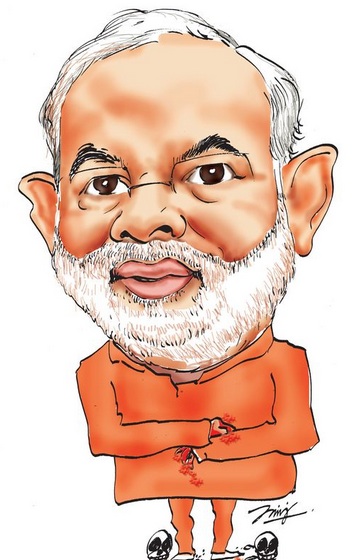
Soutik Biswas writes: Mr Modi ran a presidential-style campaign, promising achhe din, or better times, if elected. It is a promise which his supporters continue to cling to, and his detractors sneer at, saying it was a deceit to capture political power.
A poll by Mint newspaper found the prime minister has an approval rating of 74%, although down eight percentage points since last August. Another poll by the Times of India found 47% of the respondents saying that Mr Modi’s performance in government had been “somewhat good”, and an ambivalent quarter saying that it had been “neither good, nor bad”.
In truth, Mr Modi faces little competition: the Congress party, under Sonia and Rahul Gandhi has still not recovered from last year’s debacle, despite the latter’s spirited recent efforts to pick up the gauntlet. India’s Grand Old Party remains largely bereft of new ideas to fire the imagination of India’s restless young, who form the bulk of voters.
Inflation has been tamed, and the fiscal deficit contained. For both, Mr Modi should thank cheap commodity – mainly oil – prices. Electricity generation has surged to a record high.
His government so far has been free of scams, and he is making his ministers and bureaucrats work hard. Plans to auction mineral rights – starting with this year’s coal auction – should check corruption and foster transparency. He has energised India’s foreign policy, openly courting countries like Japan, Australia, Israel and the US. He is mining the diaspora. Taking the lead in evacuating stranded people in conflict-zones like Yemen and rushing relief to earthquake-ravaged Nepal has earned his government rightful praise. “Two foreign policy priorities have emerged: South Asia and the management of a larger periphery with a focus on China,” says Harsh V Pant of King’s College, London.
There are reports of industrialists, bureaucrats and politicians saying that corruption at the top has “declined dramatically”.
But all of this is still not translating into a resurgent economy: companies are not performing well, industrial output is flat, bank credit is languishing, the property market is gloomy.
The goods and services tax, India’s single biggest tax reform after Independence, appears to be embroiled in familiar political differences, and many believe that a watered down version is now being pushed through in what is seen as a shoddy compromise..
There is talk about reducing bloated government, but no radical reforms seem to be on the table. Some of Mr Modi’s ambitious projects so far look like retreads of older ones. Failure to fix the basics could easily hobble each programme.
Mr Modi wants to set up 100 smart cities, but most of India’s main cities have turned into urban dystopias. Nobody quite knows what Digital India means in a country where the elementary mobile telephone network is broken.
Mr Modi raised massive hopes of transforming India; the tyranny of high expectations can bite badly.
Some 13 million Indians are seeking jobs every year, and if Mr Modi cannot get them work, he won’t have their votes. This is no longer an India which is endlessly willing to wait patiently. Mr Modi must know that – and that he needs to do more.