The Silk Road Opens

Angela Stanzel writes:  Since 2013, China has been hyping its New Silk Road project. It launched a massive public relations campaign – which even held out the prospect of “Silk Road Tourism” – to turn the idea of a global transportation network into an incentive to cooperate with China and an expression of an Asian “community of destiny”. But China will face huge challenges in making the New Silk Road a reality. One of the places where China had begun re-construction of ancient Silk Road links early on is Pakistan. But after decades, progress has been limited. Despite China’s commitment to the Silk Road project, it’s not clear that it is going anywhere.

The “Belt and Road” initiative” includes two elements, a Silk Road Economic Belt and the 21st Century Maritime Silk Road; the aim is to create a northern road corridor and a southern maritime corridor to connect China with Europe. Beginning with Jiang Zemin in 1996, the Silk Road narrative has been long used by Chinese leaders to increase China’s – mainly economic – cooperation with other countries in Central Asia, South Asia and the Middle East, Africa – and in Europe.  Since 2013, the new Chinese leadership under Xi Jinping has developed this narrative that integrates existing projects in two mega “Belt and Road” initiatives.

The Silk Road initiative has also given a new impetus to China’s infrastructure development in Pakistan. China’s construction of the Karakoram Highway/Road from China to Pakistan dates back to the beginning of the 1970s – long before the “Silk Road” hype of the last few months. China has financed and developed the Gwadar port on the Arabian Sea since the 1990s. Since 2013, China and Pakistan have been planning a China-Pakistan Economic Corridor, which connects Gwadar with China’s western Xinjiang region. According to Chinese president Xi Jinping, the Economic Corridor is “a major project of the ‘Belt and Road’ initiative”  How Does the Silk Road Wind
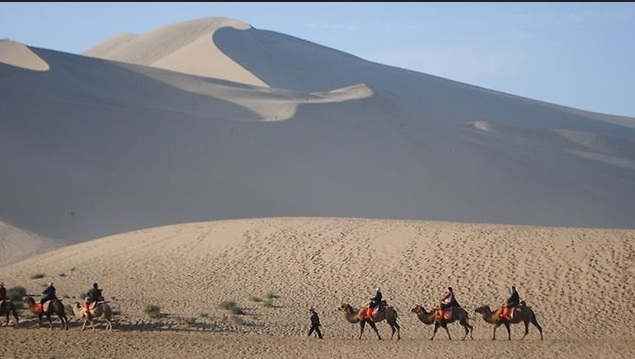
 Silk Road?

Entrepreneur Alert: Obama Opens Opportunities Worldwide

Kaj Leers writes:  Obama has been judicious on most key crises of the day. His caution and care have been notable—and underrated. He has sometimes taken the notion of strategic restraint too far, as with a premature U.S. military departure from Iraq, excessive nervousness about any entanglement in Syria’s civil war, and ongoing plans for a complete military withdrawal from Afghanistan next year. But Obama’s discipline has often been quite wise and quite beneficial to the nation, especially in regard to Russia, China, and Iran. As his presidency begins to wind down, the country’s fundamentals of national power as measured by economic growth, high-technology, industrial entrepreneurship and productivity, fiscal and trade deficits, and military power are generally no worse and in some cases modestly better than when he entered the White House.

Notable contrasts between his first secretary of state and his second reveal John Kerry as a master of diplomacy.    On behalf of the President, Kerry has furthered an Asia-Pacific rebalance,   The tricky Russia relationship is being re-considered.  The Iran deal is momumental in terms of nuclear safety and the turmoil in the Middle East.  Obama Opens Opportunities for Women Entrepreneurs

Entrepreneur Breeds Crocodiles

Settling the Middle East?

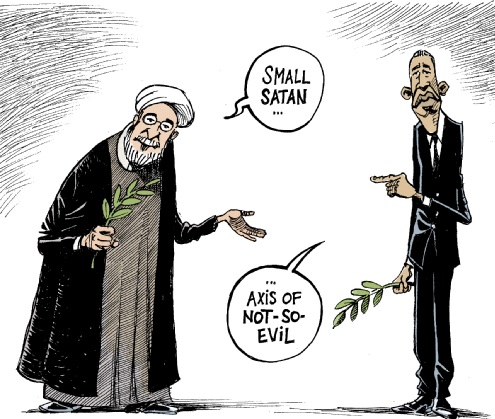
Roping off the Middle East and letting them solve their own problems sounds like a good idea, but simply won’t work.  President Obama is facing the problem head on.  Here is an interview by Jeffrey Goldberg in which the President describes his plans and hopes.

Tensions between the U.S. and the Gulf states, I came to see, have not entirely dissipated. Obama was adamant on Tuesday that America’s Arab allies must do more to defend their own interests, but he has also spent much of the past month trying to reassure Saudi Arabia, the linchpin state of the Arab Gulf and one of America’s closest Arab allies, that the U.S. will protect it from Iran. One thing he does not want Saudi Arabia to do is to build a nuclear infrastructure to match the infrastructure Iran will be allowed to keep in place as part of its agreement with the great powers. “Their covert—presumably—pursuit of a nuclear program would greatly strain the relationship they’ve got with the United States,” Obama said of the Saudis.

In the wake of what seemed to have been a near meltdown in the relationship between the United States and Israel, Obama talked about what he called his love for the Jewish state; his frustrations with it when it fails to live up to both Jewish and universal values; and his hope that, one day soon, its leaders, including and especially its prime minister, will come to understand Israel’s stark choices as he understands Israel’s stark choices. And, just as he did with Saudi Arabia, Obama issued a warning to Israel: If it proves unwilling to live up to its values—in this case, he made specific mention of Netanyahu’s seemingly flawed understanding of the role Israel’s Arab citizens play in its democratic order—the consequences could be profound.   Obama and the Middle East

US and Iran

SEC Commissioner Objects to Sanctions

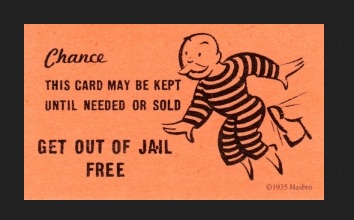
Yves Smith writes;  SEC Commissioner Kara Stein has waged an uphill battle to have the agency stop giving financial firm miscreants waivers from sanctions that would otherwise take effect when they enter into settlements for bad conduct. Stein took issue with the SEC’s prior stance, that these “get out of jail” cards were issued freely to big firms by virtue of simply asking for them. The tacit assumption seemed to be that these firms were big reputable players and hence imposing the normal legally-mandated sanctions was overkill. In fact, as we know too well, the behemoth banks do disproportionate harm by their bad actions, and recent history has shown that they’ve misbehaved across a large swathe of businesses.

Despite the fact that a single SEC commissioner has limited power, Stein has managed to stymie the granting of some of these waivers by teaming up with like-minded SEC Commissioner Luis Aguilar on cases where Chairman Mary Jo White has had to recuse herself. Stein and Aguilar’s opposition to granting waivers on a recent Bank of America settlement led to further negotiations that imposed additional requirements upon the Charlotte bank. Stein and Aguilar has also been pushing for tougher punishments, including lifetime bans from SEC regulated entities for bank executives who break securities laws.

Below is Stein’s dissent on the granting of waivers to the five banks that admitted to a criminal conspiracy to rig the spot foreign exchange market in dollars and Euros. As Stein points out, the issue isn’t just the severity of this particular incident; it’s that theses firms are recidivist bad actors yet have been granted waivers on the barmy presumption that they are for the most part, corporate citizens in good standing.

Get Out of Jail Free

Obama Pushes for TPP

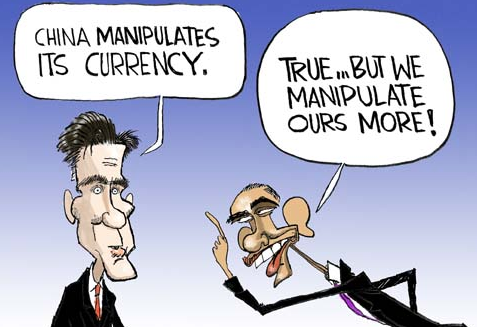
Ian Talley writes: The Obama administration, facing a push by U.S. lawmakers to insert language that targets currency manipulation in a major Pacific trade deal, is pitching a less-aggressive approach that would bolster international oversight and transparency of currency policies.

The Treasury Department says the “historic new approach” it envisions would bring exchange-rate provisions into trade negotiations for the first time and strengthen U.S. efforts to persuade countries not to use their currencies to gain unfair competitive advantages.

The administration hopes its strategy would help fend off efforts—largely by members of the president’s own party—to include provisions for binding sanctions against currency manipulators. The White House says those measures would sink the Trans-Pacific Partnership trade deal, a pillar of President Barack Obama’s plan to boost the U.S. economy and fortify economic and strategic ties in Asia.

The Senate late Friday passed legislation on what is known as fast-track authority, propelling the bill toward what is expected to be an even-more difficult path in the House next month. The Senate rejected a currency-manipulation amendment in the measure, also known as trade promotion authority, which would allow the Obama administration to complete the trade pact with Japan and 10 other nations and bring it to Congress for up-or-down votes as soon as this fall.

The Treasury Department’s proposal—pitched to TPP member countries in recent weeks—is preliminary and faces major hurdles. One option under consideration is to require better data on the key metrics for gauging currency management such as details on foreign-currency reserves and interventions. Many countries don’t provide that data to international institutions such as the International Monetary Fund, often leaving outside economists guessing about the extent of exchange-rate interventions.

Currency Issues

Balkan Dangers?

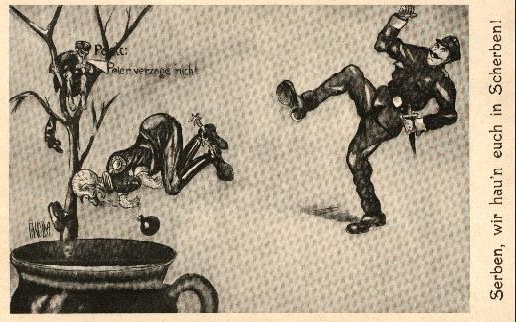
Dominique Moise writes: The Balkans continue to constitute a threat to European peace, just as they did on the eve of World War I and at the end of the Cold War, when Yugoslavia’s implosion led not only to Europe’s first war since 1945, but also to the return of genocidal murder. The recent fighting in Macedonia, which left eight police officers and 14 Albanian militants dead, raises the specter of renewed violence.

The region remains an explosive and confused reality, one capable of threatening Europe’s stability, already on a knife’s edge following Russia’s adventurism in Ukraine. The region is a volatile mix of rising nationalism, deep economic frustration, and disillusionment about progress toward membership in the European Union.

From the Serbs’ perspective, attacks by Albanian nationalists were more likely the beginning of an attempt to enlarge their territory at the expense of their Christian neighbors, beginning with the weakest.

It is views like these that, along with the violence, risk reinforcing the deep ambivalence within the EU about the prospect of any new enlargement. The precedent of Greece, hardly a poster child for European accession, seems especially relevant when applied to its northern neighbors, which are similarly plagued with high rates of corruption and unemployment. And some in the EU are put off by the seeming affinity of the Orthodox Church and its adherents toward Vladimir Putin’s Russia, or by the region’s large Muslim population.

Europhilia has begun to give way in places like Belgrade to a pining nostalgia for the Yugoslav era. “At that time, we were respected,” was how a retired Serbian diplomat put it to me. “We were one of the Great countries of the Non-Aligned Movement.”

Similar sentiments are evident in Bosnia, and even in Croatia, an EU member since 2013. During the communist era, Yugoslavia provided a sharp contrast with the Soviet bloc. Economically and socially, its citizens were far better off than those of Central Europe. Today, their fortunes have flipped. Poland is booming, while Yugoslavia’s successor states (with the exception of Slovenia) are struggling.

Russian re-conquest of Crimea provides a gleeful talking point for ultra-nationalist Serbs bemoaning the loss of Albanian-majority Kosovo. Meanwhile, the Gazprom office in central Belgrade offers a large, visible proof of Russia’s energy presence in the country.

The truth, of course, is that there is no “Russian model” for the Balkans beyond the use of brute force. Ever-closer ties with Europe remain the best way forward for the region’s residents and the EU alike. In a time of severe economic crisis, European ideals remain, in spite of everything, the only efficient antidote to virulent nationalism. For the Balkans, as for the rest of Europe, the EU is the only alternative to a future as bad as the worst of the past.

Serbia

Beyond the AIIB and Development

On the Rocky Road to Globalization

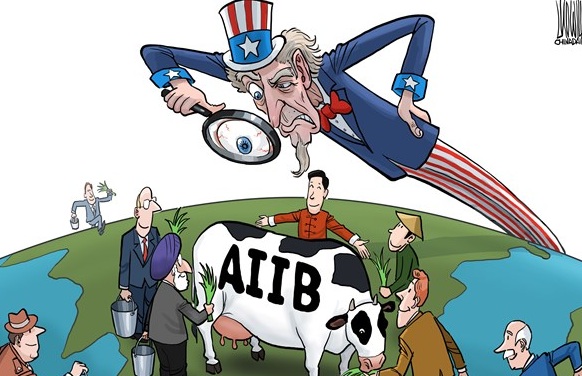
Anne-Marie Slaughter writes:  China’s success in establishing the Asian Infrastructure Investment Bank has been widely regarded as a diplomatic fiasco for the United States. After discouraging all US allies from joining the AIIB, President Barack Obama’s administration watched as Great Britain led a raft of Western European countries, followed by Australia and South Korea, into doing just that.

Worse, the Obama administration found itself in the position of trying to block Chinese efforts to create a regional financial institution after the US itself was unable to deliver on promises to give China and other major emerging economies a greater say in the governance of the International Monetary Fund.

China will control half of the voting shares in the AIIB, initially capitalized at $1 billion. Unless the Western victors of World War II can update the rules and institutions that underpinned the post-war international order, they will find themselves in a world with multiple competing regional orders and even dueling multilateral institutions.

From the point of view of developing countries in need of capital, competing banks probably look like a good thing. But what about the impact on actual development, the likelihood that individual citizens of poor countries will live richer, healthier, more educated lives? World Bank conditionality often includes provisions on human rights and environmental protections that make it more difficult for governments bent on growth at any cost to run roughshod over their people. Competition is good, but unregulated competition typically ends up in a race to the bottom.

China’s establishment of the AIIB is the latest sign of a broader move away from the view that aid to developing countries is best provided in the form of massive government-to-government transfers. Power and wealth are not only diffusing across the international system, but also within states.

The new model of development may be one based on the recognition “that the United States is one of many actors, and that countries require investments from multiple sources to achieve sustained and inclusive economic growth.” Initiatives such as Feed the Future, the US Global Development Lab, and Power Africa combine “local ownership, private investment, innovation, multi-stakeholder partnerships, and mutual accountability.”

This new model moves beyond the mantra of “public-private partnership.” It genuinely leverages multiple sources of money and expertise in broad coalitions pursuing the same big goal.

Power Africa takes a “transaction-centered approach,” creating teams to align incentives among “host governments, the private sector, and donors.” Unlike big government-to-government transfers, which can often end up in the pockets of officials, the point is to ensure that deals actually get done and investments flow to their intended destination.

Skeptics will say that the US is simply making a virtue of necessity. The federal government no longer has billions of dollars to dole out to foreign governments, while China is far more centralized and less beholden to its taxpayers.

That criticism contains some truth. But, over the longer term, the new US model of development is actually far more resilient and sustainable than the old government-to-government model. Only societies with thriving sectors free of government control can participate in these broad coalitions of public, private, and civic actors.

Overall, the AIIB is a positive development. More money aimed at helping poor countries become middle-income countries and at middle-income countries to help them provide transport, energy, and communication for their people is a good thing. But the Asian way is not the only way.

AIIB and US

Alibaba a Counterfeiter?

What Do US Bank Guilty Pleas Add Up To?

Matt Levine at Bloomberg is not hopeful about the banks changing their ways after guilty pleas in the United States this week.   Here is the notice JP Morgan Chase sent its clients:  JP Morgan Chase DIsclosure Notice  

The JP Morgan Cover Letter with Disclosers sent with the disclosure begins: The purpose of this letter is to clarify the nature of the trading relationship between you and the Corporate & Investment Bank at JPMorgan Chase & Co. and its affiliates (together, “JPMorgan” or the “Firm”) and to disclose relevant practices of JPMorgan when acting as a dealer, on a principal basis, in the wholesale spot foreign exchange (“FX”) markets.  We want to ensure that there are no ambiguities or misunderstandings regarding those practices.

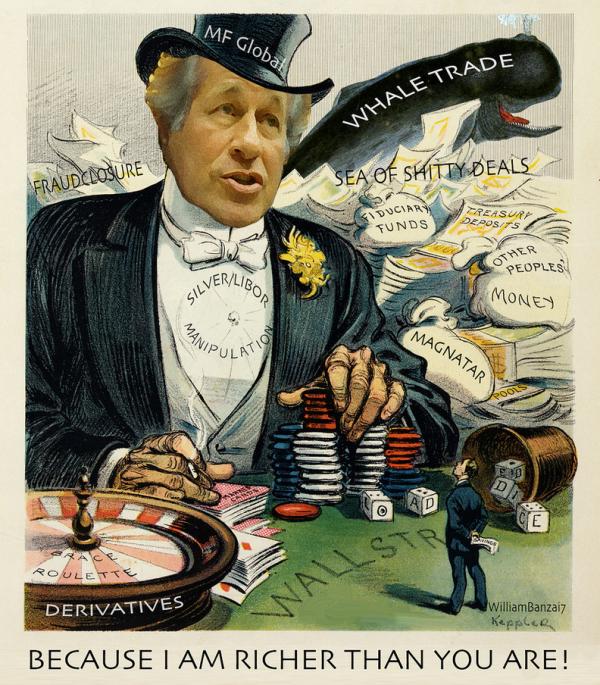
Mea culpa?  Guilt?  JP Morgan Chase CEO Jamie DImon does nothing but whine about regulations.  Is it time to hold banks to a reasonable standard?  Is it time to jail some of the big players?  Do we have to rethink banking?  Maybe.

Jamie Dimon