Tech Companies Object to TPP

On the Rocky Road to Globalization

More than 250 tech companies have signed a letter demanding greater transparency from Congress and decrying the broad regulatory language in leaked parts of the controversial Trans-Pacific Partnership trade bill.

“TPP’s trade secrets provisions could make it a crime for people to reveal corporate wrongdoing ‘through a computer system’,” says the letter. “The language is dangerously vague, and enables signatory countries to enact rules that would ban reporting on timely, critical issues affecting the public.”

If TPP’s backers truly believed that they were doing the people’s work, they’d have invited the people into the room. The fact that they went to extreme, unprecedented measures to stop anyone from finding out what was going on  tells you that this is something being done *to* Americans, not *for* Americans.

There was a notable absence from the letter of big, international tech companies like Apple, Google and Facebook. Apple and AT&T are part of the president’s International Trade Advisory Committee (which advises the Oval Office on matters relating to industry.

Several companies and industry trade groups sent statements to Congress in support of the legislation, among them Cisco and the Consumer Electronics Association. The Seminconductor Industry Association (SIA) said: “SIA strongly supports trade promotion authority (TPA) and applauds the introduction of this bipartisan legislation. TPA paves the way for free trade by empowering US negotiators to reach final trade agreements consistent with negotiating objectives laid out by Congress. Free trade is especially critical to the US semiconductor industry, which designs and manufactures the chips that enable virtually all electronics.”

Of particular concern to the tech community is an “Investment Chapter” of the TPP drafted in 2010 and leaked by Wikileaks. The letter’s signatories argue the provisions would allow corporations to use an international legal system to override national sovereignty.“

“The future of the internet is simply too important to be decided behind closed doors,” said Evan Greer, campaign director of Fight for the Future.
Greece Reconsidered

, it is odd to claim that a crisis caused by a 10-year infusion of excessive cash can be cured by means of further stimulus. The theory that it can assumes that Greece lacks sufficient “effective demand,” or the capacity of consumers to purchase goods and services at current prices. Restore this and a virtuous circle of growth will follow.

A single statistic should suffice to cast doubt on this assumption. Greece’s gross domestic product was similar in 2001 and 2014, measured in constant 2005 prices, meaning that “effective demand” in these two years before and after the debt crisis was approximately equal. And yet unemployment in 2014 was almost triple the 2001 level. The key to resolving Greece’s economic woes must, therefore, lie in something other than demand.

Equally telling is that during the five years since the crisis began, Greek imports have exceeded exports by almost 60 percent. Although Greeks are certainly buying fewer foreign goods than in 2007, it is clear that insufficient “effective demand” is not the root problem here. What has been lacking is “effective supply” — the ability of the Greek economy to produce enough competitively priced goods to sell and grow.

So why has the recession been so deep and so lasting, if not because of austerity? The answer lies in what happened between 2001 and the start of the financial crisis.

After the euro was introduced in 1999, Greece received more in credit than it needed every year, between 5 percent and 10 percent of gross domestic product. Populist politicians funneled this excess money to their political clients, explaining the windfall as a “development dividend” that resulted from “structural convergence” with the core euro area countries. This was a fantasy, because there was no such convergence. Yet, it was natural for the recipients of this largesse to see it as real and permanent income.  Greece Reconsidered

Banks Plea Guilty to Criminal Charges

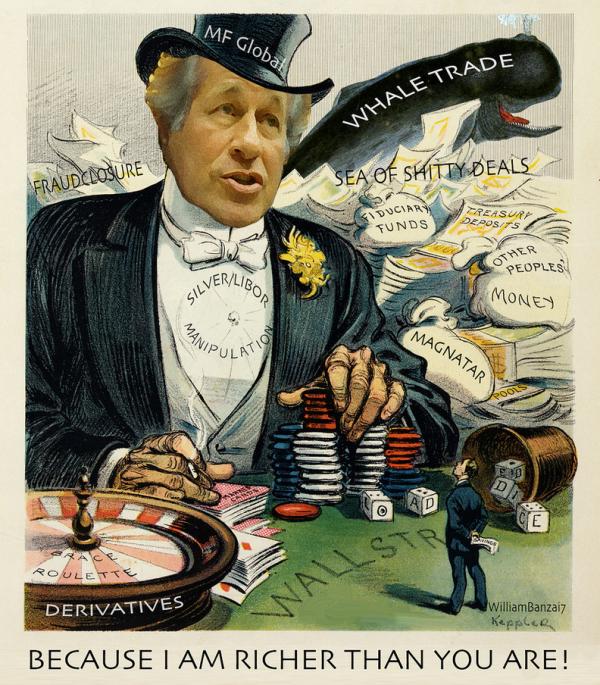
Five of the biggest banks in the world pleaded guilty Wednesday to criminal charges and essentially admitted they defrauded their customers. What’s significant about this settlement — beyond the $5.6 billion in fines the banks must pay — is that it marks the end of the practice of allowing banks to neither admit nor deny wrongdoing.

The Justice Department insisted not only on criminal pleas but also that they come from the parent companies and not obscure overseas units, as some banks previously had been allowed to do. And the fines are substantial: The $2.5 billion criminal antitrust penalty that Citicorp, JPMorgan Chase, Barclays and Royal Bank of Scotland collectively must pay is the largest of its kind in U.S. history. Justice also ripped up a 2012 nonprosecution agreement with Switzerland’s UBS and forced the bank, a repeat offender, to plead guilty to felony wire fraud stemming from an older violation.

These guilty pleas may make it easier for other financial institutions, investors and pension funds to seek redress in civil court. The transcripts from the currency traders’ online chat rooms will undoubtedly prove most helpful. “If you aint cheating, you aint trying,” reads one.

So will Wednesday’s deal change the way banks do business? The case of UBS gives one pause.. All told, banks have paid about $100 billion in fines since the financial crisis.

Another way to discourage fraud without unduly punishing an entire industry is to prosecute individuals. Justice officials made it clear that they intend to pursue members of “The Cartel,” the self-described group of traders who colluded from 2007 to 2013 to manipulate currency rates in their favor. To really change behavior, those traders’ superiors — and the executives to whom they report — should have to answer for their inability to stop the criminal misconduct in their midst.

Our associate Andreas Frank has provided continuous documentation of the criminal activities of banks since the inception of this website.  He testified in a Labor Department hearing in January, 2015, in which Credit Suisse asked for an exemption after they pled guilty to aiding and abetting tax evasion in the US.  They could not continue to do their 2 billion dollar pension business in the US as ‘criminals’ unless they got this exemption.  No  decision has been reached to date.  Criminal pleas only have teeth when they mean something.

Jamie Dimon

Coal Power and Immigration in Southeast Asia

Report from Southweat Asis:

Reliance on Coal:  The government intends to push ahead with plans to increase Burma’s reliance on coal-fired power plants to 33 percent of the country’s total generating capacity by 2030, according to a deputy minister from the Ministry of Electric Power.

Coal-fired power plants that use clean-coal technology will not be abolished while natural gas, wind power, solar energy and hydro-power electricity projects must be implemented to produce more electricity for the benefit of the public and state.

Burma’s current energy mix sees 69 percent of electricity generated from hydro-power sources, 29 percent from natural gas and just 2 percent from coal.

Environmentalist Win Myo Thu said relying on clean-coal was akin to “breathing with someone else’s nose,” with Burma’s own deposits of the carbon fuel not sufficient for the ambitious expansion of coal-fired power generation.

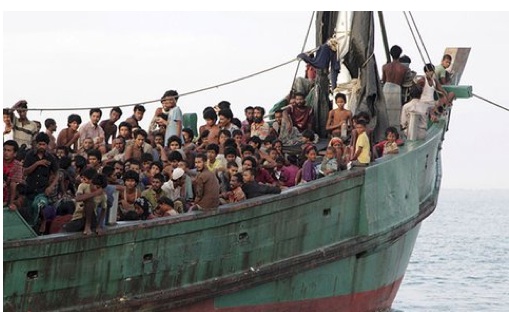
Immigration:  Scores of Burma’s minority Rohingya Muslims are paying off people smugglers and returning to the squalid camps they used to live in after being held for months on overcrowded ships that were to take them to Thailand but did not move far from shore.

Often beaten, and given little food and water, at least 50 Rohingya came back over the weekend after paying boat captains between US$200 and US$300 per person, people in one of the camps said.

A crackdown on the people-smuggling network in Thailand, usually the first stop en route to Malaysia, has meant that at least three ships loaded with hundreds of Rohingya and impoverished Bangladeshis were staying off the coast of Burma, they said.  The people in the camp survive off rice distributed by charities. They have no access to adequate health care—nor proper education or jobs.

One man close to local traffickers, who did not want to be identified, said that before the crackdown in Thailand a boat with 10-15 people would leave one of the nearby Rohingya villages and camps every 7-10 days—and there are dozens of them peppered along the Arakan State coast.Immigration Burma

TPP and Drug Patents?

Elizabeth Richardson writes: For the last several years, the US government has been negotiating a free-trade agreement known as the Trans-Pacific Partnership (TPP) with 11 other countries across the Asia-Pacific and Latin American regions, which could have major impact on the pharmaceutical market.

When finalized it will be the largest free-trade agreement in history, impacting up to one-third of world trade and roughly 40 percent of the global gross domestic product. The deal has attracted a fair share of criticism from a wide range of groups, including concerns over proposed regulations for biologic drugs in participating countries. Specifically, critics are concerned about the length of data exclusivity granted to the companies that hold the patents on these drugs. Below is a primer on biologics and how they are being addressed in the TPP.

Biologic drugs include any therapy derived from a biological source; a group which includes vaccines, anti-toxins, proteins, and monoclonal antibodies. Because they are typically much larger and more structurally complex than traditional ‘small-molecule’ drugs, they are also more difficult—and much more costly—to develop and manufacture. Biologics are also among the most expensive drugs on the market, costing an average of 22 times more than nonbiologic drugs. The recently approved hepatitis C drugs Harvoni and Sovaldi, for example, range from $63,000 to $150,000 for a full course.

Given these high costs, there is substantial interest in encouraging the development of biosimilars, a term used to describe follow-on versions of an original biologic.

After the Affordable Care Act (ACA) was passed in 2010, the US Food and Drug Administration (FDA) developed an accelerated approval pathway for biosimilars, modeled after the pathway used for the approval of small-molecule generics.

Under current FDA regulations, biologic drugs are granted 12 years of data exclusivity following approval.

For the 11 countries besides the U.S. that are involved in the TPP, current data exclusivity protections range from zero (Brunei) to eight years (Japan). Under the Obama Administration’s current proposal, participating countries would increase those periods to match the US standard of 12 years.

It is unclear whether the US will be successful in its efforts. There have been reports that the issue of data exclusivity has become a significant point of contention, and the US delegation may seek to compromise on its demands. The US Trade Representative (which is leading the US negotiations) is balancing the need to ensure adequate incentives for innovation with the need to control drug costs and facilitate patient access to potentially life-saving therapies.

Patents, Pharma, TPP

Blockchain: With and Without Bitcoin

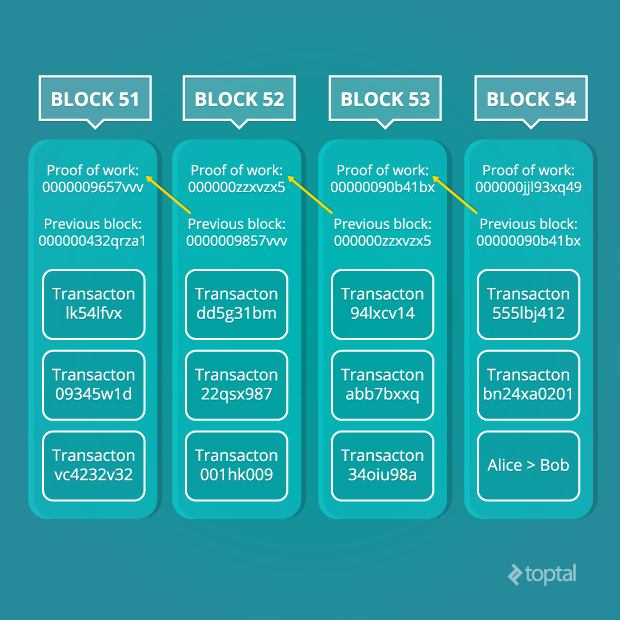
DIgital Gold by Nathaniel Popper.  The New York Public Library had a very interesting discussion of the book with the author, a Bitcoin technology expert and an investor.  It is available as a livestream.

Even the experts have a difficult time describing the blockchain technology, which is a record of all the transactions that take place.  It is this technology that will probably survice even if the currency does not.  It provides the cheapest and safest way for credit card and similar transactions to be recorded and paid.

Monocultures Not Natural?

Manu Saunders writes:  Growing  just one crop, known as monoculture, is a relatively easy, common and efficient way to produce food and fibre.

But international research shows that these monocultures can be bad for the environment and production through effects on soil quality, erosion, plants and animals, and ultimately declining crop yields.

Monocultures don’t exist in nature. This diversity of plant species and sizes supports diverse wildlife communities, and this diversity supports ecosystem services such as pollination and biological control.

When this diversity disappears, the results can be disastrous. The Dust Bowl years on the American Great Plains showed us what can happen when natural ecosystems are overwhelmed by intensive, single-crop farming.

Large fruit tree plantations differ from field crops because they are permanently embedded in the landscape for more than 10 years. Therefore, they may have more serious, long-term impacts on the environment than an annual crop.

If a plantation is inhospitable to an animal species, it won’t be able to move through the plantation to find food or shelter. This essentially creates a landscape barrier for that species.

Such effects have been found on bird, ground beetle, reptile and marsupial species living in landscapes dominated by pine plantations in south-eastern Australia.

Unlike pine trees, fruit trees rely on insect pollination, an ecosystem service, to produce fruit. With all the agricultural stressors influencing honey bee colony losses in other parts of the world, understanding how wild pollinators respond to farming practices is critical.

In the mallee woodlands and shrublands of southern Australia, probably one of the most understudied and important ecosystems for conservation, almond plantations are rapidly expanding.


Natural ecosystems like mallees are rich in diversity, unlike the monocultures that replace them.

Research from California on commercial almond plantations shows that numbers of wild pollinator and parasitoid insects (unmanaged insects that enhance yields through pollination and biological control) increased with plant diversity..

What does this diversity mean? Monoculture crops are intensively managed to remove as many plants that aren’t crops as possible. In the middle of a monoculture almond plantation, for instance, you will see little else but almond trees and bare soil for hundreds of hectares around you.

.

A sustainable farm isn’t just efficient to manage or designed to produce maximum yields per hectare. It also depends on conservation of biodiversity, ecosystem function and diversification of crops and/or livestock.

Research and development of agroecological systems are now internationally recognised as vital to sustainable food and fibre production.

With our unique natural environment and strong agricultural communities, Australia is uniquely-placed to contribute to the global discussion on sustainable agriculture.

Puerto Rican Debt

Michelle Kaske writes: Puerto Rico and its agencies have amassed $72 billion of debt as the junk-rated island’s economy has shrunk every year but one since 2006. Investors bought the securities, which are tax-exempt in all U.S. states, for their relatively higher yields. There are fewer residents to help repay the obligations: The island’s population has declined 7 percent in the past decade as residents moved to the U.S. mainland.That combination of rising debt, sluggish economy, and falling population has pushed yields on Puerto Rico debt above those of Greece. The securities have been trading at distressed levels for nearly two years as investors doubted the commonwealth’s ability to repay its debt on time and in full. Puerto Rico warned in its latest quarterly filing that it may place a moratorium on debt payments in fiscal year 2016 if the government can’t cut spending or raise enough revenue.

The island’s state-run power utility, Puerto Rico Electric Power Authority (Prepa) is currently negotiating with creditors to potentially reduce its nearly $9 billion debt load. Such a restructuring would be the largest ever in the $3.6 trillion municipal bond market.

Winner: Law Firms

Unlike Detroit, Puerto Rico and its agencies can’t file for Chapter 9 bankruptcy protection. Without a clear legal blueprint, the process of guiding the island and its creditors through a workout agreement will take more time and legal wrangling. That means lawyers for all the different parties—bond holders, banks, bond insurance companies, and government entities—will probably have to rack up lots of billable hours as they seek the best outcome for their clients.

Winner: Hedge Funds and Distressed-Debt Buyers

For nearly two years, hedge funds and investors in riskier debt have been purchasing Puerto Rico securities at distressed levels. Meanwhile, traditional tax-exempt investors such as municipal mutual funds have reduced or eliminated exposure to the island.

A group of 35 hedge funds, led by Fir Tree Partners and others, holds $4.5 billion of Puerto Rico debt. Firms that bought at a discount may make a profit on Puerto Rico entities that can either avoid a default or that offer recover rates higher than what the hedge funds originally paid to own the bonds.

Governor Alejandro Garcia Padilla and legislative leaders last week agreed on a proposal to cut at least $500 million of spending—following prior year reductions—and boosted the sales tax to 11.5 percent, from 7 percent. To lower the commonwealth’s payroll, the governor has cut 12,500 jobs payable from the general fund, a 12 percent drop.  Puerto RIco’s Debt

Puerto Rican Debt

Coal Pollution

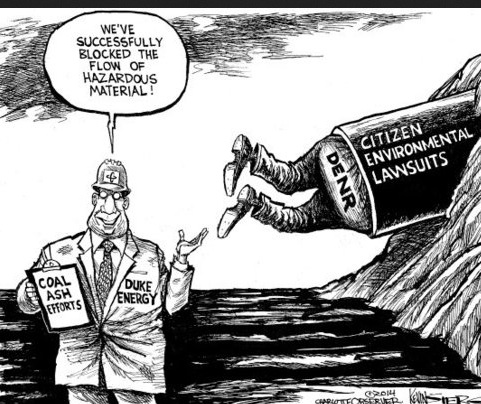
David Zucchino writes: Duke Energy may have been hauled into federal court and smacked with a $102-million penalty for polluting North Carolina rivers with potentially toxic coal ash, but that didn’t do much for the tainted well water at Barbara Morales’ house.

Morales is one of at least 123 North Carolina residents who have received letters from state health and environmental officials warning them that their well water is contaminated and unsafe for drinking or cooking.

Duke pleaded guilty Thursday to nine misdemeanor violations of the Clean Water Act, but environmentalists say the conviction does not require the utility to clean up coal ash ponds that still threaten waterways, wetlands and groundwater.

Duke would consider extending municipal water lines to affected residents if testing shows neighbors’ wells have been influenced by plant operations..

The state is testing wells for about 30 substances and heavy metals associated with coal ash, including arsenic, chromium, lead, mercury and hexavalent chromium. Some of the substances can cause cancer or serious health complications at certain levels of exposure.

Duke Energy had revenue of $23.9 billion and profit of $1.9 billion last year.

The Dan River spill also prompted North Carolina legislators to pass a law that requires Duke to close four of its most vulnerable coal ash ponds by 2019 and the rest by 2029. The ash must be stored in dry, lined pits that are regularly monitored. The law also requires the testing of wells near coal ash ponds.

But in addition to the potential coal ash threat to wells, Duke has reported nearly 200 seeps of coal ash in the state. Environmentalists said the plea deal does not require the company to stop the seeps, which release 3 million gallons of coal ash water a day.

Over a nine-day period, said Suttles, the environmental lawyer, the amount released by the 200 seeps would equal the amount of coal ash released during the Dan River spill. Pete Harrison, an attorney with Waterkeeper Alliance, a national environmental group, said Duke “is trying to legalize those leaks.”

A 62-page plea agreement, known as a joint factual statement, said seeps are common in the earthen dams used to contain Duke’s coal ash. The seeps contain “dissolved chemical constituents” and “may transport pollutants,” the federal court document said.

 Coal Pollution


Modi’s Trip to China

Tanvi Madan writes: Some quick thoughts on Indian Prime Minister Narendra Modi’s trip to China thus far, following the release of the Joint Statement, and Modi’s remarks at the Great Hall of the People, at Tsinghua University, and at a bilateral forum of state and provincial leaders:

Winner: Social media—it’s been ubiquitous, from Modi joining China’s Weibo to the Modi selfie with Chinese Premier Li Keqiang to the continuation of the Modi-looking-at-things meme.

Loser: Panchsheel. It’d been a bit odd that India had continued to choose to mention Panchsheel and the Five Principles of Peaceful Coexistence—principles that are remembered by many in India as being honored by China in the breach than in the observance in the late 1950s and early 1960s. There was even a shout-out to it in the Modi-Xi joint statement in September 2014. But it’s missing in action in the 2015 joint statement and seems to have been replaced by this:

The leaders agreed that the process of the two countries pursuing their respective national developmental goals and security interests must unfold in a mutually supportive manner with both sides showing mutual respect and sensitivity to each other’s concerns, interests and aspirations. This constructive model of relationship between the two largest developing countries, the biggest emerging economies and two major poles in the global architecture provides a new basis for pursuing state-to-state relations to strengthen the international system.   Modi’s Trip to China

Modi to China