Are Bitcoins Digital Gold?

Are Bitcoins Digiital Gold? This is the title of Nathaniel Popper’s intriguing new book released today in the US by Harper Collins.  The subtitle: Bitcoin and the Inside Story of the Misfits and Millionaries Trying to Reinvent Money.

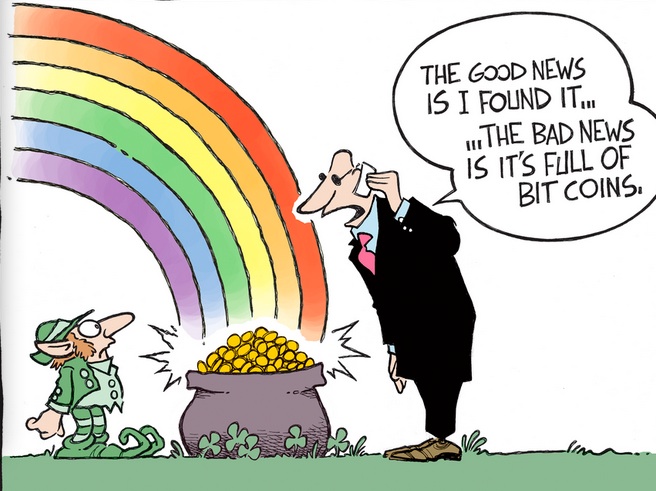
Although Popper uses the word money, his reference to gold in the title suggests that Bitcoins are a commodity.  Debate has raged between these two definitions of the new virtual currency.

When paper money was first created, it was backed by a commodity.  Not so today.  There is no ‘gold standard.’ The traditional definition of a currency is that it is a medium of exchange and a store of value. The traditional definition of a commodity is that it is a nearly-perfectly fungible good. A commodity could be used as a currency if it is convenient to do so. Likewise, a currency can become a commodity under certain conditions.

We will look more closely at all the facets of Bitcoins as described by Popper in a series of articles this week.

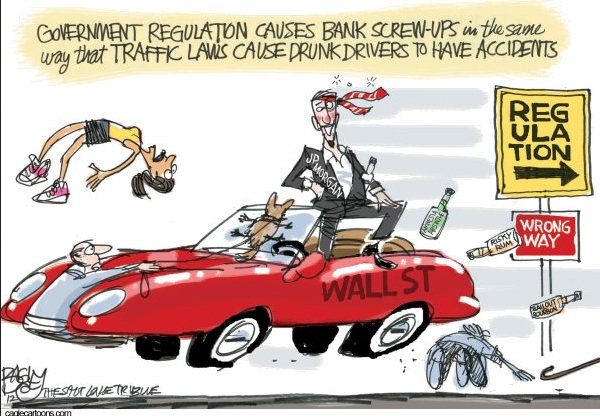
Critics of the Bitcoin are large financial institutions who do not want to be up-ended by an upstart digital financial system with a new currency.    A new way of banking might not require the Jamie Dimon’s of the world, or the JP Morgan Chase’s. In fact, Jamie Dimon, perhaps to distract people from his problems, attacked virtual currency in Davos in January of 2014,

Change in the world is happening rapidly, and while no one expects Bank of America to cave to techies from Silicon Valley soon, it could happen much sooner than we think.  The banking industry watches nervously as tech firms like Apple take on the banks.  Apple has 400 million consumers with credit cards attached to iTunes. In many different ways, tech firms can deeply disrupt the financial services sector.

Bitcoins cut even deeper into the banking system, because they have the potential to provide a new way to store money and then spend (or trade) it.

The first parry of banks against the bitcoin operators is that they are crooks.  After Libor and sub-prime mortgages that seems on odd word for the banking ‘criminals’ to lob at others.  The US Department of Justice is seeking criiminal pleas from Barclay’s, CItibank, JPMorgan Chase and Bank of America.  The Silk Road drug dealers on a bitcoin site who the FBI hauled in may just have been the rogues in this game.  Many Bitcoin players seem serious and honest, although some are over-the-top libertarians.

To be sure, the technology that drives Bitcoins insures anonymity. Yet anonymity is not always attached to criminal intent.  In fact, as Popper weaves his tale, we meet a host of dedicated technology experts who are fascinatied by the problem of creating a new currency and seem not at all interested in crimincal possibilities.

Popper described the structure of bicoins efficiently and clearly.  Encyrption is step one.  Numbers and letters are in long sequences, but there is nothing particularly unusual about signing up for a bitcoin account.  What is really brilliant is the ‘blockchain,’ which we will devote one article to describing.

Blockchains are at the heart of the matter for a new banking system.  Popper describes a meeting between one of the early entrepreneurs in the Bitcoin field with Bill Gates.  He approached Gates at an event and asked to speak with him about Bitcoins.  At first, Gates sloughed him off.  But when more detials of the possibilities of offering free banking to the nundreds of millions of under-served people in the developing world was suggested, Gates said he wanted to know more.  And he is presumably thinking about the prospect right now.

No, Bitcoins are not the evil Wall Street and the bankers would have us believe.  The system holds promise for cheaper and faster banking in the future.  It will probably not come in the forms avaialable today, but so much capital, including lead Silicon Valley firm Andressen Horowitz, has been invested already, that it’s hard not to see this as a very good idea that will be shaped for easy use in the future.

Remember online banking and the ATM?  After John Reed earned his MIT degrees at the Sloan school, he went to work for Citibank.  In 1967, the bank commissioned a report on the future of the industry. One finding raised the question of what impact computers might have on banking. The Citibank president told Reed, “You went to MIT, surely you understand computers…Read this and take some time and figure out what this means for the banking industry.”

Reed, who had only written a few lines of Fortran during his MIT studies, took a year to study the problem, returned to MIT to study with several faculty members, and visited equipment manufacturers who were developing computers. And he decided that online, interactive systems would have the most influence on banking, akin to the airline reservations systems then being developed. Reed launched a company, Citibank Systems Inc., on the edge of the MIT campus, since he thought he could hire good people there. “It was a very unusual project because we had a solution looking for a problem,” Reed noted.

Moving money online was an early successful application, and it still earns millions of dollars for banks every year. On the retail side, Reed’s startup looked at branches and how to replace cash registers with speedier equipment. The developments allow Citibank’s to take the lead in issuing credit cards that allowed customers to transact business without carrying cash.

For Automated Teller Machine (ATMs), the main proposition was this: “We decided that the electronic dispensing of cash was going to be a real change agent,” he said. In 1970, Citibank had 1,600,000 customers in New York City so that became the test site. Reed moved his operation to California to combine his startup team with a group of engineers who had just developed a related system. They designed computers and multiplexers and leased telephone lines from AT&T. And then they had to figure out how human beings were going to interact with the machines….and that was just the beginning.

Who among the bankers today will switch and cut bait and do what John Reed did for Citi?  That remains to be seen.  But the cast of characters in the Popper book is a start.

Tomorrow: Popper describes how the Bitcoin system works.
Bitcoins


Big Banks Safe, Small Banks Thrive?

Democrats on the Senate Banking Committee are drafting financial legislation as an alternative to a Republican bill they see as an effort to dismantle the Dodd-Frank Act, a committee aide said Monday.

Ten Democrats, led by Senator Sherrod Brown of Ohio, are signing onto the proposal ahead of a Thursday meeting of the committee, according to the Democratic aide. The lawmakers have signaled support for measures to help community banks and credit unions, while criticizing Republicans for pushing plans that would help banks with as much as $500 billion in assets and relax some mortgage regulations.

“We can provide small financial institutions the help they need without undermining important financial safeguards,” Brown said last week in a response to the legislation unveiled by Senator Richard Shelby, the Alabama Republican who leads the Banking Committee. Brown said the Republican draft bill “is a sprawling industry wish list of Dodd-Frank rollbacks.

”Shelby’s bill, which seeks also to toughen oversight of the Federal Reserve, was released as a discussion draft ahead of possible negotiations with Democrats. Republicans will need at least six other senators to back their bill to overcome procedural hurdles and pass it out of the Senate.  TBTF Draft Bill

Community Banks and Regulation


Grexit?

This role reversal reveals at least three consequential aspects of the changes:

  •  First, having achieved progress on containing and isolating the Greek crisis, Europe seems a lot less worried about the potential for negative spillover effects should the multiyear drama now end in tragedy.
  •  Second, Europe is becoming less resistant to the notion of Greece exiting the single currency, especially if this were the result of a Greek decision rather than one imposed by its EU partners.
  •  Third, the proposed referendum would push the Syriza-led government into a lose-lose situation.

To understand these three developments, it is worth recalling why Europe crushed the referendum proposed by the Greek government in 2011.

Confronted by pockets of internal opposition, Papandreou saw the referendum as a way to mobilize broad-based voter backing to implement difficult economic reforms.

Almost four years later, Europe is far less worried about the adverse consequences of a Grexit.  The change in Europe’s attitude has been influenced by events in Greece. Syriza’s election success was fueled by repeated promises to alter course on economic policy, including by being less compliant with the austerity demands imposed by Greece’s European partners and the International Monetary Fund. At the same time, the government’s ability to secure agreement with its creditors has been repeatedly undermined by public disagreement, a trust deficit, and rookie governing mishaps. In such circumstances, a referendum presents a lot more downside for the Greek government than in 2011.

A referendum that showed broad-based support for EU-imposed measures would undermine both the unity and electoral credibility of Syriza.

Even the rejection of EU-imposed measures in a referendum wouldn’t be a good outcome for Syriza. The vote would accelerate capital outflows, risk a large-scale run on banks and make it very hard for the European Central Bank to continue to provide Emergency Liquidity Assistance, all of which would bring closer the country’s economic and financial implosion.

The Greek government’s hope is to retain control as it secures time to compel creditors to agree to an easing of austerity measures, a reorientation of some structural reforms, greater debt relief and a large injection of immediate funding beyond what is being provided by the ECB.  That is why it will resist a referendum; and why its European partners will continue to insist on such a vote.

Grexit?

France’s Tough Stand Against Russia

Josh Gelernter writes:  Early last year Russia invaded and annexed Crimea, and ginned up a separatist movement in Ukraine’s east. Ever since, it has supported those separatists financially, with arms, and, sometimes, in battle.

Inuits from Seal Hunting to Social Security?

Malcolm Brabant writes:  Greenland’s Inuit chefs, clad in sealskin outfits and trousers fashioned from polar bear fur, will not be offended if MEPs decline morsels of the whiskered marine mammal from the grill. But the chefs hope that their planned cookery session will help to convince European lawmakers to reverse what they regard as a misguided ban on the importation of seal products that is driving a centuries-old way of life to the edge of extinction.

Exports of seal pelts have plummeted by 90% since the introduction of the European ban in 2009. The impact on subsistence economies in Greenland’s 60 coastal communities has been catastrophic. “It’s a tragic situation for us,” says Karl Lyberth, a hunter who used to be Greenland’s minister of fishing, agriculture and food. “A lot of people in the EU don’t understand our way of life.”

A delegation of Greenland seal hunters will board a bus in Copenhagen on Monday for the journey to Strasbourg to lobby parliamentarians.

They are steeling themselves for a clash of cultures and a struggle to change public perceptions. The hunters’ main hurdle is to overcome the image promulgated by animal welfare campaigners of helpless cuddly baby seals being clubbed to death on ice floes in Canada.

International public outrage at the annual Canadian cull contributed in no small way to the European moratorium. “To a large extent it’s the last call for a lot of the hunters,’ says Rasmus Holm of Inuit Sila, the Greenlandic Hunters and Fishermen’s Association. “If the current crisis continues, they won’t have any alternative but to claim social security.”

 Inuit tent of seal skins

Better Regulation in the EU?

James Panichi and Quentin Aries write:  The European Commission is trying to exert more control over both the European Parliament and Council of Ministers in determining the make-up of a powerful new legislative board that forms a key component of its “Better Regulation” initiative.

The Commission has watered down plans to allow the Council and Parliament to each appoint a member of the seven-member “Regulatory Scrutiny Board” (RBS), which had been envisaged as a gate-keeper for legislative proposals. The Commission will instead demand that the other institutions appoint board members who would act “independently.”

These new criteria would appear to rule out any attempt to appoint either sitting MEPs or officials employed directly by the Council.

What’s more, the main text of the document now makes no reference at all to either Parliament or the Council in the appointment process. “Three temporary posts will be created to permit the recruitment of the remaining three RSB members from outside of the European Commission on the basis of their proven academic expertise,” the document reads.

Instead of giving the RSB authority to make or break legislative proposals by carrying out impact assessments on them, the board now appears to be more of a body which would distill other impact assessments into a legislative recommendation.

Timmermans, who is spearheading the Commission’s drive for better regulation, is expected to announce that the new board will replace the Impact Assessment Board.

The RSB will broaden the scope of the Impact Assessment Board by carrying out retrospective evaluations as well as scrutinizing legislation still in the pipeline.

The Commission is planning to create another body to focus on the REFIT initiative — the Commission’s program to cut red tape and simplify EU law.

Chaired by Timmermans himself, this REFIT “platform” would help the Commission collect comments and feedback on EU regulations.

REFIT is often targeted by NGOs and trade unions, who consider it a Trojan horse used to weaken social and environmental policy.

Timmermans’s renewed approach to REFIT is likely to keep the Commission’s focus on curbing administrative burdens for small business — one of the key items of Commission President Jean-Claude Juncker’s work program, which he made public after taking office.

Regulation

Merkel and Lagarde Soap Opera?

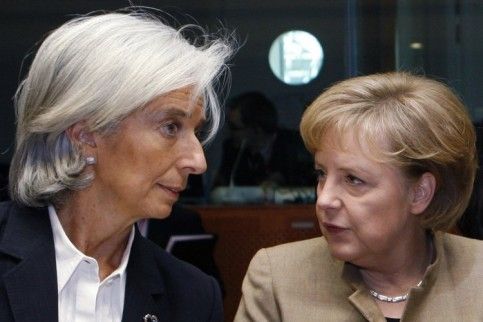
Can the German chancellor and International Monetary Fund chief find a Greece solution that pleases their own restless constituencies?  Time is fast approaching for the latest installment of Europe’s long-running drama: The Greek Bailout. Christine Lagarde and Angela Merkel are expected to star in season three of this often suspenseful tale, with the main storyline centered around the continuing question of how to get Greece’s debt down in order to lift the country up.

The essential plot of season three: Can the managing director of the International Monetary Fund and the German chancellor find a way to agree on a deal while minding their respective, restless constituencies?

Lagarde’s institution is still feeling the scars of the 2010 and 2012 Greek bailouts. Merkel’s Germany is gripped by bailout fatigue as Germans feel they have been asked to pay the taxes Greeks refuse their own government. The IMF chief may look for reelection next year and must take into consideration her staff and her board’s reluctance to get involved in the Greek funk yet again. The chancellor has to deal with a Bundestag — parliament — reluctant to fuel “moral hazard” and with rising anti-euro sentiment in the electorate.

Both would rather agree, because a deepening of the Greek crisis would be bad for Europe’s and the world’s economy. But both may also feel less pressured to do so, because the EU economy is recovering slowly and a Greek meltdown isn’t seen as threatening the existence of the eurozone as it did five years ago.

In terms of their own relationship, the two women leaders see eye to eye on most European issues, and they have had a good personal chemistry ever since the four years Lagarde spent as finance minister of then-French president Nicolas Sarkozy, from 2007 to 2011. Last year, according to media reports, Merkel even approached France to put forward the IMF chief as European Commission president — not hiding her lack of enthusiasm at the time for Jean-Claude Juncker, who ultimately got the job.

The result of “extend and pretend,” noted Ashoka Mody, professor of international back almost €5 billion to the IMF, and €6 billion to the ECB by the end of the year. This is a country heading back towards recession after the first four months of the Syriza government, and struggling every month to pay some €1.7 billion in public sector salaries. If Tsipras finally decides to tackle the Greek economy’s structural flaws, he will have to trust Lagarde and Merkel to show him a way from under the country’s debt burden. That will not happen — and the situation will spiral downwards — if the two can’t agree.  Germany, the IMF and Greece

Lagarde and Merkel

US Fed as Lender of the Last Resort?

Ben Bernanke writes: Earlier this week Senators Elizabeth Warren (D-Massachusetts) and David Vitter (R-Louisiana) introduced a bill they call the “Bailout Prevention Act of 2015.” If enacted, the bill would further restrict the Federal Reserve’s emergency lending powers in a financial crisis. That would be a mistake, one that would imprudently limit the Fed’s ability to protect the economy in a financial panic.

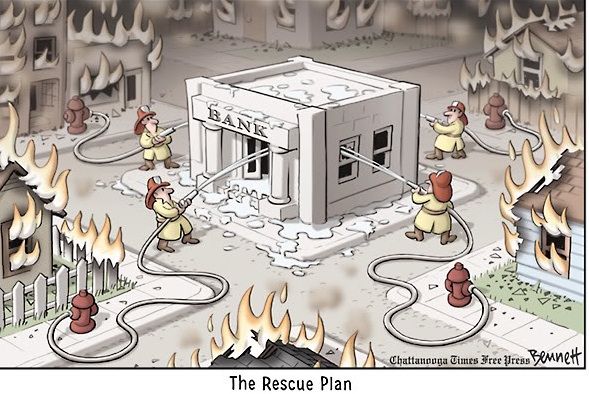
During the 2007-2009 crisis, the Fed used its emergency lending authorities in two quite different ways. First, it made loans to help prevent the collapse of two systemically critical firms, Bear Stearns and AIG. The Fed took these actions, with the support of the Treasury, because it feared that the disorderly failure of a large, complex, and highly interconnected firm would greatly worsen the financial panic and damage the economy—a judgment confirmed by the aftermath of the bankruptcy of Lehman Brothers in September 2008. Second, the Fed created a variety of broad-based lending programs, to unfreeze dysfunctional markets and to help stem devastating runs that left whole sectors of the financial system without adequate funding. In providing this funding via short-term, fully collateralized loans, the Fed was fulfilling the traditional central bank role of serving as lender of last resort. This lending, all of which was repaid with interest, was essential for stabilizing the financial system and restoring the flow of credit.   Should the US Fed be Lender of the Last Resort

Lender of the Last Resort

Do Business Qualifications Work for a Political Leader?

Robert E. Litan writes:  It’s impossible for anyone to come into the White House with all the skills required to be a good president. We can know that key traits include intelligence, both cognitive and emotional; self-confidence; and decisiveness. Also needed are the ability to communicate; to listen and learn; to delegate; to recognize problems–and a sense of humor and humility.

Candidates’ stands on the issues are critical in primaries and in the general election, but I suspect that the views of many independent voters–whose ranks are growing–may not be as intensely held as those of partisan voters.

Given Americans’ widespread frustration with traditional politicians, it is understandable why a few candidates with at least some business experience have entered the fray. Having run a business exposes one to how government affects the private sector, which is the engine of economic growth and drives improvements in living standards.
But running a private-sector business is very different from heading a federal government that employs millions, and that takes in and spends trillions, while also dealing with a wide range of domestic and foreign policy issues, many of which demand immediate attention. These things require dexterity–and the combined challenges are ones that no business ever comes close to dealing with. (Probably the closest experience to the presidency is running a large state. But even then, no governor has had to confront the range of foreign policy challenges facing the president.)

A critical difference between running a business and government is that CEOs can usually make sure that their orders are carried out; and if they’re not, those who didn’t do their jobs can be fired. Imagine a president tried working with Congress that way.

One might think that military leaders would face the same problem, but successful generals, especially in recent times, have had to develop and hone political skills as well as knowing how to fight. Gen. Dwight Eisenhower is now regarded as a good president not only because of his military experience but because he also was a politician-administrator while commanding allied forces during World War II.

Some 2016 voters will cast ballots based on particular issues. But for others, particularly those who believe this country is on the wrong track, a candidate running on his or her business background in an effort to stand out from the pack is not likely to have the qualifications most important to being a successful president.

 Leadership?

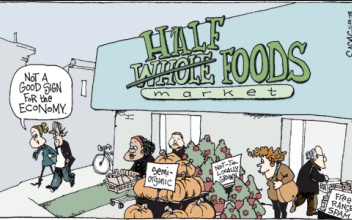
Whole Foods Sets Up a Trader Joe’s Division?

Robyn Bolton writes:  The news that Whole Foods will open a separate chain of stores designed to appeal to millennials stopped me mid-aisle. According to Whole Foods co-CEO Walter Robb, these future stores will feature “modern, streamlined design, innovative technology, and a curated selection” of lower- priced organic and natural foods.
As millennials would write—facepalm.

By relying on demographics to define a consumer base, executives are implicitly, or explicitly, saying that all people of a certain demographic (in this case the same age cohort) are the same and that they are also distinctly different from everyone in other demographics.  This flawed approach applies not just to Whole Foods but to any business.

A better approach is to target and design for consumers based on what my colleagues and I call their “jobs-to-be-done” – the fundamental problems they are trying to solve or goals they are trying to achieve. By understanding consumers’ jobs, companies can identify what drives their behavior and their buying decisions—and then create offerings that resolve their most important and unsatisfied jobs.

Within its existing stores, Whole Foods has demonstrated its ability to successfully design offerings that satisfy a range of functional, emotional, and social jobs.

Certainly, Whole Foods’ concerted effort to solve important jobs that are not currently satisfied by existing stores is laudable. But it’s thrusting the company into a field crowded with other large and established retailers seeking to fulfill the same jobs of urban consumers willing to trade off selection for value and natural/organic foods, including, namely:

  • “Give me convenient access to healthy food” – Both Target and Walmart are aggressively working to satisfy this job by rapidly expanding the number of CityTarget, TargetExpress, and Walmart Express stores.
  • “Let me feel confident in the choices I’m making” – “Curated selections” are an effective solution for this job, and Whole Foods’ is already delivering brilliantly in its existing stores, with its 365 Everyday Value house brand (which may be the focus of the new chain, if trademark filings are to be believed).
  • “Give me good value” + “Enable me to make healthy choices” – Whole Foods is often referred to as “Whole Paycheck” because many perceive its prices to be significantly higher than those of traditional grocers.

Consumers are already visiting an average of 2.5 stores or online venues to solve their many grocery jobs,

Until it resolves the question of differentiation, Whole Fods will likely be forced to answer a far more awkward question, eloquently posed by one millennial: “Why don’t they just call the new chain Trader Joe’s?”

Whole Foods New Chain