Are Bitcoins Digital Gold?

Sometimes, in spite of the incredible speed with which we can use the tech at our fingertips to find the information we’re looking for — hail a taxi, book a vacation, and wire money across the world — it’s easy to forget how fast things are changing, and that every day entire industries are being disrupted by some new startup.

Brad Templeton,  the founder and architect of the first-ever entirely web-based business, ClariNet, points out that Bitcoin and other virtual currencies are significant in that they take some aspects of finance that were formerly in the hands of professionals and unlock them for the public at large. Now anyone can be a banker. And in the future, the extent to which this is the case will expand exponentially. Back in 1990, with a four-track home recorder, an aspiring musician could make a few low-fi demo tracks. Today, you can produce an entire album on an iPad. The case of finance is analogous, with Bitcoin and crowdfunding platforms paving the way and even bigger changes to come.

Understanding these kinds of exponential changes in advance is a major advantage for individuals and businesses that want to stay a step (or 100 steps) ahead of their peers.

Nathaniel Popper’s important book, Digital Gold, is due out this week, and we will be reviewing it and parsing its implications all week.

Bitcoins-Currency of the Future?

What is Digital Journalism?

Michael Massing writes:   “No one can feel secure,” said one Times reporter who had survived the cut. Her comment captured the climate of fear and insecurity that has gripped traditional news organizations in the digital era. “Disruption” is the catch-all phrase.

That digital technology is disrupting the business of journalism is beyond dispute. What’s striking is how little attention has been paid to the impact that technology has had on the actual practice of journalism. The distinctive properties of the Internet—speed, immediacy, interactivity, boundless capacity, global reach—provide tremendous new opportunities for the gathering and presentation of news and information.

The Huffington Post is undergoing an identity crisis. One of its initial core innovations—using content from elsewhere—has become so dominant as to nearly choke the site.

Arianna Huffington said that the site plans to end its relationship with the AP and build its own in-house news service, while “doubling down on original reporting and bringing together a new investigative team.” To head that team, The Huffington Post hired three former staff members of The New Republic—editors Greg Veis and Rachel Morris and writer Jonathan Cohn—to help “bring long-form journalism to a new audience.”

The Huffington Post has been down this road before. In 2009, it set up a nonprofit Investigative Fund with a staff of eleven and a budget of nearly $2 million,  Within a year, the fund was folded into the Center for Public Integrity, a nonprofit investigative outfit.

Huffington Post editors claim that these print-based imports proved a poor fit in an all-digital operation. Perhaps so, but the AOL deal seems to have been a Faustian bargain for the organization; in return for a huge pot of cash, it came under relentless pressure to turn a profit. The only way to do that was by increasing ad revenues, which in turn meant drawing more readers. That explains the site’s perpetual motion, nonstop expansion, and proliferation of sections. In its early years, The Huffington Post seemed on its way to defining a new type of digital journalism. Ten years on, it seems stuck in place, struggling to recapture the innovative spirit that had once defined it.

The same seems true of the first generation of digital news sites in general. After an initial burst of daring and creativity, they have entered a middle-aged lethargy.

These sites, which all seem to blend into one another, rarely break news or cause a commotion. After the Charlie Hebdo attacks, I was hoping to see one of them grab hold of the event and provide a forum for the many pressing questions raised—free speech versus hate speech, anti-Semitism and anti-Islamism, the state of religious tolerance and religious fanaticism in Europe.  The State of Digital News

Digital Journalism

Tsipras Threat and Aftermath

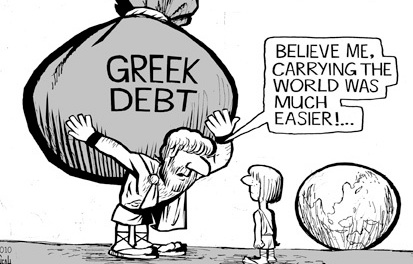
 Greece’s Prime Minister Alexis Tsipras had at one stage warned foreign creditors that Athens would not repay 750 million euros due to the IMF in May unless they provided it with immediate liquidity, the Kathimerini newspaper reported.

Athens ultimately made the May 12 payment by emptying an International Monetary Fund holding account.

Citing European sources, the newspaper said Tsipras made the threat in a May 8 letter to EU Commission President Jean-Claude Juncker, IMF head Christine Lagarde and ECB President Mario Draghi.

Greek Debt


Enlightened Self Interest, Share Buybacks and Innovation

Jim O’Neill writes:  In a forthcoming paper, the Review on Antimicrobial Resistance estimates that bringing new antimicrobials to market and improving their administration will cost about $25 billion – a significant sum, but one that pales in comparison to the costs to society if the problem is not checked.

While the review has yet to come up with recommendations for financing the development of new drugs, it seems clear that it is well within the capacity of the pharmaceutical industry to contribute. A common argument made by drug companies is that they need to be guaranteed a reward if they are to invest in developing medicines that are unlikely to deliver the kind of returns that other investments may provide.

Why should the pharmaceutical industry play a major role in financing something like a common “Innovation Fund” to provide financing for early-stage research into solving the problem of antimicrobial resistance?

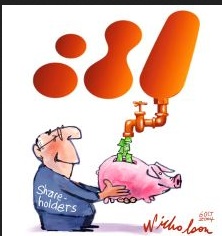
Share buybacks do not seem justified – especially when considered from the standpoint of enlightened self-interest. In December, the pharmaceutical giant Merck spent $8.4 billion to acquire Cubist Pharmaceuticals, a Massachusetts-based drug-maker that specializes in combating Methicillin-resistant Staphylococcus aureus (MRSA), a bacteria that has become resistant to many types of antibiotics.

In early March – less than three months after the acquisition – Merck announced it would close down Cubist’s early-stage research unit.  Three weeks later, Merck announced that it would spend an additional $10 billion to buy back some of its shares.

Of course, dubious buybacks are not confined to the pharmaceutical industry. Apple is another good example. Within a year, China will likely be a bigger market for Apple’s  products than the United States.

In April, the company announced it had authorized an additional $50 billion to be used for repurchasing shares, bringing the total to $140 billion.

Coming at a time when the technology industry is under increasing scrutiny in the developed world as governments struggle with budget shortfalls and rising debt, this seems to me to be a questionable decision. Companies’ ability to minimize their global tax burden, while boosting their earnings per share through buybacks – in some cases financed with debt – does not strike me as a stable trend.

When companies are genuinely unable to identify areas of research and investment that would help their business (and employees and clients), they are better off returning the savings to shareholders in the form of higher dividends than authorizing buybacks.

Share Buybacks

TPP and Latin America

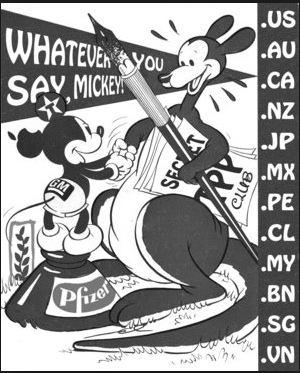
Andres Velasco writes: With the International Monetary Fund having just cut its forecasts for economic growth in Latin America for the fifth year in a row, the region’s countries are casting about for ways to reignite investment and boost productivity. They should look to fast-growing Asia, argue advocates of the Transpacific Trade Partnership (TPP), the proposed mega-regional trade accord that would bind together 12 Pacific Rim countries. But should they?

If done right, the TPP could help Mexico, Peru, and Chile – the accord’s Latin American members – make the leap to high-productivity exports based on innovation. But that would require the TPP to foster, not impede, the flow of knowledge around the Pacific Rim. Regrettably, the United States is insisting on a series of intellectual-property provisions that serve the interests of US-based firms, but do little to create a sound environment for innovation elsewhere.

In the last two decades, Mexico has managed to diversify its export base and is now a major supplier of industrial goods to the US and Canada. The bad news is that Mexico’s growth prospects have become inextricably tied to those of its huge neighbor to the north. The good news is that the US is growing faster than any other major industrialized economy, so Mexico can look forward to a couple of years of accelerating economic expansion.

Peru and Chile, by contrast, are natural-resource exporters that derived huge benefits from the China-driven commodity boom of the last decade. Today commodity prices are down, and so is growth.

That is where Pacific Rim trade and the TPP come in. A firm in Thailand, the Philippines, or Vietnam can develop a new product line by plugging into the huge East Asian value chain and producing, for example, a tiny component which, along with myriad other components, will be assembled into a smartphone at a factory in China.  TPP and Latin America

TPP Issus

Is London a City-State?

Gillian Tett writes: About two decades ago, my brother and I combined all our savings and bought a small, scruffy flat in Gloucester Road, west London. Back then, property did not seem so crazily expensive (in 1991, the UK real estate market had crashed sharply). Nor did the residents of that white stucco building seem wildly cosmopolitan. They mostly considered themselves English and were either young professionals or “Sloanes” (a tribe of upper-class Brits.

London became a modern trading hub; private commercial interests, such as banks, hold sway. And, unlike those Ottoman rulers, the UK government is not very effective at extracting tribute, aka taxes – which is one reason why those French, German, Danes, Italians and Russians flood in. But, like Constantinople, one of the joys of London is that it is wonderfully multi-ethnic and largely tolerant – albeit due to the grubby reality that what unites the multi-ethnic elite is commerce – a desire to make money.

Is this a bad thing? Yes, if you want the UK to exist as a truly cohesive nation state. After all, the arrival of these wealthy professionals has widened the gap between the elite and everyone else. Look at London house prices compared with those elsewhere in England (the flat that my brother and I once owned has surely risen about sixfold in price since we bought it). And when some economists from Deutsche Bank recently looked at the city, they discovered, astonishingly, that there was less correlation in growth patterns between London and the rest of the UK than between the different members of the eurozone; London is driven by global trading flows, not the British economy. “The overall pattern that emerges . . . is one of the rest of the UK dancing to the capital’s tune but out of time,” they wrote.

But if you look at London in its own terms, as a European city-state, it is hard to not feel a sense of excitement. Just like Constantinople, this new urban centre is buzzing with cultural blending and creative collisions; there is entrepreneurial energy and sunny optimism.

To put it another way, just as the US has benefited over recent centuries from the arrival of energetic immigrants from Europe and elsewhere, London flourishes on the energy created by waves of wealthy (and not so wealthy) immigrants from continental Europe.

London

Does Happiness Factor into Business Success?

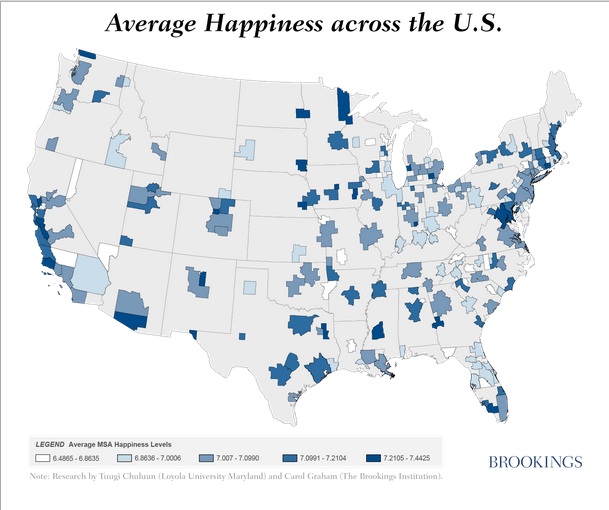
Is Happiness a Factor in Business Success?  write:  Economists—and other social scientists—are now using a burgeoning body of research based on surveys of reported well-being or, more colloquially put, happiness. They are studying areas as diverse as the effects of income, inflation, unemployment, exercising, smoking, and marital status on well-being. They are also exploring the effects of well-being on individuals’ attitudes about and investments in the future.

The results are not surprising: smoking, inflation, and unemployment (particularly the latter) are bad for well-being; while income, exercise, and marriage are, on average, good for well-being. Individuals with higher levels of well-being on average have better future outcomes in the health, labor market, and social arenas. The latter is due to innate optimism and intrinsic motivation on the one hand, and the capacity of individuals with higher levels of well-being to make choices about what kind of lives they want to lead on the other. In short, numerous studies show that higher levels of well-being are associated with all sorts of positive outcomes.

It is important to note that the use of these metrics requires methodological precision. Scholars do not ask respondents if particular things make them happy or unhappy. Instead, they use large-scale surveys with the well-being question of interest up front in the survey. They control for all sorts of socio-demographic traits (such as income, gender, age, education, and employment status) and assess how well-being levels vary with the variable of interest, holding all other things equal.
But does any of this have relevance for the business world? Here is what we examined:
Does happiness play a role in corporate economic behavior?
We recently explored whether well-being is relevant to our understanding of firm behavior and found, rather remarkably, that it is.  Does Happiness Improve Business

Happiness

Infrastructure: A Life and Death Matter

Robert Puentes writes:  When a bridge falls, when a water main fails, or when a train crashes, news crews and commentators report on the sorry state of our nation’s infrastructure. Policymakers on both sides of the aisle say we need to do something to fix our roads and rails, our ports and pipes. This flurry of activity lasts for a few days, but then little to nothing happens.

Why isn’t there more action?

Despite infrastructure’s fundamental role in the health and safety of the American people and the economy, the United States has underinvested for decades. Today, infrastructure spending as a share of gross domestic product is about 2.5 percent, much lower than the 3.9 percent in peer countries such as Canada, Australia, and South Korea. The figure for Europe as a whole is closer to 5 percent and between 9 and 12 percent for China.

The McKinsey Global Institute estimates that the United States should spend at least an additional $150 billion a year on infrastructure through 2020 to meet its needs. This investment is expected to add about 1.5 percent to annual GDP and create at least 1.8 million jobs.

Unfortunately, the federal government has not taken the actions required to reinvest in our nation’s infrastructure. For the foreseeable future, federal support for programs such as the Highway Trust Fund and State Revolving Funds for water will likely continue to face cuts and budgetary shortfalls.

Other experiments, such as the National Infrastructure Bank (though noteworthy), seem too complex and politically challenging in the current legislative environment. Furthermore, given the rise in interest payments, increases in entitlement spending, and decline in traditional sources of government revenue such as the gasoline tax, competition for limited resources is fierce.

Cost in Lives

Cost in Lives

Can Big Cities Survive without Mixed Income Housing?

The British Vancouver Housing Authority has learned from the mistakes of New York.  All new building are mixed income housing. Meanwhile, back in Manhattan, there is no sign that the housing predicatment of people who live and work in the city and contribute to its well-being have had any of their houseing problems solved.

Oshrat Carmiel writes: The newest condominium tower in midtown Manhattan’s billionaires district is ready to open its doors to buyers. It took almost a decade to get there.

The skyscraper at 53 W. 53rd St., designed by French architect Jean Nouvel and rising next to the Museum of Modern Art, will start marketing its 139 apartments next week, with prices starting at $3 million. Planned since 2006, the project endured the real estate bust and a global financial crisis that decimated demand for luxury homes. Now it’s emerging when buyers can’t seem to get enough of them.
Like many of the supertall buildings going up in Midtown, 53W53 commands Central Park views.

“We’re very eager to begin,” said David Penick, the New York-based managing director for developer Hines, which is building the project with Goldman Sachs Group and Singapore-based Pontiac Land Group.

The project’s latest challenge: competing for buyers with about a half-dozen other luxury condo towers that are under construction nearby. The developments—including Vornado Realty Trust’s 220 Central Park South and Aby Rosen’s 100 E. 53rd St.—are transforming Midtown neighborhoods known for hotels and corporate offices into communities of wealthy people from around the world.  They often do not live in their apartments.

The 1,050-foot (320-meter) tower, the size of the Chrysler Building, will rise near the corner of Sixth Avenue between 53rd and 54th streets, on land once owned by the adjacent museum. MoMA will expand its galleries in the bottom three floors of the residential building, whose signature architectural flourish is a web of diagonal concrete beams that gird the structure from the outside before tapering into a pinnacle more than 82 stories into the sky.

“It is the flag—not only of the building—but the flag of the MoMA on the skyline,” says Nouvel, who also designed a Ferrari factory in Italy, an art museum in Abu Dhabi, and a 23-story condo building near Manhattan’s Chelsea waterfront.

“We tried to do a kind of dialogue with the views and with the buildings around,” he says. “You frame it with different shapes in the city and the neighboring buildings.”
53W53 tapers into a pinnacle more than 82 stories into the sky.

Amenities at the tower include a movie theater, a private dining room overlooking Central Park, and temperature-controlled wine vaults. Residents can buy studio apartments on the 14th through 16th floors for their personal service staff.

The project was conceived in 2006, before Houston-based Hines acquired the site from the museum for $126 million. Manhattan’s luxury property market has soared in recent years, with wealthy investors paying ever-higher prices for trophy homes.

“The basic strategy hasn’t really changed,” he says. “It’s a very attractive location adjoining the Museum of Modern Art. We always knew that it would be high end.”
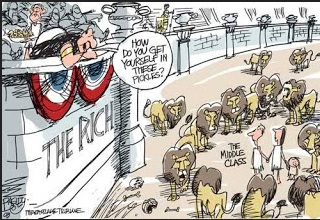

Need for Mixed Income Housing

Entrepreneur Alert: The Next Big Thing

Karsten Strauss writes:  We looked at 35 promising companies and subjected them to our own grading formula, keeping in mind the track records and skills of the founding teams, and chose 25 startups we think have billion-dollar valuations in their futures

What we learned was that technology is transforming industries the world over and investors are backing young companies that promise to change the face of e-commerce, food tech, financial services, and the enterprise.

We took a look at some of the trends we’re seeing in the high-value startup space. What industries are the startups dismantling?  Why are  venture-backed companies are taking longer to go public, how dpes that affects valuations, and what venture capitalists are doing in response.

Among some of the top startups we’re taking a closer look at is Tanium, the product of father and son cofounders, became the latest $1 billion startup at the end of March (S David and Orion Hindawi have now received over $140 million from Andreessen Horowitz, the VC firm’s biggest single bet ever, to reinvent cyber security for massive corporations. FORBES’ reporter Brian Solomon took a look at how Tanium’s back-end architecture lets clients like Visa, Amazon, Best Buy and the U.S. Department of Defense view and control every one of their hundreds of thousands of networked computing devices in seconds.

Docker also made the winners circle. In just two years, Docker has become one of the most popular open-source projects in tech, its app containers downloaded more than 300 million times. Docker is an open platform for developers and sytems admininstrators to build, ship, and run distributed applications, whether on laptops, data center VMs, or the cloud. The big enterprise players are lining up to partner with it from IBM to Microsoft and VMware. And it’s just raised $95 million at valuation just under $1 billion from top investors in venture as well as Coatue and Goldman Sachs.

Personal loan startup, Avant (formerly AvantCredit), has been racking up customers by taking the headache out of getting a quick handout. Loan Star) Revenue grew 971% to $75 million in 2014, and CEO Al Goldstein says Avant can more than triple that this year as it surpasses its 200,000th customer. Its valuation so far? We estimate $875 million.

Cyber security,  an open platform for developers and sysadmins to build, ship, and run distributed applications, whether on laptops, data center VMs, or the cloud and a personal loan business.