Drop Dead Date for Greece?

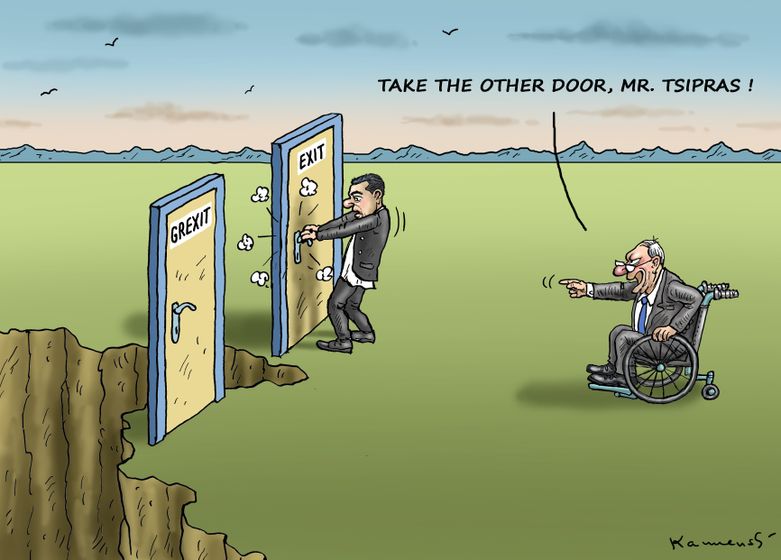
Peter SIegel writes:  Unless Greece and its international creditors agree a deal soon to close out the country’s €172bn bailout, and then quickly agree another rescue, Athens is likely to run out of money and default on its debts. That would push it perilously close to crashing out of the eurozone.

Will Athens bow to pressure and accept tough new economic reforms to release the remaining €7.2bn in the programme and refill its dwindling coffers? Or will Greece’s increasingly divided creditors succumb to fears over “Grexit” and give Athens a pass?

All 19 eurozone finance ministers are due to gather in Brussels next week for their monthly eurogroup meeting, where bailout deals are normally brokered. The next day, Greece is due to make a €750m

Greece appears to have once again scraped together enough cash to stave off the day of reckoning.

Athens hopes the European Central Bank will be persuaded to increase its cap on the amount of short-term debt the government could issue — a key relief valve that would have eased, at least temporarily, the government’s cash crunch. But no such relief is now expected. The current bailout ends in June and officials are starting to examine the calendar to figure out the drop-dead moment a deal must be reached to have enough time to clear all the prerequisites for a payment to reach Athens by June 30.

Most officials believe the last week of May would be the best-case scenario, leaving a full month for eurozone parliaments to approve the deal and for Greece to pass and implement new laws.

Can a deal be reached by then? The differences over the main stumbling points — pension cuts, labour market liberalisation, value added tax increases — remain just as wide as they were when the stand-off began three months ago.

The dark cloud looming over the current negotiations is that even if a deal is reached, the most difficult task still lies ahead: agreeing yet another bailout.

The €7.2bn remaining in the current rescue programme is intended to refill Athens’ empty coffers, pay off arrears, and ensure all debts due through June are met.

Unless the eurozone wants to play with the same fire that nearly caused a full-scale Greek bank run in February — the last time Greece was nearly left without the cover of an EU bailout — a new rescue must also be agreed by the end of June. Two deals in seven weeks. The make-or-break moment may be here.

Grexit

Should Banks Create Money?

Frosti Sigurjonsson, Member of the Parliament of Iceland and Chairman of the Committee for Economic Affairs and Trade, today published a report outlining the need for a fundamental reform of Iceland’s monetary system.  The report, commissioned by the Prime Minister, considers the extent to which Iceland’s history of economic instability has been driven by the ability of banks to ‘create money’ in the process of lending.

The gross demand for money is affected by various factors such as the size and growth rate of the real economy, and the financial sector.  Demand for ISK is also affected by the fact that taxes can only be paid in ISK, thereby creating an underlying demand for ISK by taxpayers.

While banks have an incentive to create money, the costs of an overshooting money supply, in the form of inflation or bubbles, are borne by society in general. This separation of benefit and cost may explain why banks have not created an optimal amount of money for the economy

This has been discussed for centuries almost. Are we better of with credit bubbles and business cycles or are we better of without? Schumpeter’s creative destruction in his theory of economic development would be a good starting point, because money has real consequences!This means that in order to create new money for a growing economy, households and businesses must go deeper in debt. “

Let us not forget that government can create money, too. They call this deficit spending, and we already have decades of experience. Not the Keynesian era, but the neo-liberal era, too! Government debt has exploded, pundits all over the world would tell you, and … government bond yields approach zero.

Warren Takes on the “I” in F.I.R.E.

Pam and Russ Martens write:  In 2013, it was only because of Senator Warren that we learned that the so-called Independent Foreclosure Reviews to settle the claims of 4 million homeowners who had been illegally foreclosed on by the bailed out Wall Street banks were a sham. The “independent” consultants were hired by the banks, paid by the banks, and the banks themselves were allowed to determine the number of victims.

It was Senator Warren who put the high frequency trading scam described in the Michael Lewis book, “Flash Boys,” into layman’s language the American people could understand.

In 2013, Warren, together with Senators John McCain, Maria Cantwell and Angus King, introduced the “21st Century Glass-Steagall Act.” Warren explained why the legislation is critically needed:

“By separating traditional depository banks from riskier financial institutions,” said Warren, “the 1933 version of Glass-Steagall laid the groundwork for half a century of financial stability. During that time, we built a robust and thriving middle class. But throughout the 1980’s and 1990’s, Congress and regulators chipped away at Glass-Steagall’s protections, encouraging growth of the megabanks and a sharp increase in systemic risk. They finally finished the task in 1999 with the passage of the Gramm-Leach-Bliley Act, which eliminated Glass-Steagall’s protections altogether.”

Nine years later, the financial system crashed, leaving the economy in the worst condition since the Great Depression.

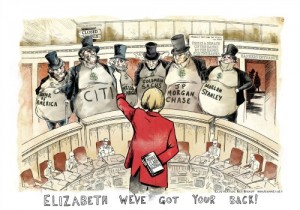
Last December, Warren made headlines again, stepping onto the Senate floor to reveal to the American people how Citigroup, the bank that received the largest taxpayer bailout in the history of the country after it imploded from its own derivatives bets in 2008 – had just slipped language into the spending bill to overturn part of the Dodd-Frank financial reform bill meant to rein in that behavior going forward. Despite her pleas, the bill passed both houses of Congress and was signed into law by President Obama.

Today, Warren is under fire by the “I” in F.I.R.E. – the insurance industry. On April 28, she sent letters to 15 insurance companies, including AIG, the international insurance company that blew itself up in 2008 by taking on the risks of Wall Street’s credit default swap bets and was bailed out with $182 billion from taxpayers.

The letters asked the insurance companies to provide Warren with the specifics on the incentives they offer to push the sale of annuities, the number and value of the incentives awarded, and the companies’ policies for disclosing these potential conflicts of interest. The letters were sent to the 15 companies with the highest 2014 annuity sales to individuals: Jackson National Life, AIG Companies, Lincoln Financial Group, Allianz Life, TIAA-CREF, New York Life, Prudential Annuities, Transamerica, AXA USA, MetLife, Nationwide, Pacific Life, Forethought Annuity, RiverSource Life Insurance, and Security Benefit Life.

Elizabeth Warren Won't Let Go

What Would Happen if Women Were the Financial Regulators?

William Greider asks:  If women were in charge of banking regulation, could they save us from the Wall Street cowboys who crashed the global financial system?

That provocative question was the implicit subtext for an all-day conference of banking and financial officials in Washington this week, held at, of all places, the soberly serious International Monetary Fund. The IMF’s managing director, as it happens, is a woman—Christine Lagarde of France—and she appeared alongside an even more powerful woman—Janet Yellen, chair of the US Federal Reserve System. Neither of them was in charge when the system crashed in 2008.

The IMF event was not a rump rally of feminists who somehow crashed the halls of power. But all of the 18 speakers on various panels were women, prominent as bank regulators or financial authorities. The one-sided gender line-up was not exactly an accident. The men in suits could hardly miss the message.

But just in case they did, IMF Director Lagarde prompted them with a droll question: “What would have happened if Lehman Brothers had been Lehman Sisters?”

What she meant was that different values might have prevailed if women had held the controlling positions at the brokerage or were the government regulators enforcing prudent standards. Women, as Lagarde has observed, worry more about financial exclusion. Worldwide, 42 percent of women have no access to financial services. Only a measly 3 percent of bank CEOs are women.

More to the point, Largarde said research shows women are more risk-averse—a quality utterly missing in the reckless banks and brokerages rushing like lemmings to the cliff. Women in charge might have asked tougher questions.

Fed Chairwoman Yellen stayed away from the gender question. But Lagarde has invoked “Lehman Sisters” numerous times since the financial collapse and disappointing recovery.

“It takes a great deal of will power to direct the French economy,” Largarde wrote in 2010 when she was France’s finance minister. “I am not doing this for women but as a woman I am, perhaps, more keenly aware of the damage that the crisis has done through greed, pride and a lack of transparency…. I am determined to do everything within my power to change the rules of the game and do my best to ensure that a crisis such as this can never happen again.”

What women want, she wrote, is to be judged, like men, on the basis of their deeds. She added what Eleanor Roosevelt had to say on the subject. “A woman is like a tea bag—you never know how strong it is until it’s in hot water.”

One of the conference speakers, Brooksley Born, is a courageous example. Born was nearly drowned by “hot water” dumped on her by Robert Rubin, Alan Greenspan, and Larry Summers during the Clinton administration. As a regulator she was trying to impose some limits on dangerous derivatives. The men hammered her, blocked her, and effectively drove her out of government.

Institute for New Economic Thinking was co-founded and funded by investor George Soros and others, and it set out to sweep worldwide in search of new ideas and new economists who are breaking free of the old orthodoxy that failed.

Johnson was once asked,“If you could wave a magic wand and do one thing to make the financial system better, what would it be?” Johnson had a quick answer: “Only women get to regulate finance.”

Adamti, Provocateur, Instigator

Adamti, Provocateur, Instigator

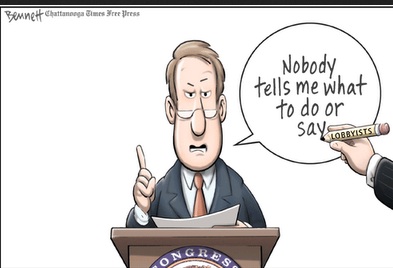
States’ Attorneys’ General Targeted by Lobbyists and Lawyers

Pro Publica reports on the campaign contributions and lobbying efforts of businesses and organizations targets by States’ Attorneys General.

Attorneys general are now the object of aggressive pursuit by lobbyists and lawyers who use campaign contributions, personal appeals at lavish corporate-sponsored conferences and other means to push them to drop investigations, change policies, negotiate favorable settlements or pressure federal regulators, an investigation by The New York Times has found.

A robust industry of lobbyists and lawyers has blossomed as attorneys general have joined to conduct multistate investigations and pushed into areas as diverse as securities fraud and Internet crimes.

But unlike the lobbying rules covering other elected officials, there are few revolving-door restrictions or disclosure requirements governing state attorneys general, who serve as “the people’s lawyers” by protecting consumers and individual citizens.

A result is that the routine lobbying and deal-making occur largely out of view. But the extent of the cause and effect is laid bare in The Times’s review of more than 6,000 emails obtained through open records laws in more than two dozen states, interviews with dozens of participants in cases and attendance at several conferences where corporate representatives had easy access to attorneys general.

Often, the corporate representative is a former colleague. Four months after leaving office as chief deputy attorney general in Washington State, Brian T. Moran wrote to his replacement on behalf of a client, T-Mobile, which was pressing federal officials to prevent competitors from grabbing too much of the available wireless spectrum.

“As promised when we met the A.G. last week, I am attaching a draft letter for Bob to consider circulating to the other states,” he wrote late last year, referring to the attorney general, Bob Ferguson.

A short while later, Mr. Moran wrote again to his replacement, David Horn. “Dave: Anything you can tell me about that letter?” he said.

“Working on it sir,” came the answer. “Stay tuned.” By January, the letter was issued by the attorney general largely as drafted by the industry lawyers.

The exchange was not unusual. Emails obtained from more than 20 states reveal a level of lobbying by representatives of private interests that had been more typical with lawmakers than with attorneys general.

“The current and increasing level of the lobbying of attorneys general creates, at the minimum, the appearance of undue influence, and is therefore unseemly,” said James E. Tierney, a former attorney general of Maine, who now runs a program at Columbia University that studies state attorneys general. “It is undermining the credibility of the office of attorney general.”

Lobbyists

Some US Senate Democrats Vote for TPP

The Rocky Road to Globaliation

Alexander Bolton writes: Washington Sen. Patty Murray is breaking with the rest of the Senate Democratic leadership over trade legislation.

Murray supports granting President Obama fast-track authority to negotiate trade deals, such as the Trans-Pacific Partnership. She also favors moving the fast-track measure before the Senate recesses for its Memorial Day break.  But other Democratic leaders oppose fast-track.

Senate Democratic Leader Harry Reid (Nev.) has vowed to delay it until Republicans lay out a clear path for passing an extension of the Highway Trust Fund and the National Security Agency’s surveillance authority in the next two weeks.

Nearly 40 percent of Washington state’s jobs are tied to exports, according to local business leaders, and she doesn’t want to play with fire when she’s facing reelection next year.

Senate Democratic Whip Dick Durbin (Ill.) said Tuesday there are “major challenges” that give him pause over granting Obama fast-track authority, and noted he voted against a similar bill in 2002.

Murray and Durbin could face each other for the whip post at the end of this Congress.

Durbin said he agrees with Reid that trade legislation should not move until Republicans lay out a clear plan for highway funding and surveillance authority.

New York Sen. Charles Schumer, the third-ranking member of the Senate Democratic leadership, who is a lock to replace Reid as the Senate’s top Democrat in 2017, voted against TPA in the Finance Committee.

Murray downplayed tensions with other Democratic leaders over trade.

“We all accept that we come from different regions and different states,” she said.

Kris Johnson, president and CEO of the Association of Washington Business, said she hails from one of the most trade-dependent states in the country.

“Forty percent of jobs in Washington state are tied to trade in one manner or another,” he said. “I think last year alone we set an all-time high record of just over $100 billion in exports.”  He said Washington exports more per capita than any other state except for Louisiana, adding that the local aerospace, technology and agriculture industries depend on trade.

Microsoft is headquartered in Redmond, Wash., and Boeing employs more than 80,000 people across the state.

Sen. Maria Cantwell (D), Murray’s home-state colleague, said she will vote for fast-track if it moves with an extension of the Export-Import Bank and other measures.

 TPP in Washington State

Connect Bankers’ Salaries to Performance?

Banks need to do more to shake up bonus-heavy pay structures and attack corporate cultures that encourage excessive short-term risk-taking, the head of the International Monetary Fund warned yesterday.

Christine Lagarde, IMF managing director, said since the 2008 global financial crisis much had been done on the regulatory front to crack down on banks and bankers and avoid a repeat of the turmoil.

But in a speech in Washington she cautioned that risks to financial stability were still elevated and the “culture” of the financial sector was at least partly to blame.

She said pay practices needed to encourage the long-term performance of banks and other companies rather than short-term gains. Shareholders also needed to be given a bigger say on pay, while banks should have the power to claw back pay and bonuses in the event of misconduct or changes in performance, she added.

More also needed to be done to improve internal risk-management structures, she said, citing the case of JP Morgan’s “London Whale”, in which a trader at the bank ran up $6 billion in trading losses. In that case, “financial risks were either ignored or underestimated . . . Failure happened at both the management and board levels.”

“Regulation alone cannot solve the problem,” she said. “Whether something is right or wrong cannot be simply reduced to whether or not it is permissible under the law. What is needed is a culture that induces bankers to do the right thing, even if nobody is watching.

“Ultimately, we need more individual accountability. Good corporate governance is forged by the ethics of its individuals.”

Regulators around the world have since the crisis placed an increasing emphasis on conduct and risk-management issues amid concerns that banking scandals could trigger new systemic risks.

Addressing the same event as Ms Lagarde, she cited tougher rules governing capital and liquidity requirements and said the Fed had made improved risk management and internal controls at companies a “top priority”. Lax controls contributed to “unethical and illegal behaviour” by banks and employees, she said.

Bankers' Salaries

Yellen on Finance and Society

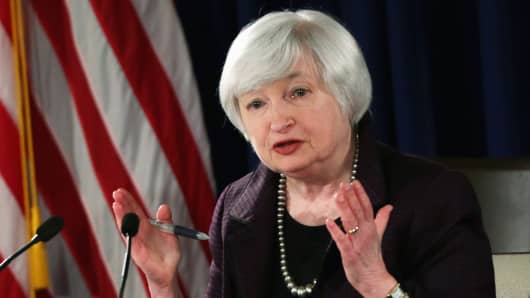
Federal Reserve Chair Janet Yellen warned that equity market valuations were “quite high,” though she said the Fed was not seeing the hallmarks of a bubble.

She also noted that the Fed was watching the issue closely.

“I would highlight that equity market valuations at this point generally are quite high,” Yellen said, according to Reuters. “There are potential dangers there.”

Yellen also made note of the risks to open-ended mutual funds, Reuters reported, particularly dangers to liquidity if redemptions rose.


Janet Yellen

Yellen said the Fed and other banking regulators have made significant progress in correcting flaws in the financial system that triggered the worst banking crisis in seven decades.

Banking regulators are remaining “watchful” for any areas where further reforms may be needed, she said in remarks at a financial conference.

Yellen cited the need to address the problem of “too big to fail”—the perception among investors that some institutions are so large that the government will step in and save them if they get into trouble.

She said the Fed and other regulators are taking steps to make sure that the collapse of even very large banking institutions can be handled in ways that don’t jeopardize the stability of the entire system.

Yellen’s comments came in a joint appearance with International Monetary Fund Managing Director Christine Lagarde at a conference sponsored by the Institute for New Economic Thinking.

Lagarde told the group that a recent IMF report found that risks to financial stability around the globe are rising with increasing risks at non-bank financial institutions and in emerging market countries.

“We need to build a financial system that is both more ethical and oriented more to the needs of the real economy—a financial system that serves society and not the other way around,” Lagarde said.

Yellen said a well-functioning financial sector promotes job creation, innovation and economic growth but that problems arise when the incentives become distorted, prompting bank executives to pursue risky strategies to increase profits.

“Unfortunately, in the years preceding the financial crisis, all too many firms took on risks they could neither measure nor manage,” she said.

“The result was the most severe financial crisis and economic downturn since the Great Depression,” the Fed chief said, noting that 9 million American lost their jobs and roughly twice that many lost their homes.

Anat Admati: FInance and Society

John Cassidy talks to Anat Admati about her conference in Washington on Finance and Society.  Women speakers dominate:  Janet Yellen, Elizabeth Warren and Christine Lagarde.

The title of the conference is “Finance & Society,” which is also the name of a course you teach at Stanford Business School. Is that where you got the idea for holding a conference?

AA:  I’ve been working on both at the same time. The course and the conference share the objective of engaging more people in an informed discussion of how finance can best serve society and how to improve the system, which is currently distorted and dangerous, due to ineffective regulations.

What do you hope the conference will achieve?

AA: I hope it helps to frame and focus the discussion of these important issues, to expose the challenges, and to cause people, especially those who can impact policy, to try and improve the financial system. I view this discussion—done as broadly as possible and with as many people as possible involved—as critically important, because the financial system is fraught with conflicts of interest and lacks basic rules of accountability. Yet the issues are widely misunderstood, and the policy debate is muddled. I hope the conference, as well as the course and other efforts, helps to change this situation.

So how did the conference actually come about?

The concept of the conference started evolving about two years ago. Eventually, three economists (from Iceland, Switzerland, and the I.M.F.) joined me to try and make it happen. Last June, I shared the idea with Rob Johnson, the president of INET (the Institute for New Economic Thinking). He and others at INET were enthusiastic, and we have been collaborating with them to put it on.

Why did you decide to make it an all-female event?

AA: We didn’t actually set out to have all female speakers. But we wanted to highlight and celebrate the fact that there are now more—indeed many—women in leadership positions who can bring important insights to the discussion. So we started by creating the theme, and the content, and then used our “girls’ network” to invite women who could make the event powerful and impactful. As it happened, we never ran out of women we wanted to invite. In this regard, I should perhaps direct you to Justice Ruth Bader Ginsburg’s answer to the question of when there would be enough women on the Supreme Court: “When there are nine.”

You’ve got an all-star lineup.

AA: It took some effort to get commitments and coördinate a date with Janet Yellen and Christine Lagarde. But once we had that (which luckily also worked for Senator Warren) it was remarkably easy to get the others to come. The response was very enthusiastic.

What does it mean that, today, three of the most important economic and financial policymakers are female—and that coming up behind them are lots of other very influential women

AA: The fact that there are more women in influential positions means that there is progress, with more role models, and reason to celebrate. Having women deliver great content and insights on important issues is the best way of celebrating the progress.

The men who were running the financial world in the run-up to 2008 made a mess of things. Lots of people felt it was time for a change.

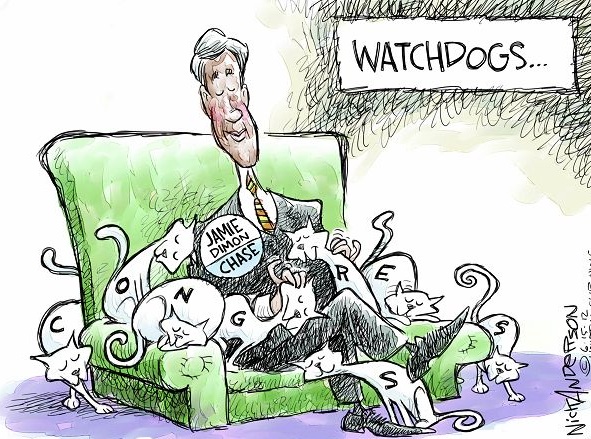
AA:   I haven’t noticed significant change within the financial industry. There is a pervasive sens of entitlement, with massive lobbying efforts and virtually the same practices as before.

Beyond highlighting women, was there any specific principle behind the types of speakers you chose?

AA: We avoided inviting people who work for private, for-profit financial institutions, whose interests are sometimes in direct conflict with those of the rest of society. My experience is that they often make vague, perfunctory, or, worse, misleading statements, which muddle the debate and waste valuable time.

Spin is not unique to the private sector, of course. Policymakers and central bankers may also portray the situation, and their own efforts, in a better light than is appropriate. But policymakers hold the key to improving the system, and I think we have enough speakers with no institutional constraints to make sure that the discussion gets at the underlying issues in some depth.

Senator Warren has made clear that she hopes issues relating to finance and Wall Street figure prominently in the 2016 campaign. How important has she been in highlighting these topics and keeping them on the political agenda?

AA:  She has been extremely important. I found it remarkable and dismaying that financial reform has not really been on the agenda in the past two elections, 2012 and 2014. It appears that money and lobbying corrupts politicians from both parties.

In your own work, you’ve focussed on huge financial institutions. I’m sure you’ll talk about this more in your remarks at the conference, but what is the single biggest outstanding issue? Too big to fail? Derivatives? Governance? Something else?

AA:  These are related and interlocked problems that boil down to a single overriding issue, namely the ability of people in the financial industry, and especially at the largest institutions, to take and hide excessive, unnecessary risk that benefits them and harms the public. The fault lies with policymakers who fail to set and enforce appropriate rules. Some regulations that could be highly beneficial are badly designed and insufficient, while others that have been implemented are wasteful and counterproductive. And accountability is lacking throughout this system, including accountability for policymakers.

In addition to the keynote speeches and Q. & A.s, the conference will feature panel sessions on governance and politics, credit distortions, and financial regulations, all of which are important.

AA:  Inequality is a complex topic that we can’t do justice in a one-day event that tries to unpack lots of other issues specific to the financial system. But I am sure the discussion will shed some light on how distortions in the financial system contribute to the problem.