Upheaval in US Power Business

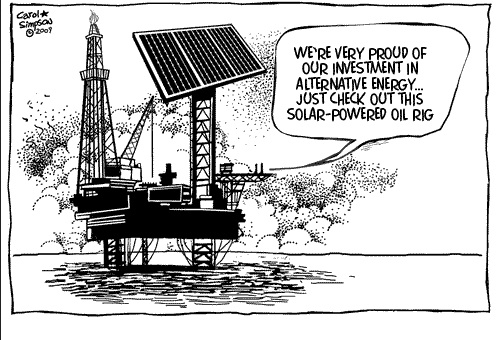
Hawaii is at the forefront of a global upheaval in the power business. Rooftop systems now sit atop roughly 12 percent of Hawaii’s homes, according to the federal Energy Information Administration, by far the highest proportion in the nation.

Other states and countries, including California, Arizona, Japan and Germany, are struggling to adapt to the growing popularity of making electricity at home, which puts new pressures on old infrastructure like circuits and power lines and cuts into electric company revenue.

As a result, many utilities are trying desperately to stem the rise of solar, either by reducing incentives, adding steep fees or effectively pushing home solar companies out of the market. In response, those solar companies are fighting back through regulators, lawmakers and the courts.

The shift in the electric business is no less profound than those that upended the telecommunications and cable industries in recent decades. It is already remaking the relationship between power companies and the public while raising questions about how to pay for maintaining and operating the nation’s grid.

In solar-rich areas of California and Arizona, as well as in Hawaii, all that solar-generated electricity flowing out of houses and into a power grid designed to carry it in the other direction has caused unanticipated voltage fluctuations that can overload circuits, burn lines and lead to brownouts or blackouts.

The economic threat also has electric companies on edge. Over all, demand for electricity is softening while home solar is rapidly spreading across the country. There are now about 600,000 installed systems, and the number is expected to reach 3.3 million by 2020, according to the Solar Energy Industries Association.

The Edison Electric Institute, the main utility trade group, has been warning its members of the economic perils of high levels of rooftop solar since at least 2012.

In Hawaii, the current battle began in 2013, when Hawaiian Electric started barring installations of residential solar systems in certain areas.  The utility wants to cut roughly in half the amount it pays customers for solar electricity they send back to the grid. But after a study showed that with some upgrades the system could handle much more solar than the company had assumed, the state’s public utilities commission ordered the utility to begin installations or prove why it could not.

It was but one sign of the agency’s growing impatience with what it considers the utility’s failure to adapt its business model to the changing market.

Hawaiian Electric is scrambling to accede to that demand, approving thousands of applications in recent weeks. But it is under pressure on other fronts as well. NextEra Energy, based in Florida, is awaiting approval to buy it, while other islands it serves are exploring defecting to form their own cooperative power companies.

It is also upgrading its circuits and meters to better regulate the flow of electricity. Rooftop solar makes far more power than any other single source, said Colton Ching, vice president for energy delivery at Hawaiian Electric, but the utility can neither control nor predict the output.

For customers, such explanations offer little comfort as they continue to pay among the highest electric rates in the country and still face an uncertain solar future.

Installers — who saw their fast-growing businesses slow to a trickle — are also frustrated with the pace. For those who can afford it, said James Whitcomb, chief executive of Haleakala Solar, which he started in 1977, the answer may lie in a more radical solution: Avoid the utility and its grid altogether.

Customers are increasingly asking about the batteries that he often puts in along with the solar panels, allowing them to store the power they generate during the day for use at night. It is more expensive, but it breaks consumer reliance on the utility’s network of power lines.
Solar Power

Drilling Oil and Climate Change

Jeffrey D. Sachs writes: ExxonMobil’s current business strategy is a danger to its shareholders and the world. We were reminded of this once again in a report of the National Petroleum Council’s Arctic Committee, chaired by ExxonMobil CEO Rex Tillerson. The report calls on the US government to proceed with Arctic drilling for oil and gas – without mentioning the consequences for climate change.

While other oil companies are starting to speak straightforwardly about climate change, ExxonMobil’s business model continues to deny reality.

The year 2014 was the hottest on instrument record, a grim reminder of the planetary stakes of this year’s global climate negotiations, which will culminate in Paris in December. The world’s governments have agreed to keep human-induced warming to below 2º Celsius (3.6º Fahrenheit).

Many of the world’s biggest oil firms are beginning to acknowledge this truth. Companies like Total, ENI, Statoil, and Shell are advocating for a carbon price (such as a tax or permit system) to hasten the transition to low-carbon energy and are beginning to prepare internally for it. Shell has stepped up its investments in carbon capture and sequestration (CCS) technology, to test whether fossil-fuel use can be made safe by capturing the CO2 that would otherwise go into the atmosphere.
Exxon’s management, blinded by its own vast political power, behaves with a willful disregard for changing global realities. It lives in a cocoon of Washington lobbyists and political advisers who have convinced the company’s leaders that because the US Senate is currently in Republican hands, the business risks of climate change have somehow been nullified, and that the world will not change without or despite them.

At the same time, ExxonMobil is not some marginal actor in the planetary drama. It is one of the central protagonists.  So what does ExxonMobil say about the new climate realities? How does it reconcile its corporate policies with planetary needs?  Unfortunately, the company basically ducks the issue.

The development of the Arctic’s oil and gas resources would contribute to warming far above the 2º limit. The Arctic itself is warming far faster than the planetary average, potentially causing massive, global-scale climate disruptions – which may include the extreme weather patterns recently observed in the US mid-latitudes.

For these reasons, the best recent science, including an important study published in Nature this year, provides a clear and unequivocal message: Keep the Arctic oil in the ground and beneath the deep seas; there is no safe place in the climate system for it.”

ExxonMobil’s brazenness should be deeply troubling for its shareholders. The company’s management is planning to spend vast sums – perhaps tens of billions of dollars – to develop Arctic oil and gas reserves that cannot safely be used. Just as the global shift toward renewable energy has already contributed to a massive drop in oil prices, climate policies that will be adopted in future years will render new Arctic drilling a huge waste of resources.

Pension funds, universities, insurance pools, and sovereign wealth funds worldwide are grappling with the increasing risks, both moral and financial, of owning shares in oil, gas, and coal companies. As Lisa Sachs and I recently explained, responsible investors must urgently query these companies about their business plans to comply with the 2º limit on warming.

Drilling for Oil in Alaska

Dealing with Debt Globally

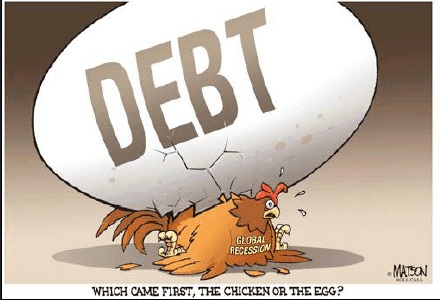
Adair Turner and Susan Lund write: Greece’s divisive negotiations with the EU have placed debt back at the center of debates about economic growth and stability. But Greece is not the only country struggling to repay its existing debt, much less dampen borrowing. Its fraught negotiations with its creditors should spur other countries to take action to address their own debt overhangs.

Since the global financial crisis erupted in 2008, the world’s debt has risen by $57 trillion, exceeding GDP growth. Government debt has increased by $25 trillion, with the advanced economies accounting for $19 trillion – a direct result of severe recession, fiscal-stimulus programs, and bank bailouts.

Much of this debt accumulation was driven by efforts to support economic growth in the face of deflationary headwinds after the 2008 crisis. That was especially so in China, which, together with other developing economies, accounts for nearly half of the debt incurred since 2008.

To be sure, debt itself is not bad. But excessive reliance on debt creates the risk of financial crises, which undermine growth. Given this, the world needs to find both less credit-intensive routes to growth and ways to eliminate existing debt burdens.

To help limit future debt accumulation, countries have three options. First, they can employ countercyclical macroprudential measures to dampen credit cycles and prevent excessive borrowing. For example, stricter loan-to-value-ratio limits and higher capital requirements for banks could slow credit growth when housing or commercial real-estate markets are overheating. Yet precisely the opposite approach is now being taken in the United States, where some first-time homebuyers have now been given access to 97% loan-to-value mortgages.

A second strategy for curbing the buildup of debt could be to introduce mortgage contracts that enable more risk sharing between borrowers and lenders, essentially acting as debt/equity hybrids. As the Great Recession grimly illustrated, when a period of soaring real-estate valuations and rising household debt is followed by a period of falling prices, and households attempt to deleverage, the results can be catastrophic. The talent for financial innovation that produced harmful new home-mortgage options before the crash should now be harnessed to develop more flexible mortgages that help borrowers avoid default.

One example is “shared responsibility” mortgages, in which payments are reduced under certain circumstances, such as when home prices dip below the borrower’s purchase price. In exchange for this flexibility, the lender receives a share of any capital gain that is realized when the home is sold. Similarly, the continuous-workout mortgage adjusts payments and terms in specific cases, such as job loss.

A third option for limiting debt accumulation is to reconsider tax rules that favor debt. In many countries, interest accrued on a mortgage remains tax deductible. Though phasing out this policy is politically contentious, some countries – such as the United Kingdom in the 1980s – have managed to do so. Similarly, it would be difficult – but not impossible – to reduce the incentives, created by almost all countries’ tax regimes, for corporate leverage.

Governments must also work to reduce existing debt – and the deficient global demand to which it contributes. It is simply not feasible for the most highly leveraged governments to grow their way out of debt. Nor can austerity alone suffice, as it would require countries to make such large fiscal adjustments – 5% of GDP, in Spain’s case – that citizens would likely resist them, as the Greeks have done.

A more effective approach would employ a broader range of tools, including debt restructuring. In some countries, sales of public assets and the levying of one-off wealth taxes would also be helpful.

The US Federal Reserve, the Bank of England, and the Bank of Japan now own 16%, 24%, and 22%, respectively, of all bonds outstanding.

Given that central banks are owned by the government, and that interest paid on outstanding bonds is remitted back to the national treasury, these government bonds are fundamentally different from those owned by other creditors. Focusing on “net” government debt (which excludes intra-government debt holdings, such as the bonds owned by central banks) is a more effective approach to assessing and ensuring the sustainability of public debt.

The global economic crisis laid bare the challenge of debt reduction – and the risks that excessive indebtedness raises. Yet the crisis also intensified government and household dependence on leverage, causing debt levels to continue to rise – a trend that, left unchecked, will lead to more crises in the future.

 Global Debt

Putin Makes Nice to US

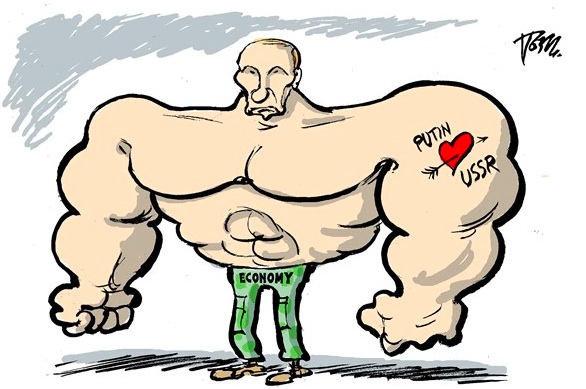
Russia has key interests in common with the United States and needs to work with it on a common agenda, Russian President Vladimir Putin said  in a television interview.

In his comments to the state-run Rossiya channel, Putin appeared to soften his anti-American rhetoric after being highly critical. Relations between Moscow and Washington and other Western powers have soured over the conflict in Russia’s neighbor Ukraine, sinking to an all-time low.

“We have disagreements on several issues on the international agenda. But at the same time there is something that unites us, that forces us to work together,” Putin said.

“I mean general efforts directed at making the world economy more democratic, measured and balanced, so that the world order is more democratic. We have a common agenda.”

Putin has in the past fiercely attacked the United States and the West in general, blaming them for the Ukraine crisis, which Russia says was the result of a Western-backed “coup” against Ukraine’s former leader Viktor Yanukovich.

Russia has repeatedly denied accusations from Kiev and the West that it is supporting pro-Russian rebels with troops and weapons in eastern Ukraine, where more than 6,000 people have been killed since last April.

Both Russia and the West say they back a peace deal agreed in Minsk in February, as a result of which a ceasefire in the Donbass region is largely holding.

Putin


Bail in or Bail Out: That is the Question?

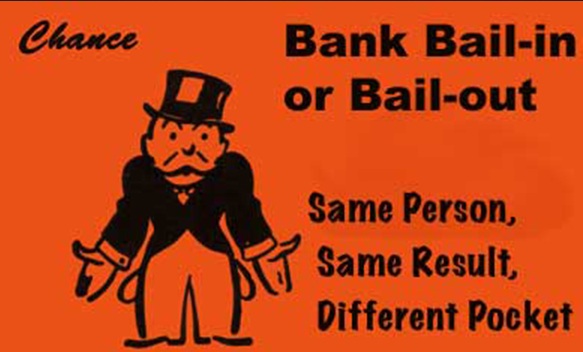
Ken Workman discusses reaction to the true but politically incorrect remark of Jeroen Djisselbloem.  The fact—and the fear—is that the Eurogroup is changing expectations again: When they bailed out Greece, creditors got restructured, but Europe promised it was a one-time only thing. The ECB bailout of Spain was different: You guys recapitalize the banks, creditors stay whole, and the ECB provides the financing. When Cyprus, and its role as Russia’s offshore bank came along,  European leaders responded by reverting to the Greek model: Creditors got “bailed-in” and had to take losses.

Customers at banks in Spain and Italy and France now realize that if their countries and banks end up in need of further financial assistance to stay in the euro zone, the private sector might have to take losses. This is already causing bank stock prices to drop, prompting a quick walk-back (pdf) that left everyone confused.

Customers at banks in Spain and Italy and France now realize that if their countries and banks end up in need of further financial assistance to stay in the euro zone, the private sector might have to take losses.

The problem is that while Cyprus is special, it’s not that special. Germans don’t want to bailout Russian depositors, but they also don’t want to bail out anyone. The Spain model isn’t working and the expectation that it will means disappointment. A euro zone mired in recession is not going to be able to out-grow its debt problem with a weak financial system.  The EU needs a banking union, something the Eurogroup has already begun work on. Recognizing reality may make markets nervous, but to solve the crisis, public and private creditors will have to pay up.

That doesn’t make Cyprus ideal by any stretch of the imagination. Cypriots would probably be better off leaving the euro altogether. And the haphazard assembly of its bailout has left only two real principles intact: the euro will not be allowed to fail, and creditors will likely need to help with that. Balancing crisis management (stopping bank  runs) with reform (recapitalizing banks) is never easy, but after four years it might be worth thinking more clearly about the tensions between the two.

Bail-Ins

Common Energy Policies in the EU

Nick Butler writes: An intriguing process has begun in the EU, almost unnoticed outside the small world of Brussels and the shrinking circle of those who believe in an ever-closer European Union. The EU is asserting its role in the energy market.

No country is forced to give up the power to set its own energy mix. The French will not be told to start fracking for shale gas or the extensive volumes of tight oil that
exist in the Paris basin. Germany will not be required to change its policy of phasing out nuclear power. There is no proposal to unify taxation on energy production or consumption.

What changes is simply but crucially that a new level of policy making is established above the nation states.  Focus is on energy security, particularly for gas but potentially also for electricity.  Completing the internal market in energy means removing the national barriers which at present create a patchwork quilt of supply systems and prices.

In truth, the likelihood is that in the classic European way one thing will lead to another. Many of the proposals for energy network linkages — for instance between Spain and France, or through Italy into central and northern Europe — won’t be built because it is not in the interests of particular national suppliers whose business depends on limiting open competition. But once there is a European-level policy, the momentum to open the market and to sweep away the blockages of national borders will be very strong.

In the days when Europe was at war with itself, those systems were protected nation assets. Now we are in many ways, and by legal agreement, a single economic space why not unify the system?

Energy security is a matter of national security and in the end governments carry a responsibility to ensure that the lights stay on. Given market failures around the impact of carbon emissions, only the state can ensure that externalities are priced in. But state control of the market can be costly, destructive to innovation and narrowly inward looking. The new European energy union virtually ignores technical and scientific progress and has very little to say about trade links with other parts of the world, even though those links could in many cases give Europe lower cost supplies. At a first reading you would get the idea that Mr Sefcovic and his colleagues would be very happy if Europe were completely self-sufficient in energy.


Is the American Dream Over?

Richard Reeves writes about the Horatio Alger awards:  Twelve new members (11 men, one woman) were honored for having risen from childhood poverty to positions as captains of commerce or celebrated public servants. Colin Powell, a 1991 award recipient, was among those in the audience. The new members’ speeches were brief, striking a balance between pride and humility, and all hewing to the rags-to-riches theme.

The climax of the evening came with the arrival on stage of more than 100 students from poor and troubled backgrounds to whom the Society had awarded college scholarships. . The ceremony had the feel of an act of worship and thanksgiving before the altar of the society’s namesake. It was a genuinely moving experience, even for me—and I’m a Brit.

Vivid stories of those who overcome the obstacles of poverty to achieve success are all the more impressive because they are so much the exceptions to the rule. Contrary to the Horatio Alger myth, social mobility rates in the United States are lower than in most of Europe. There are forces at work in America now—forces related not just to income and wealth but also to family structure and education—that put the country at risk of creating an ossified, self-perpetuating class structure, with disastrous implications for opportunity and, by extension, for the very idea of America.

In his second inaugural address in 2013, Barack Obama declared: “We are true to our creed when a little girl born into the bleakest poverty knows that she has the same chance to succeed as anybody else, because she is an American; she is free, and she is equal, not just in the eyes of God but also in our own.”

Strive and Succeed cover

The United States was to be a self-made nation comprised of self-made men. Alexis de Tocqueville—the first of many clever Frenchmen to wow the American reading classes—suffused his Democracy in America with admiration of the young nation’s “manly and legitimate passion for equality,” while Abraham Lincoln extolled his countrymen’s “genius for independence.”

There is a simple formula here—equality plus independence adds up to the promise of upward mobility.   Hence the toddlers who show up at daycare centers in T-shirts emblazoned “Future President.” Hence Americans’ culture of competitiveness, their obsession with sports, their frequent and all-purpose references to “the rules of the game” and to “fairness.” Hence the patriotism-tinged pride of the successful, exulting not only in their own grit and prowess, but also in the meritocratic system that gave them scope and opportunity.   Can Americans Still Dream

Warren: Rules and Market Go Together

Elizabeth Warren writes:  For too long, the opponents of financial reform have cast the debate as an argument between the pro-regulation camp and the pro-market camp. They generally put Democrats in the first camp and Republicans in the second.

But that so-called “choice” gets it all wrong.

Rules are not the enemy of markets. Without some basic rules and accountability, financial markets don’t work. People get ripped off, risk-taking skyrockets, and markets fall apart. Rolling back the rules or firing the cops can be profoundly anti-market.

Republicans claim – loudly and repeatedly – that they support competitive markets, but their approach to financial regulation is pure crony capitalism. It helps the rich and the powerful protect and expand their wealth and their power – and leaves everyone else behind.

This week, I gave a big policy speech which boils down to two principles:

First, financial institutions shouldn’t be allowed to cheat people. Markets work only if people can see and understand the products they are buying, only if people can reasonably compare one product to another, only if people can’t get fooled into taking on far more risk than they realize just so that some fly-by-night company can turn a quick profit and move on. That’s true for families buying mortgages and for pension plans buying complex financial instruments.

Second, financial institutions shouldn’t be allowed to get the taxpayers to pick up their risks. That’s true for using insured deposits for high-risk trading, and it’s true for letting Too-Big-to-Fail banks get a wink-and-a-nod guarantee of a government bailout.
We know what changes we need to make financial markets work better. Strengthen the rules to prevent cheating. Make the cops do their jobs. Cut the banks down to size.  Change the tax code to promote more long-term investment. Tackle shadow-banking done by non-bank firms and subsidiaries.

Changes like these can make a real difference. They can help protect hard-working families from cheats and liars. They can help rein in the lawless practices that are still too common on Wall Street. They can end Too Big to Fail.

The secret to better markets isn’t turning loose the biggest banks to do whatever they want. The secret is smarter, more structural regulation that forces everyone to play by the same rules and doesn’t let anyone put the entire economy at risk.

Warren the Warrior.

World Bank and IMF Spring Up

Homi Kharas writes:  This weekend, finance ministers, economists, and others from around the world will convene on Washington for the annual World Bank-International Monetary Fund Spring Meetings. The IMF released dramatic new global growth projections yesterday, and these will set the tone as other issues surface throughout this year’s meetings.So what’s going on in the world economy today?

Global growth drivers aren’t who they used to be: The Millennium Development Goals will expire this year, and in July, countries will meet in Addis Ababa to discuss how the U.N. will finance development efforts for the next 15 years. Financing for development is expected to be a principal topic for the development committee this year, and one that finance ministers are starting to take seriously. I’ve already written my thoughts on what we need from the Addis meeting, as well as on the worthiness of crafting a set of Sustainable Development Goals that work. But what can we expect from the Addis meeting? And how is it different from what we’ve seen before?
New funding sources have to be leveraged for effective future development
.
Finally, the Asian Infrastructure Investment Bank will continue to make news. Almost every country but the U.S. and Japan has now joined China in its setting up of the AIIB. And everyone has an opinion—from Larry Summers proclaiming it’s time for the U.S. to wake up to a new economic era, to my Brookings colleague Raj Desai who welcomes the bank and thinks the U.S. will suffer from its lack of participation. So what exactly is the AIIB and why has the U.S. sought to keep its allies from participating?
The AIIB could be a new channel for much-needed infrastructure investment.

Finance Wizards Meet

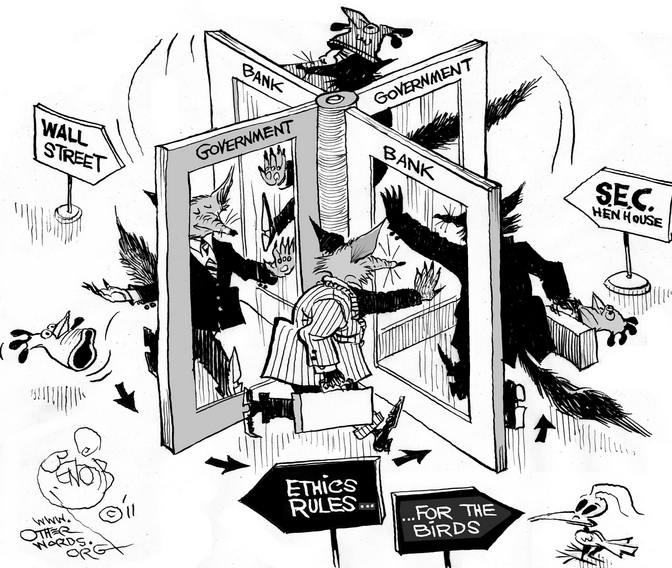
Is the Revolving Door from Government to Finance Dangerous?

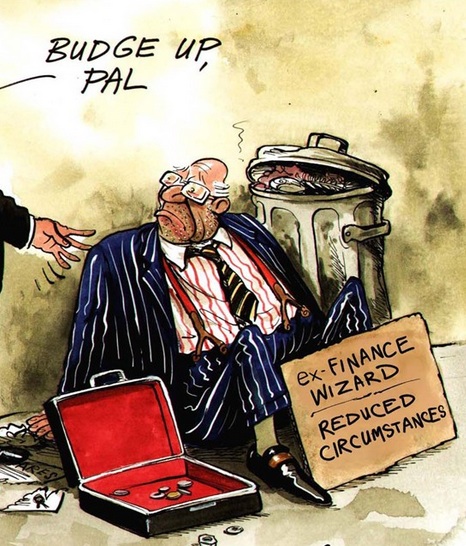
Ben Bernanke, the former chairman of the US Federal Reserve, has joined Citadel as an adviser on monetary policy, arriving as the Chicago hedge fund recovers from a $1bn loss trading government bonds.

The ex-central banker, who stepped down from the Fed in January 2014, said he would be adding his “perspective on a range of issues affecting our global economy” in his new role.

The move may fan criticism of the revolving door between the Fed and other wings of government and powerful financial firms.

Alan Greenspan, Mr Bernanke’s predecessor as Fed chairman, took up positions including acting as a consultant for Deusche Bank and hedge fund Paulson & Company after leaving the central bank.

Last month, Jeremy Stein, a former Fed governor, said he would start advising BlueMountain Capital Management, another fund.

Mr Bernanke said he was sensitive to anxieties about the “revolving door” and had chosen Citadel, rather than a position at a bank, in part because it is not regulated by the Fed. He said he would not be doing “lobbying of any sort”.

Ken Griffin, the founder and chief executive of Citadel, which has $26bn in assets under management, said Mr Bernanke has “extraordinary knowledge of the global economy and his insights on monetary policy and the capital markets will be extremely valuable to our team and to our investors.”

The appointment was announced on Thursday, hours before it emerged that Citadel’s head of fixed income, Derek Kaufman, had resigned after suffering $1bn of losses in his portfolio of developed market sovereign bonds.

People familiar with the situation said a series of macro bets went awry in 2014, dragging down the overall performance of Mr Kaufman’s 20-person team.

After a weak start to trading in 2015, he resigned two weeks ago.  A former JPMorgan proprietary trader, Mr Kaufman was recruited by Citadel in 2008.

Mr Kaufman’s team was responsible for a $4bn global fixed income fund, which managed only a 0.75 per cent gain last year, and for portions of Citadel’s flagship Kensington and Wellington funds. The fixed income team will now report directly to Mr Griffin.

“Citadel is a dynamic firm with tremendously talented people and a rigorous approach to research and investing. I look forward to adding my perspective on a range of issues affecting our global economy,” said Mr Bernanke in a statement released by Citadel.

Since leaving the Fed, Mr. Bernanke’s views have been solicited by hedge fund managers and other market participants at exclusive dinners and speaking engagements. He will be a speaker at next month’s SALT conference for hedge fund managers in Las Vegas.

Mr Bernanke served as chairman of the Fed from February 2006 to January 2014, putting him at the helm of the central bank in the midst of the financial crash. Before his appointment as chairman, he chaired the president’s council of economic advisers from June 2005 to January 2006.

Revolving Door