Woman CFO to Google for $70 million

Another run from Wall Street finalized with negotiations reached. Google Inc. has agreed to pay Chief Financial Officer Ruth Porat more than $70 million after she begins in May, ranking her among the highest paid CFOs in the business.

Porat who will be resigning from her position as the CFO of Morgan Stanley will receive a signing bonus of $5 million along with a $25 million stock grant this year that will continue through 2017 says Google, after as of a regulatory filing on Thursday. In addition, the CFO is entitled to a $40 million biennial stock grant in 2016 and a salary base of $650,000 annually.

Patrick Pichette, current Google Inc. CFO announced he would step down this month. Porat is expected to leave Morgan Stanley sometimes in April and replace Pichette the following month on May 26th. Google said it would pay Pichette pro-rated outstanding equity grants that were set to vest in 2016 and 2018 to ensure “that he continues performing in the role until such time as Google determines that there has been a smooth transition to the new CFO” said a spokesperson for the company.

Porat was paid $40.3 million after her first four years serving as chief Financial Officer of Morgan Stanley. Her total pay for last year has not yet been disclosed. The powerful female CFO owned 920,000 Morgan Stanley shares amounting to $32.7 million as indicated by regulatory filling.

As Porat joins the great Wall Street migration to Silicon Valley, she will undertake the rivalry against Google’s competitors like Apple, Inc. and Facebook Inc. With over 25 years at Morgan Stanley, Porat should bring better fiscal discipline to the company so; Google can cut costs in order to invest in new businesses.

Other ex-wall street executives have enjoyed the same pay raise on the west coast. Anthony Noto, Twitter Inc. CFO received a one-time stock award of 1.5 million restricted shares vesting over four years amounting to nearly $65 million last July.  He served previously as a top banker at Goldman Sachs and the CFO of the National Football League.

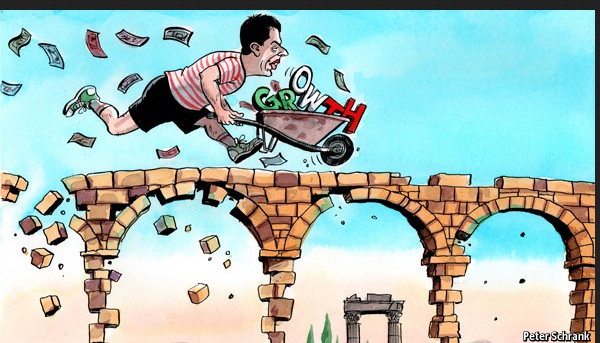
The rush to the west is in part due to the lure of an overwhelming number of start-ups turning into gold mines practically overnight. Years of financial insecurity on Wall Street has redirected young college graduates to more promising avenues in “the golden state”. Robert Reffkin, who left Goldman Sachs in 2012 after 7 years to create his own real estate star-up Compass said, “Smart people go to where they feel there is the most growth.”

In a statement released last Tuesday, after Porat’s appointment was announced, Google Chief Executive Officer Larry Page said “We’re tremendously fortunate to have found such a creative, experienced and operationally strong executive.”


Ruth Porat

Chile Cleans Up Its Act

Alicia Chevy writes: As one of the most competitive economies and financial market in the region and worldwide, Chile projected itself as a strategic destination for foreign investments over the past two decades. Emerging from the disastrous Pinochet dictatorship in 1990, the Andean country established strict political and legislative safeguards to lower corruption levels and protect judicial processes, democratic values, and investments.

The new government’s efforts successfully created strong confidence in the new political system, improving transparency and corruption indexes, and solid financial and legal institutions. From these reforms, high inflows of FDI followed and Chile became the world’s 11th largest recipient of FDI in 2012.

Thus, over the past 10 years, it became clear that Chile had the potential to become a powerful player in the region, as its GDP grew at an average annual rate of 4.6% from 2005 to 2012.

Influential institutions like the World Economic Forum recognized Chile as one of the top countries with the best macroeconomic environment.  Investors have benefited from Chile’s strongly legislated guarantees, such as protection on copyrights, and from its strategic trade agreements with 59 countries, including Free Trade Agreements.

With no restrictions on capital flows, promotion of private investment incited by tax exemptions, and a flat tariff of 6% on imports from other countries, Chile became the Golden Boy of Latin America for investments.

While the country proved its resilience in facing international crisis, its flexibility to address domestic problems has been challenged over the past year. Corruption and finance-related scandals in the public sector erupted, shaking Chile’s image as a regional role model.

Incoming accusations involving influential politicians in illegal campaign financing were the cherry on top. The Chilean Miracle became a mirage.

Along with the political scandals and a harsh month of natural disasters, President Bachelet was sidetracked from implementing her reform agenda and addressing the economic slowdown.

As its main export is copper, Chile’s energy sector’s and economy’s health depends heavily upon commodities’ global development and the growth of its major consumer, China. Along with changing global energy policies, China’s demand for copper and commodities has slowed down, deeply affecting Chile.

Moreover, sharp declines in the price of copper weakened investments in the mining sector and GDP growth over the past two years. Economists have also accounted falling employment rates and limited monetary tools for driving the economy and currency value down.

Consequently, major manufacturing and mining companies have expressed their concerns regarding Chile’s current economic environment.

To tackle the recent political and economic crises, Bachelet’s administration proposed several reforms. For instance, tougher regulations on government and public sector officials aim to reduce pervasive corruption in the public sector and help the president regain her popularity.

Overall, Bachelet and her administration have sought to reassure investors in health, energy and other major sectors in recent months. Energy Minister Maximo Pacheco devised a plan to boost energy investment and stopping the nefarious impact that drastic change in copper prices have on the economy.

Through early signs of economic recovery in January, Chile showed its aptitude in facing challenging domestic and international conditions.

Chile’s reputation as an ideal business destination and its institutional strengths remain largely spotless.

Despite the recent corruption scandals and financial problems, Chile remains an attractive investment destination.

The Appeal of Chile

Reform in Italy?

Walter Russell Mead writes:  Italy has made some progress on spending cuts, but reform seems to be slowing down at just the point when real gains could be locked in. The FT reports on Prime Minister Matteo Renzi’s announcement that the country will see spending cuts of €10 billion next year. That number, however, still leaves the country €6 billion behind the target savings the government was originally aiming at. Future savings gained by making the Italian government more efficient are promised, but the FT reports that some are skeptical these savings will materialize.

There’s a reason why many advanced governments today have trouble meeting budget cut targets. At the end of the day, the cuts that would be least painful for Italian society would be unbearably painful for special interests that are well-entrenched in the political system. Making government procurement more effective, with less room for waste and corruption, for example, wouldn’t harm any of those who depend on government services — but it would reduce the profits of the well-connected crony capitalists and the local politicians who are hand in glove with them.

Similarly, reducing bloated staffing, rationalizing government administration, and otherwise making government more transparent and effective would enable taxpayers to enjoy the same level of services with less debt and taxes. A clear gain, you would think, but politics (and not just in Italy) has a hard time delivering this kind of result.

In the U.S. as well as in Italy, many of our debt and spending problems don’t come from the ‘greed’ of those who receive government services. They come from government ineptitude and from those who profit from bloated and irrational delivery systems. From our defense procurement system to infrastructure to the health care system to higher ed, our country—like many of the other advanced industrial democracies—suffers from the high costs of a badly-run state.

The left characteristically attacks all forms of spending discipline as a cold-hearted assault on the poor even while it continues to serve the special interests in the governance machine. For its part, the right howls rhetorically about the evils of spending, but is also unwilling to go after deep-pocketed special interests who profit from government inefficiency (think, for example, of state politicians everywhere who suck up to crony capitalist highway construction firms, or presidential candidates bowing to the Iowa ethanol lobby).

The left—in Italy as in the U.S.—needs to learn that budget discipline properly done helps the poor rather than hurts them. The right needs to learn the importance of governing well so as to govern less intrusively and less expensively. There is an agenda here that could electrify voters and put us on the road to better societies with less debt. Let’s hope that a new generation of real reformers will come along to give us the government we need at a price we can pay.

Italian Reform?

Joining the AIIB?

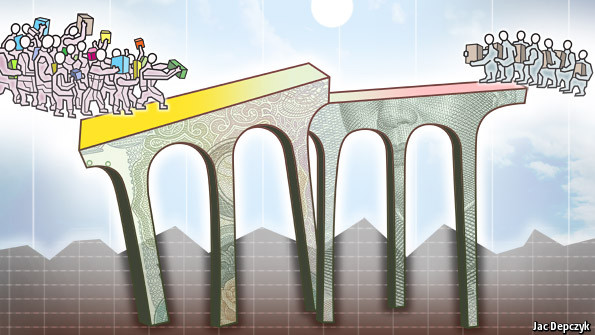
Will Kickey writes: March 31 marked the deadline for charter founders to line up for the new China-led Asian Infrastructure Investment Bank, 亚洲基础设施投资银行, or AIIB initiative. At the last moment Norway, Taiwan and others rushed to find the good graces of the Chinese opportunity. Many countries seek Asian influence, and Washington has been miffed by Chinese rejection of its traditional actors – the World Bank, the International Monetary Fund and the Asian Development Bank. The US and Japan, initially cool but now perhaps contemplating some eventual partnership, will remain on the sidelines.

A Chinese proverb says “they sleep in the same bed but dream different dreams.” The AIIB founding members are a diverse group with a range of investment agendas:
South Korea, marginalized in the Asian Development Bank, and despite US misgivings, expects to take a stake of upwards of 5 percent in the AIIB. With it heavy equipment industry, Hyundai, Doosan and infrastructure prowess in everything from roads to ports to bridges with GS, Hanwha and POSCO, South Korea will not play second-place against Japanese industry.

Australia, another country the US had leaned heavily on not to join, counts China among its main export markets for coal, copper and iron ore through its mining giants BHP, Rio Tinto and Leighton – creating the industrial might for major infrastructure projects.
The United Kingdom, the first major EU country to clamor for AIIB membership, mystified Washington by keeping it out of the loop during secret negotiations. While the UK’s major interests in accomodating China are unclear, it undoubtedly hopes to regain Asian outcome could prove controversial: a technological marvel, but wracked  with social and environmental concerns.    Joining the AIIB

AIIB

At Once Scold and Embrace Russia?

Joseph Nye writes:  As Europe debates whether to maintain its sanctions regime against Russia, the Kremlin’s policy of aggression toward Ukraine continues unabated. Russia is in long-term decline, but it still poses a very real threat to the international order in Europe and beyond. Indeed, Russia’s decline may make it even more dangerous.

The threat posed by Russia extends far beyond Ukraine. After all, Russia is the one country with enough missiles and nuclear warheads to destroy the US. As its economic and geopolitical influence has waned, so has its willingness to consider renouncing its nuclear status. Indeed, not only has it revived the Cold War-era tactic of sending military aircraft unannounced into airspace over the Baltic countries and the North Sea; it has also made veiled nuclear threats against countries like Denmark.

Russia’also benefits from its enormous size, vast natural resources, and educated population, including a multitude of skilled scientists and engineers.

But Russia faces serious challenges. It remains a “one-crop economy,” with energy accounting for two-thirds of its exports. And its population is shrinking – not least because the average man in Russia dies at age 65, a full decade earlier than in other developed countries.

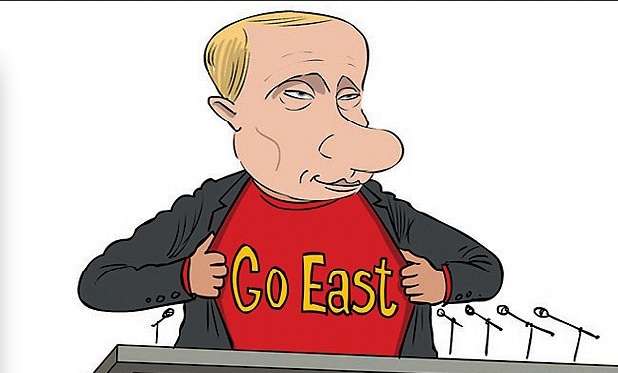
Instead of developing a strategy for Russia’s long-term recovery, Putin has adopted a reactive and opportunistic approach – one that can sometimes succeed, but only in the short term.

Russia’s problem is not just Putin. Though Putin has cultivated nationalism. Other high-level figures – for example, Dmitry Rogozin, who last October endorsed a book calling for the return of Alaska – are also highly nationalistic, a successor to Putin would probably not be liberal. The recent assassination of former Deputy Prime Minister and opposition leader Boris Nemtsov reinforces this assumption.

So Russia seems doomed to continue its decline – an outcome that should be no cause for celebration in the West. States in decline – think of the Austro-Hungarian Empire in 1914 – tend to become less risk-averse and thus much more dangerous. In any case, a thriving Russia has more to offer the international community in the long run.

Though sanctions are unlikely to change Crimea’s status or lead to withdrawal of Russian soldiers from Ukraine, they have upheld that principle, by showing that it cannot be violated with impunity.

On the other hand, it is important not to isolate Russia completely, given shared interests with the US and Europe relating to nuclear security and non-proliferation, terrorism, space, the Artic, and Iran and Afghanistan. No one will benefit from a new Cold War.

Designing and implementing a strategy that constrains Putin’s revisionist behavior, while ensuring Russia’s long-term international engagement, is one of the most important challenges facing the US and its allies today. For now, the policy consensus seems to be to maintain sanctions, help bolster Ukraine’s economy, and continue to strengthen NATO (an outcome that Putin undoubtedly did not intend). Beyond that, what happens is largely up to Putin.

Putin

US Should Join AIIB!

Joseph Seigliz writes: The International Monetary Fund and the World Bank are poised to hold their annual meetings, but the big news in global economic governance will not be made in Washington DC in the coming days. Indeed, that news was made last month, when the United Kingdom, Germany, France, and Italy joined more than 30 other countries as founding members of the Asian Infrastructure Investment Bank (AIIB). The $50 billion AIIB, launched by China, will help meet Asia’s enormous infrastructure needs, which are well beyond the capacity of today’s institutional arrangements to finance.

One would have thought that the AIIB’s launch, and the decision of so many governments to support it, would be a cause for universal celebration. And for the IMF, the World Bank, and many others, it was. But, puzzlingly, wealthy European countries’ decision to join provoked the ire of American officials.

America’s opposition to the AIIB is inconsistent with its stated economic priorities in Asia. Sadly, it seems to be another case of America’s insecurity  undermining an important opportunity to strengthen Asia’s developing economies.

China itself is a testament to the extent to which infrastructure investment can contribute to development.

The AIIB would bring similar benefits to other parts of Asia, which deepens the irony of US opposition.

There is a further major global advantage to a fund like the AIIB: right now, the world suffers from insufficient aggregate demand. Financial markets have proven unequal to the task of recycling savings from places where incomes exceed consumption to places where investment is needed.

When he was Chair of the US Federal Reserve, Ben Bernanke mistakenly described the problem as a “global saving glut.” But in a world with such huge infrastructure needs, the problem is not a surplus of savings or a deficiency of good investment opportunities. The problem is a financial system that has excelled at enabling market manipulation, speculation, and insider trading, but has failed at its core task: intermediating savings and investment on a global scale.

The World Bank’s assistance was sometimes overburdened by prevailing ideology; for example, the free-market Washington Consensus policies foisted on recipients actually led to deindustrialization and declining income in Sub-Saharan Africa. Nonetheless, US assistance was, overall, far more effective than it would have been had it not been multilateralized.

New attempts to multilateralize flows of assistance are similarly likely to contribute significantly to global development. The AIIB offers a chance to test that idea in development finance itself.

Perhaps America’s opposition to the AIIB is an example of an economic phenomenon that I have often observed: firms want greater competition everywhere except in their own industry. This position has already exacted a heavy price: had there been a more competitive marketplace of ideas, the flawed Washington Consensus might never have become a consensus at all.

US opposition to the AIIB is hard to fathom, given that infrastructure policy is much less subject to the influence of ideology and special interests than other policymaking areas, such as those dominated by the US at the World Bank. Moreover, the need for environmental and social safeguards in infrastructure investment is more likely to be addressed effectively within a multilateral framework.

The UK, France, Italy, Germany, and the others who have decided to join the AIIB should be congratulated.

20140719_FND000_0

Saving Greece?

Does Europe need to save Greece:

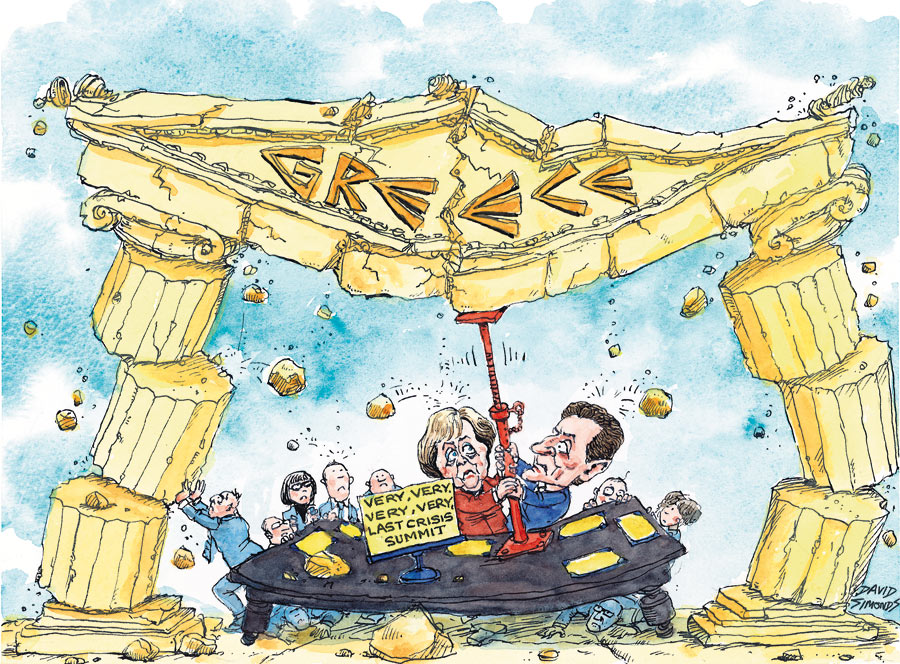
Anders Borg writes:  The fundamental problem underlying Greece’s economic crisis is a Greek problem: the country’s deep-rooted unwillingness to modernize. Greece was subject to a long period of domination by the Ottoman Empire. Its entrenched political and economic networks are deeply corrupt. A meritocratic bureaucracy has not emerged. Even as trust in government institutions has eroded, a culture of dependency has taken hold.

The Greeks, it can be argued, have not earned the right to be saved. And yet a Greek exit from the euro is not the best option for either Greece or for the European Union. Whether or not the Greeks are deserving of assistance, it is in Europe’s interest to help them.

The OECD, the European Commission, the International Monetary Fund, and the World Bank have emphasized, in report after report, the fundamental inability of Greece’s economy to produce long-term sustainable growth. The country’s education system is sub-par and underfunded. Its investments in research and development are inadequate. Its export sector is small. Productivity growth has been slow.

Greece’s economy struggles to reallocate resources, including workers, given the rigidity of the labor market.

After Greece was allowed to enter the eurozone, interest-rate convergence, combined with inflated property prices, fueled an increase in household debt and caused the construction sector to overheat, placing the economy on an unsustainable path.

In the eight years that I served on the EU’s Economic and Financial Affairs Council, I worked alongside seven Greek ministers, every one of whom at some point admitted that the country’s deficit numbers had to be revised upward.

And yet, as bad as Greece’s economy and political culture may be, the consequences of the country’s exit from the euro are simply too dire to consider.  European values at stake in that decision trump any economic considerations.

For starters, a Greek exit from the euro would be a devastating blow to Greece. Without the support of the European Central Bank, the country’s banking system would be shut off from international markets.

To make matters worse, the economic crisis could lead to a political meltdown, making it impossible to enact the structural reforms that Greece desperately needs.

Europe also needs to consider the geopolitical environment. Increased tension caused by the conflict in Ukraine risks destabilizing other parts of the continent. Expelling Greece into such an unstable international environment would leave the region more vulnerable to those – particularly Russia’s current leaders – who believe they would benefit from a weaker, less unified Europe.

There are more important questions raised by the crisis in Greece than whether the country deserves to be rescued by European taxpayers. At stake are fundamental values and strategic considerations that are central to the European project. Europe is simply more European with a stable partner in Athens.

Saving Greece?

Are Greek Reforms Progressing?

Renee Maltezou writes: Greece’s finance ministry dismissed on Sunday a report by a German newspaper which said that euro zone officials were shocked at Greece’s failure to outline plans for structural reforms at last week’s talks in Brussels.

The mood between Greece’s newly-elected leftist government and its euro zone partners has been tense during negotiations that will determine whether the cash-strapped country deserves further financial aid by its EU/IMF lenders.

Frankfurter Allgemeine Sonntagszeitung cited participants at last week’s meeting as saying that they were disappointed by Athens’ lack of movement in its plans, adding that the Greek representative just asked where the money was “like a taxi driver” and insisted his country would soon be bankrupt.

“When the readers of FAS read the minutes of the Euro Working Group meeting the newspaper will have difficulty justifying its headline and the content of its article,” the finance ministry said. “Such reports undermine the negotiation and Europe.”

A meeting of deputy finance ministers – called the Euro Working Group – on Thursday gave Athens a six working day deadline to present a revised economic reform plan before euro zone finance ministers meet on April 24 to decide whether to unlock emergency funding to keep Greece afloat.

Technical teams from Greece and its international lenders held a teleconference on Saturday to outline the agenda of talks in the coming days, a Greek finance ministry official said.

Greece’s biggest creditor Germany has said the euro zone would give Athens no extra funds until it has a more detailed list of reforms.

Greek Reforms


Anti-Corruption Protests in Brazil

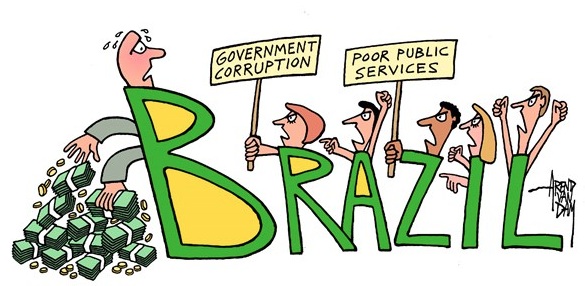
Crowds were generally smaller than in March when more than 1.5 million people turned out.  They allege involvement of the governing Worker’s Party in bribery at the state oil firm Petrobas.

President Dilma Rousseff denies involvement and has been exonerated in an investigation by the attorney general.  The political opposition say much of the alleged bribery of politicians took place when Ms Rousseff was head of the oil company.

Despite her exoneration, many protestors still believe that the president must have known about the scandal. Some have been calling for her impeachment.

The number of protestors varied widely. Police have said that 696,000 people took to the streets on Sunday but organisers have put the number at 1.5 million, according to Globo news.  Many of the protestors wore the yellow shirts of the national football team and waved Brazilian flags. Others held placards reading “Dilma out” and “Corrupt government”.

In Rio de Janeiro, several thousand people marched along Copacabana beach, a turnout reported to be considerably lower than the 25,000 protestors seen on 15 March.

Earlier this month, the Supreme Court approved the investigation of 54 people for their alleged involvement in a corrupt scheme. It is alleged that private companies paid corrupt officials in order to get lucrative Petrobras contracts.

High-profile politicians also took a share of the money siphoned off from the oil company, according to the investigation. Officials to be investigated include Senate President Renan Calheiros, President of the Chamber of Deputies Eduardo Cunha, former Energy Minister Edison Lobao and former President Fernando Collor de Mello.

All deny corruption allegations.

Protests in Brazil

Slowdown in Turkey. Why?

Cenk Sidar writes:  For most of the past decade, Turkey’s economy has enjoyed remarkable success. Between 2002 and 2006, during the first term of the Justice and Development Party (AKP), growth averaged 7.2 percent per year, making Turkey a star performer in an otherwise difficult region.

While external factors played some role in Turkey’s success, one would be remiss not to give due credit to the ruling party. The positive steps the AKP took after winning power — continuing the IMF-led reforms initiated by its predecessors and maintaining a responsible fiscal and monetary policy — helped the country achieve the macroeconomic stability necessary to attract foreign capital.

This picture has changed significantly over the past few years, as Turkey has turned from an exemplary emerging market into a country that grabs headlines with stories of economic weakness and financial vulnerability. The current list of problems is daunting: rising inflation, slowing growth, foreign exchange pressure, rising fiscal expenditures, increased unemployment, overall debt, and loss of export competitiveness. The IMF expects Turkish GDP to grow only 3 percent in 2015 and 2016. The lira has lost over 10 percent of its value since the beginning of this year. Moreover, the country is falling behind rival emerging markets. In 2014, India and China left Turkey’s 2.9 percent growth rate in the dust with impressive rates of 7.5 and 7.4 percent respectively.

Turkey’s slowdown is mainly caused by longer-term structural factors, pointing to an urgent need for fundamental reform. And this is where the economic track record of President Recep Tayyip Erdogan and the ruling AKP has begun to suffer. Even as the Turkish economy sputters, the AKP government is focusing on unsustainable, and sometimes destructive, short-term measures, such as pressuring the central bank to maintain a loose monetary policy, jeopardizing its independence and legitimacy in the process. Meanwhile, the structural reforms needed to ensure the country’s longer-term development are being put off.   Turkey’s Economic Problems

Turkey