Renewable Energy Makes Economic Sense?

Klaus Topfer writes:  A silent revolution is under way. In November, Dubai announced the construction of a solar energy park that will produce electricity for less than $0.06 per kilowatt-hour – undercutting the cost of the alternative investment option, a gas or coal-fired power plant.

The plant – which is expected to be operational in 2017 – is yet another harbinger of a future in which renewable energy crowds out conventional fossil fuels. Indeed, hardly a week seems to pass without news of a major deal to construct a solar power plant. In February alone, there were announcements of new solar power projects in Nigeria (1,000 megawatts), Australia (2,000 MW), and India (10,000 MW).

There can be no doubting that these developments are good for the fight against climate change. But the major consideration driving them is profit, not the environment, as increased efficiency in energy distribution and, where necessary, storage, reduces the cost of producing renewable energy.

As efforts to improve the management of electricity from fluctuating sources yield further advances, the cost of solar power will continue to fall. Within ten years, it will be produced in many regions around the globe for 4-6 cents per kilowatt-hour.  By 2050, production costs will fall to 2-4 cents per kilowatt-hour.

We should not underestimate the tremendous potential the sun and wind have for building global wealth and fighting poverty. As solar power becomes increasingly cost-effective, countries located within the planet’s sun belt could develop entirely new business models as cheap, clean energy enables them to process their raw materials locally, adding value – and profit – prior to export.

Unlike large-scale conventional power plants, solar installations can be built in months; in addition to being cost-effective, they provide a quick means of responding to growing global demand.

Solar power plants thus could play the same role for energy that mobile phones did for telecommunications: rapidly reaching large, underserved communities in sparsely populated regions, without the need to invest in the cables and accompanying infrastructure that once would have been necessary. In Africa, 66% of the population has gained access to electronic communications since 2000. There is no reason why solar power could not do likewise for access to electricity.

The time to invest in large-scale solar energy production is now. For starters, construction costs for solar power plants are finally low enough to produce electricity at a competitive, stable price for more than 25 years. The price of oil may have plunged for now, but it will rise again. Solar power plants provide insurance against fossil fuels’ inherent price volatility.

Even more important, the cost of capital currently is very low in many countries. This is a decisive factor for the economic viability of solar power plants, because they need very little maintenance but require relatively high upfront investment. The Fraunhofer study shows that differences in capital expenditure are as important for costs per kilowatt-hour as differences in sunlight. Solar power is currently cheaper in cloudy Germany than in sunny regions where the cost of borrowing is higher.

The amount of sunlight that shines on a country is impossible to change. But the cost of capital is something over which a country can maintain a certain amount of control.

Factors like these explain why international climate policies increasingly focus not only on solar power, but on other forms of renewable energy as well. Technological breakthroughs have boosted these energy sources’ competitiveness relative to fossil fuels. As a result, instruments that make their adoption more affordable are becoming some of the most important weapons we have in the fight against climate change.

What Kind of Bank Helps?

Kenneth Rogoff writes: With China set to lead a new $50 billion international financial institution, the Asian Infrastructure Investment Bank (AIIB), most of the debate has centered on the United States’ futile efforts to discourage other advanced economies from joining. Far too little attention has been devoted to understanding why multilateral development lending has so often failed, and what might be done to make it work better.

Multilateral development institutions have probably had their most consistent success when they serve as “knowledge” banks, helping to share experience, best practices, and technical knowledge across regions. By contrast, their greatest failures have come from funding grandiose projects that benefit the current elite, but do not properly balance environmental, social, and development priorities.

Dam construction is a leading historical example. In general, there is a tendency to overestimate the economic benefits of big infrastructure projects in countries riddled by poor governance and corruption, and to underestimate the long-run social costs of having to repay loans whether or not promised revenues materialize. Obviously, the AIIB runs this risk.    What Kind of Bank Helps and How

China and Infrastructure?


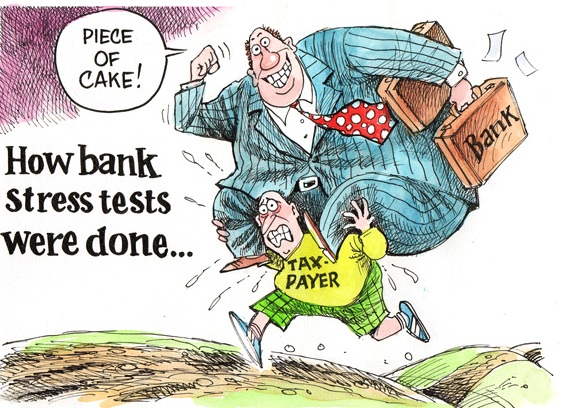
Are Bank Holding Companies’ Stress Tests Meaningful?

In March, the Federal Reserve and thirty-one US bank holding companies announced the results of the latest Dodd-Frank mandated stress tests.   Somehave arguedthat that the bank holding companies have strong incentives to mimic the Fed’s stress test results, since the Fed’s results are an integral part of the Federal Reserve’s supervisory assessment of capital  adequacy for these firms.  Stress Tests- Dodd Frank versus US Fed

Dodd Frank Stess Test 2015

Bank Stress Tests?

US Lags in Numeracy Skills

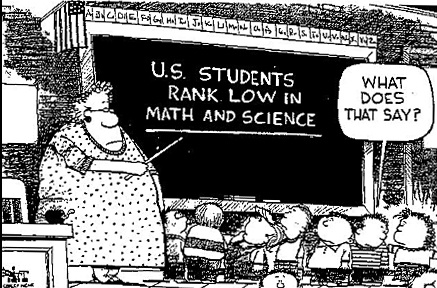
On the human-capital side, in 1995 America had the highest graduation rate in the OECD. Now it lags behind seven other countries. President Barack Obama has set a target for his country to return to the top of the graduation league by 2020, but it is unlikely to be met. Young American graduates are below the OECD average in numeracy and literacy, and are doing relatively worse than older ones. Some of the explanation lies with the poor performance of America’s schools, but the most expensive tertiary-education system in the OECD might be expected to help students catch up.

Recent work by American academics suggests that it does not. Richard Arum of New York University and Josipa Roksa of the University of Virginia, authors of “Academically Adrift”, looked at the results of 2,300 students who took the Collegiate Learning Assessment (CLA), a test of critical thinking, complex reasoning and writing, and found that 45% of the sample showed no significant gains between their first and third years. Innumeracy in America

American Education Failing

US and Central Asia

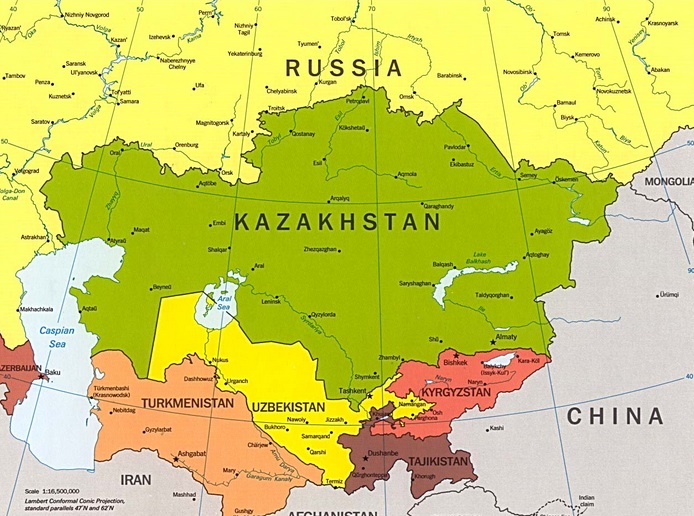
Casey Michel writes:  The United States is often – and often fairly – maligned for a distinct lack of strategy in its relations with Central Asia. Tacked on to Chinese or Afghanistan policy, bogged in securitization or stilted democratization efforts, Washington has seemed unable to formulate a distinct, coherent policy for the region for years. Unlike Beijing’s economic expansion or Moscow’s military ties, Washington’s Central Asian policy, if one appears, often comes across as an afterthought.

That’s not to say efforts haven’t been made to bring a policy to bear. Earlier this week, Deputy Secretary of State Antony Blinken spoke at the Brookings Institute, attempting to provide a sketch of Washington’s current regional plans. But in lieu of innovation or revamp, Washington appears content to continue along the muddled path it’s followed prior, with stale plans and retread ideas bundled once more.

For instance, Blinken cited the New Silk Road initiative, which has had little impact on the ground in its four years of existence. Pointing to attempts at “helping develop the region’s connectivity,” Blinken cited the CASA-1000 project, which will “help bring surplus hydro-electricity from Kyrgyzstan and Tajikistan to Afghanistan and Pakistan.” The CASA-1000 project, as it is, stands as one of America’s foremost efforts at regional integration – but makes little sense when Kyrgyzstan is a net electricity importer, as it experienced during 2014. Washington hasn’t attempted to explain just how the CASA-1000 will function with Tajikistan as the sole provider of surplus electricity. Blinken didn’t offer any explanation, either.

Blinken also cited Washington’s “three important objectives” in the region: strengthening partnerships to advance mutual security; forging closer economic ties; and advancing and advocating for improved governance and human rights.” The ordering – security foremost – speaks louder than the content. Blinken later reiterated the primacy of security, noting that “our policy in Central Asia [is] founded on two distinct ideas:  US and Central AsiaEveryone Competes for Central Asis

Dutch Banks

The Economist:  Misreading the public mood can be costly when the government owns your bank, as the directors of ABN AMRO found out last week. The bank has been in the hands of the Dutch state since it was bailed out in 2009 as part of the global financial crisis that also dumped Royal Bank of Scotland in the laps of British taxpayers. The Dutch government had hoped to begin privatising ABN AMRO this autumn—until the news broke that the bank’s directors had awarded themselves a salary bump of €100,000 ($107,000) a year. An outcry in parliament led the directors to forgo their raises and Jeroen Dijsselbloem, the Netherlands’ finance minister, to postpone indefinitely the bank’s return to the markets.

The directors’ error of judgment is perhaps understandable. As in Britain, public sentiment in the wake of the collapse was furious with fat-cat bankers. But the Dutch board had been correspondingly cautious. The directors receive no bonuses, and their raise had been approved by parliament in 2011 but renounced each year until now.

Why, despite the good economic news, is the Dutch public mood still sour? Partly because of a problem that many European governments face: they have not delivered the policies their constituents were promised. The Dutch government, like the German one, is a centrist, two-party grand coalition. In the 2012 election, leftists voted for the largest centre-left party, Labour (PvdA), in opposition to austerity and the dismantling of the welfare state. Conservatives voted for the largest centre-right party, the Liberals (VVD), in opposition to redistribution, Europe and immigration. What they got instead was a Liberal prime minister, Mark Rutte, at the head of a hybrid government whose horse-trading led to an unsatisfying mix of policies.

That Dutch government has carried out a series of far-reaching reforms which have left nobody entirely happy.

Confusingly, voters have scattered in all directions.

It all chimes oddly with a brightening economy. The government’s reforms, disruptive at first, have started working, says Dimitry Fleming, an economist at ING Bank. “People feel we have seen the major necessary reforms, so policy uncertainty is diminishing.” House prices and residential investment are rising. Exports are up. The tulips are sprouting. Maybe public enthusiasm will too.

Dutch Banks

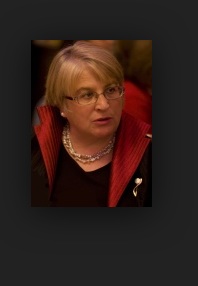
Diane Morris TIWA Award Recipient

TIWA announces:  Diane Morris has been named the 2015 recipient of the  Mandy Goetze 21st Century Award. 

A graduate of the London School of Economics for whom she was the inaugural Chair of the Female Alumni Network, Diane has a marketing background, originally working in consumer magazines and advertising for IPC Women’s Magazines and Gillette in the UK, moving into international business media with BBC World, TIME and Fortune Magazine during the ten years she spent in Asia. She moved into conferences with DNMstrategies who were the producers and managers of the BusinessWeek conferences in Asia. Her experience of working in Africa, USA, and Asia has recently led to an invitation to become a tutor in International Marketing with the Institute of Export and International Trade.

Since returning to London, she has been granted the Freedom of the City of London, and is a Court Assistant and the Fellowship Chairman of The Worshipful Company of Marketors, and a Liveryman of The Worshipful Company of World Traders. These Liveries are highly influential in the City of London.

In parallel to her career, Diane has been very active in women’s networks, as President of Foreign Executive Women (FEW Tokyo)  joining TIAW in 1994, and Programme Director of PrimeTime Business and Professional Women’s Association (Singapore). She moved back to London in 2001, joining City Women Network (CWN) on the recommendation of TIAW. She was responsible for the TIAW programme in London in 2003, successfully promoting its Women on Boards’ programme to become part of the UK Government’s policy to encourage women into the boardroom. She is a Past President of CWN, and also a Past President of TIAW, 2008 -2010. She is a co founder of the TIAW World of Difference 100 Awards, and serves on TIAW’s Finance and Board Nomination Committees.

She is also the Chairman of the Judging Panel for the European Union Women Inventors and Innovators Awards and a mentor with the Cherie Blair Foundation.

Diane Morris


Money in the New Cuba

In January 1961, a cargo ship arrived in the harbor of Santiago de Cuba bearing a load of freshly minted cash. Cuba’s pre-revolutionary peso had been stable and valuable for decades, a source of patriotic pride. Overnight, the Cuban revolution invalidated the old peso and replaced it with new bills, signed by Che Guevara and worth what the government said they were worth. The gesture sidelined opponents, reduced the independence of the professional and middle classes, and effectively seized the island’s remaining wealth in one gesture. In 1967, when Che died, it was his face that went on the currency, memorably gracing a 3-peso note that would get you lunch and a drink. Today that same bill is worth 12¢.

The end of Soviet subsidies in 1991 brought real economic desperation to Cuba. Dollars were traded on the black market. (In a dark Havana alley, I once got 125 pesos for a single greenback in a hurried transaction with a frightened man.) By 1994, in an effort to co-opt the black markets and once again take hold of the island’s resources, the government introduced the CUC. Initially this was strictly for tourists, the only legal tender for all those mojitos and langoustines. The CUC was pegged at 1:1 with the U.S. dollar, and just the commissions on exchanging it—up to 20 percent—earned the Cuban government billions a year.

No política. That’s what Yamil Alvarez Torres says as he settles onto a hotel sofa in Old Havana, his Under Armour socks showing a fashionable amount of ankle from beneath pressed jeans and a striped dress shirt. Alvarez looks the part of the new Cuban entrepreneur, a successful restaurant owner who has bourgeois hobbies—dogs and free diving—and an almost unlimited confidence in the future. But no politics. Like most Cubans, he avoids talking or even thinking about the nation’s closed and secretive political system too much.

Havana today is in physical bloom. A gallon of paint costs 30 percent of a typical monthly salary, yet half the houses in the city seem freshly painted. The once-ubiquitous and fuming thunder chariots of old Detroit are either shined up with new chrome and paint or, more often, sidelined by more recent and reliable Korean and Chinese vehicles. The people I’d known on the edge of starvation over the last 20 years of visiting are now fighting the creep of their waistlines and the return of pastries and deep-fried everything at street-corner kiosks. Even in 1991, Cuba seemed more open than it was, an island without barbed wire or machine guns, the friendly blue ocean serving as its Berlin Wall. Now the openness is tangible: In December, Cuba and the U.S. announced that the two intend to reestablish relations after more than four decades of enmity. On Havana’s streets, there’s a charge of anticipation, and one senses a people eager to embrace the world.

HSBC Massaged by DOJ Nominee?

William K. Black writes:  HSBC got a sweetheart deal from the Obama administration. It laundered vast amounts of money for Mexico’s murderous Sinaloa cartel, helped bust sanctions for terrorists and mass murderers, and did not cooperate with the investigation. The U.S. Attorney in charge of the case, Loretta Lynch, refused to prosecute any of the HSBC bankers or even sue them individually. Instead, there was a pathetic non-prosecution agreement limited to HSBC.  HSBC’s Sweetheart Deal

French Models: Thin Out Stout In

France will ban excessively thin fashion models and expose modeling agents and the fashion houses that hire them to possible fines and even jail, under a new law passed on Friday.

The move by France, with its fashion and luxury industries worth tens of billions of euros, comes after a similar ban by Israel in 2013, while other countries, like Italy and Spain, rely on voluntary codes of conduct to protect models.

The measure is part of a campaign against anorexia by President Francois Hollande’s government. Lawmakers also made it illegal to condone anorexia and said any re-touched photo that alters the bodily appearance of a model for commercial purposes must carry a message stating it had been manipulated.

“The activity of model is banned for any person whose Body Mass Index (BMI) is lower than levels proposed by health authorities and decreed by the ministers of health and labor,” the legislation says.

The lawmaker behind the bill previously said models would have to present a medical certificate showing a BMI of at least 18, about 55 kg (121 lb) for a height of 1.75 meters (5.7 feet), before being hired for a job and for a few weeks afterwards.

The law, voted through the lower house of parliament by Hollande’s Socialist majority despite opposition by conservative parliamentarians, envisages imprisonment of up to six months and a fine of 75,000 euros ($82,000) for any agency contravening it.

A second measure means that any website inciting a reader to “seek excessive thinness by encouraging eating restrictions for a prolonged period of time, resulting in risk of mortality or damage to health” will face up to a year in prison and fines of up to 100,000 euros.

Elite and IMG, two big modeling agencies present in France, both declined to comment on the moves.

Some 30,000-40,000 people in France suffer from anorexia, most of them teenagers, health experts estimate.

In 2010, Isabelle Caro, an anorexic 28-year-old former French fashion model, died after posing for a photographic campaign to raise awareness about the illness.

Minnie In and Out