Oil Price Decline a Black Swan?

Kent Moors writes:  Oil prices are struggling to stabilize.  Some think it is a black swan, a theory popularized by Nassim Nicholas Taleb.  According to Taleb, a black swan event has three characteristics:

  1. It is a surprise. Nothing in the past can convincingly point to its possibility.
  2. It has a major impact.
  3. People contend that they expected the event to take place (in hindsight).

Almost 15 years ago, Taleb applied this approach to the stock market.  As a consequence, the black swan is being used as an “explanation” for all kinds of things. It’s the obverse of the mantra “this time is different.” And that leads us back to the true nature of the 40% drop in oil prices.  Is the stunning fall of crude is a black swan event?

It isn’t. But calling it one may be a good way of clouding up what really is happening.

First off, there were always indications on both the supply and demand side that matters were softening. Second, the OPEC non-decision on Thanksgiving to keep production levels unchanged was both predictable (from the Saudi perspective) and telegraphed in advance. Then, the orchestration of the talking heads commentary on the tube made the whole move “legitimate.”

Unless, of course, there is another motive at work and the black swan becomes a convenient cover. Instead, this is what is really happening when it comes to oil prices.

Yes, there are traditional pressures driving down the price of crude. Rapidly increasing supplies and slower demand would have created a correction in oil prices in any event.  But dropping over $40 a barrel has required something else entirely.

When it comes to oil we are in a new age of massive short plays and swaps. The coordination of these moves is staggering, creating an impact that is immediate. Especially if there is a segue to important policy makers.

For instance, a Kuwaiti official tells the world oil can fall to $60 and… presto, within 48 hours, that’s where oil lands.

Of course, the targets of all of this are well known and have been discussed here at length: Russia, recalcitrant members of OPEC, and U.S. shale producers.

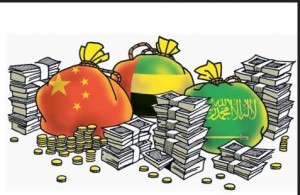
But we should look also at the positioning of sovereign wealth funds (SWFs).These funds have been designed to invest the proceeds from national revenues. Usually, the better a country’s balance of payments, the stronger the SWF. This is always a result of a trade surplus – as more is exported out of a country (being paid for by somebody else) than is being imported (requiring payment).  China, for example, is in this category.

But most of the SWFs of consequence involve investing the proceeds of oil sales. In the case of oil producers, that has usually meant the success of an SWF was perceived as dependent on the price of crude. The higher the price, the greater the leverage for an SWF.

Now these funds are almost always conservative, preferring guaranteed or long-term gains over a higher but riskier return. That explains SWF investments in Rockefeller Plaza and hotels on the one hand, or dull but secure 1.5% annualized return from somebody else’s sovereign low-interest bond on the other.

There is also the problem of limiting the financial downside from introducing the proceeds directly into a domestic economy. Given that oil revenues are in U.S. dollars, a direct flow into the economy ends up inflating the local currency rather quickly.

So the proceeds from export sales are largely segregated from domestic trade, kept outside the country, with the profits from investing introduced in ways to minimize the inflationary impact.

All of which has triggered a new development. SWFs have now become a player in the market, shorting the very product responsible for the funds to begin with. In other words, some OPEC members are making money on both sides of the crude pricing curve.

Transacting the deals outside their own borders via SWFs, these countries are hedging the product in both directions. That means they are currently pushing the lower cost of crude forward by pairing shorts to actual oil consignments.

Plain and simple: This is manipulating the market. It’s equivalent to being a poker dealer who is able to read everybody’s hand while taking a seat at the table.
Sovereign Wealth Funds

Should Big Banks Be Primary Dealers for Central Banks?

What impact do primary dealers have on the economics of any country, the EU, or the world economy for that matter, Lee Adler asks.  Here is a table of primrary dealers he has prepared.  World Primary Dealers

Adler looks around at the central banks: The PBoC (China) is also playing a growing role as it integrates its financial markets with the rest of the world’s, but its system does not use Primary Dealers, per se, and its linkages to the rest of the world are more obscure. The BoE (UK) is a small player.

Adler aruges that Central Banks’ policy doesn’t mean much. With Quantitative Easing, the central banks bring the money into existence by making deposits in the Primary Dealers’ accounts at the central banks in payment for the securities the central banks purchase from the Primary Dealers, or by making loans to them. What the dealers do with the money from there is up to them, although they are loosely required to purchase government securities when the central government auctions them. Since there are always plenty of other bidders for the government paper, the Primary Dealers end up with billions in excess cash.

Certainly the US is making the break up of Big Banks a big issue, and this may be why it is important to simplify and clarify their role and divide up their functions.

The Tentacles of Big Banks Crush Governments


Is It Time to End Russian Sanctions?

General Winter, they call the supreme Russian commander who beat back Napolean and Hitler.  Snlow blanketing Europe has nudge oil prices up a bit?  Is General Winter again at work on behalf of Russia?

Probably not enough to turn the economy around.  The Central Bank of Russia could release reserves to stem the plunge for a while.  But probably the most effective way to turn the Russian economy around would be to end sanctions.  What would the West demand from Russia in exchange?  Wihtdrawal from Crimea?  Other promises?

Will General Winter Save Russia?

New Era of Low Oil Prices?

I suspect that view would be a mistake this time around. The world is experiencing much more than a temporary dip in oil prices. A change in the supply model marks a fundamental shift that will likely have long-lasting effects.

Through the years, markets have been conditioned to expect OPEC members to cut their production in response to a sharp drop in prices.  As the biggest producer, Saudi Arabiawas willing and able to absorb a disproportionately large part of the output cut in order to stabilize prices and provide the basis for a rebound.

It did so directly by adhering to its lowered individual output ceiling, and indirectly by turning a blind eye when other OPEC members cheated by exceeding their ceilings to generate higher earnings. In the few periods when Saudi Arabia didn’t initially play this role, such as in the late 1990s, oil prices collapsed to levels that threatened the commercial viability of even the lower-cost OPEC producers.

Yet in serving as the swing producer through the years, Saudi Arabia learned an important lesson: It isn’t easy to regain market share.   OPEC is no longer in a position to lower its production even though oil prices have collapsed by about 50 percent since June.

This change in the production model means it is up to natural market forces to restore pricing power to the oil markets. Low prices will lead to the gradual shutdown of what are now unprofitable oil fields and alternative energy supplies, and they will discourage investment in new capacity.

As costs fall for manufacturing and a wide range of other activities affected by energy costs, and as consumers spend less on gas and more on other things, many oil-importing nations will see a rise in gross domestic product. And this higher economic activity is likely to boost investment in new plants, equipment and labor, financed by corporate cash sitting on the sidelines.

The likelihood of longer-lasting changes is intensified when we include the geopolitical ripple effects. In addition to creating huge domestic problems for some producers such as Russia and Venezuela, the lower prices reduce these nations’ real and perceived influence on other countries. Some believe Cuba, for example, agreed to the recent deal with the U.S. because its leaders worried they would be getting less support from Russia and Venezuela.  In countries such as Iraq and Nigeria, low oil prices can fuel more unrest and fragmentation, and increase the domestic and regional disruptive impact of extremist groups.

A prolonged period of low oil prices is likely to result in durable economic, political and geopolitical changes that, not so long ago, would have been considered remote, if not unthinkable.

Oil Prices Tumble

Vatican Finds Hundreds of Millions Euros “Tucked Away”

The Vatican’s economy minister has said hundreds of millions of euros were found “tucked away” in accounts of various Holy See departments without having appeared in the city-state’s balance sheets.

In an article for Britain’s Catholic Herald Magazine, Australian Cardinal George Pell wrote that the discovery meant overall Vatican finances were in better shape than previously believed.  “In fact, we have discovered that the situation is much healthier than it seemed, because some hundreds of millions of euros were tucked away in particular sectional accounts and did not appear on the balance sheet,” he wrote.

 “It is important to point out that the Vatican is not broke … the Holy See is paying its way, while possessing substantial assets and investments,” Pell said, according to an advance text made available on Thursday.

Pell did not suggest any wrongdoing but said Vatican departments had long had “an almost free hand” with their finances and followed “long-established patterns” in managing their affairs.

“Very few were tempted to tell the outside world what was happening, except when they needed extra help,” he said, singling out the once-powerful Secretariat of State as one department that had especially jealously guarded its independence.

“It was impossible for anyone to know accurately what was going on overall,” said Pell, head of the new Secretariat for the Economy that is independent of the now downgraded Secretariat of State.

Pell is an outsider from the English-speaking world transferred by Pope Francis from Sydney to Rome to oversee the Vatican’s often muddled finances after decades of control by Italians.

Pell’s office sent a letter to all Vatican departments last month about changes in economic ethics and accountability.

As of Jan. 1, each department will have to enact “sound and efficient financial management policies” and prepare financial information and reports that meet international accounting standards.

Each department’s financial statements will be reviewed by a major international auditing firm, the letter said.

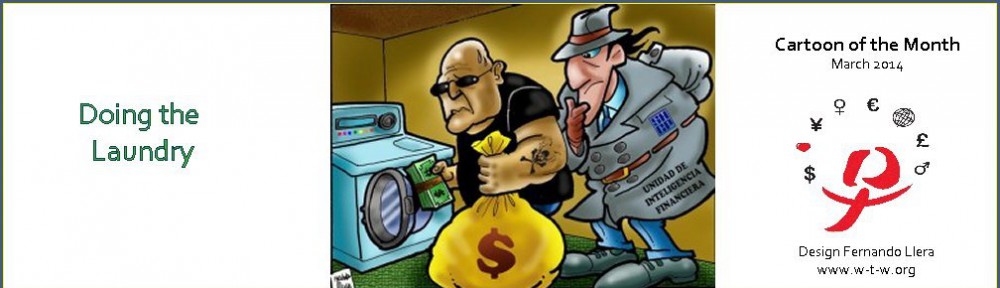
Since the pope’s election in March, 2013, the Vatican has enacted major reforms to adhere to international financial standards and prevent money laundering. It has closed many suspicious accounts at its scandal-rocked bank.

Whee are the Euros Tucked Away?


Citigroup Takes Space in the US Capital

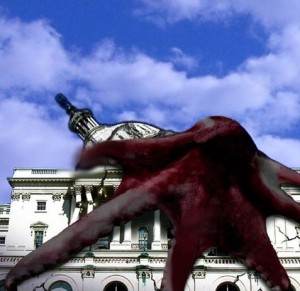
Citigroup to Move Its Headquarters to the Capital Building   The banking giant Citigroup announced on Friday that it would move its headquarters from New York to the U.S. Capitol Building, in Washington, D.C., in early 2015.

Tracy Klugian, a spokesperson for Citi, said that the company had leased thirty thousand square feet of prime real estate on the floor of the House of Representatives and would be interviewing “world-class architects” to redesign the space to suit its needs.

According to sources, Citi successfully outbid other firms, including JPMorgan Chase and Goldman Sachs, for the right to move its headquarters to the House floor.

The Citi spokesperson acknowledged that the extensive makeover of the House is expected to cost “in the millions,” but added, “It’s always expensive to open a new branch.”

Explaining the rationale behind the move, Klugian told reporters, “Instead of constantly flying out from New York to give members of Congress their marching orders, Citigroup executives can be right on the floor with them, handing them legislation and telling them how to vote. This is going to result in tremendous cost savings going forward.”

Klugian said that Citi’s chairman, Michael E. O’Neill, will not occupy a corner office on the House floor, preferring instead an “open plan” that will allow him to mingle freely with members of Congress.

“He doesn’t want to come off like he’s their boss,” the spokesperson said. “Basically, he wants to send the message, ‘We’re all on the same team. Let’s roll up our sleeves and get stuff done.’ ”  (Borowitz Group)

Who Stole the People's Money?

Should US Treasury Nominee Be Opposed?

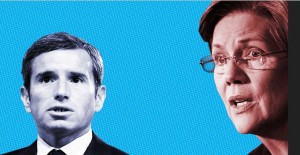
Sen. Al Franken (D-Minn.) on Sunday called on supporters to reject one of President Obama’s nominees to the Treasury Department.  Franken criticized nominee Antonio Weiss in no uncertain terms, arguing Obama had nominated the wrong person for the job of Treasury undersecretary for domestic finance.

He argued Weiss would not put the middle class first, and that he was too close to Wall Street.  Franken wrote that Weiss has worked on manuevers called “inversions,” which are mergers that seek to lower a company’s tax burden in the United States.

“More than six years after the crash, the American economy is still recovering,” Franken writes. “We got into that mess because we were willing to let Wall Street police itself. Foxes make poor guards of henhouses. We know that through bitter experience, and I’m not willing to let it happen again.”

Franken is joining Sen. Elizabeth Warren (D-Mass.) and others in opposing Weiss, setting up an internal Democratic Party fight with Obama. Weiss is an executive at the investment banking firm Lazard.

When Gary Gensler direct from Goldlman Sachs was nominated to head the Commodities Futures Tradiing Commission, Carl Levin spoke to him early on. Cutting to the chase, levin asked, “Does speculation affect prices?”  “Yes,” said Gensler.  There was long silence.  The answer had come with astonishing ease,  Here was someone ‘tainted’ by Wall Street who was clearly capable of being honest.  Has anyone asked Weiss tough questions?  Asnwers could surprise?

Antonio Weiss and Elizabeth Warren

Are Kleptocrats Abandoning Putin?

Chrystia Freeland writes:   In our sanitised, public relations-conscious age, Vladimir Putin’s chauvinistic bluster has been bizarrely compelling. For a while, that unaccustomed spectacle concealed the profound brittleness of his regime, at least from some. Now the cracks are showing. The immediate causes are western sanctions and the lower price of oil but Russia’s fragility runs much deeper.

Mr Putin came to power on the strength of a promise: that it was possible to rule like Joseph Stalin but live like Roman Abramovich. The arrangement suited almost everyone. Mr Putin and his KGB cronies were able to rebuild a softer version of the authoritarianism they had yearned for since the collapse of the Soviet Union.

Russia’s economic elites — Mr Putin’s coterie from the “power ministries” in Moscow and the oligarchs of the Boris Yeltsin era who were smart enough to play along — enjoyed vast wealth. Thanks to rising commodity prices, Russia’s urban middle class became richer, too.

Even the liberal intelligentsia, the only group that was openly disgruntled with its lot, could avail itself of a safety valve. In clever contrast with the Soviet Union, Mr Putin’s managed democracy kept its borders open, allowing potential dissidents to find homes in more congenial places..

Mr Putin is an authoritarian ruler,,  but he reigns without a governing ideology or an organised revolutionary party. His invocations of Russian nationalism have a certain rhetorical flair but they are merely the populist packaging for a system that is “capitalism for friends”.  They are rich now, wear Italian suits and Swiss watches, and no longer have an inferiority complex.

Mr Putin’s crony capitalists got rich, but they did so by looting Russia’s natural resources and borrowing against that booty with the help of accommodating western bankers. The double shock of western sanctions and a lower oil price has brought that arrangement to a halt. The greatest damage is internal. Russia’s kleptocrats and its upper middle class prospered during the Putin era, and most of these beneficiaries did not think too hard about the sources of their wealth.

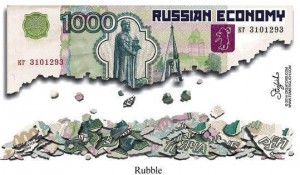
Mr Putin’s nationalist bluster is no consolation at all for these Russians who, over the past two decades, had come to take a rising standard of living and integration into the west for granted. The rouble crashed precipitously in part because this group, which includes most of the country’s richest business leaders, is cashing out.
That is the problem with capitalism for friends — it earns you fair-weather allies. Their defection does not mean that Mr Putin is entirely declawed. Part of his appeal for the kleptocrats was his ability, in contrast with the politicians of the liberal intelligentsia, to craft a persona that appealed to poorer, older Russians and to those who live outside the big cities.

As the economic costs of Mr Putin’s Crimea gambit mount, he may try to pivot from kleptocracy to populist autarky. Such a shift would be economically ruinous in the long run, but in the short run it could make Russia even more aggressive and unpredictable.  Russia today is divided and in decline. The right parallel is not with the cold war. It is with the decaying Soviet Union of the 1980s.

Are Kleptocrats Abandoning Putin?

Russia’s Good Neighbor Policy?

Russia has said its currency crisis is over. But for Polish companies like the family-run shoe producer Conhpol, which just opened its first store in the capital Warsaw, the danger signs are still flashing.  Many Russians have stopped traveling to countries like Poland for shopping and vacations.

Sebastian Konopka, who helps his father run Conhpol from its headquarters in the village of Stanislow Dolny, says orders from Russia have abruptly dried up. “If we were dependent only on Russian clients, we would have problems now,” he says.

For most of 2014, a militarily strong Russia has spooked the EU, particularly those countries formerly under the Soviet yoke. But now an economically hobbled Russia is looking equally problematic for its some of its European neighbors.

“The fact that Russia is in a difficult situation from a financial point of view is not good news,” Federica Mogherini, the EU’s new foreign policy chief, said at a recent summit of EU leaders, “first of all for Russian citizens, but also it is not good news for Ukraine, it is not good for Europe, or for the rest of the world.”

Most European companies are less exposed to Russia than they were in 1998, when Russia last defaulted on its debts. Only 4 percent of Polish exports, for example, go to Russia.

But many in Europe are still looking warily at Russia’s sinking economy. Those with stakes include small and medium businesses like Conhpol, the shoemaker, to border crossings dependent on Russian trade, to countries worried about any setbacks to already weak economic growth.

Russia’s finance minister said the acute crisis sparked by the ruble’s crash is over. But inflation is growing, and perhaps most tellingly, Russian President Vladimir Putin said his ministers would not be able to take New Year holidays this year because of the economic downturn.

After Russia annexed Crimea and sent shockwaves through Western capitals, the EU struggled to forge consensus on how to punish Mr. Putin. At the time, economics loomed large: European politicians fretted over the impact on gas supply and luxury goods and, for cities like London, rich Russian expats.

Now some countries may voice a more conciliatory tone, as they consider how Russia’s economic woes might ripple outwards.

Schmieding says those countries, like Poland, that are the closest to Russia are the most immediately vulnerable, from tourist flows to exports.

Ryszard Petru, president of the Association of Polish Economists in Warsaw, says Polish companies have grown wary of depending on its giant neighbor.

Still, Marek Rogalski, chief analyst at Brokerage House BOŚ in Warsaw, says that Russia is still a key market for many companies.

In the 1990s, Mr. Konopka, the shoemaker, focused almost exclusively on exports to Russia, as well as the domestic Polish market. The company, which was founded in 1978, now depends on Russia for around one in ten of its overseas sales. Still, he’s hopeful of expanding his business there, if and when the economic and political turbulence subsides.

Russia's Good Neighbor Policy

Built-In Resilience in China?

Zhang Jun writes:  Many people are profoundly pessimistic about the Chinese economy’s growth prospects, owing to the emergence of massive debt, excessive investment, overcapacity, and so-called “ghost cities” since the 2008 global financial crisis. But these problems are not new. They have, in various forms, affected China’s economy since 1978, and were evident in East Asia’s other high-performing economies – Taiwan, South Korea, and even Japan – during their periods of rapid growth.

How did these economies manage to grow so fast for so long and overcome the serious problems that they faced along the way? The answer is simple: resilience.

If a country fails to respond adequately to new challenges as they arise, economic growth and development stall. East Asia’s economies have consistently adjusted their growth strategies and engaged in continuous institutional reform. The aim was not to tackle the problems they faced directly, but to induce new, more efficient activities that would help to turn debt into assets and maximize use of the economy’s capacity.

East Asia’s economies have embraced the process of “creative destruction” described by the Austrian economist Joseph Schumpeter, whereby the economic structure is continually revolutionized from within.  By implementing incremental reforms that facilitate the replacement of old, inefficient sources of growth with new, more dynamic ones, they have expedited this process.

China’s productivity-enhancing agricultural reforms in the 1980s were spurred partly by growth in the non-agricultural sector, a result of policies aimed at stimulating township and village enterprises. Similarly, in the 1990s, China addressed the buildup of bad debt and unfinished construction projects by implementing institutional reforms that stimulated growth in more dynamic sectors, thereby offsetting the SOEs’ declining return on capital.

Resilience has thus characterized the interaction between the government and markets since the introduction of Deng’s reforms.

In China clusters of vibrant smaller manufacturers are flourishing.  Market institutions guide the process, ensuring that they play a key role in the expanding industrial sectors.

Another source of resilience in East Asia are local governments.  They are responsible for public capital expenditure, driving the improvement in China’s physical infrastructure and yielding reasonable returns for private investors. This advances the objective of helping local businesses, particularly innovative small and medium-size firms, to grow and thrive.

Finally, local governments have demonstrated a willingness to support institutional innovation. This allows for the flexibility needed to address structural challenges at the local level, thereby preventing them from blocking growth.

After three years of slowing growth and rising debt, China once again finds itself at a crossroads. Fortunately, it seems to be choosing the path of flexibility and adjustment, as it pursues an ambitious reform plan that, it is hoped, will enable it to edge closer to – and eventually cross – the high-income threshold.

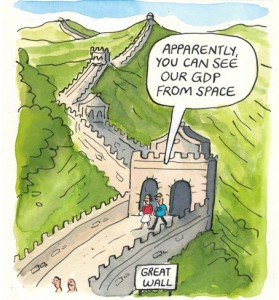
China's Growth