Illegal Trade in Tiger and Cat Skins up on China Border

The illegal trade in Tigers and other wild cat parts from Burma into China has grown in the border town of Mong La in the past decade, while the same trade into Thailand through the border town of Tachilek has diminished, a new survey has found.

The report, issued by wildlife trade monitoring group Traffic on Monday, analyzed data from 19 separate surveys of wild cat trade in Tachilek between 1991 and 2013, and seven surveys between 2001 and 2014 in Mong La.

In Tachilek on the Myanmar-Thailand border, shops selling wild cat parts including Tiger and Leopard skins and skulls, fell from 35 in 2000, to just six in 2013.  In Mong La, at the China border, such shops more than trebled from six in 2006, to 21 in 2014. Mong La caters almost entirely to customers from China.

Parts of the Clouded Leopard were found most frequently, representing some 482 individuals, while other cat species included Tiger, Leopard, Leopard Cat and the Asiatic Golden Cat, according to Traffic, which said that traders claimed most animals were sourced from Burma and India.

All wild cat species are protected under the Convention on International Trade in Endangered Species of Wild Fauna and Flora (CITES) and by national laws.

“[T]he decrease in Tachilek could be due to greater enforcement action in Thailand while the increase in Mong La may be linked to the rising buying power of China’s consumers, and the apparent ease in smuggling illegal wildlife parts into China from Mong La,” the Traffic report said.

“It’s time for the relevant enforcement authorities to live up to their international commitments to address wildlife crime,” said Vincent Nijman, a professor of anthropology at Oxford Brookes University and one of the report’s authors.

Tachilek is located in eastern Shan State and forms Burma’s main border crossing with northern Thailand. Mong La is located on the Burma-China border and administered by the National Democracy Alliance Army, a 2,000-men-strong armed group that is a remnant of the now-defunct Communist Party of Burma. It signed a ceasefire with the central government in 1989 and gained a range of concessions to run the area.

All manner of illegal trade, from prostitution and gambling to narcotics, arms and wildlife trafficking, have long flourished in the rebel-run town, which is part of a wider swathe of territory known as Special Region 4.

 Tiger and Leopard Skins for Sale

Is Norway Moving to a Post-Oil Economy?

Nick Cunningham writes:  New oil projects are being scrapped in Norway amid falling production and low oil prices. Long held up as the model for managing oil abundance, Norway has painstakingly sought to prevent the problems that occur with other natural-resource-based economies, such as corruption, slow economic growth, currency appreciation and deindustrialization.

Since 1990, Norway has diverted much of its oil earnings to a sovereign wealth fund, which has become the world’s largest. The money, reaching $890 billion as of June 2014, amounts to $178,000 for every Norwegian citizen. The sovereign wealth fund helps Norway avoid some of the problems associated with the “resource curse” by investing capital abroad. But more importantly, the money is set aside to be saved and invested to help the country plan for the eventual decline of oil production and the transfer to a more diversified economy.

The early cracks in Norway’s petrol-based economy are beginning to show more quckly than many predicted. Statoil, the mostly government-owned oil company, has  seen its share price cut in half since July 2014.  Several offshore rigs have stopped drilling.  To make matters worse, costs of developing new fields have been steadily rising.  Since oil prices have tumbled. Norway may see a steep decline in investment.

Lower oil prices could force more than $150 billion worth of investments to be put on hold worldwide.  Statoil is deferring a decision on investing $5.74 billion in the Snorre field, an offshore oil project in the Norwegian Sea. Also, Statoil’s Johan Castberg field, an estimated $16 billion to $19 billion oil field in the Barents Sea, will be tabled.

Even with high oil prices Norway was facing a tougher future due to years of waning oil production. Since 2001, Norway’s oil production has fallen by almost half, from around 3.5 million barrels per day down to about 1.8 or 1.9 million barrels per day in 2014.

The decline in investment is already pinching the labor market. About 10,000 Norwegian oil workers have been laid off as the industry pares back spending, accounting for 10 percent of the sector’s total workforce. Oil workers are threatening to strike unless the government steps in to stem further losses.

Despite its best efforts, Norway’s economy is overwhelmingly dependent on oil, which accounts for more than half of the country’s exports. Other export industries have struggled to develop, as costs are too high.  It doesn’t make sense for many companies in Norway to invest in new projects. Spending could drop by another 18 percent next year, as project economics look poor.  Without investment, new production will not materialize in the coming years, leading to further deterioration for the sector as existing fields age and decline.

Norway has its almost $1 trillion sovereign wealth fund to fall back on, so it is not as if its citizenry will be thrust into poverty anytime soon. Still, Norway may need to begin building a post-oil economy sooner than it thought.

Norway's Oil?

Can India Go High Tech?

Raghunath Mashelkar and Anu Madgavkar-write about the irony that India, which produces solutions to many of the knottiest information-technology problems faced by the world’s largest companies, has benefited little from technological progress. Fortunately for India’s citizens, Prime Minister Narendra Modi intends to change that.

The gap between India and its emerging Asian counterpart China is significant. Whereas China has created the world’s largest online bazaar and become a global leader in renewable energy, India has just begun to explore the potential of e-commerce; IT remains beyond the scope of millions of small and medium-size enterprises; and most citizens remain cut off from the digital economy.

To bring India up to speed, Modi’s government announced in August a national digital initiative.  The rapid decline in costs and increase in performance capabilities of a range of digital technologies including mobile Internet, cloud computing, and expert systems make large-scale adoption a distinct possibility in the coming decade.

These digital technologies together with genomics (supporting agricultural and medical and unconventional energy will enable financial inclusion for hundreds of millions of Indians and potentially redefine how services like education, food allocation, and health care are delivered.

Educational innovations could enable some 24 million workers to receive more years of education and find higher-paying employment. Mobile financial services will give 300 million Indians access to the financial system, allowing them to build credit. And precision agriculture can help 90 million farmers increase their output and reduce post-harvest losses, with access to timely market data bolstering their incomes.

Moreover, some 400 million Indians in poor rural areas can gain access to better health care in field clinics, where health workers can diagnose and treat some ailments using low-cost diagnostic tools, expert software, and online links to physicians. Finally, by digitizing government services, such as food-distribution programs for the poor, India could eliminate the leakage that diverts, according to our estimates, half of the food from intended recipients.

Even with low prices for devices and data plans relative to the rest of the world, Internet access in India remains beyond the grasp of close to a billion people.  Indian policymakers should be working with the country’s tech industry and other private-sector actors to implement measures that would enable technology adoption.

Challenges to entrepreneurship, such as India’s cumbersome procedures for starting new businesses, should be removed.  Scaling up for massive impact requires more than start-up innovation; it also demands a regulatory environment characterized by a liberal approach to pricing, manufacturing, and distribution.

Sustaining the benefits of technological adoption and innovation will require continued investment and adjustment to compensate for its disruptive effects.

With thoughtful planning, productive collaboration between public and private institutions, and capable execution, India’s government can clear the way for technological progress.

Technology in India


Deflation, Structural Reform and QE

Barry Eichengreen writes:  The European Central Bank is moving, hesitantly but ineluctably, toward quantitative easing. The threat of deflation – and the ineffectiveness of its previous measures – leaves it no choice. The question is whether the ECB will be able to move quickly enough.

The ECB has already attempted to ease credit conditions by purchasing high-quality asset-backed securities. It has bought securities backed by cash flows from private-sector mortgages, so-called covered bonds, and it has floated the idea of buying corporate bonds and multilateral securities issued by the European Investment Bank.

But it is clear that this will not be enough.  ECB President Draghi will need to continue working to build a consensus within the bank’s governing board for purchases of government bonds.

But Draghi and his colleagues will proceed in small steps, given fears in Germany that quantitative easing is just another name for runaway inflation. Initially, the ECB will buy a small volume of government bonds; when this fails to produce economic Armageddon, it will begin to scale up its purchases.

When deflationary expectations are entrenched,  consumers and investors delay spending on the ground that prices and costs will be lower tomorrow. Less spending means even less inflation and, in the worst case, falling prices.

Opponents of quantitative easing worry that it augurs inflation. The most influential objection to quantitative easing is that it will relieve the pressure on European governments to reform. According to this moral-hazard argument, the authorities will push ahead with painful labor- and product-market reforms and pursue the fiscal consolidation needed to gain the confidence of investors only if they remain under the gun. If the ECB purchases their bonds, governments will be able to ignore market pressure.

Under current conditions, with the inflation rate dangerously close to zero, governments are reluctant to do anything that increases the risk of deflation. And structural reform and fiscal consolidation are both deflationary in the short run.

Structural reform that increases the flexibility of labor and product markets is deflationary as well. Enhancing wage flexibility in an environment in which unemployment exceeds 11% will allow firms to cut wages, and lower labor costs will permit them to cut prices in an effort to gain market share. Deregulation that intensifies product-market competition will similarly lead to lower prices (that being what competition does).

Perhaps the best thing the ECB could do to encourage fiscal consolidation and structural reform is to banish the specter of deflation. Only full-bore quantitative easing can do that.

Deflation and QE

Does Inequality Drive Growth?

Dani Rodrik writes:  The belief that boosting equality requires sacrificing economic efficiency is grounded in one of the most cherished ideas in economics: incentives. Firms and individuals need the prospect of higher incomes to save, invest, work hard, and innovate. If taxation of profitable firms and rich households blunts those prospects, the result is reduced effort and lower economic growth. Communist countries, where egalitarian experiments led to economic disaster, long served as “Exhibit A” in the case against redistributive policies.

In recent years, however, neither economic theory nor empirical evidence has been kind to the presumed tradeoff. Economists have produced new arguments showing why good economic performance is not only compatible with distributive fairness, but may even demand it.  In high-inequality societies, where poor households are deprived of economic and educational opportunities, economic growth is depressed. Then there are the Scandinavian countries, where egalitarian policies evidently have not stood in the way of economic prosperity.

Early this year, economists at the International Monetary Fund produced empirical results that seemed to upend the old consensus. They found that greater equality is associated with faster subsequent medium-term growth, both across and within countries.
Moreover, redistributive policies did not appear to have any detrimental effects on economic performance. We can have our cake, it seems, and eat it, too.
Economics is a science that can claim to have uncovered few, if any, universal truths. Like almost everything else in social life, the relationship between equality and economic performance is likely to be contingent rather than fixed, depending on the deeper causes of inequality and many mediating factors. So the emerging new consensus on the harmful effects of inequality is as likely to mislead as the old one was.
Consider, for example, the relationship between industrialization and inequality. In a poor country where the bulk of the workforce is employed in traditional agriculture, the rise of urban industrial opportunities is likely to produce inequality, at least during the early stages of industrialization. As farmers move to cities and earn higher pay, income gaps open up. And yet this is the same process that produces economic growth; all successful developing countries have gone through it.
In China, for example, rapid economic growth after the late 1970s was associated with a significant rise in inequality. Roughly half of the increase was the result of urban-rural earnings gaps, which also acted as the engine of growth.
Or consider transfer policies that tax the rich and the middle classes in order to increase the income of poor households. Many countries in Latin America, such as Mexico and Bolivia, undertook such policies in a fiscally prudent manner, ensuring that government deficits would not lead to high debt and macroeconomic instability.
On the other hand, Venezuela’s aggressive redistributive transfers under Hugo Chávez and his successor, Nicolás Maduro, were financed by temporary oil revenues, placing both the transfers and macroeconomic stability at risk. Even though inequality has been reduced in Venezuela (for the time being), the economy’s growth prospects have been severely weakened.
Latin America is the only world region where inequality has declined since the early 1990s. Improved social policies and increased investment in education have been substantial factors. But the decline in the pay differential between skilled and unskilled workers – what economists call the “skill premium” – has also played an important role. Whether this is good news or bad for economic growth depends on why the skill premium has fallen.
If pay differentials have narrowed because of an increase in the relative supply of skilled workers, we can be hopeful that declining inequality in Latin America will not stand in the way of faster growth (and may even be an early indicator of it). But if the underlying cause is the decline in demand for skilled workers, smaller differentials would suggest that the modern, skill-intensive industries on which future growth depends are not expanding sufficiently.
In the advanced countries, the causes of rising inequality are still being debated. Automation and other technological changes, globalization, weaker trade unions, erosion of minimum wages, financialization, and changing norms about acceptable pay gaps within enterprises have all played a role, with different weights in the United States relative to Europe.  While technological progress clearly fosters growth, the rise of finance since the 1990s has probably had an adverse effect, via financial crises and the accumulation of debt.

It is good that economists no longer regard the equality-efficiency tradeoff as an iron law. We should not invert the error and conclude that greater equality and better economic performance always go together. After all, there really is only one universal truth in economics: It depends.

Inequality

Why Are Commodities Prices Falling

Jeffrey Frankel speculates:   Oil prices have plummeted 40% since June – good news for oil-importing countries, but bad news for Russia, Venezuela, Nigeria, and other oil exporters. Some attribute the price drop to the US shale-energy boom. Others cite OPEC’s failure to agree on supply restrictions.

But that is not the whole story. The price of iron ore is down, too. So are gold, silver, and platinum prices. And the same is true of sugar, cotton, and soybean prices. In fact, most dollar commodity prices have fallen since the first half of the year. Though a host of sector-specific factors affect the price of each commodity, the fact that the downswing is so broad suggests that macroeconomic factors are at work.

So, what macroeconomic factors could be driving down commodity prices?  The global economic slowdown, which has diminished demand for energy, minerals, and agricultural products may be a factor.  Indeed, growth has slowed and GDP forecasts have been revised downward since mid-year in most countries.

The United States is a major exception. The American expansion seems increasingly well established, with estimated annual growth exceeding 4% over the last two quarters.Yet it is particularly in the US that commodity prices have been falling. The Economist’s euro-denominated Commodity Price Index, for example, has actually risen over the last year; it is only the Index in terms of dollars – which is what gets all of the attention – that is down.

The importance of monetary policy as a determinant of commodity prices is often forgotten. Monetary tightening is widely anticipated in the US, with the Federal Reserve having ended quantitative easing in October and likely to raise short-term interest rates sometime in the coming year.

There is something intuitive about the idea that when the Fed “prints money,” the money flows into commodities, among other places, and so bids their prices up – and thus that prices fall when interest rates rise. But, what, exactly, is the causal mechanism?

In fact, there are four channels through which the real interest rate affects real commodity prices.  First, high interest rates reduce the price of storable commodities by increasing the incentive for extraction today rather than tomorrow, thereby boosting the pace at which oil is pumped, gold is mined, or forests are logged.

Second, high rates also decrease firms’ desire to carry inventories.

Third, portfolio managers respond to a rise in interest rates by shifting out of commodity contracts.

Finally, high interest rates strengthen the domestic currency, thereby reducing the price of internationally traded commodities in domestic terms.

US interest rates did not really rise in 2014, so most of these mechanisms are not yet directly at work. But speculators are thinking ahead and shifting out of commodities today in anticipation of future higher interest rates in 2015; the result has been to bring next year’s price decrease forward to today.

The prospect of US monetary tightening coincides with moves by the European Central Bank and the Bank of Japan toward enhanced monetary stimulus. The result has been an appreciation of the dollar against the euro and the yen. The euro is down 8% against the dollar since the first half of the year and the yen is down 14%. That explains how so many commodity prices can be down in terms of dollars and up in terms of other currencies.

Will Hoarding Commodities Continue?

Central Bank and Interest Rates

Philip Pilkington writes:  Does the central bank control the long-term interest rate? Yes. Does it control the spread between the long-term rate and the short-term rate? There is no evidence to confirm this and the evidence that we do have — taking the Fed at its word — suggests that they do not. But regardless, next time some economists tells you that the markets control the long-term rate of interest you can safely tell them that they have absolutely no idea what they are talking about. Interest Rates and Central Bank

Interest Rates

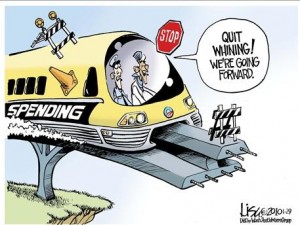
US Needs Infrastructure Repair

It’s somewhat understandable that few politicians want advocate for the massive spending it would take to update and maintain our existing infrastructure. It’s much easier to be a silent and foolish than loud and prudent. But if the United States fails to take advantage of current economic conditions to reinvest in infrastructure, it’s only going to have to inconvenience itself more in the future. See: the Washington DC Metro.

This is the gist of economist Larry Summer’s latet thoughts on the subject.  Summers explains that there’s no better time than now to invest in America’s infrastructure. Interest rates are ridiculously low. Unemployment in the construction sector is in the double-digits. What are we waiting for?

W-T-W.org suggests a tewtny-year infrastructure program financed by loans from the Federal government, subject to approval by each state.  Intractablly unemployed could have jobs until we learn how to match job readinesss with available jobs.

Infrastructure


Overeducated Chinese?

John Morgan and Bin Wu write:  The number of university students in China, including those in part-time higher adult education, expanded from 12.3m students in 2000 to 34.6m in 2013. China has become an exceptional example of increasing access for students to higher education – but this expansion has also been accompanied by some unexpected and even negative consequences.

The annual number of graduates is expected to reach 7.27m in 2014.  The challenge is to find them appropriate jobs, especially as the supply of over-educated graduates exceeds labour market demand.

The unevenness of China’s economic and social development over the past three decades has created a stratified scoiety which has had a major impact on educational inequality.

The renewal of higher education was a key part of Deng Xiaoping’s development strategy, begun in 1978, to open China to the world. State control was maintained and the universities continued to serve the policy requirements of the Communist Party.

Yet gradual adjustments were made. A high value was placed on scientific knowledge, innovation and the application of research, compared with traditional Chinese knowledge. University curricular were de-politicised and direct political control over student recruitment and behaviour was relaxed.

In contrast with the Maoist era, the most significant change has been that universities are now essentially centres for the production of elites in the manner of similar institutions in capitalist economies. The possession of university credentials is now emphasised as a key criterion for recruitment or promotion in both the public sector and in the emerging private sector.

In the late 1990s, China’s higher education system entered a new era, with the introduction of a new set of policies focused on developing world-class universities.

These led to strict ranking of higher education institutions with privileged state financial support. This was followed by the devolution of responsibility for around 300 other universities to provincial governments.

The most significant change has been a funding system which has led to both an expansion of public universities and the emergence of private higher education.

These changes have taken place in the context of an economic growth which has created a highly stratified society.  Now policy programmes have aimed to increase the number of disadvantaged students accessing key universities, while state funds have been allocated to improve teaching conditions in higher education in the disadvantaged west of China.

Students from migrant workers’ families have been allowed to take the national university entrance examination at their place of residence rather than at their place of family origin. There has also been improved state financial support for students from poor families alongside promotion of entrepreneurship to enhance employment prospects.

The dilemma faced by Chinese higher education officials is how to build both world-class universities and a system that meets the needs of the Chinese people.

Chinese Universities

The End of Information Symmetry?

Who owns the lawmakers and the courts?  Symmetry of information, also known as a ‘level playing field,’ is the cornerstone and underlying principle of US Securities laws since 1933.

“Information symmetry is a condition in which all relevant information is known to all parties involved. For example, in the stock market, stock information has a full public disclosure, and all investors are in the same position to share information.” “In contract theory and economics, information asymmetry deals with the study of decisions in transactions where one party has more or better information than the other. This creates an imbalance of power in transactions which can sometimes cause the transactions to go awry, a kind of market failure in the worst case. Examples of this problem are adverse selection, moral hazard, and information monopoly.”

The letter of the law can be twisted hard enough to find a reason for excusing some particularly blatant insider trading.  As long as the exchanging of favors is sufficiently soft and undocumented, and not the explicit exchange of cash, videotaped and posted to Youtube, it’s all good.  The purpose of information symmetry is to prevent certain market actors from engaging in control frauds. This principle taken to a perfect and natural ideal was a cornerstore of one of the great economic canards that justified deregulating the markets.

“In finance, the efficient-market hypothesis asserts that financial markets are ‘informationally efficient’. In consequence of this, one cannot consistently achieve returns in excess of average market returns on a risk-adjusted basis, given the information available at the time the investment is made.”

Information symmetry means that some analyst or CEO cannot tell his friends that they are going to give downward guidance in a week, so that they can all sell their stock and even short it ahead of the public.

It means that the most powerful players in the market cannot traffic in private knowledge, presenting two sorts of datastreams, one for the public and one for themselves

This decision will probably be reversed, because otherwise there can be no confidence in US markets any longer.  No one who is not an insider can believe in their impartiality and honesty. They are worse than any casino, because the dealer can signal some of the players when he has an ace in the hole.

The most rational response from the rest of the world will be to shun US markets, and take steps to prevent the contagion of this abuse of privilege.

This is the kind of situation where the locker room talk at the Country Club gets leaked out in public, and the Very Important People who do it are suddenly exposed for exactly who and what they really are, and what they really believe.  It is a  brave new world if this decision stands.

Disrupting Information Symmetry