Italy’s Corruption Rating

Eleonora Casuela notes that perception of corruption in Italy is prevalent, especially in public administration.  Italy is tied with six other states, four of which are European. The NGO Transparency International in its new ranking on corruption sees Italy steady at sixty-ninth place in a ranking that includes 175 states.

Although ranked the same as Brazil, Bulgaria, Greece, Romania, Senegal and Swaziland, with 43 points, Italy did in fact record a potential value lower (34 points). This places it on the top rung of the ladder of the eurozone countries and the whole of Europe. The index of Transparency should be stated, is based on perception, not on a register of cases certified. The ranking does not necessarily reflect the real value of corruption cases certificates.

According to the report, however, the level of perceived corruption is increasing especially in countries with the highest rate of economic growth. These include Turkey, in particular, followed by Brazil, Russia, India and China. But at the center of the criticism by Transparency International, there are also important financial centers.  In some countries where the level of corruption is low, the multinational banks and major financial centers such as Frankfurt, London and New York are often corrupt.

This year Denmark defended his first place, followed by New Zealand and Finland.

North Korea and Somalia are tied for last place.  Germany isl twelfth and fourteenth is Britain. France is twenty-sixth, with the US seventeenth.

Corruption Index

Is Investment the Key to EU Recovery?

Daniel Gros writes:  The mantra in Brussels and throughout Europe nowadays is that investment holds the key to economic recovery. The lynchpin of the new European Commission’s economic strategy is its recently unveiled plan to increase investment by €315 billion ($390 billion) over the next three years.

The Commission’s plan, the signature initiative of President Jean-Claude Juncker at the start of his term, comes as no surprise. With the eurozone stuck in a seemingly never-ending recession, the idea that growth-enhancing investment is crucial for a sustainable recovery has become deeply entrenched in public discourse.

European Union authorities (and many others) argue that Europe – particularly the eurozone – suffers from an “investment gap.” The smoking gun is supposedly the €400 billion annual shortfall relative to 2007.

But the comparison is misleading, because 2007 was the peak of a credit bubble that led to a lot of wasteful investment. The Commission recognizes this in its supporting documentation for the Juncker package, in which it argues that the pre-credit-boom years should be used as the benchmark for desirable investment levels today. According to that measure, the investment gap is only half as large.

The pre-boom years are not a good guide for today’s European economy, because something fundamental has changed more quickly than is typically recognized: Europe’s demographic trends.

The eurozone’s working-age population had been growing until 2005, but it will fall from 2015 onward. Given that productivity has not been picking up, fewer workers mean significantly lower potential growth rates. And a lower growth rate implies that less investment is needed to maintain the capital/output ratio.

If the eurozone maintained its investment rate at the level of the pre-boom years, there would soon be much more capital relative to the size of the economy.

An ever-increasing capital stock relative to output means ever-lower returns to capital and thus ever more non-performing loans in the banking sector over time.

What can the Juncker plan do to have a positive short-run impact on aggregate investment?

At present, there is no shortage of funding available in most of the EU. The countries on the eurozone periphery, where credit might still be scarce, account for less than one-quarter of Europe’s economy. So a lack of funding is not the reason that investment remains weak.

The Juncker plan is supposed to unlock, with €21 billion in EU funding, projects worth 15 times as much (€315 billion). That sounds far-fetched. Europe’s banking system already has more than €1 trillion in capital. The addition of €21 billion, in the form of guarantees from the EU budget, is unlikely to have a significant impact on banks’ willingness to finance investment.

The Juncker plan targets, in particular, infrastructure projects, which are often riskier than other investments. But these risks usually are not financial; they reflect potential political and regulatory barriers at the national level. These problems cannot be solved by a guarantee from the EU budget.

The reason why there still is no good interconnection between the Spanish and French power grids is not a lack of financing, but the unwillingness of monopolies on both sides of the border to open their markets. Many rail and road projects are also proceeding slowly, owing to local opposition, not a lack of financing.
.
Economic performance in the United States and the United Kingdom holds an important lesson for the eurozone. Both economies’ recoveries have been driven largely by a pickup in consumption on the back of stronger household balance sheets, especially in the US. Is consumption the answer?

Is Consumption the Answer?


EU to QE?

Barry Eichenreen writes:  The European Central Bank is moving, hesitantly but ineluctably, toward quantitative easing. The threat of deflation and the ineffectiveness of its previous measures leaves it no choice. The question is whether the ECB will be able to move quickly enough.

The ECB has already attempted to ease credit conditions by purchasing high-quality asset-backed securities. It has bought securities backed by cash flows from private-sector mortgages, so-called covered bonds, and it has floated the idea of buying corporate bonds and multilateral securities issued by the European Investment Bank.

But it is clear that this will not be enough. Supplies of private-sector securities are limited, reflecting the dominance of bank lending in Europe and depressed sentiment in securitization markets. Augmenting the supply of such securities will take too much time.

For all these reasons, purchasing private-sector securities alone will not enable the ECB to achieve its stated goal of expanding its balance sheet by €1 trillion ($1.2 trillion). Unable to vanquish the specter of deflation, ECB President Mario Draghi will need to continue working to build a consensus in the bank’s governing board for purchases of government bonds.

But Draghi and his colleagues will proceed in small steps, given fears in Germany that quantitative easing is just another name for runaway inflation. Initially, the ECB will buy a small volume of government bonds; when this fails to produce economic Armageddon, it will begin to scale up its purchases.

The problem is that this kind of incrementalism will not work.  When deflationary expectations are entrenched, as they are in Europe today, consumers and investors delay spending on the ground that prices and costs will be lower tomorrow. Those expectations become self-fulfilling.

Dramatic measures are needed to convince households and firms that the future will be different from the past. The central bank needs to convince them that it will do whatever it takes  to jolt the economy out of its deflationary lethargy.

That is what the Bank of Japan, under Governor Haruhiko Kuroda, is attempting to do.

Opponents of quantitative easing worry that it augurs inflation. They worry that securities purchases will sow the seeds of another financial bubble and bust. The most influential objection to quantitative easing is that it will relieve the pressure on European governments to reform.

Under current conditions, with the inflation rate dangerously close to zero, governments are reluctant to do anything that increases the risk of deflation. And structural reform and fiscal consolidation are both deflationary in the short run.

Structural reform that increases the flexibility of labor and product markets is deflationary as well. Enhancing wage flexibility in an environment in which unemployment exceeds 11% will allow firms to cut wages, and lower labor costs will permit them to cut prices in an effort to gain market share. Deregulation that intensifies product-market competition will similarly lead to lower prices (that being what competition does).

Europe does stand to reap significant benefits from fiscal consolidation and structural reform – but in the long run, not in the short run, when the problem is deflation. And European governments know it.

It follows that the best thing the ECB could do to encourage fiscal consolidation and structural reform is to banish the specter of deflation. Only full-bore quantitative easing can do that.

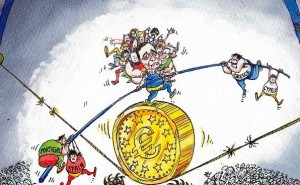
Draghi's Options

Accomplished Women 2014

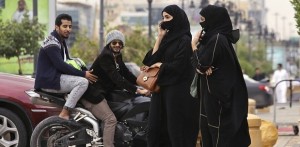
Bayan Mahmoud al-Zahran opened Saudi Arabia’s first female law firm, where she’ll represent women and bring women’s rights issues into the courts.

“I believe women lawyers can contribute a lot to the legal system,” al-Zahran said. “This law firm will make a difference in the history of court cases and female disputes in the Kingdom. I am very hopeful and thank everyone who supported me in taking this historical step.”

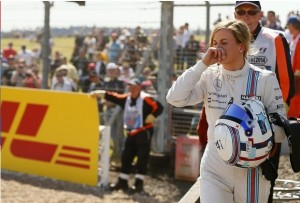
Lady LawyersSusie Wolff, first woman to take part in a Formula One race in 22 years.

Formula One Racer

Professor Maryam Mirzakhani was the first woman to win the FIelds math medal.

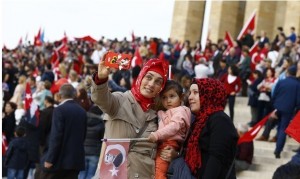
Math StarThe first Women’s Party was established in Turkey to seek equal representation for women. Benal Yazgan, the chair of the party, said: “Once again, hegemony is being passed from man to man. The patriarchy is the same; they always leave women out and pass the roles amongst themselves.”

A Woman's Party in Turkey

End the Embargo on Cuba?

Under a law from the 1990s only Congress can end the 1960 embargo on Cuba.  But support for the embargo, which failed abysmally and gave the Castros potent propoganda, has been crumbling.  Every country in Latin America agrres that Cuba should have a normal place in teh Ameircas.

The Obama adminsitration has not asked the State Department to remove Cuba frmits terrorism list.

Rapi; Castro’s economic reforms have stalled recently and they never were intended to lead to political reform.

The lesson of Cuba is that pressure from Washington does not lead to democratization.

Abe Set to Win on Sunday

Abe argues that he is the leader to overhaul Japan and catch up with the outside world.  After his landslide victory in 2012, he fired up the country with talk of three economic arrows.  Radical monetary easing, extra public spending and bold reforms to ease the machinery of the economy.

Abe is looking for another mandfate from voters in the snap general election for the lower house of the Diet.  A consumption tax crimped the economy.  The Japanese like the Germns may be congenital savers.

Unemployment has falled to 3.5%   Wage rises have not kept pace with inflation.

Workers’ hours have been the subject of heated debate.  The government finally applied new laws, but only to the best-off workers.

Some say Abe does not have the courage to face down the LDP, which hates monetary easing, loves public spending and despises reform.

Now he is talking reform and if he is seroius we might ee mobility in a rigid labor market, slashing waste in medical care, liberalizing the electricity market and a shake up in agriculture.  Most important are the archaic work rules.

Abe

Hello Kitty Turns 40

Since her arrival in 1974 as a graphic on a coin purse, Hello Kitty has become a worldwide delight and a $7 billion business annually.  Can entreprenrenuers will this  kind of success?  Probably not.  But luck and hard work are a good place to start.

Helo Kitty transcents age and geographic barriers.  Taiwan has a Helllo Kitty themed aircraft, hotell rooms, a restaurnat and even a maternity ward.  This is the icon’s 40th anniversary.

Los Angeles held a four-day sold out Hello Kitty Con featuring original merchandse and fan meet-ups.

Earlier this year parent company Sanrio causes a stir when it told a curator for a Helllo Kitty retrospective at the Japanese American National Museum in Los Angeles that its star is not a cat, but rather a third-graded from England.  Helo Kitty is Kitty white, “a bright little girl with a heart of golld.”

Hello Kitty's Birthday


Should the EU Extend Welcome Arms to Turkey?

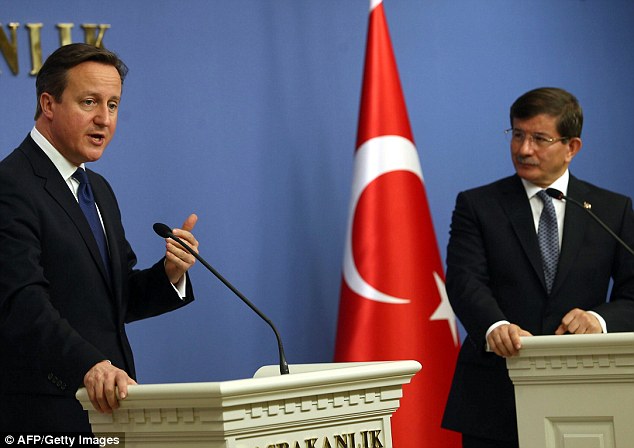
David Cameron wants Turkey to join the European Union, despite his drive to reduce net migration to tens of thousands of Turks.  Speaking in the Turkish capital Ankara after talks with prime minister Ahmet Davotoglu, he said of Turkey’s membership: ‘I very much support that.”

Remarks: Mr Cameron made the comments after a meeting with Turkish PM Ahmet Davotoglu (right)

The comments are likely to provoke anger from Conservative backbenchers, who want curbs on the free movement of people within the 28-member bloc

Mr Cameron last visited Turkey four years ago, and said at the time that he was there to ‘make the case for Turkey’s EU membership’ and was its ‘strongest advocate’.

However since then, he has committed to an in-out referendum on Britain’s membership of the EU amid rising public concern about levels of immigration.

His ministers have also been forced to admit the government will fail in its target to reduce net migration to ‘tens of thousands’. The latest figures last month revealed it had risen to 260,000.

But yesterday he said his position has not changed. Talks about Turkish accession have stalled in recent years with Germany deeply opposed to its membership.  There are also fears millions of people could migrate to other European countries and that the Turkish government has been sliding back on human rights commitments.

Mr Cameron said: ‘In terms of Turkish membership of the EU, I very much support that. That’s a longstanding position of British foreign policy which I support. We discussed that again in our talks today’.

It is understood any moves towards Turkish membership of the EU would take several years, and would almost certainly involve transitional controls on new migrants.

But his words will provoke a reaction Ukip. Leader Nigel Farage said last year: ‘The vast majority of people in northern Europe would not support enlargement to include a country like Turkey’.

Mr Cameron’s visit was to discuss the issue of British foreign fighters travelling to Syria and northern Iraq to join Islamic State.  At least 500 UK jihadis are believed to have joined the Islamist fanatics, many of them travelling on commercial flights to Turkey and infiltrating its porous border with Syria.

Mr Cameron said the two countries would share intelligence and work ‘hand in glove’ to ‘stop this scourge of foreign fighters and defeat this ideology of violence’.

In addition to passing counter-terror laws and drawing up plans to seize the passports of suspected jihadis, the Prime Minister said those who travel through Turkey and other routes ‘threaten us back at home so we should do everything that we can and we’ve had very productive discussions’.

He said in a press conference at his ministry: ‘We have a very clear and obvious position. Foreign fighters are a threat to the countries that they are coming from or for the neighbouring countries. Turkey has never tolerated their transit through our territory or their existence in Syria.

‘These fighters are creating a threat for us in Turkey, they are casting a shadow over the just cause of the Syrian people….No country can claim that it is under more of a threat than Turkey [from terrorism].

He even blamed ‘propaganda in the foreign press’ for claiming ISIL leaders had passed through Turkey.

He said: ‘Isis actually emerged in Iraq and when Iraq was under US control they developed with the support of the Syrian regime. In no way did any Isis leader pass through the Turkish border.’
 Turkey and the EU

80 Million Dollars to Develop Torture Tactics?

The United States government paid two military psychologists $80 million to develop torture tactics that were used against suspected terrorists in the wake of the September 11 attacks on the Pentagon and the World Trade Center.

In 2002, two former Air Force psychologists, James Mitchell and Bruce Jessen, became the masterminds of the CIA’s torture program, according to a report released by the Senate Select Committee on Intelligence. The two men, identified in the report under the pseudonyms Grayson Swigert and Hammond Dunbar, devised and performed torture tactics–including waterboarding and mock burial on some of the CIA’s most significant detainees.”

The report noted that neither of the men had previous experience as professional interrogators, nor did they have “specialized knowledge of al Qaeda, counterterrorism or any relevant cultural or linguistic experience.”
Even if one could get past the idea of paying someone to come up with new ways to torture people, the outrageous amount of taxpayer dollars spent on two individuals is simply unacceptable—especially when they didn’t seem to “invent” anything.

Still, they were in charge of developing the techniques and analyzing their effectiveness.


Torture Techniques

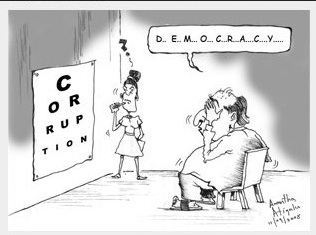
Corruption in the Ukraine

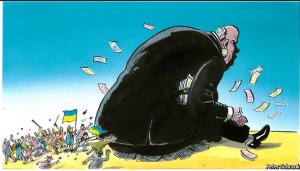
While the war in Ukraine’s east again threatens to explode into open conflict, Kiev is simultaneously fighting an even greater impediment to Ukraine’s long-term stability: endemic corruption.

According to the most recent figures from international corruption watchdog Transparency International, Ukraine was ranked 144 out of 177 countries on its Corruption Perceptions Index, placing Ukraine at the bottom of the rankings — tied with Cameroon, Papua New Guinea, Nigeria and others.

While Ukrainian government graft is widespread, public procurement corruption tops the list of challenges that the government in Kiev must confront. Ukrainian Prime Minister Arseniy Yatsenyuk has stated that Ukraine’s government makes about $25 billion in purchases in state purchases yearly, 40 percent of which — or $10 billion — is lost through graft.

“Public procurement is the most problematic sector where corruption is rife. Sometimes for certain things, the level of corruption in a tender can be up to 40 to 50 percent,” said Sergiy Gula, a government procurement expert at Transparency International Ukraine.

“The most common type of corruption in government tenders is either unlawful use of a single party or an associated company — a fictional competition or tender is won by a predetermined firm, even with the worst and most expensive proposal,” Gula said.

Corruption in the purchase of drugs for HIV/AIDs uncovered by the Anti-Corruption Action Center in Kiev supports Gula’s point. In a typical scheme, several companies controlled by one owner “compete” with each other to win millions of public funds. The end result of drug corruption procurement is that only 43 percent of HIV-infected patients obtain the drugs they need.   Corruption in Ukraine

Corruption in Ukraine