US Fed: International?

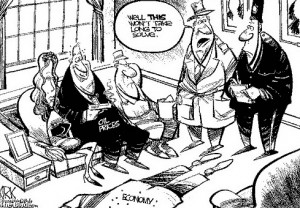
Mohamed El Erian writes:  The U.S. Federal Reserve is poised to take yet another step away from its extraordinary efforts to support the U.S. economic recovery. In doing so, it must strike a delicate balance between an improving recovery at home and a worsening outlook abroad.

Over the past several years, the Fed has relied on three main instruments to boost growth and generate jobs: extremely low interest rates, guidance on the probable future path of rates, and the bond-buying program known as quantitative easing. By lowering borrowing costs and pushing up the prices of stocks and bonds, the measures are supposed to encourage consumers to spend and companies to invest — hopefully before the potential benefits are overwhelmed by adverse side effects such as excessive risk-taking in financial markets.

After many fits and starts, the economic recovery is finally rising to the Fed’s expectations, allowing the central bank to start pulling back on stimulus. In October it stopped its program of quantitative easing. At its policy-making meeting this week, it will likely alter its forward guidance by removing a promise to keep interest rates floored near zero for a “considerable period” — a phrase the markets have taken to mean a minimum of six months. The change in language will set the stage for gradual rate hikes starting in mid-2015.

None of this should come as a great surprise. That said, investors need to recognize that the future of Fed policy is not set in stone. Fed officials will be navigating through a fragile global economy, buffeted by economic malaise in Europe and Japan and geopolitical tensions with Russia over Ukraine. With political gridlock rendering governments incapable of pushing through comprehensive measures to fully heal their economies, the task of reconciling economic and policy divergences falls to the currency markets, which will be challenged to do the job in an orderly manner.

As regards the destination, most agree that the Fed’s short-term interest-rate will likely end up below its historical average of about 4 percent. How much below depends on the central bank’s assessment of the structural factors weighing on the economy’s long-term growth potential. These include an aging population, insufficient infrastructure investment, inadequate education and fiscal policies — such as exemptions-ridden corporate and estate taxation — that inhibit growth and distort the allocation of productive resources.

For now, though, the Fed can continue bringing its policy back toward normal, albeit gradually, comforted by signs of broadening domestic economic healing.
International Outlook?

Kuroda: Abe’s Enabler?

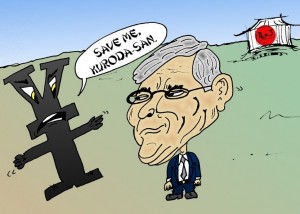
William Pesek writes: As the world watches to see what Prime Minister Shinzo Abe does with his renewed mandate in Japan, my eyes are on Haruhiko Kuroda.  The Bank of Japan governor probably deserves about 90 percent of the credit for whatever success Abe’s reflation efforts have had including the 70 percent rise in the benchmark Topix index. Whether the prime minister now goes further and implements the real structural reforms Japan needs depends as much on Kuroda as anyone else.

Abe’s victory was not as sweeping as might appear at first glance.  Not surprisingly, officials in Tokyo are talking less about politically difficult reforms and more about putting money in the hands of Japanese to spend. Some think the Japanese are not ‘nudgeable.”

Analysts are expecting a rush of new fiscal stimulus early in the new year. Kuroda, too, will face pressure to one-up himself when the BOJ meets on Friday. Markets want the central bank governor to outdo his “shock-and-awe” from April 2013 and recent Halloween surprise on Oct. 31, when he boosted bond purchases to about $700 billion annually.

It’s time for Kuroda to do exactly the opposite: hold his fire and prod Abe to begin doing his part to push through his “third arrow” structural reforms. To this point, Kuroda has been a dutiful and circumspect policymaker — perhaps to a fault. Other than a brief flash of impatience with Abe’s foot-dragging when he said “implementation is key, and implementation should be swift” — Kuroda has held his tongue. Yet he bears a responsibility to play the honest broker role that monetary powers have over the years — from Paul Volcker at the Federal Reserve decades ago to Raghuram Rajan at the Reserve Bank of Inida today.

Now that the election is over, it’s up to Prime Minister Abe to carry out the will of the people and deregulate the economy.   A smart economist and wise tactician like Kuroda has to know this Japanese experiment will end very badly if Abe fails to encourage innovation, loosen labor markets, lower trade tariffs and cut red tape. If bond traders drive government bond yields higher and credit-rating companies pounce, the blame will fall squarely on Kuroda.

Some fear the apparent drift toward increased stimulus:  The investment world views Kuroda as a maverick — a man who’s breaking all the rules in Tokyo. In reality, though, he’s fallen into the same trap that ensnared the BOJ leader from 1998 to 2003 who pioneered quantitative easing.

Kuroda’s policies have indeed been bold — bolder than anything Abe himself has been willing to attempt. But the BOJ’s policies are allowing the government to sidestep its responsibility. That must stop if Abenomics is to come off life support. On Friday, Kuroda should begin nudging Abe to do something with his popular mandate for change.

Kuroda


Hedging?

Barry Ritholtz writes:  Hedge funds have done well in 2014, but not along a normal Gaussain distribution along smooth bell curves. It has been feast or famine.  Darwin’s laws of the jungle apply to capital as well: The big get bigger, while the weak atrophy and eventually die out. The elite firms dominate money raising.

Why are investors attraced to hedge funds in the first place?  The lottery-like nature of the next high alpha?  Selecting the emerging managers of the next 10 years has proven to be impossible.

CALPERs of course dropped hedge funds.  Yale has done very well under David Swensen.  Yale was in first, the alpha generation high, the costs reasonable and valuations modest.

Ritholtz sees more feast or famine. A handful of firms will capture most of the alpha and fresh assets. More firms will shut their doors. Perhaps a few more endowments and pension funds will re-evaluate their hedge-fund investments. Don’t be surprised if venture-capital and private-equity fund are next to undergo a similar examination.

Hedge Funds

Internet Regulation?

Wayne Brough writes:   President Obama recently weighed in on the Federal Communications Commission’s (FCC) net neutrality proceedings.  New regulations come at the price of reduced innovation and lower levels of capital investment, which is unfortunate, because neither the administration nor the FCC have yet to make the case that current internet policies have been problematic.

In fact, a look at the internet’s development demonstrates just the opposite: limited regulation has fostered the development of one of the most important and disruptive technologies of our time. In spite of-or, more likely, because of-light-handed regulation, the internet has evolved at a pace that is transforming large swathes of the economy. Today, there are 2.5 billion people connected to the internet. By the 2016, the internet is expected to generate $4.2 trillion in economic activity among the G-20 nations.

In the Clinton era,  FCC Chairman William Kennard led the effort to ensure the internet was allowed to expand on its own, free of the burdensome regulations that governed telecommunications. But there has always been a tension between regulators and broadband providers, with increasing efforts to place the internet under greater government scrutiny. Under the guise of protecting a free and open internet, proponents of net neutrality rallied to the call for tighter regulations. They have been joined by internet giants such as

Google and Netflix have their own economic interests at heart in their push for increased regulation.

President Obama’s call for Title II regulations addresses the U.S. Court of Appeals’ rejection earlier this year of the FCC’s 2010 “Open Internet Order.” The court concluded that because the agency refused to classify the internet as a telecommunications service, it could not be subjected to the Title II regulations, which were adopted to regulate the telephone system. Reclassifying internet service as a telecommunications service, therefore, would remove any legal impediments to Title II regulation. In response to the court’s decision, current Chairman Tom Wheeler opened a new rulemaking on how best to regulate the internet, which is the source of the current debate.

Title II was first enacted in 1934 to regulate the telephone network as a utility, or common carrier. Utility regulation is a cumbersome, time-consuming process typified by ratemaking hearings where providers and regulators dispute what comprises a “just and reasonable” price. And more often than not, this type of economic regulation benefits the regulated industry, not the consumer. This is why, starting under President Jimmy Carter, there was a concerted move away from this form of regulation, a move that saved consumers billions of dollars. With the FCC, the Federal Trade Commission, and the Department of Justice already looking at anticompetitive practices, is a massive new regulatory structure required?

The internet is still evolving and placing federal regulators in charge will alter that evolution in ways that net neutrality advocates do not expect. It is not intuitively obvious that FCC regulators would be better managers of the internet.

The statutory basis for the FCC’s desire to impose Title II regulations on the internet is tenuous at best, as demonstrated by the court’s consistent rulings against the FCC’s past attempts at internet regulation. Given the legal uncertainties and the explicit pressure from the White House on a supposedly independent agency, it may be time for Congress to revisit this issue to resolve the current regulatory uncertainty, which has already led one significant broadband provider to delay further investments in broadband deployment. If the courts are questioning the FCC’s statutory authority, perhaps the new Congress should clarify the FCC’s regulatory limits, and allow the internet to continue its dynamic evolution free from unnecessary federal regulations.

Internet Regulation

Cyprus: Opportunities Mired

Yusuf Kanli writes:  Expectations for a quick fix to the crisis in the Cyprus talks process appear to have come to a dead end. Turkey is reiterating that under no condition will it agree to abandon support for the equal partnership rights of the Turkish Cypriot people on – as well as off – the island, with the Greek Cypriots.  Greek Cypriots are stressing that talks might become “feasible” only if Turkey removes its Barbaros seismological ship and the accompanying navy ships from the “Cypriot Exclusive Economic Zone.”

Turkish President Reep Tayyip Erdogan was the last and the highest Turkish official to reiterate that there will be no step back in Turkey’s position.Turkey will never steer clear of recent developments in Cyprus. Erdoğan’s strong words, on the other hand, demonstrated the determination in Ankara not to waiver under duress – particularly amid pressure from the Americans and the British, who have been relentlessly working behind the scenes to get the talks back on track. Instead, Turkey has been following a policy of reasserting in every possible way the equal partnership rights of the Turkish Cypriot people on Cyprus.

But can anyone compromise while the strongest man in the country is so adamant? In the absence of President Nicos Anastasiades, can the acting president return to talks? Even if acting President Ioannakis Omiriu wanted to prove his presidential skill in this transition period – which could be extended to weeks, if not months – before Turkey withdraws its ships, he cannot do so because of public pressure.

With no change or even softening in the positions of the sides on the problem, the approaching Christmas expiration of the first phase of drilling by the Eni-Kogas consortium in the disputed area and the expiry of the Navtex issued by Turkey on Nov. 30 might not mean an end to the standoff.

Greek Cypriots must understand what the Americans, the British and many others wishing to see a settlement in Cyprus have finally started to acknowledge; namely, that a Cyprus settlement requires the recognition of the equal partnership rights of Turkish Cypriots on the land, in the air and on the sea, as well as in the sovereignty and administration of the island. Their recognition as the Cyprus government does not mean that Turkish Cypriots will surrender to their domination, forgetting that they are one of the two founding peoples of the Republic of Cyprus which was forcefully destroyed by Greek Cypriots by aspiring to join Greece. The more they continue to deploy the rhetoric that the Cypriot Republic will continue and the Turkish Cypriots will be thrown a few added minority rights, there will be no settlement. On the contrary, partition will be consolidated.

What will happen now? Will Anastasiades manage to come back healthy enough to continue his presidency, or will there be – as expected – an early presidential vote later this summer? Will incumbent Turkish Cypriot President Derviş Eroğlu be re-elected in April, or will there be a change? Not only are prospects dimming for a quick fix in the talks, but there are abundant signs of further complications.

The Republic of Cyprus is a member of the European Union. The EU’s body of common rights and obligations is suspended in the area administered by Turkish Cypriots pending a Cyprus settlement. U.S. exports and projects involving U.S. investment are primarily in the energy, financial services, tourism, logistics, and consumer goods sectors. There may be additional opportunities for investment in Cyprus’ growing energy sector. U.S. imports from Cyprus include agricultural products, salt, and minerals. Bilateral business ties also encompass a healthy exchange in services.
Greeks and Turks on Cyprus

Elizabeth Warren, Smart and Courageous

Warren took on President Obama and her party’s leadership, and appeared to inspire an uprising in the House.
The fight earned her comparisons to Texas firebrand Republican Sen. Ted Cruz, another relative newcomer to the Senate who has shown outsized clout in his party.

Warren lost the battle, but if  she continues to fight hard she may be in a battle with Sen. Charles Schumer (D-N.Y.), the third-ranking member of the Democratic leadership who represents New York’s powerful financial industry.

Peter Ubertaccio, a political science professor at Stonehill College in Massachusetts, sais, “If she’s able to succeed at the expense of her own leadership team — the team that she’s on — it will have the practical impact of moving the center of power away from folks like Schumer and toward her,” he said. “That’s pretty significant for a freshman senator that’s been brought into the leadership.

It could also reverberate in the 2016 presidential race, which liberal Democrats are dying for Warren to enter as a rival to former Secretary of State Hillary Clinton.

Warren is now a national figure in a tradition of influential Massachusetts politicians who have run for president such as former Sen. Ted Kennedy (D), former Gov. Michael Dukakis (D), former Gov. Mitt Romney (R), former Sen. John Kerry (D) and former Sen. Paul Tsongas (D).

Warren’s efforts also carried risks, and rubbed some Democrats the wrong way. Warren exhorted fellow Democrats to defeat the spending bill because it repealed a key provision of the 2010 Dodd-Frank Wall Street reform law. She lost, but the battle was important.

House Minority Leader Nancy Pelosi’s (D-Calif.) position appeared to harden .  She harshly criticized the White House.

Sen. Warren has recognized an opportunity to be the voice of the progressive side of the Democratic coalition and she’s taken full advantage.

Ending ‘too big to fail’ is far from over. Before Congress starts handing out Christmas presents to the megabanks and Wall Street, beware.

Warren 2016?

No Taxpayer Insurance for Derivatives?

Mark Whitehouse writes:   In the US, the congressional wrangling to avoid a government shutdown  has brought useful attention to some unfinished business of financial reform: loosening the largest U.S. banks’ grip on the derivatives market.

Six years after the 2008 financial crisis, these institutions still dominate a market that had a starring role in that disastrous episode. As of June, the three top banks — JPMorgan Chase, Citigroup and Goldman Sachs — had written derivatives contracts on the equivalent of about $182 trillion in assets, up from $158 trillion in 2008, according to the Comptroller of the Currency. Here’s a chart:

DerivsA20141211

And here are the 10 bank holding companies with the largest derivatives positions as of June:

DerivsB20141211

Why might this be a problem? Derivatives allow banks and investors to make bets on the performance of assets such as stocks, bonds and currencies without putting much money down. Such leveraged positions can quickly generate big gains or losses, and can trigger sudden, large demands for added cash collateral.  These events are not particularly desirable for institutions crucial to the functioning of the economy. The banks typically provide a sort of bookmaking service, taking bets that more or less cancel each other out. But not always: JPMorgan lost more than $6 billion on credit derivatives bets in 2012, and several big banks — including Goldman Sachs and Citigroup — required a government bailout after insurance giant AIG couldn’t meet collateral demands on its souring mortgage bets in 2008.

The banks have remained so dominant in large part thanks to a special advantage: They are able to finance their derivatives positions cheaply, because their creditors assume the government will rescue them in an emergency. Their central role in derivatives trading, in turn, serves to reinforce their too-big-to-fail status.Put another way, the banks can take federally insured deposits and use the cash to post collateral on derivatives bets. That’s according to the Federal Deposit Insurance Corp.

The Dodd-Frank Act of 2010 gave regulators a number of tools to rein in the derivatives operations. They can reduce the value of government support by requiring banks to have ample capital to absorb potential losses, and cash on hand to meet collateral calls. They are setting up central counterparties and trading hubs aimed in part at encouraging investors to do business directly with one another, rather than going through the big banks. In both areas, they have a long way to go.

Which brings us to the swaps push-out rule, a piece of Dodd-Frank that would require the banks to move a small but risky portion of their derivatives out of their deposit-taking subsidiaries and thus remove them from explicit federal support. If you’ve read this far, you’ll understand why this is sensible policy. Bank lobbyists have long been trying to kill the rule.

Banks’ assertion that the swaps push-out would be unduly complicated isn’t convincing. When their survival was at stake back in late 2008, both Goldman Sachs and Morgan Stanley managed to transform themselves into traditional bank holding companies in short order.

The swaps rule wouldn’t  eliminate the banks’ advantages or make their derivatives operations safe on its own. But it would be a useful part of a broader financial reform.

Derivatives.  Weapons of Mass Destruction?

Is Putin’s End Near?

David Russell writes: Even though Putin continues to be widely popular in his own country, there are several reasons why he could be brought down. The principle ones are the fall in oil prices and the financial crisis brought on by the sanctions imposed by the West. There are many others: a 40 percent decline in the value of Russian currency; an impending recession; the cost of defending his expansionist foreign policy; inflation rising by 9 percent; slowing or postponement of domestic goals of higher wages, better healthcare and cheaper housing (he has already closed 28 clinics and dismissed 10,000 medical staff in Moscow alone); and his personal failings. The last of these combines hubris with an inability to flexibly adapt to hardship.

Putin’s popularity soared domestically as average salaries increased tenfold from 2000 to 2013 and oil production and oil prices kept rising in an economy where 60 percent of exports were oil and gas and these accounted for 50 percent of the burgeoning government’s revenues. The prosperity enabled the reconstruction of a credible military and more goods and services for citizens. The U.S. and European allies’ pugilistic approach to post-Cold War territorial issues allowed Putin to call upon the nationalistic fervor.

Putin has blasted the West for what he feels is a U.S.-Saudi alliance to depress oil prices and place pressure on him to step away from the expansionist stance he has taken in Ukraine; the implied threats to Finland, Latvia, Lithuania, Bulgaria and Estonia; and naval excursions into the North Sea, the Atlantic and the Caribbean.

While his reserves may allow for some staying power for government budgets (the current estimate is two years), it will not protect vital industries.  Nearly $700 billion is owed to Western banks,  much of it by the giant state-run companies that constitute the heart of the Russian economy. But sanctions imposed by the United States and Europe over Russia’s annexation of Crimea and adventurism in southeastern Ukraine have blocked access to Western financing.”

While these industries can default on debt in defiance of Western sanctions, the West will be able to garnish oil payments and disrupt virtually every type of financial transaction of Russian oligarchs if they attempt to interact with the West. The prospects of refinancing major Russian companies could and mostly likely will cause an international financial crisis, causing further declines in the ruble and disruptions in oil exports.

It is widely speculated that the financial elements of Putin’s problems will create the greatest difficulty as he does or doesn’t adapt to Russia’s shifting circumstances. Since 66 percent of Russian assets are owned by the 1 percent, it is only a matter of time before Putin’s allies begin questioning his leadership. The easiest move for Putin would be to step back from his aggressive foreign policy.

The other adjustment would be to cut government spending by as much as 30 percent to address the reality of falling oil prices.

To achieve either or both of those moves requires a certain level of humility as Russia adjusts to a period of hardship unlike any that Putin has had to face the in the 16 years of his control.

Oil price declines were a principle contributor to the fall of the Soviet Union in 1991. There is gleeful speculation that falling prices will do the same for Putin. Where would threats to his control come from? Most likely it will be his oligarchic friends.

There is no question that the combined forces of economics and financial sanctions have weakened the Russian leader. The White House can hasten his departure by consciously encouraging the continuation of the oil surpluses.

Putin's Oil

How Low Can Oil Go?

Saudi Arabia and its fellows in the Organization of the Petroleum Exporting Countries are stressed out oil giants. The producers of oil from shale are driving down the world price of crude by flooding the market with millions of barrels of new oil each day. At $64 a barrel, Brent crude is down 44 percent since June.  All OPEC can do is gape at the falling price of crude and contemplate the destruction of their cartel at the hands of the Americans, whom they thought they had supplanted for good 40 years ago. Energy economist Philip Verleger says shale is to OPEC what the Apple II (AAPL) was to the IBM (IBM) mainframe.

Theories as to why OPEC didn’t reduce quotas at its meeting in Vienna on Nov. 27 are as cheap and abundant as crude in North Dakota. One holds that the Sunnis of Saudi Arabia want to hurt the Shiites of Iran, who need high-priced oil to finance their government. Another, expressed by Russian President Vladimir Putin, is that the whole thing is a conspiracy to undermine Russia, the world’s biggest oil producer. Yet another is that the Saudis hope to drive oil prices below where it makes sense for American shale producers to invest in new production. But shale producers have lowered their costs so much that in key fields they can make profits at $50 to $70 a barrel. That’s above core OPEC members’ exploration and production costs but below what many need to cover their government spending. “If my calculations are correct, this will go down as one of the worst commodity trading decisions ever,” Wilbur Ross, billionaire investor and chairman of WL Ross (IVZ), wrote in an e-mail.

In fact, prices are being forced down not by any action (or inaction) of the Saudis but by the American shale producers, who are simply producing all the oil they can to maximize their profits.
With apologies to Ebinger, the shale producers don’t need to be sophisticates. Each operator is so small, it can increase production without pushing down the market price. That makes them price “takers,” not price setters. And because shale wells are short-lived, producers don’t have to plan far ahead, says Karr Ingham, a petroleum economist in Amarillo, Texas. Singly the shale busters are nothing. Collectively, their breakneck production is breaking OPEC’s neck. This is the remorseless, leaderless free market at work.

OPEC used to be something to reckon with. For a brief period in the 1970s its influence was so strong, it could set prices to the penny for scores of crudes. . Its power has waned considerably, but until this year Saudi Arabia could still be counted on to cut output for the good of the cartel when gluts emerged. The Saudis’ refusal last month to take one for the team is historic.

Why Does Saudi Arabia Drop Oil Prices?

The Advantages of Strong Regulation

Rod Hunter writes: When India’s prime minister, Narendra Modi, was on the campaign trail, he promised to improve the way the country is governed. Since taking office in May, he has strived to deliver. Recently, he declared that he wants to boost India’s position in the World Bank’s “Doing Business” survey, which assesses the regulatory climate in 189 countries. Modi’s goal is to lift India into the top 50 – a bold ambition given that the country currently sits at 142.

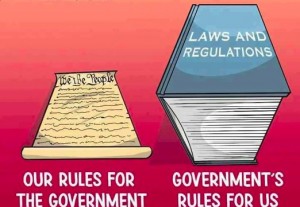
Cutting bureaucratic red tape can help foster a culture of entrepreneurship and dynamism. But putting in place an effective regulatory and enforcement infrastructure can be equally important, especially in areas where consumers have difficulty assessing the value of products and the risks they can pose.

In all countries – but especially in developing economies – a robust regulatory system is essential to building trust in the marketplace. Consumers need to know that the food they eat, the cars they drive, and the medicines they take are safe. Confidence in local products boosts domestic consumption and makes exports more attractive in foreign markets.

By contrast, a country riddled with regulatory shortcomings will find its arteries of commerce clogged and foreign investors spooked by unpredictable quality and unfair competition from unscrupulous producers. In developing countries, “poor quality regulation and implementation are formidable barriers to entrepreneurship and investment,” according to a World Bank report. “Regulatory failures expose people and the environment to horrific risks.”

As developing countries upgrade their regulatory systems, they should focus on closing legal gaps that put consumers at risk and undermine market credibility. In China, for example, the manufacturers of pharmaceutical ingredients can dodge drug regulation by claiming that their products will be used for non-medical purposes. Even as reputable firms ensure the quality of all their inputs, this loophole can allow unsafe products to enter the market, as occurred in 2008, when at least 81 Americans died after receiving doses of the blood thinner heparin that contained adulterated Chinese material.

By the same token, regulations should be based on international standards, where they exist. For example, American, European, Japanese, and other drug regulators have developed guidelines, through the International Conference on Harmonization, that take advantage of their collective expertise. Countries such as South Korea and Singapore are drawing on these guidelines to flesh out their own regulatory systems. As a result, their citizens will enjoy quick access to new medicines, and their researchers will find it easier to participate in global clinical research, a boon to domestic industries.

Because a regulatory institution can only be as effective as the people who work for it, another area of focus for developing countries should be training skilled staff. In China, fewer than 200 people work at the Center for Drug Evaluation, the agency that reviews applications for new drugs. By contrast, the United States Food and Drug Administration employs 4,000 reviewers, and the European Medicines Agency has 3,000. Predictably, China’s approval process for new drugs is one of the world’s slowest – eight years on average. As a result, patients are denied access to the medicines they need.

Building intellectual capital and institutional competence can take years, but it can be done. A decade ago, Japan’s drug-approval process was lethargic relative to that of other developed economies. The country made the safe acceleration of the approval process a high priority, and tremendous progress has followed. The median time taken to approve new drugs fell from 833 days in 2006 to 306 days in 2012, according to the London-based Center for Innovation in Regulatory Science.

For regulation to be truly effective, it must be backed by robust enforcement – with sanctions for noncompliance. That calls for a legal system that can adjudicate disputes and ensure fair, equitable, and timely treatment. For India, which has only 1.2 judges per 100,000 people (compared to 10.8 in the US), this will be a difficult challenge. According to the Supreme Court of India, in March 2012 the country had 31.2 million cases pending, more than 80% of them in lower courts. Such extraordinary backlogs have persisted – and can undermine the rule of law.

The world’s richer countries created their regulatory infrastructure over generations, during a time when there was little direct global competition. Emerging markets need to create theirs in a greatly compressed timeframe.

This will not be easy anywhere. It will require significant resources, and the process risks angering domestic companies that have become accustomed to a lack of regulatory oversight. But, if implemented correctly, sound regulation can strengthen countries’ growth capacity, while protecting citizens and improving their long-term living standards.

Reulations?