China Recovery Beats Expectations

China had suffered a worrisome slowdown in the first quarter with many macro indicators weaker than market consensus forecasts, posing a significant threat to the government’s commitment to achieving “around 7.5 percent” growth target in 2014.
In response, China introduced a series of growth-supportive measures. The Chinese leadership has been intensifying the anti-corruption campaign this year indicating more strongly than ever, they desire a stable economic and financial backdrop.

Latest macro indicators suggest that these measures have been instrumental in helping China’s economy recover more quickly than expected.  Many experts believe the cumulative impact of monetary easing efforts, through targeted liquidity provision, and growth-supportive measures will continue to help bolster the Chinese economy for the rest of this year.

Chinese equities made notable progress in July, with the benchmark Shanghai Composite Index advancing 7.48 percent last month. It marked the best month for China’s equity markets since December 2012.  HSBC and Bank of America Merrill Lynch upgraded their forecasts for China’s year-on-year gross domestic product growth in 2014. HSBC raised its forecast to 7.5 percent from 7.4 percent, while the latter lifted its prediction to 7.4 percent from 7.2 percent.

Confidence is being restored, but the world’s second largest economy is still faced with significant pressure and risks.  Among them, the property sector drew the most attention. In the second quarter, new sales and property investment in China slid, with the former contracting further and the latter’s growth sinking to a 20-month low.
Another concern is local governments’ rising debts and possibly inadequate fiscal capabilities as the central government asked them to support growth-supportive measures.
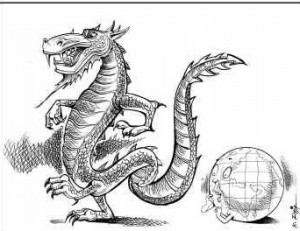

Chinese Growth

Anti Corruption Movement in Ghana

Ms Mary Addah, a Program Manager of Ghana Integrity Initiative (GII), a local Chapter of Transparency International, has urged Ghanaians to collectively stand up against corruption by going to anti-corruption institutions to report cases.  Speaking at a public symposium organized by Citizens’ Movement against Corruption (CMaC) in Accra, she mentioned the consequences of corruption to include lack of development, poverty, widening of the gap between the poor and rich.

According to her, in instances where citizens have been up and doing, there had been accountability and transparency on the part of leaders.  She expressed regrets over the low number of corruption cases lodged since the promulgation of the Whistle Blowers Act in 2006.  People often decline to report corrupt cases because they are of the view that less or no actions would be taken or they would be victimized.

Ms Addah was not happy with Ghana’s rating on the Corruption Index, pointing out that, whiles some countries were scoring 9.6  out of 10; Ghana was only scoring four.  Incentives for corruption are high because the society entertains the acts of corruption hence allow people to act with impunity.

Ms Addah called for more education on corruption and transparency on the part of leadership from homes to the presidency.

Mr. Edem Senanu, Co–Chairman of CMaC, noted that, corruption had been termed as the abuse of entrusted power for personal gains.  The CMaC is a movement rallying support and unifying all efforts of the citizenry to fight corruption. It also seeks to serve as an alliance between civil society organizations and the private sector to address corruption and its negative impact on national development.

Corruption Lesson


Bringing Back Glass Steagall in the US

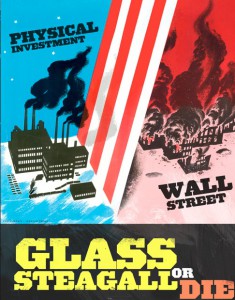
For over half a century, the Depression-era law known as Glass-Steagall kept traditional banks separate from the high-risk world of investment banks and hedge funds. Uncle Sam agreed to insure our deposits. And the banks, in return, agreed not to use these deposits for gambling in the Wall Street casino. That all changed with the industry-backed deregulation of the 1980s and ‘90s. Once again, banks gained the ability to play risky games with government-backed funds, setting the stage for the financial and economic meltdown of 2008.

After Senators Elizabeth Warren, John McCain, Maria Cantwell, and Angus King introduced their bill to bring back Glass-Steagall, AFR and our allies wanted to show the strength of the support for making the biggest banks simpler and smaller and once again ending the public subsidy to Wall Street speculation.

Return to Glass Steagall


Argentina’s Debt Crisis

Kenneth Rogoff writes: Argentina’s latest default poses unsettling questions for policymakers. True, the country’s periodic debt crises are often the result of self-destructive macroeconomic policies. But, this time, the default has been triggered by a significant shift in the international sovereign-debt regime.

The shift favors hardline creditors in bond issuances governed by US law. With emerging-market growth slowing, and external debt rising, new legal interpretations that make debt future write-downs and reschedulings more difficult do not augur well for global financial stability.

Argentina’s Debt Crisis Argentina's Debt Crisis

Are We In a Circular Economy?


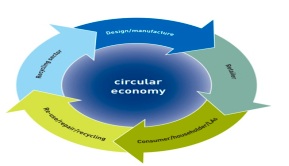
Teresa Domenech writes:  A circular economy is one that exchanges the typical cycle of make, use and dispose in favour of as much re-use and recycling as possible. The longer materials and resources are in use, the more value is extracted from them. This could contribute toward reducing Europe’s dependence on critical materials such as cobalt, fluorspar or gallium, but also reduce overall demand by recovering the resources, nutrients or energy contained in products at the end of their useful life.

Extending the life of products and materials prevents the over-generation of waste and recovers the full value of products. This would create new business opportunities and revenue streams, while minimising the environmental impact of mining, resource extraction, refining and manufacture.  The Circular Economy

Circular Economic Cycle


Multinational Companies Bribing Chinese Officials

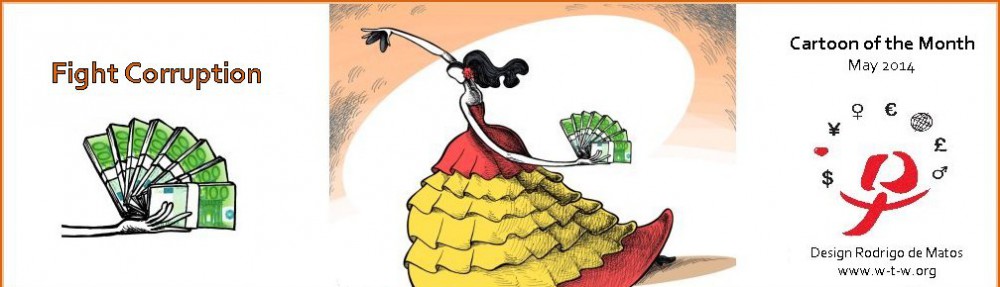
Zhang Yan writes:  Prosecuting departments have been handling an increasing number of cases involving bribery offered by multinational companies to government officials or State-owned enterprises, according to the Supreme People’s Procuratorate.  “The worst-hit areas in terms of corruption are pharmaceuticals, the electric power sector and software,” Song Hansong, director of the procuratorate’s corruption prevention department, told China Daily.

The number of bribery cases being prosecuted has risen markedly across the country, Song said, but he declined to give further details.  Because State-owned companies often need to purchase equipment and components from foreign firms, some multinational enterprises saw this as an opportunity to offer huge bribes to senior managers in State-owned companies or government officials to promote their products, Song said.

Zhao Wu’an, also a senior member of the corruption prevention department, highlighted some common methods of bribery.  “Rather than directly offering cash, they usually hire agents in China to offer the bribe by other means, including supporting overseas study for their children, arranging expensive foreign holidays and, of course, depositing money in a foreign bank account.”

In some cases, he said, corrupt officials in State-owned enterprises sent their children or spouses overseas to study or invest in businesses as a disguise to get passports and visas to launder money ahead of their own departure, he said.
Last year, Chinese police accused GlaxoSmithKline China, a British pharmaceutical giant, of offering huge bribes to officials and doctors to boost their product sales.
The company also faced accusations that it transferred up to 3 billion yuan ($489 million) to 700 middlemen over six years to facilitate the corruption.

Four senior Chinese executives at the company were detained, and Abbas Hussain, president of Europe, emerging markets and the Asia-Pacific for GlaxoSmithKline in Beijing, made a public apology and said the company will fully cooperate with police in the investigation.  Song said prosecuting departments face a number of practical difficulties when investigating corruption since getting their hands on evidence can be difficult as there is no paper trail.

Companies will also take more steps themselves to combat the scourge, he said.
The most effective measure, he said, is to “tighten supervision of ‘naked officials’ in State-owned companies”.  This term refers to officials who have sent their children and spouses overseas to pave the way for their own departure. Greater supervision over State-owned companies, especially those involved in high-cost projects, is required.

Foreign Bribes in China

Walgreens the Latest US Company to Relocate to Switzerland

Walgreens plans to merge with Swiss-based pharmacy chain Alliance Boots. Walgreens will then claim that it’s now a Swiss company, just to be able to pay Switzerland’s lower tax rate.

Walgreens is planning to create a massive new corporate tax loophole. They don’t want to pay their fair share of taxes.  This reflects the massive problems with the US corporate tax structure.  In many ways it is unfair to corporations and we are driving companies away from responsibilities they incur in the US because they use the US roads and bridges, a workforce educated in the US and our legal system.

Their stores are staying put. Walgreens will still depend on US citizens to shop there and make the company profitable.  Thanks to American shoppers Walgreens made $72 billion in profit in 2013. Nearly a quarter of those sales were from services like Medicare and Medicaid that are paid for by our tax dollars.

Walgreens wants all the benefits of being an American company. It should be asked to pay its fair share of taxes here.  Our representatives have not come up with an answer to this dilemma.

Walgreens Around every Corner

Europe’s Growth Strategy

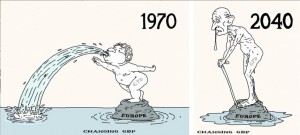
Jean Pisani-Ferry writes:  Packaging existing loan portfolios and offloading them to non-bank investors, as many have proposed, should be encouraged. Beyond short-term fixes, the main priority must be to encourage a resumption of savings flows across Europe, but this time in the form of equity, not bank deposits and loans. For this, Europe needs an adequate regulatory and tax framework. Official institutions could also be involved in a suitable way. Oddly, the European Investment Bank, the EU’s financial arm, is authorized to provide only loans and guarantees, not equity investment. Substitutes should be found.  Europe’s Growth Strategy

There are, finally, a few fields where national governments could act directly. Infrastructure is a case in point, provided that the current interest in investment projects is not used as an excuse to revive Europe’s love for white elephants.

Will it be enough? It is hard to know.

European Growth?

Encouraging Women’s Voices

The Cleveland Plain Dealer in the US has 16 columnists one of whom is female.  Why should we hear from more women?  The Op Ed Project suggests some reasonsL

“…if I were in the finance world, I might say that we have a portfolio called Public Knowledge, and we are surveying the landscape, looking for undiscovered assets for that portfolio  –   all the brains out there that we aren’t hearing from.   Women’s ideas are one of those undiscovered, or undercapitalized assets.   But there are other voices – under-represented or unheard voices and brains of all kinds – that we could and should invest in as well.

We – our leaders and the public – are not getting the information and ideas we need to make the best decisions.  Our world conversation is currently an echo chamber that reproduces the same narrow range of  (85% male) voices over and over. Even worse among academics: a May 2008 Rutgers University study found that 97% of op-eds by scholars in the Wall Street Journal are written by men. What is the cost to society when so many of our best minds and best ideas are left out?  What could we accomplish if together we invested in our missing brain power?

Speak up.  Write for us.  We welcome suggestions and new ideas.

Women Can Change the Light

US Women Lag Behind European Women in Tech Industry

SIlicon Valley Bank’s report indicates US problems. Innovation Economy Outlook survey is out, and this year, SVB decided to focus on one topic in particular, in addition to conducting its general survey. “We asked,” reads the group’s report, “1,200 tech executives in innovation hubs around the world about the representation of women in leadership positions at their companies.”

SVB’s findings are in accord with most estimates: Less than 50% of technology companies have women in the C-suite or serving on the board of directors.

Only one region in the US broke 50%, the southeast. The national percentage of tech companies with women in leadership roles is 45%.  Europe is at 50%, Asia is at 56%, and “other innovation centers” reached 58%.

These percentages may well be splitting hairs, though. Companies were only asked if they had any women in the C-suite or serving on the board, and so whether a company had only one woman who served on the board, or was a start-up had 90% female employees, the two scenarios (and anything in between) counted the same way. If 50% of companies in Europe have women in power, it doesn’t necessarily mean that those companies are more empowering or more diversity friendly than companies in the US.

What European companies do have going for them, though, said SVB Chief Information Officer Beth Devin, is generally greater acceptance of parents needing flexible schedules in order to meet family responsibilities. Men and women are both granted this understanding, and adopting a similar attitude here could affect US companies where women are hired straight out of college into entry-level positions, but then cannot rise within the company past a certain point if they choose to become mothers and primary caregivers for their children.

Putting aside our technological behemoths, the US has problematic industries. As SVB’s survey demonstrates, within the greater context of technology companies, not all specializations hire women equally. Healthcare, it should come as no surprise, lead the pack with 56% of related companies having at least one woman in an executive or board-level position. Of course, healthcare has had strong female representation for as long as people have had midwives. Following healthcare’s statistic were software-related companies at 44%, hardware at 36%, and cleantech at 35%.

A breakdown also occurs when companies are parsed by size. “Larger companies are more likely to have women at the helm,” reads the survey, which goes on to show that regardless of whether the perspective is global, or focused on the US, the UK, or other innovation centers generally, when start-ups are in the pre-revenue stage, they tend to put fewer women into executive positions. Larger companies with revenues promote more women, but globally, the percentage that do so is still only 49%, and in the US, it’s 44%.

Breaking down these statistics further, it seems that most companies are basically all or nothing when it comes to promoting women. Though 26% of survey respondents reported having women on the board of directors, and 37% have women in the C-suite, the number of companies with neither is made particularly clear when the total percentage of companies with one or the other falls so short at 46%. This means that almost 20 percentage points are accounted for by overlap – companies that have women in both kinds of executive positions – and 54% don’t have women in either kind of executive position. Over 70% of respondents are likely on the more extreme ends of the spectrum.

All Male Conference in SIlicon Valley