About one percent of Chinese households own one-third of the nation’s wealth, raising concerns about income inequality in the world’s most populous country, according to a study by Peking University.
Chinese households on average had a net worth of 439,000 yuan (about $71,000) in 2012, up 17 percent from the 2010 level, the university’s Institute of Social Science Survey said Friday in its latest report on China’s livelihood development.
However, income inequality rose rapidly during the period, the report said, as the top one percent of Chinese households held more than one-third of the nation’s wealth, while 25 percent of households at the bottom owned only 10 percent of the country’s property value.
The researchers based their main analysis on 2012 data from the China Family Panel Studies, a large-scale survey project conducted by the institute.
The report showed about 74.7 percent of Chinese household wealth came from owning real estate.
The Latest on High Speed Trading
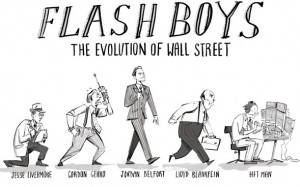
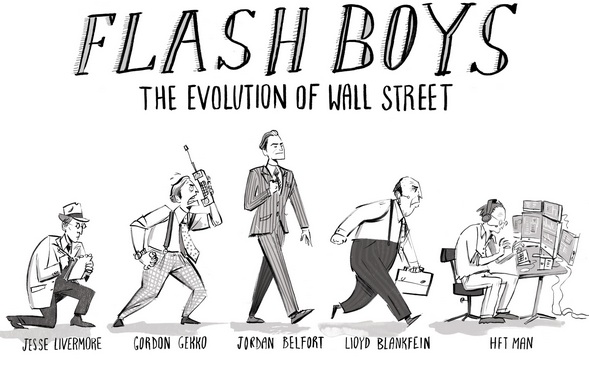
Matt Levine comments: Coincidence or not, ever since “Flash Boys” came out four months ago, alleging that U.S. equity markets are rigged by high-frequency traders and crooked dark-pool operators, there’s been a whole lot of regulatory attention paid to high-frequency traders and crooked dark-pool operators in U.S. equity markets.1 New York Attorney General Eric Schneiderman has been on quite a tear. The Securities and Exchange Commission has upped its game, fining Liquidnet for using dark-pool customer data to pitch issuer business. Even Finra has gotten involved.
The SEC settled for 5 million dollars with LavaFlow Inc., a big stock trading venue owned by Citigroup. LavaFlow is not a dark pool; it’s an electronic communications network (ECN) that displays orders. (Basically: It’s a stock exchange within Citigroup.) But it allows subscribers to submit various sorts of non-displayed orders,2which are, you know, not supposed to be displayed. And the problem was with those non-displayed orders.
LavaFlow had an affiliate called Lava Trading,3 whose main business was running a smart order router called ColorBook. An excerpt from the LavaFlow order::
Lava Trading’s flagship product was ColorBook, which was software that provided smart order routing services to over 100 registered broker-dealers that principally used ColorBook to route their customers’ orders to execution venues. … An “order router” is an application that generally allows an end user to submit an order to an execution venue. A “smart order router” applies preprogrammed analytics that carry out an execution strategy for order flow provided to the smart order router.
The point here is that, if you just want to buy some stock, that’s a weirdly hard thing to do. You can’t just go to the New York Stock Exchange and say “buy 100 shares of IBM,” because IBM shares are traded on a bunch of different exchanges and ECNs and dark pools, and you want to buy them at the lowest price offered on any of those venues. Or maybe you don’t — maybe you prefer convenience to getting the lowest price.
A human trader at a big bank, Brad Katsuyama, had trouble buying shares because he was a human, and the price kept moving. So he built a smart order router (and named it “Thor”). Smart order routers are (1) computers, so they’re fast, and (2) smart, so they break up your order and send it to the places where it’s most likely to execute quickly at the best possible price.5 Some brokers have their own order routers; others will rent someone else’s, because building one is hard. ColorBook is an order router that Citi uses, and that other brokers can rent.
One thing that made ColorBook smart was that it remembered where it sent orders. So not only could it see all the displayed orders on all the displayed exchanges and ECNs, but it also could see all theundisplayed orders — dark pool orders, or hidden orders sent to exchanges or ECNs — that it had sent there. So if you came to ColorBook asking to buy 100 shares of IBM, and the best offer for IBM displayed anywhere was $195, but ColorBook remembered sending an undisplayed order to LavaFlow to sell at $194.95, then ColorBook would route your buy order to LavaFlow to get the better price. As the SEC puts it, “ColorBook considered its historical knowledge of non-displayed resting orders to make future routing decisions.”6
If you used ColorBook, that was part of the deal: It would remember your secret orders and use them to route its future orders, though it wouldn’t tell anyone about them.
But as it turns out, if you just used the LavaFlow ECN without using ColorBook — as a “direct subscriber” — then ColorBook remembered and made use of your orders anyway:
From March 2008 until March 2011, LavaFlow allowed ColorBook to access and use its knowledge of the LavaFlow ECN direct subscriber non-displayed order flow when making smart order routing decisions for those smart order routing customers who also were subscribers of the LavaFlow ECN.
What ColorBook did with the hidden orders is route its customers to those hidden orders. What it didn’t do was tell them about the hidden orders.8 So the ColorBook customers couldn’t use the hidden orders to make pricing decisions, or to decide whether or not to trade, or to “front-run” the hidden orders. All they could do was trade with the hidden orders: Once they submitted an order to buy X shares at Y price, ColorBook would send it toward the hidden orders. That’s exactly what you want when you submit a hidden order! That’s not bad! If you’re a LavaFlow direct subscriber, you might be annoyed that ColorBook used your data without telling you, but I don’t think you were harmed by it. You might even have been helped: Your orders were more likely to execute, and more quickly.9
The victims were the LavaFlow direct subscribers, who did not use ColorBook, and who left hidden orders on LavaFlow. Who subscribes directly to Citi’s ECN, without using Citi’s order router? I think the answer is basically:
- other big broker-dealers (and their routers), who feel obligated to connect everywhere, and who do their own routing, and
- high-frequency traders, who want to trade everywhere, and who also do their own routing.
Other banks and brokers probably subscribe to LavaFlow, but it seems unlikely that they’d leave a lot of hidden orders there. (Why leave orders with your competitor?10 ) The LavaFlow direct subscribers who were actually leaving hidden orders there were … probably mostly high-frequency traders?
So this case looks a lot like: Citi took information from high-frequency traders and used it to improve the outcomes of regular customers.
Britain’s New Thatcher?
It was billed as “the march of the women” but David Cameron decided well before this month’s ministerial reshuffle that one woman in his cabinet was going nowhere: Theresa May.
After two remarkable months in which the home secretary has added an unpredictable ruthlessness to her political armoury, the prime minister and his allies are both respectful and wary of May, the most powerful Conservative woman since Margaret Thatcher. “One of the central principles of the reshuffle was that Theresa must not be promoted,” says one official close to Cameron.
Theresa May this month became Britain’s longest-serving home secretary in more than 50 years, establishing a reputation for cool competence that has won her admirers across the party and made her the bookmakers’ favourite to succeed Cameron as Tory leader. Theresa May
Can new BRICs bank rival the IMF
Brazil, Russia, India, China, and South Africa have founded a $100 billion ‘New Development Bank’ that will lend to members and other developing countries, a potential alternative to the Washington-based World Bank.
China and four other emerging market nations are setting up their own development bank and currency reserve to challenge the Western-dominated international financial system.
Frustrated by the failure of the World Bank and the International Monetary Fund to give them a bigger say, the five BRICS nations launched a $50 billion bank to fund infrastructure projects and a $100 billion money pool to help members cope with liquidity crises. The bank will be headquartered in Shanghai, Brazil, Russia, India, China and South Africa, who count for a quarter of the global economic output.
The New Development Bank, due to start making loans in 2016, shows developing countries “flexing their muscles” and providing “healthy competition” to the World Bank and IMF, widely seen as insensitive to poorer countries’ priorities, says Stephany Griffith-Jones, an international finance expert at Columbia University in New York.
In a rebuff to China’s efforts over the past two years negotiations to win a dominant position for China in the new bank, BRICS leaders announced Tuesday at their summit in Fortaleza, Brazil, that all five countries would contribute equally to capitalizing the bank.
“This is not a hegemony,” Brazilian president Dilma Rousseff told reporters, explaining that an Indian will be the first to occupy the bank’s rotating presidency. It will be at least 15 years before China holds the top post.
China did persuade Brazil and India to locate the bank’s headquarters in Shanghai. “Shanghai is a financial center, an international city, and China has a lot of experience in building infrastructure, which is what the new bank is mainly for,” says Zhu Jiejin, who teaches at the Center for BRICS Studies at Fudan University in Shanghai.
Beijing will have more clout in the currency reserve, to which it will contribute $41 billion of the $100 billion total. South Africa will put in five billion dollars and the other three countries $18 billion each. The fund will cushion the sort of balance of payments crises that developing countries might face in the event of rising US interest rates that would likely trigger capital outflows from emerging markets. China isn’t likely to get caught short: It has nearly $4 trillion in foreign currency reserves.
Developing countries complain that IMF emergency loans often come with harsh austerity measures that are politically risky and not always appropriate. The New Development Bank is expected to be more understanding of its clients’ concerns.
The BRICS leaders said they were “disappointed and seriously concerned” that the IMF had not implemented governance reforms, agreed in 2010, to better reflect the increasing economic weight of emerging market countries. The US Congress has refused to ratify those reforms.
The new bank may eventually be able to lend $34 billion a year by 2036, provided that it is adequately capitalized. Though that would come nowhere near bridging the one trillion dollar annual shortfall in infrastructure investment in developing countries that the World Bank estimates, “it would be a start,” says Zhu. “At any rate one thing is certain,” he adds. “We now have more choice for infrastructure financing, not just the World Bank.”

Whither the EU?
Michael J. Boskin discusses the future of the EU. Whither the EU
Many Europeans have come to believe that they have weathered the economic and financial storm. In the last two years, deficits and debt have stabilized. Yields on the sovereign debt of the eurozone periphery’s weak economies have fallen sharply. Portugal and Ireland have exited their bailout programs. Talk of Greece leaving the euro has subsided.
All of that is true, but there is a big catch: economic growth in the European Union remains anemic. GDP in Holland and Italy shrank in the last quarter, and France’s barely budged. Forecasters are revising down their estimates for 2014 eurozone growth to just 1% year on year. Unemployment remains at a staggering 11.6% in the eurozone as a whole, compared to 10% in the United States at the worst of America’s Great Recession. It is above 25% in Greece and Spain – and even higher among the young. Europe’s economy remains shackled by three problems – sovereign debt, the euro, and wobbly banks.
Can India Be as Successful as China?
Lee Jong-Wha writes in Project Syndicate: In recent years, China and India have both emerged as global economic superpowers, with China leading the way. But, with Chinese growth slowing and the need for structural change becoming increasingly acute, will the economic-reform efforts of India’s new prime minister, Narendra Modi, enable the country to catch up?
Since the 1980s, China has experienced unprecedented economic growth, fueled by abundant low-cost labor, high saving and investment rates, substantial market reforms, outward-oriented policies, and prudent macroeconomic management. Its leaders now hope to achieve high-income status by developing more technologically sophisticated industries.
India’s economic performance has been less remarkable. Economic growth began to accelerate dramatically in the early 1990s, owing to trade liberalization and other economic reforms. Then reforms stalled, the fiscal and current-account deficits soared, and annual GDP growth fell to 4-5%. As a result, China has pulled ahead, with per capita income last year standing at $11,850 – more than double India’s $5,350. The question now is whether Modi’s push for faster growth can narrow the income gap in the coming decades.
The most important factor working in India’s favor is its “demographic dividend.” In China, population aging and low fertility rates are already causing the prime working-age population, people aged 15-59, to decline. From 2015-2040, this group is expected to shrink by more than 115 million. Meanwhile, India’s prime working-age population will increase by 190 million. But favorable demographics alone will not bring about the kind of growth that has made China the world’s second-largest economy. India’s leaders must develop a comprehensive plan to eliminate barriers to economic competitiveness, expand employment opportunities in manufacturing, and improve workers’ education and skills.
As it stands, India ranks 60th in the world for economic competitiveness – much lower than China, which, at 29th, is closing in on high-income countries like South Korea (25th) and France (23rd). The reasons for this are not difficult to discern: India performs poorly on the fundamental drivers of long-term economic prosperity. Indeed, despite steady improvements, public health and education levels remain low (102nd worldwide). Moreover, the lack of adequate transport, communication, and energy infrastructure (85th) is undermining India’s productivity growth. And India lags behind China in the efficiency of its product and labor markets (ranking 85th and 99th, respectively). Only by addressing these shortcomings can India attract sufficient investment and boost economic growth.
At the same time, India should expand labor-intensive manufacturing, thereby creating employment opportunities for its growing pool of workers. Given that manufacturing contributes only 15% of India’s total output, compared to 31% in China, there is considerable room for growth.
In a sense, India has the advantage of being able to learn from China. China transformed its agrarian economy by building a strong, labor-intensive industrial base, shifting workers from agriculture to manufacturing and construction, and improving productivity across all sectors. Today, the agricultural sector accounts for only one-third of total employment in China, compared to one-half in India.
India’s structural transformation and sustainable growth will hinge on its efforts to build a flexible labor market, centered on the easing of outdated and complicated employment laws. The legal protections of workers in India’s formal sector exceed those of most developed countries, as well as China, with mandated requirements rising as the number of employees increases. As Jagdish Bhagwati and Arvind Panagariya have pointed out,excessive labor-market regulations deter Indian entrepreneurs from employing unskilled workers and developing labor-intensive manufacturing, implying that the Indian government should redouble its reform efforts in this area. Equally important, Indian workers – especially young people – need opportunities to upgrade their skills continuously. The McKinsey Global Institute estimates that, of the potential global oversupply of 90 million low-skilled workers in 2020, 27 million will be in India. Meanwhile, the country will face a shortage of 13 million medium-skilled workers.
Despite India’s educational expansion, especially at the secondary and tertiary levels, its system of higher education, including technical and vocational education and training, remains inadequate. Though India’s public vocational education and training systems are well institutionalized, they lack the scale, curriculum, financing, and incentives needed to prepare young workers to meet the demands of rapid globalization and technological advancement.
The good news is that Modi seems committed to boosting India’s competitiveness by improving its business climate. For example, he has already announced measures to promote foreign direct investment in insurance, defense, and telecommunications, including higher infrastructure spending and new tax incentives for savings and investment. India’s government will also sustain its predecessors’ efforts to strengthen vocational education and skills training. What Modi’s plan lacks is a strong focus on expanding India’s labor-intensive industries. That, together with the planned reforms, would enable India to seize the opportunities that arise with favorable demographics and achieve Chinese-style growth.
Symphony Orchestras Hire Gender Blind
Kristin V. Brown writes: In 1970, the nation’s leading symphony orchestras faced a problem not unlike one that confounds Silicon Valley today. Women accounted for less than 5 percent of the musicians in the top five symphonies. Often, the only woman in an orchestra played the harp, an instrument considered feminine. Orchestras were boys clubs.
In the orchestral world, that gender divide stemmed from a deeply entrenched belief that female musicians were simply not as good as their male counterparts. Zubin Mehta said in 1970 that women should notbe in an orchestra because they simply become men. By the mid-1990s, the number of women in the five leading orchestras had increased fivefold. By 2003, more than a third of players in the top 24 orchestras were women. Prominent women soloists emerged, as did female concertmasters.
The shift occurred as orchestras began conducting blind auditions. Throughout the ’70s and ’80s, applicants were concealed behind screens and drapes. When gender was hidden from judges, more women made the cut.
In Silicon Valley, women hold few technical positions at leading companies – just 17 percent at Google and 15 percent at Facebook, for example. In 2013, women held only a quarter of professional computing jobs nationally. And, like the nation’s symphonies, the tech industry’s lagging number of women is tied to a deeply rooted cultural bias that suggests women just aren’t good at science and math.
Perhaps the tech world could learn a thing or two from the nation’s leading orchestras, where blind auditions are now an industry standard. Much of what employers look for in computer engineers – technical chops, clean code, experience, creativity – could be determined without meeting candidates face-to-face or learning their names and genders.
Research makes clear that the impact of the underlying bias toward women in science, math and engineering fields is immense. Several studies have shown that the advent of double-blind scientific reviews, in which both the name of the reviewer and the study author are not known, has significantly increased the number of works by female scientists accepted for publication.
A study published last month in the National Academy of Sciences demonstrated that when looking to fill a mathematical job, both male and female managers were twice as likely to choose a man over a woman when given no information other than gender and physical appearance. When managers were also given information about the candidates’ performance on a math test, the bias against women persisted, though it decreased, even though both genders fared equally well on the test.
In the 1990s, researchers sought to determine whether blind auditions truly helped symphonies diversify. The large amount of data available and differing times at which symphonies changed their hiring practices afforded them the opportunity to ask such a question in the first place. They found that blind auditions were responsible for between one-fourth and one-half of the increase in the number of women in orchestras since 1970.
There are many issues facing women in technology, but a gender-blind initial interview could solve at least one of them – and perhaps its effects would trickle down, making technology companies friendlier places for women to work and encouraging more women to pursue the field.
Deep-seated cultural assumptions make them hard to fight.
Infrastructure Update One Pay Phone at a Time
Susan Crawford writes: The homely pay phones of New York City are ghostly, graffiti-scarred reminders of an earlier era. But they could play a role in the city’s digital environment if New York gets its priorities straight. The crucial step is for the city to treat these pay phones as it does its bridges or trees: like basic infrastructure, not just opportunities for short-term revenue.
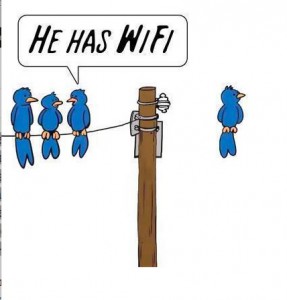
Last week, New York received bids from companies interested in replacing the nearly 10,000 payphones throughout the five boroughs with upgraded, attractive structures. The city is calling for free public Wi-Fi, among other amenities, to be provided by the winning bidder. The city already has free Wi-Fi hot spots in many of its parks, run by AT&T Inc. or Cablevision Systems Corp. The problem is that those hot spots don’t offer very good service: They are connected to low-capacity lines, making anything other than slowly downloading e-mail a frustrating experience.
The city has an opportunity to use its pay phones to change this picture. The pay-phone franchise deal should be part of a larger commitment by the city to connect every snazzy new pay-phone structure to reasonably priced open fiber lines regulated by the city. The successful bidder’s obligation to provide truly public (and free) Wi-Fi hot spots in exchange for the opportunity to advertise its brand would be a winning combination for citizens and visitors alike.
Only with fiber will the new structures be able to handle data-heavy uploads and downloads as well as low-bandwidth e-mail checking. Result: the ability for people standing near the new pay phones to be part of the 21st-century Internet. Cities around the globe have free Wi-Fi; it is a standard utility, like public toilets and a functioning public transport system. If we do this right, tourists and residents won’t need to subscribe to Comcast in order to watch or upload video — whether for entertainment or emergency purposes. (Another entry on the wish list: charging stations for handheld devices.)
New York will need to make a trade-off. Right now, the city is hoping this project will be a moneymaker right off the bat, and it is planning no investments or contributions of its own. That may not be feasible.
These new kiosks will be basic infrastructure for the city. They should be beacons of information for tourists and neighborhoods, stations of light and power for all of us (powered by solar energy, if possible, in preparation for the next Hurricane Sandy), and homes of ample, free connectivity. That will take the city’s collaboration. The city’s priority should be its long-term health and sustainability rather than its short-term profits.
Biggest Unions in South Africa Get Pay Hike
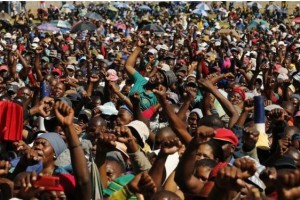
The main employer body in South Africa’s metals and engineering federation has accepted a government proposal to raise wages by as much as 10 percent, it said on Tuesday, raising hopes of an end to a strike by more than 200,000 workers.
The Steel and Engineering Industries Federation of South Africa said unions led by the National Union of Metalworkers of South Africa are reported to have accepted the offer.
The proposal of wage raises put forward by Labor Minister Mildred Oliphant under which SEIFSA agreed to increase wages by between 7 to 10 percent in next three years. National Union of Metalworkers of South Africa (NUMSA) declared strike on July 2 where more than 200,000 worker affiliated to NUMSA put their tools down to convince employers to fulfill their demand of 12-15 percent wage increases.
The strike is hitting economy of SA as many auto mobiles companies have shut down their vehicle assembly lines due to the unavailability of car parts. Construction work in power supply companies was also effected by the ongoing walkout of labors.
South Africa is trying to avoid deeper recession which started five months ago when the platinum workers struck. The GDP is expected to fall nearly 5 percent in this fiscal year as the result of strikes.
When unions produce raw materials required by manufacturing in the same country they have clout.
Bank Accounts for People Who Don’t Have Them
Senator Elizabeth Warren has suggested giving the post office a banking function in the US. Already they supply money orders. In England, basic bank accounts are offered. In the UK a million people can’t get a regular bank account. But there is a solution called a ‘basic bank account’. This product is designed for those with poor credit scores.
As the name suggests, a basic bank account offers a place to store your money and pay your money from, without overdraft facilities or any in-credit interest. Most basic bank accounts will give you a debit card, so you can make payments in shops and online, and all allow you to set up direct debits – which is great, as this can make bills cheaper than paying by cash or cheque.
Overdraft charges occur when you attempt to make a payment and don’t have enough money in your account. This is called a transaction fee even though no transaction has taken place.
UK banks don’t publicize these accounts because there is a use charge built in, and most other accounts don’t have this, so they can be called ‘free.’ Also, banks can’t’ make money on these accounts unless you try to use more money than you have.
What Warren is calling for in the US, and Silicon Valley may consider as they look into the banking business, is a way for lower end customers to bank.