Inverting or Redomicilliating American Companies

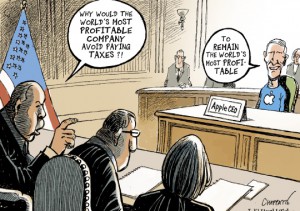
Laura Tyson writes:  A growing number of American companies are seeking to move their legal headquarters abroad by acquiring or merging with foreign companies. In the latest case, Medtronics plans to acquire Irish-based Covidien, a much smaller company spun off by US-based Tyco, and move its legal headquarters to low-tax Ireland, culminating in the largest ever “inversion” or “redomiciliation” of a US company. Walgreens is reportedly considering moving its headquarters to the United Kingdom by acquiring the remaining public shares of Alliance Boots, the Swiss-based pharmacy giant.

Such deals reflect the deep flaws in the United States’ corporate tax system. The US has the highest statutory corporate tax rate among developed countries and is the only G-7 country clinging to an outmoded worldwide tax system under which the foreign profits earned by US-headquartered companies incur additional domestic taxes when they are repatriated.  By contrast, all other G-7 countries have adopted “territorial” systems that impose little or no domestic tax on the repatriated earnings of their global companies. This difference puts US-headquartered multinationals at a disadvantage relative to their foreign competitors in foreign locations. To offset this, US multinationals take advantage of a deferral option in US tax law.

Deferral allows them to postpone – potentially indefinitely – the payment of US corporate tax on their foreign earnings until they are repatriated. Not surprisingly, as their foreign earnings have grown as a share of total earnings, and as foreign corporate tax rates have plummeted, US companies’ stock of foreign earnings held abroad has soared, now topping $2 trillion.  The US system thus implies significant costs, as companies hold more cash abroad, borrow more to finance domestic cash requirements, and invest more in foreign locations. Deferred earnings are “locked out” of the US economy: the government receives no tax revenues from them, and they are not directly available for domestic use by US companies. This undermines their ability to compete with foreign companies in acquiring other US companies. It also makes investments by US shareholders in domestic companies less attractive relative to investments in foreign companies that can distribute their foreign profits in the US without an additional tax penalty.

Overall, deferral distorts corporate balance sheets, imposing efficiency costs on US companies that are estimated to be 5-7% of deferred earnings. As the stock of deferred earnings grows, these costs accumulate, and moving legal headquarters abroad through cross-border acquisitions becomes a logical step for US companies with a large stock of deferred earnings abroad. Companies like Medtronics can then use future foreign earnings in the US with little or no repatriation tax. Such companies have a strong incentive to redomicile abroad even to finance their US investments.

To be sure, strategic rather than tax considerations drive corporate mergers and acquisitions. The recent surge in cross-border M&As to a seven-year high is the result of ample cash, strong balance sheets, cheap financing, and buoyant stock markets. But tax considerations play a major role in corporate decisions regarding how acquisitions are financed and where a merged entity is located. Large balances of foreign earnings are available to many US firms to finance their foreign acquisitions, and the competitive disadvantages of the US corporate tax system militate against locating the merged entities in the US.  Though American officials rail against “inversions” as unpatriotic, they are an efficiency-enhancing response to the flaws in the corporate tax system. As the prospects for corporate tax reform deteriorate, cross-border mergers with redomicilation are becoming an attractive option for many of America’s most competitive global companies. And the pressure on other companies to follow suit intensifies as more inversion deals are done.

Under current law, US companies can move their legal headquarters abroad for tax purposes by buying a smaller foreign company as long as the acquired company’s shareholders end up owning at least 20% of the combined company. To discourage inversions via cross-border M&A, President Barack Obama’s administration and several Democratic members of Congress have proposed legislation that would increase that percentage to at least 50%.  Moreover, a merged foreign company would be treated as a US company for tax purposes (regardless of share ownership) if its management and control functions and a substantial share of its economic activity – sales, employment, or assets – are located in the US. If enacted, the legislation would apply these new conditions retroactively to inversions occurring from May 2014.  Such policies will not address the underlying causes of inversions, will add to the widely acknowledged distortions in the corporate tax regime, and are likely to have negative unintended consequences. To meet the tougher new ownership requirements, US companies might respond by breaking up their business units into smaller pieces – reducing their market value and the returns to their shareholders and workers. Likewise, to meet the tougher new management and control conditions, US companies might respond by shifting more of these functions, and the jobs and investment (especially in research and development) associated with them, to foreign locations.

The proposed anti-inversion measures would also make it more likely that US companies are the target, rather than the acquirer, in cross-border M&A deals. Corporate tax reform should make the US a more attractive place for business activity; threatening US corporations with tougher rules on cross-border M&A and retroactive tax increases will have the opposite effect.

The US should learn from the British example. In 2008, several large UK companies threatened to redomicile in Ireland because of its lower corporate tax rate. The British government responded by cutting its corporate tax rate from 28% to 20% by 2015; introducing a territorial tax system that exempts UK-based companies’ foreign earnings from domestic taxation; enacting a “patent box” that provides a 10% corporate rate on patent-related income; and adopting a new 10% non-incremental, refundable R&D tax credit. So far, these innovations appear to be attracting companies, investment, R&D, and jobs to the UK.

Bold and prompt US action to reform the corporate tax system is essential. Sadly, that is not likely in a deeply divided Congress in an election year.

Domiciling Abroad

Is the Boom Beginning to Hurt?

Robert Shiller writes:  In recent months, concern has intensified among the world’s financial experts and news media that overheated asset markets – real estate, equities, and long-term bonds – could lead to a major correction and another economic crisis. The general public seems unbothered: Google Trends shows some pickup in the search term “stock market bubble,” but it is not at its peak 2007 levels, and “housing bubble” searches are relatively infrequent.

But the experts’ concern is notable and healthy, because the belief that markets are always efficient can survive only when some people do not completely believe it and think that they can profit by timing the markets. At the same time, this heightened concern carries dangers, too, because we do not know whether it will lead to a public overreaction on the downside.

International agencies recently issued warnings about speculative excesses in asset markets, suggesting that we should be worried about a possible crisis. In a speech in June, International Monetary Fund Deputy Managing Director Min Zhu argued that housing markets in several countries, including in Europe, Asia, and the Americas, “show signs of overheating.” The same month, the Bank for International Settlements said in its Annual Report that such “signs are worrying.”
CommentsView/Create comment on this paragraphNewspapers are sounding alarms as well. On July 8, the New York Times led its front page with a somewhat hyperbolic headline: “From Stocks to Farmland, All’s Booming, or Bubbling: Prices for Nearly All Assets around World Are High, Bringing Economic Risks.” The words “nearly all” are too strong, though the headline evinces the newfound concern.  It is not entirely clear why the alarms are sounding just now, after five years of general expansion in markets since they hit bottom in early 2009. Why aren’t people blithely expecting more years of expansion?  It seems that this thinking is heavily influenced by recent record highs in stock markets, even if these levels are practically meaningless, given inflation. Notably, just a month ago the Morgan Stanley Capital International All Country World Index broke the record that it reached on October 31, 2007.

The International Monetary Fund announced in June a new Global Housing Watch website that tracks global home prices and ratios. The site shows a global index for house prices that is rising, on a GDP-weighted basis, as fast as during the boom that preceded the 2008 crisis, though not yet reaching the 2006 record level.  There is also the US Federal Reserve’s announcement that, if the economy progresses as expected, the last bond purchase from the round of quantitative easing that it began in September 2012 will be in the month after the Federal Open Market Committee’s October 2014 meeting. That kind of news story seems also to affect observers’ thinking, though it is not really much in the way of news, given that everyone has known that the Fed would end the program before long.

The problem is that there is no certain way to explain how people will react to such a policy change, to any signs of price overheating or decline, or to other news stories that might be spun as somehow important. We simply do not have much well-documented history of big financial crises to examine, leaving econometricians vulnerable to serious error, despite studying time series that are typically no more than a few decades long.

Until the recent crisis, economists were talking up the “great moderation”: economic fluctuations were supposedly becoming milder, and many concluded that economic stabilization policy had reached new heights of effectiveness. As of 2005, just before the onset of the financial crisis, the Harvard econometricians James Stock (now a member of President Barack Obama’s Council of Economic Advisers) and Mark Watson concluded that the advanced economies had become both less volatile and less correlated with each other over the course of the preceding 40 years.  That conclusion would have to be significantly modified in light of the data recorded since the financial crisis. The economic slowdown in 2009, the worst year of the crisis, was nothing short of catastrophic. In fact, we have had only three salient global crises in the last century: 1929-33, 1980-82, and 2007-9. These events appear to be more than just larger versions of the more frequent small fluctuations that we often see, and that Stock and Watson analyzed. But, with only three observations, it is hard to understand these events.  All seemed to have something to do with speculative price movements that surprised most observers and were never really explained, even years after the fact. They also had something to do with government policymakers’ mistakes. For example, the 1980-82 crisis was triggered by an oil price spike caused by the Iran-Iraq war. But all of them were related to asset-price bubbles that burst, leading to financial collapse.

Those who warn of grave dangers if speculative price increases are allowed to continue unimpeded are right to do so, even if they cannot prove that there is any cause for concern. The warnings might help prevent the booms that we are now seeing from continuing much longer and becoming more dangerous.

Asset Boom?

Why Germany Dominates

Leonid Bershidsky writes in Bloomberg:  “Weltmeister Deutschland! Jaaaaaaaaaa!” reads the celebratory front page of Germany’s most popular daily newspaper, Bild. Germany won soccer’s World Cup and the victory is a symbol of the country’s resurgence.

Last time Germany won the World Cup was in 1990, when they also played Argentina for the title. That game was a slogging, dirty affair, the first World Cup final in which a player was sent off (two, actually). And as last night, Germany won 1:0.  The 1990 tournament was the last in which the German team played as West Germany — the Berlin Wall had fallen, but the country faced a long path toward reunification against opposition from some of its neighbors. To all practical purposes, the process only ended last year, when East-West migration within Germany evened out.

Chancellor Helmut Kohl’s Germany of the 1990’s was a country of hope and caution. The government’s main goal was to stitch the country back together and that meant assuaging lingering fears of a too-powerful Germany. The sutures have almost healed by now and Prenzlauer Berg, the Berlin district where Chancellor Angela Merkel once lived modestly as an East German academic, is now an affluent area with fancy boutiques and high rents.

Merkel’s Germany makes no excuses about the past or future: The apologies have been made. It is the most populous country in the European Union, with more than 80 million people, the biggest net contributor to the EU’s budget (to the tune of $19 billion in 2012, the last year for which data are available) and the second biggest contributor to NATO, providing 14.5 percent of alliance budget, compared to 21.7 percent for the U.S. Germany is also the world’s fourth biggest economy and, according to a recent report by management consultancy McKinsey, the most connected one, in terms of flows of trade, finance, people and data.

Germany has everything, from old-style family-run industrial businesses, such as Bayerische Motoren Werke AG, to an exciting start-up scene (SoundCloud is based in Berlin). Unlike some other European economies, it also has growth that is not a statistical accident, but is based on making things people around the world want to buy. No wonder it was able to finance the bailouts that followed the European debt crisis. And it hasn’t been shy about claiming the central role in the EU as its reward, all the while sighing about the added responsibility.

Berlin, not Brussels, is the true political capital of the bloc: U.S. President Barack Obama met with Merkel in Germany twice in his first year as president (and visited Berlin during his election campaign). He put off his first visit to the Belgian capital until this year. It is Merkel who has taken on the role of chief Western negotiator with Russia’s increasingly hostile president, Vladimir Putin, not just because each speaks the other’s language, but because of her implied seniority in Europe.

No top EU appointment happens without Merkel’s approval. She made it look as if she was bowing to political inevitability when she backed Jean-Claude Juncker’s nomination as head of the European Commission, but she could have blocked it had she wanted. And German influence in the EU’s institutions will only grow. Starting in November, the important job of supervising large European banks will be done from Frankfurt, where the European Central Bank is based, and although the Single Supervisory Mechanism is headed by Frenchwoman Daniele Nouy, her deputy, Sabine Lautenschlaeger, is German.

Germans are meticulous in most things they do, so they have a training program for bureaucrats who want to win EU posts. The German soccer team’s stars include players of Polish, Ghanaian, Turkish and Arab descent, but they all sang the national anthem spiritedly before the game. Last night on the streets of Berlin, people of many ethnicities launched fireworks, danced and clinked beer mugs in celebration of their soccer victory, but perhaps also of something bigger: a new, non-threatening pride and confidence that Germany has allowed itself to feel now that it is finally one strong country again. Literally translated, Weltmeister — world champion — means master of the world.  The Economist chimes in.  Lessons from the German Economy

Germany still manufactures good.  The US should take note.

Germany's Strength


Renewing the American Economy

Ideas from the Hoover Institution at Stanford University:

Fix the Tax Code, Encourage two parent families, restore the rule of law, restrain special interests,  states act independently of Washington, Make doing business easy for entrepeneurs, Review regulations, focus on education in the classroom, reward good teachers, Expand entrance opportunities for highly skilled workers, End crony capitalism, Move election days to weekends, Forecast retirement income realistically, Repair the public infratstructure,

None of these ideas are radical.  They come from both sides of the aisle.  What is the chance of their being implemented?

US Education


How Financial Advisors Approach Women Clients


M. P.Dunleavey writre:  Imagine that you work for a financial company. You’ve plowed through stacks of research showing that women — who are increasingly educated and affluent — could be a big source of revenue for you. Now what?  Do you paint the reception area a nice shade of coral? Put handbag hooks on the bathroom doors? Provide sensitivity training to your staff?

If you’re thinking that it can’t be that hard to bring female customers in the door, let me bring you up to speed: Women control trillions of dollars of wealth in the United States, yet as clients, they pose a challenge to Wall Street’s traditional way of doing business.

Every year at its national conference, for example, TD Ameritrade offers a seminar for advisers on working with women as clients, and it’s always jam-packed.  This session is attended mostly by men, and they’re struggling.  Some are thrown by women’s high question-asking quotient, she said; many male advisers wonder whether they should just stay out of the way and have women deal with women.

Research shows that women as clients don’t necessarily prefer to work with female advisers — any more than they want pink-themed websites.  Women don’t need different products or services.  Mutual funds and that work for men ought to be fine for women, too. But women need to be approached differently than men do.

Companies know this, yet there’s a frustrating lack of agreement about how to go about it. Companies like Merrill Lynch and Vanguard lean toward what I’ll call a more gender-agnostic approach, focusing more on a client’s individual situation. TD Ameritrade, Ameriprise, Barclays and Pax World Investments are among those that seem to be trying to embrace a financial style that is more overtly friendly to women, like companies that focus on women as leaders.

Vanguard learned through a two-year study, many women prefer advisers to focus on life goals, and not just on mutual funds and other investments.  Likewise at Merrill Lynch, there’s a conviction that gender “can be a distraction in financial planning,” said Michael Liersch, head of behavioral finance at Merrill Lynch Wealth Management. To that end, the company is training advisers to use a proprietary tool called the Investor Personality Assessment to give advisers a more objective way to evaluate each client’s goals..

A survey of 6,000 people in the United States, Britain China, India, Singapore and Hong Kong, suggests that women don’t necessarily lack moxie, skill or interest in money. But they’re often turned off by how money is handled in a mostly male world of finance.

Many women today prefer companies and advisers with gender smarts. That means being able to field questions on virtually all aspects of a woman’s life, understanding how time-constrained most women feel, and not taking a one-size-fits-all-women approach to planning.

So what approach is best for women — and how can Wall Street accelerate its efforts to adjust to their needs? Finance has a long and hidebound history, and it may well be necessary to take a traditional approach to get the ball rolling faster.

How about giving advisers a bonus when they bring in more women as clients?  If coral-colored reception areas do the trick, great. But for the sake of creating financial parity at long last, I’m inclined to think there’s nothing like a carrot to get people moving.

Women and Money


SBA in US Gets Small Businesses Paid on Time

Three years ago, entrepreneur Maurice Brewster made one of the best business decisions of his life: He signed his limousine company, Mosaic Transportation, up for IBM’s Supplier Connection – a collaboration between small businesses and the supply chains of Fortune 500 corporations

It was a wise decision because small firms that enter the supply chains of major corporations grow their revenue by an average of 250 percent and their workforce by an average of 150 percent.

In three years, Maurice has signed contracts with seven major corporations, grown Mosaic from 20 to 46 employees, and tripled his annual revenues. His company had lost half of its business during the Recession, but now it is reaping record profits. Maurice credits this remarkable turnaround to two things: he joined a corporate supply chain, and all seven of his new clients pay him up front with a corporate credit card.

Unfortunately, most Mosaic clients take far longer to pay; it took one company seven months to cut his check. Maurice says if every client paid him on time, he would expand tomorrow to New York and Los Angeles and create dozens of new jobs.

This is a common complaint from America’s small business owners. Timely payments and the cost of working capital can make or break a small business. And these ingredients are essential to job creation and economic growth.

Today, SBA Administrator Maria Contreras-Sweet joined President Obama at the White House to announce the launch of Suppllier Pay It’s a new project dedicated to giving America’s entrepreneurs access to affordable, consistent working capital. It’s about paying them on time and keeping their interest rates low, so they can invest in new equipment, new products and new people.

Twenty six companies have already signed up. They’ve pledged to shorten payment times or provide other creative financing solutions, so their small business suppliers have the confidence to hire more workers and expand their operations.

SBA will take the lead in recruiting additional corporations to join this endeavor.  We have a great case to make, because SupplierPay is a win-win for small businesses and their corporate partners. Supply chains are often shared across an entire industry, so there’s a positive spillover effect when capital costs are lowered. It reduces the price of goods and services. It allows investments in human capital that reduce preventable errors. It increases returns on cash and improves the overall stability of supply chains.   Whether you’re a limo company, an auto parts maker or an IT services company, getting paid faster and on more favorable terms is a surefire way to drive job growth and help put America on the road to a more prosperous future.

Late Payments


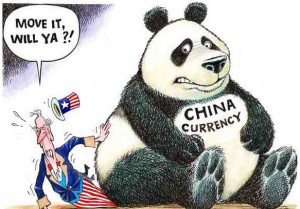
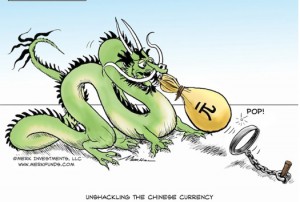
China Reforms Foreign Exchange Market

China will reduce its intervention in the foreign exchange market through a step-by-step process as it gradually pushes for foreign exchange reform, said central bank chief Zhou Xiaochuan.  “We’ll keep the yuan’s exchange rate at a reasonable and balanced level and let the market decide the rate,” Zhou said on the sidelines of the China-US Strategic and Economic Dialogue in Beijing on Thursday.

Zhou, who as governor of the People’s Bank of China is in charge of the nation’s monetary policy, said the central bank will still remain cautious and that it will intervene in the market if major fluctuations occur as major countries adjust their monetary policies.

US Treasury Secretary Jacob Lew said the US welcomes the market-oriented reform announced by China’s leaders in November. The commitment by Zhou on Thursday will further China’s implementation of its reform agenda, he added.
“China is making preparations to adopt greater transparency, including in foreign exchange, that will accelerate the move to a more market-based exchange rate. This commitment will assist China in its reforms. It also reflects the increasingly important role that China plays in the global economy,” Lew said.

But Chinese financial experts warned that the US may recruit other emerging markets to pressure Beijing to appreciate the yuan.  Li Jianjun, a financial analyst at the Bank of China’s International Finance Research Institute, said the Chinese government should understand that pressure for the yuan to appreciate may expand from a Sino-US bilateral problem to a multilateral one.

“Because of the US Federal Reserve’s tapering of its quantitative easing policy, emerging markets are coming under increasing pressure from capital outflows. But the emerging markets also have a trade deficit with China, just as the US does. So the US may unite with those countries to push for the yuan to further rise,” Li said.
The yuan has risen more than 30 percent against the US dollar since 2005 until it weakened in the first four months of this year. The yuan closed at 6.2035 to the dollar on Monday, down from 8.28 on July 21, 2005, the day that China announced a move to reform its exchange rate mechanism and revalued its currency.

Over the past three years, the proportion of the current account surplus against the GDP dropped to a reasonable level that is internationally recognized, the nation’s foreign-exchange regulator said.  The current account surplus fell from a record high of 10.1 percent of GDP in 2007 to 2 percent in 2013 and 0.3 percent in the first quarter of this year, said Du Peng, current account department chief of the State

Administration of Foreign Exchange, at a news conference in Beijing on June 30.
Zheng Chaoyu, a professor of economics at Renmin University of China, said, “The US government used to say the yuan is undervalued, but that accusation does not hold water anymore.  “Even if the yuan continues to appreciate against the dollar over the long run, an appreciation still has to be done step by step in a controllable manner that can be expected.”

China has been gradually promoting the marketization of exchange rates since 2005. This year, it accelerated the process.  On March 17, the People’s Bank of China widened the daily trading band for the yuan against the US dollar from 1 percent to 2 percent.  The adjustment is aimed at increasing the yuan’s flexibility and that two-way fluctuation in the yuan will be the new norm. Investors should pay more attention to the medium and long-term trend of the yuan.

Foreign Exchange

China Buying Assets

Beijing-based Hony Capital has bought PizzaExpress, the British restaurant chain, for about £900m in the latest example of China’s growing appetite for overseas investments.

The sale comes after PizzaExpress owner Cinven, the London-based buyout group, explored plans last year to sell Gondola Group, the parent company that owns the pizza chain along with other restaurant assets, including Zizzi.

Cinven has moved to dispose of individual chains within the group after reckoning it would be difficult to find a private buyer for the entire business. It sold Byron, the gourmet burger chain, in October for £100m. Cinven declined to comment.
A string of UK brands have been sold to buyers based in China. Outbound mergers and acquisitions in the food and beverage industries accounted for 17 per cent of total M&A in China in the year to June, almost on a par with the 20 per cent from the energy and power sector – traditionally the biggest deal generator, according to Thomson Reuters.

Chinese property and entertainment conglomerate Wanda paid more than £300m for almost 92 per cent of Dorset luxury yachtmaker Sunseeker International, and Weetabix was bought by Bright Food in a deal that valued the breakfast cereal at £1.2bn.  Hony Capital is a China-focused middle-market private equity firm backed by Legend Holdings. It has more than $6.8bn in assets under management across seven funds, according to its website.
The firm is also exploring a bid for United Biscuits, the maker of Jaffa Cakes, said people familiar with the situation.

The PizzaExpress bidding process also attracted Chinese rival Citic, said people familiar with the matter.  Cinven, which manages a €5.3bn buyout fund, took Gondola private in a €1.3bn deal in 2006.  Asia is a key part of our future growth strategy and Hony’s expertise in this region will be invaluable.

Gondola employs more than 15,000 people, serving 40m meals a year in more than 690 restaurants, according to Cinven’s website.  PizzaExpress has focused on international expansion in recent years. It will open its first Beijing outlet this summer. The group has restaurants in Shanghai and Hong Kong. The chain also expanded its Middle East business, with a new outlet in Saudi Arabia. The expansion means that PizzaExpress now operates in 14 countries.

Pizza Worldwide

Renminbi Clearing Banks

Barry Eichengreen writes:

European and Chinese officials have made two notable announcements in recent weeks. On June 18, China’s second largest financial institution, China Construction Bank, was designated as the official renminbi clearing bank for London. The next day, the Frankfurt branch of the Bank of China, the country’s largest commercial bank, received the same designation for the eurozone.
Both announcements were greeted with great acclaim. British Chancellor George Osborne hailed the creation of a London clearing bank as “hugely important” for the financial future of the City. Joachim Nagel of the German Bundesbank lauded the Bank of China announcement as a “milestone on the road toward creating a renminbi trading center in Frankfurt.”
We should expect these kinds of enthusiastic pronouncements from European officials, who are desperate for good news, whatever its source. But should the rest of us care? After all, banks, firms, and even individuals already can buy renminbi for their pounds and euros. A range of financial institutions, both locally and in Hong Kong, have long stood ready to provide this service.
The only difference is that the two big Chinese banks, when doing business in London and Frankfurt, will be permitted to purchase renminbi in China itself when their foreign customers demand it. The People’s Bank of China (PBOC) will give them a quota for this purpose. Other banks, when seeking to provide renminbi to their clients, are limited to bidding for the fixed supplies that circulate offshore. This raises their costs and limits demand for their services.
Thus, by permitting two clearing banks to access renminbi onshore, Chinese officials are effectively subsidizing their London and Frankfurt operations and encouraging direct sterling and euro trades.
But London and Frankfurt would be reckless to bank on rapid growth in their renminbi transactions. In its most recent survey of foreign-exchange markets, in April 2013, the Bank for International Settlements found that renminbi-dollar trades averaged $113 billion a day, whereas direct renminbi-euro trades totaled a mere $1 billion, while direct renminbi-sterling trades amounted to even less.
In practice, when Europeans want China’s currency, they use their euros and pounds to buy dollars, and then use those dollars to buy renminbi. This reflects the fact that the market in dollar-denominated assets is exceptionally deep and liquid, which limits transaction costs. In other words, European practice reflects the dollar’s “exorbitant privilege” as the only true global currency, freely accepted by currency traders and investors in China and around the world.
Chinese officials presumably believe that this situation will change over time. Once banks offer new assets denominated in renminbi, more customers will be drawn into the market, thereby adding liquidity and reducing transaction costs for purchases of renminbi in European currencies. The dollar’s asymmetric role will be superseded. At that point, the renminbi, the euro, and sterling will all play consequential international roles.
Thus, the decision to designate renminbi clearing banks in London and Frankfurt is, in effect, one more step by China to foster the emergence of an international monetary system with several global currencies, not just one. It is a step toward creating a better match between our multipolar global economy and its monetary and financial system – and thus a step toward ending the world economy’s dependence on the dollar, which European and Chinese policymakers have complained about since the global financial crisis erupted in 2008.
But it is only a step. Deep and liquid markets are not built in a day. In June 2013, when the PBOC unexpectedly tightened monetary policy, domestic interbank interest rates shot up to 25%. Thus, even a quota that permits an offshore clearing bank to tap funding in China does not guarantee that it can obtain that funding at a reasonable price.
Moreover, if China develops financial problems, capital outflows may accelerate. The Chinese authorities may then be forced to tighten the quotas made available to the clearing banks. Market liquidity would be a casualty.
One can also question how much appetite European investors will display for renminbi-denominated financial assets. In the past, demand for such assets has been fed by the expectation that the renminbi will continue to appreciate. If Chinese growth slows, such expectations might well dissolve.
There is no doubt that, with time, the renminbi will acquire a more consequential international role. Twenty-first-century financial technology will facilitate direct trading in a variety of different currencies, eliminating the need and custom of routing virtually all international transactions through the dollar. Ultimately this will spell the end of America’s “exorbitant privilege.” Just not yet. And not anytime soon.

Renminbi