Diversity in Tech?

Evan Charles writes:  Our technology and innovation economy isn’t doing a great job of recruiting, hiring or promoting women. And by ‘not doing a great a job,’ I mean it’s failing.

By most estimates, fewer than 30 percent of all tech and computer jobs are held by women as of 2014. The further up the management and leadership ladder you look, the more it resembles an old boys’ club. That’s an especially troubling reality for an industry, which believes that decisions such as hiring should be analytically driven, and merit-based.

The business world is chock full of studies and data which show that diversity in hiring and management is profitable. Diverse teams are more creative, more energetic and productive.  Not only is diversity better for business, it’s morally correct.

But for various reasons, diversity hasn’t yet fully taken real root in tech companies. Sewing diversity into small technology startups is especially important because small startups become large global players more quickly than ever. And corporate cultures endure.

Companies that start with a real commitment to diversity are likely to stay that way. Companies that grow without those principles, by contrast, are far less likely to be course-corrected – even by savvy management.

And let’s be clear. Since most – and some economists would say all – new jobs in the United States are created by new startups, it’s simply not good enough to have a strongly worded diversity statement, or to simply blog about it.

Startups – and especially those which see themselves as future business and economic leaders – have to model best behavior. They must recruit, pay to train, reach in hiring and promote qualified women.  Because such commitment may cost extra hours and dollars, the venture capital investors who fund tech startups have an obligation too. If early funders insist on diversity in coding teams and boardrooms, entrepreneurs will have to do it. Investors are often too lax on technology wunderkinds because they want to ‘win the deal’ and the results, in diversity at least, are evident.

Once entrepreneurial leaders and early investors insist on gender and other diverse backgrounds, demand for talent will increase supply. More women will take computer science classes and enroll in coding camps when they know businesses want, need and value what they offer. Confidence will follow.  So what can a tech startup do to increase gender equity in their own offices and industry-wide? Here are four suggestions:

1. Establish a scholarship for a promising woman at a coding camp or sponsor a student directly.  Amanda Cheung was a designer at Dockyard, an agency that builds mobile and Web applications. The company sponsored her tuition-in-full to attend Launch Academy, the coding school which I co-founded. Following graduation, Amanda was able to transition into a developer role, where she still works.  Tuition at coding camps varies but investing in diversity at the building-block level speaks directly to commitment and will have tangible results – fostering more trained women developers in the talent pool.

2. Set company hiring goals and attach accountability.  Making it a company mandate to hire, retain and promote a workforce that is just 5 percent higher than the industry average of 30 percent would be great progress. Linking those goals to leadership and Board reviews – and bonuses, for example – would be even more impressive.

3. If your investors don’t have a diversity policy for their investments, ask them why.  Showing investors that diversity and equality are important to your company is a great idea. More diverse companies tend to make more money.  Just as investors can influence the companies they back, the reverse is likewise true.

4. Get involved  Don’t just lament that local colleges’ computer science programs or coding camps aren’t graduating enough women. Go ask these programs what your startup can do to get more women in the classrooms. Then ask for resumes of female graduates – interview them, get their perspective.

If tech-savvy entrepreneurs are smart and resourceful enough to disrupt entire industries, they are smart enough to fix the gender equity problems in their offices. The fact that they haven’t yet may say more about their motivation than their ability.


Women in High Tech

Should Australia Follow the US

Joseph Stiglitz writes:  

For better or worse, economic-policy debates in the United States are often echoed elsewhere, regardless of whether they are relevant. Australian Prime Minister Tony Abbott’s recently elected government provides a case in point.

As in many other countries, conservative governments are arguing for cutbacks in government spending, on the grounds that fiscal deficits imperil their future. In the case of Australia, however, such assertions ring particularly hollow – though that has not stopped Abbott’s government from trafficking in them.   Should Australia Copy the US


Australian Education

Illegal Bank Transactions Rampant in Italy


Last year, the Financial Intelligence Unit of the Bank of Italy received nearly 65,000 reports of suspicious transactions, worth approximately 84 billion Euros, relating almost exclusively (99.7%) to the recycling of money.  This is reported by the FIU, the national intelligence unit established in 2007 to fight money laundering and financing of terrorism.  Numerous reports have focused on the laundering of proceeds of crime “attributable to politically exposed persons”.

They have detected, in particular, the inappropriate use of public funds, defaults in the application of rules on traceability of financial flows in the area of ​​public procurement, embezzlement of funds pertaining to political parties, corrupt situations.”

From 2007 to 2013, the transactions reported to the FIU increased five-fold, from 12,500 to 64,601 (with a peak of over 67,000 in 2012), 10% of which are classified as “high risk.”

In the first half of this year, reports were received over 38,000, an increase of 23% compared to the same period of 2013.

On more than 50% of the reports received, the report said, there have been findings of investigation. Whereas in general – according to FIU – half of the cases on which they are carried out further investigations end up in court, 25% of reports gives rise to legal proceedings.

“This shows an ability of obligated parties to identify at-risk behaviors. Even in the difficulty of making accurate comparisons with the reality of other countries, these are definitely values ​​that place us in the most virtuous,” says the report by the Director of FIU Claudio Clemente.  As indicated by a recent study of the European Central Bank, in Italy, the volume of retail transactions settled in cash is significantly higher than the EU average.”

The analysis indicates that the use of cash is more concentrated in areas of southern Italy where it is a strong presence of organized crime, although there are “points of care” in some areas of Central and North-West, especially near the border.

Mafia Cash


The Relationship Between Prices and Employment Rates

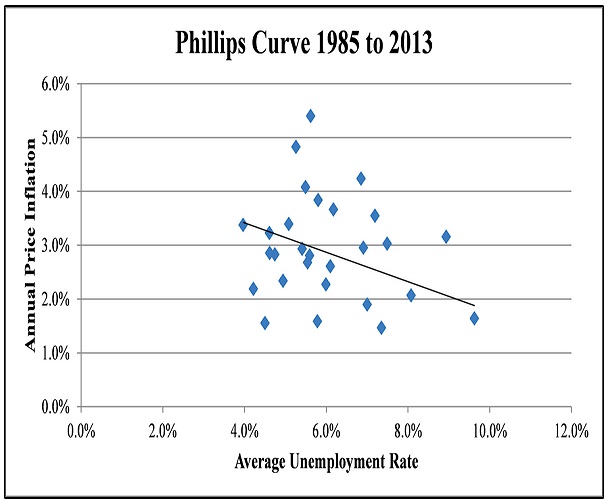
Chris Casey writes:  Due to its unjustified acceptance of the Phillips curve and its related misconceptions about price inflation and business cycles, the Federal Reserve will never be able to trade higher price inflation for lower unemployment. Nor can it sacrifice higher unemployment for lower price inflation. But it can, and likely will, generate high levels of both. If the Federal Reserve’s economic controls appear broken, it is because they never really worked in the first place.  Inflation and Unemploymnet

Phillips Curve

Using a State as an Economic Laboratory in the US


Steven Hansen writes: Economic theory is interesting. There never has been “scientific” proof documenting how any theory performs against the wide range of economic dynamics because there is no experimental control sample for comparison. Like most of us, I have opinions (based on theory) but I do not confuse opinions with data or facts.

This past week, everyone’s “love him or hate him” economist Paul Krugman wrote:

Two years ago Kansas embarked on a remarkable fiscal experiment: It sharply slashed income taxes without any clear idea of what would replace the lost revenue. Sam Brownback, the governor, proposed the legislation — in percentage terms, the largest tax cut in one year any state has ever enacted — in close consultation with the economist Arthur Laffer. And Mr. Brownback predicted that the cuts would jump-start an economic boom — “Look out, Texas,” he proclaimed.

But Kansas isn’t booming — in fact, its economy is lagging both neighboring states and America as a whole. Meanwhile, the state’s budget has plunged deep into deficit, provoking a Moody’s downgrade of its debt.

Yah, Kansas is not booming but consider the following and let’s see where these items might take us:

  • the debt in Kansas is not much worse than any other states.
  • more than two states bordered Kansas;
  • how fast does any economic theory work? Should it be judged in the short, medium or long term?
  • raising income taxes removes money from consumers.

There is no question that based on employment, Kansas is doing worse than its neighbors (about the same as Missouri) and the average for Kansas and all its neighbors looks to be slightly below the national average. Remember that employment is a lagging indicator of economic growth.

GDP growth for Kansas appears also be very near the national average – but GDP growth is less than 3 of its 4 neighbors.

If raising taxes were an answer – the USA economy should be flying. You cannot condemn a single element of an economy without examining all elements. I am not for or against raising taxes per se on a state level. My opinion would be conditional when judged against all the other economic dynamics.

Consider also that the Federal Government has different monetary dynamics than the states (being a sovereign monetary issuer) – and the examples given in Professor Krugman’s oped were based on Federal Government experience.

The individual states in America, like countries in the EU,  are potential economic laboratories. States should be encouraged to leave the trodden trail and experiment. Most experiments end in failure, but without failures – our understanding of economic dynamics is not enriched. Professor Krugman is the mouthpiece for liberal partisan politics, and partisan politics have no place in “factual” economic discussions.


Piketty’s Statistics Can Be Questioned, But…

his conclusions can not be, write Dan Lieberman.  Capitalism is doomed if the spread between the very, very wealthy and the rest of us is too great.

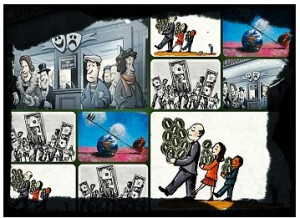
Questioning the statistics in Thomas Piketty’s best selling book with intent to undermine his thesis, is futile. Even if Piketty’s alert to the economics community that returns on investment have exceeded the real growth of wages and output, which means that the stock of capital is rising faster than overall output, may not be exact, the criticism has neglected to upset the conclusion – severe income inequality and inequitable wealth distribution doom the capitalist system to an eventual collapse, and a more narrow distribution keeps it going.    Piketty’s Statistics

Income Inequality


Evaluating Oil and Gas Reserves

Factors to watch in evaluating oil and gas reserves.

  • Price changes can increase or decrease reserves
  • Improved technologies can increase the reserves
  • New discoveries can increase the reserves. Elsewhere there are studies that predict what is left to be discovered.
  • Political realities can increase but more frequently decrease reserves.

So reserves is an economic concept unlike the size of the total resource which is a geological concept and the technically recoverable portion of the total resource which is an engineering concept. These three concepts and the quantification that corresponds to each concept has a relationship which is not always as clear as it should be and ofttimes controversial especially when things are changing rapidly.

BP-statistical-review-of-world-energy-2014-full-report

Oil Reserves


European Debt

Kenneth Rogoff writes:

Eurozone leaders continue to debate how best to reinvigorate economic growth, with French and Italian leaders now arguing that the eurozone’s rigid “fiscal compact” should be loosened. Meanwhile, the leaders of the eurozone’s northern member countries continue to push for more serious implementation of structural reform.

Ideally, both sides will get their way, but it is difficult to see an endgame that does not involve significant debt restructuring or rescheduling. The inability of Europe’s politicians to contemplate this scenario is placing a huge burden on the European Central Bank.

In general, neither pure austerity nor crude Keynesian stimulus can help countries escape high-debt traps. Throughout history, other measures, including debt rescheduling, inflation, and various forms of wealth taxation (such as financial repression), have typically played a significant role.

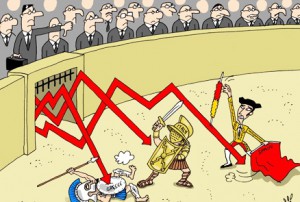
It is hard to see how European countries can indefinitely avoid recourse to the full debt toolkit, especially to repair the fragile economies of the eurozone’s periphery. The ECB’s expansive “whatever it takes” guarantee may indeed be enough to help finance greater short-term stimulus than is currently being allowed; but the ECB’s guarantee will not solve long-run sustainability problems.  European Debt

European Debt

Dumbing Down Women

Powerful women, whether in politics or business, are too confounding without some spin or gloss to soften them up. When Yahoo CEO Marissa Mayer was profiled in Vogue, audiences were struck not only by the lopsided profile—she is literally posed upside-down in evening wear—but by her insistent insecurity. “It’s not like I had a grand plan where I weighed all the pros and cons of what I wanted to do,” she says of her role as leader of a major corporation. “It just sort of happened.”

Things are “just sort of supposed to happen” to powerful women—good things, determined by fortuity instead of fortitude.

There is no persona that works. Accomplished professional with a Pulitzer Prize is too intimidating, caring mom too weak. Combining both is a mommy wars minefield.

The solution, of course, is to simply accept women as a complex individuals with the right to a private life and evaluate them based on their ideas and professional actions. But that would be breaking a long media tradition.   Dumbing Down Women


Marissa Mayer


American Express Gives up Plastic?

Leslie Berland has a curious job. She’s paid to think about all the ways to make her company’s flagship product obsolete.

Berland leads digital partnerships and development at American Express, the company that pioneered the notion that a piece of colored plastic could not only buy stuff but raise your social status. In the future that Berland anticipates, a black card or a gold card won’t mean any more than a purple card, because you won’t have a card at all. Even American Express believes the plastic in our wallets eventually will go away.

There are two things you always have with you: a credit card and a smartphone. The day is coming when we combine them.

At a recent event, hosted by Andreessen-Horowitz, on the future of retail, Berland pointed out that there are two things you always have with you: a credit card and a smartphone. The day is coming when we combine them. “What we are hyper-focused on is how do we merge those two things,” she says. “Especially as one day the physical card will disappear.”

Berland is not alone in thinking plastic is on its way out. Figuring out how to make smartphones the primary way we pay for things is one of Silicon Valley’s great white whales. The same minds that have put airline boarding passes on our phones alongside every song ever recorded and video calling a la The Jetsons are trying to crack this problem. Everyone from Google and Apple to Square is pondering this.

So far they’ve had little success. But, ironically, this creates an opportunity for the very industry these tech giants are trying to disrupt. A company like American Express has every reason to want things to stay as they are. But if it’s willing to concede its core product’s days are numbered, it has a chance of beating the Apples and Googles of the world in the race to redefine payment tech. That’s because it’s got a key advantage over Silicon Valley: Amex already is in people’s wallets.

There are countless apps that already turn your phone into a credit card substitute: Google Wallet, PayPal, Venmo, LevelUp, Coin, Loop, and others abound, not to mention retailer-specific offerings like the Starbucks app. But with so many offerings, the offline merchants who still account for the vast majority of U.S. retail spending are reluctant to gamble on any one of them as the emerging standard. This hesitation creates a self-fulfilling loop in which consumers won’t commit to an app because they don’t know which stores use it. In the meantime, everyone just keeps swiping their cards.

This puts American Express and other major credit card companies in a unique position to make mobile payments happen.

As Berland describes it, this puts American Express and other major credit card companies in a unique position to make mobile payments happen. For them, the “point-of-sale gap” already is bridged.

The various smartphone apps act as credit and debit card aggregators—skins for what you already have in your wallet. That makes these companies what Berland calls “frenemies” to companies like Amex. They encourage use, but they stand between card companies and their customers—a concern for American Express especially, since, unlike MasterCard or Visa, it doesn’t use banks as intermediaries. Amex’s business depends on its customers embracing the concept of “membership,” which the company reinforces through loyalty programs and other perks. These have the potential to get diluted when a different company’s app stands in between Amex and its members. Also, those third parties get a piece of the customer data so valuable to AmEx.

Ultimately, Berland believes the key to getting mobile payments to catch on won’t be the technology but the experience it enables. Amex, Berland says, knows about its customers: what they buy, where they are, how they spend their money and time. Used the right way, she says, that data can be leveraged to make shopping more convenient and more fun. She acknowledges the danger of coming across as Big Brother. But she claims the company’s own focus-group research has found this doesn’t bother customers.

End of Credit Cards