Modi an Equal Partner with the US?

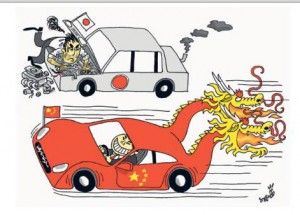
The US has demanded over recent years that India buy defense weapons, allow big US corporate banks into the country, and ease patents helping Big Pharma.    Prime Minister Modi, who was banned from the US six years ago, has a long memory.  He will demand parity with the US.  President Obama says that this relationship is a big US priority?  Can we move forward?  Modi wants investors to flock to the manufacturing sector.  He is looking to China and Japan.

Modi

Women in South African Mining Join Forces

Concerned about the future of mining in Africa, and wanting to place more women in the business, South African Women In Mining (SAWIMA) was launched in December 1999, when Ms Phumzile Mlambo-Ngcuka, was appointed Minister of then Minerals and Energy. Shortly after herappointment, she expressed concern at the alarming absence of women in the mining industry.

Current programs:  Economic Transformation & Change Management (annually and continuously monitor & evaluate Economic Transformation & Change Management Progress in the Mining Sector)  Stakeholder Relationship Management (implement and adhere to the Stakeholder Relationship Management Matrix Model); Marketing, Advocacy, Publicity & Communications Unit/Desk (introduce Information Technology System, Multi-Media and Social Media Platforms)  SAWIMA – a Women Chamber of Mines South Africa (launch SAWIMA Women Chamber of Mines South Africa Project), SAWIMA Women Mining Skills & Enterprise Development (co-ordinate Human Capital, Investment & Business Opportunities Development for Women in Mining; Corporate Governance, Compliance & Ethical Business Practice (launch annual SAWIMA Board of Directors Development Programme and refresher courses on Responsible Directorship); SAWIMA Investments Management (produce record of all SAWIMA Investments Portfolio, and submit official Investment Certificates).

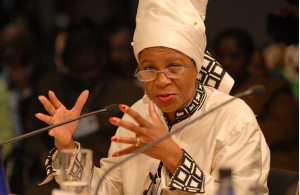
An inspirational figure for women miners is Dr. Mamphlea Ramphele who created a mining company now worth over 50 million dollars.

Dr. Mamphela RampheleWomen Entrepreneurs in Africa

Fast Tracking Agriculture Grants in Africa

The Agriculture Fast Track is the first and only project preparation fund focused exclusively on agriculture in Africa. Building on the commitments under the New Alliance for Food Security and Nutrition, the Agriculture Fast Track develops and advances a pipeline of bankable food security projects that support Africa’s agriculture transformation agenda.  African entrepreneurs and particularly women are invited to apply for grants.

Recent projects receiving grants are:  An irrigation system for small shareholder production, a hulling facility to create stronger market links for small shareholders; power source for center to train small shareholders.  Currently open to citizens of Burkina Faso, Cote d’Ivoire, Ethiopia, Ghana, Mozambique, and Tanzania.

A project of the Africa Development Bank.

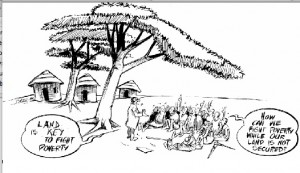
Agriculture in Africa

Premier Li’s Balancing Act in China

Zhang Jun writes about the premier’s balancing act between conventional credit and overissuance of currency and the government’s response to overheating.

But the latest round of deflation-fighting policies, together with the massive stimulus package that the government launched in the wake of the global economic crisis, has led to oversupply in the housing market and idle capital in the manufacturing sector. Making matters worse, demand for Chinese exports in Europe and the United States has weakened considerably, and is not expected to rebound. All of this has diminished short-term investment opportunities in China, raising fears of a hard landing.

Chinese Economy Revving Up?

Gender Balance of the Boards of New Zealand Companies

Right Honprable Jo Goodhew, Minister of Women’s Affairs in New Zealand, comments:  The 120th anniversary of women’s suffrage last year reminded us that New Zealand led the world in recognising that women should have an equal rights to men.

One of our goals is to achieve more gender balance in leaders
hip across New Zealand. This brings benefits not only to boards and their organisations, but also to the economy.  Leadership talent is always in demand, in New Zealand and globally.

Since 1994 women have been graduating with tertiary qualifications at higher rates than men. They now comprise 65 percent of university graduates. Yet at every successive management level more talented women drop out, or their career stalls, compared to men.

I want to see a greater number of women in leadership and governance roles in New Zealand. There is compelling evidence that gender balance leads to better decisions and organisational performance, providing economic and productivity gains.  Women represent increasing market power. Research evidence tells us they make most of the retail decisions, worldwide.

Gender balance in leadership can also promote increased innovation and effective problem solving, and more effective risk management.  We must create more opportunities for women in governance positions, especially in the private sector. We must achieve a step change in the percentage of women that currently sit on boards, head organisations, and contribute as Members of Parliament or other democratically elected roles.

Organisations need to look at the issues and challenges they face in attracting, developing and retaining women at all levels in the leadership pipeline. Research shows that addressing cultural and structural issues, such as unconscious bias and flexible work practices, removes barriers for women.

Senior leaders, particularly chief executives, need to set long-term goals for women in leadership in their organisations and regularly measure results towards that goal.

In the state sector, I encourage women seeking governance roles to contact the Ministry of Women’s Affairs. The Ministry manages a database with over 800 women who are actively growing their careers in governance.  New Zealand’s Diiversity Rule requires companies listed on the stock exchange to report on gender balance on their boards and in their senior management teams each year.  Women comprise 12 percent of directors on the 109 New Zealand companies.  covered by this Rule.   By increasing women’s participation and having more diversity on boards, we can further grow our productive economy. To do this and achieve the progress required, each of us must take action today.

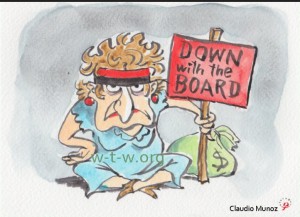
More Women on Boards


Chinese Optimistic About New Swiss Transparency Policy

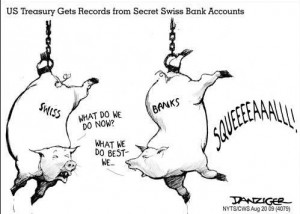
Emma Dai writes in the China Daily:  A decision by Switzerland to hand over details of secret bank accounts in the country to other nations will benefit China’s ongoing anti-corruption campaign, financial specialists say.  The Swiss pledged on Tuesday to provide details of foreign bank accounts, marking a breakthrough in the global crackdown on tax evasion.
The Financial Times reported that Switzerland committed itself to signing a new global standard on automatic exchange of information. The move is being viewed as a decisive break away from traditional Swiss protection of banking clients’ privacy.
“The move will definitely help anti-corruption efforts in China, as Switzerland is the world’s largest offshore financial center,” said Shen Minggao, head of China research at Citibank.  “It will become much easier for the Chinese authorities to collect information on overseas accounts relating to corrupt officials.”

The Swiss policy change pledge was made at a meeting of the Organization for Economic Cooperation and Development in Paris.  The declaration was signed by more than 40 countries, including other member countries of the OECD and G20 nations.  It requires the collection and exchange of information on bank accounts and the beneficial ownership of companies and other legal entities such as trusts.

The policy change by the Swiss authorities will contribute to international anti-corruption cooperation efforts.  Late Philippine president Ferdinand Marcos had billions of dollars in secret Swiss bank accounts, and imprisoned former Taiwan leader Chen Shui-bian also had deposits in Swiss banks.  Improving transparency may be a global trend.

Transparency?

Opportunities for Women in a Changing Japan

Higuchi Yoshio of Keio University writes: Facing a decrease in potential growth due to the aging of the population coupled with a low birthrate, the Japanese economy has slipped into a downward spiral of continued shrinking. We should maintain and increase the per-capita national income even amidst the population decline and realize a society in which a matured and enriched lifestyle can be enjoyed. The economy should shift to creating and expanding value added.

In order to increase their international competitiveness, Japanese businesses must rid themselves of the inward-looking attitude based on a rather homogeneous Japanese society which is typical of Japanese organizations. By increasing the transparency of their operations and evaluations and reviewing their business culture and labor practices, companies can recruit high quality personnel domestically and abroad irrespective of gender, age, and nationality.

Some of the driving powers for value creation are knowledge and experiences in different fields, respect for different values, and an increase in the labor force participation. We should create a society in which more people participate in value creation and enjoy working in accordance with their respective surroundings and abilities through diversification.

The project aims to clarify the impact of women’s participation and leadership on economic growth and business competitiveness. We address this issue from the following two directions. First, using an econometric approach, we will clarify the impact of women’s participation and leadership on firms’ performance or productivity. Second, using a case study approach, we discuss recruiting high quality personnel by taking full advantage of women’s ability and promoting diversity and work-life balance management.

Japanese Business Women

IMF Chief Says Banks Haven’t Changed Since Financial Crisis

Our correspondent Andreas Frank writes: The head of the International Monetary Fund has warned that a persistent violation of ethics among bankers and rising inequality pose a major threat to growth and financial stability.

Christine Lagarde told the audience at the inclusive capitalism conference that six years on from the deep financial crisis that engulfed the global economy, banks were resisting reform and still too focused on excessive risk taking to secure their bonuses at the expense of public trust.

She said: “The behaviour of the financial sector has not changed fundamentally in a number of dimensions since the crisis. While some changes in behaviour are taking place, these are not deep or broad enough. The industry still prizes short-term profit over long-term prudence, today’s bonus over tomorrow’s relationship.

“Some prominent firms have even been mired in scandals
that violate the most basic ethical norms – Libor and foreign exchange rigging, money laundering, illegal foreclosure.”

Lagarde warned the too-big-to-fail problem among some of the world’s largest financial institutions was still unresolved and remained a major source of systematic risk, with implicit subsidies of $70bn in the US, and up to $300bn in the eurozone.

In a speech littered with quotations from Winston Churchill to Pope Francis and Oscar Wilde, Lagarde said international progress to reform the financial system was too slow. “The bad news is that progress is too slow, and the finish line is still too far off. Some of this arises form the sheer complexity of the task at hand. Yet, we must acknowledge that it also stems from fierce industry pushback, and from the fatigue that is bound to set in at this point in a long race.”

Lagarde told that rising inequality was also a barrier to growth, and could undermine democracy and human rights.

“One of the leading economic stories of our time is rising income inequality, and the dark shadow it casts across the global economy,” Lagarde said.

Borrowing from Oxfam research, she noted that the world’s richest 85 people, who could fit into a single London double-decker bus, control the same wealth as the poorest half of the global population of 3.5 billion people.

Options to address inequality include more progressive tax systems and greater use of property taxes, she said.
“We must recognise that reducing inequality is not easy. Redistributive policies always produce winners and losers. Yet if we want capitalism to do its job – enabling as many people as possible to participate and benefit from the economy – then it needs to be more inclusive. That means addressing extreme income disparity.”

Lagarde compared the rising awareness of social responsibility tied into the financial system with the world’s expanding environmental consciousness. “Just as we have a long way to go to reduce our carbon footprint, we have an even longer way to go to reduce our ‘financial footprint’. Yet we must take those steps.”
IMF Lagarde Speech 27.5.14

Derek Easterby

Derek Easterby

Women Entrepreneurs in Italy

A recent report shows that over the past 5 years, in Italy, women entrepreneurs have fared better than men.

Since 2009 the total number of entrepreneurs, meaning by that term holders and shareholders of companies, has increased from 4 million to 4 million 514 thousand 308 thousand in 2013 .  Women have shown a greater capacity for resilience than men. In view of the fact decrease of 158 thousand entrepreneurs (-5%) , among women the losses were lower.  The combined effect of the various trends resulted in a slight increase although the level of feminization of Italian business : the impact of women entrepreneurs on the total number of entrepreneurs has in fact increased from 29.8 % in 2009 to 30.1% in 2013.

The economy of Southern Italy had more impact on entrepreneurs between 2009 and 2013.  Even in North production losses were significant.  In the NorthEast, men were more severely hit than women.  Of note is the situation in Central Italy , which records a better economic and employment situation.

The services sector continues to be the industry that enjoys better health.  The number of women entrepreneurs has remained virtually unchanged over the difficult years, 2009-2013.  Women have  further consolidated their presence in those sectors in which womne-run companies traditionally play a central role :

Organizing events, catering, beauty  salons, and tatoo salons have flourished. The sector that provides social assistance is small, but women account for 59% of the business.

Women entrepreneurs are entering traditional male businesses with great success.
Financial assets and insurance , brokerage , brokerage, subcontractor where women account for only 29.5%, but this is up 4.3% in the last year and continues to expand. In real estate women representing 44.5% of the entrepreneurial base.

In short, no matter how strongly affected by the crisis, women not only in recent years have shown a greater resilience than men , limiting the negative effects on the business system, but proved even more able to detect the areas of innovation, of change and growth offered by the service sector by the crisis and seize the opportunity to get back into the game and turn it into a real opportunity.

The main findings that emerge from the Observatory Confcommercio – CENSIS on the evolution of women’s entrepreneurship in the service sector between 2009 and 2013 is that women cope better than men.

Surviving an Econnomic Downturn

Surviving an Econnomic Downturn


Learning Basic Code in High Schools

Venetia Rainey writes from Dhour Choueir, Lebanon:  In the hallway of Dhour Choueir High School, perched high up in the craggy hills of Mount Lebanon, teenagers cluster around a fist-sized computer chip with wires protruding from various sides.  On the attached screen, a monkey walks from side to side catching bananas that fall from the sky, with a speech bubble that says “yummy” appearing every time he succeeds.

In the middle of the crowd, a 17-year-old explains how it works. But he’s not talking about how to play the game, he’s talking about how to make it.

This is Raspberry Pi, an innovative new education tool that can teach children as young as 5 how to create computer code and program, which lets them create anything from video games to music. The device costs $25 – way less than a computer, laptop or tablet – and all you need to plug in is a screen (for example, a TV), a keyboard, a mouse and some power.

Created in Britain by a group of men who feared the younger generation was losing the ability to control the technology mushrooming around it, Raspberry Pi has snowballed from an idea in 2006 into a movement that is taking the world by storm.

With the help of UNICEF, the International Education Association, the Education Ministry and the Muna Bustros Foundation, Raspberry Pi was officially launched on Friday in the Middle East as part of the Pi For Learning program.

“This is the future,” said 17-year-old Ryan Loukih, a student at Dhour Choueir High School. “The whole world is going toward coding and programming, and Raspberry Pi simplifies it so that everyone can use it. There are endless possibilities.”

The pilot project in the Lebanese public school in Dhour Choueir teaches students how to use a visual programming language called Scratch, and the older students that have been experimenting with it over the last few months were eager to show off the fruit of their work.

“This game is like a basic version of pong,” explained Ian Saba, 17, pointing to a screen where a ball was bouncing between two horizontal lines – essentially a game of ping pong seen from above.

“With coding, we can control the rules and bend them to our will, so if he is winning,” Saba smiled and gestured to his work partner, “I can press a button and change the direction of the ball with no warning.”

For IT teacher Viana Mansour, the introduction of the devices to her computer lab has been revolutionary.

“They thought that computers were all about social media sites like Facebook and so on, now they know that they can make their own games, animations, music – anything.  Children are way more excited to come to IT now.”

“Everyone in the world is looking at this experiment,” Candace Johnson, an American angel investor and high-profile telecommunications entrepreneur, said to those gathered at the launch. “I built my own transistor radio when I was 6, and it put me in a place where I was able to build the world’s largest satellite system.  If we give young people the ability to code, they will build things in the future that we can’t even imagine now.”

This message was echoed by UNICEF’s new innovation specialist, James Cranwell-Ward, a key driver behind the agency’s plan to bring Raspberry Pis to schools in neglected parts of Lebanon.  “You could potentially give birth to and establish a whole generation of technologists who could go on to build the next Facebook,” he told The Daily Star.

UNICEF is particularly hoping to target school-aged Syrian refugees, some 300,000 of whom are receiving no education at all because of the lack of capacity, resources and funds.

“We will be using the RP as a vehicle to teach basic numeracy, Arabic and science,” Cranwell-Ward  said.

 

Cost: $25 Value: Priceless

Cost: $25
Value: Priceless