Afghanistan Risks Blacklisting For Corruption

Our correspondent Andreas Frank reports;  If Afghanistan does not do more to combat corruption in its financial sector by June, the country risks being “blacklisted” by an inter-governmental task force — which the U.S. watchdog for Afghan reconstruction (SIGAR) said would would be “devastating” for the sector and the overall economy.

In the most dangerous country in the world for aid workers and where armed insurgents still control large swathes of territory, the reconstruction effort’s number one enemy should be corruption, John Sopko, the special inspector general for Afghanistan reconstruction, said.

Attracting and maintaining foreign investment is vital to sustaining Afghanistan’s economy as U.S. assistance funding – which has totalled over $102 billion so far – declines.

Sopko criticized U.S. government agencies for failing to produce a comprehensive anti-corruption strategy, claiming that unless corruption is specifically targeted and combated it could be the “spoiler” that “will jeopardize every gain we have made over the last 12 years.”

Corruption in Afghanistan’s financial sector presents a particular threat to the country’s ability to attract foreign investment: “Failure to sufficiently reform and regulate the banking sector is putting the country’s immediate future development at risk.”

Sopko reported that the Financial Action Task Force, an inter-governmental body that sets the standards required to combat money laundering, terrorist financing, and other threats to the integrity of the international financial system, recently downgraded Afghanistan’s status based on the country’s lack of progress implementing its much-touted anti-money laundering and terrorist financing action plan.

If Afghanistan continues to fall short on these measures, the FATF could “blacklist” the country as early as June, an outcome the SIGAR chief said would be “devastating” for the country.   Atlantic Council Remarks
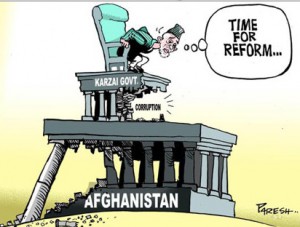
Afghan Corruption

California AG Fights Transnational Organized Crime

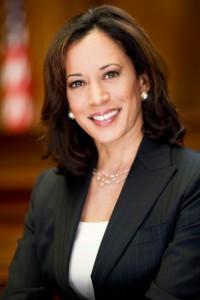
Our correspondent Andreas Frank reports:  International criminal enterprises follow the money, and a report being released Thursday says they are increasingly focusing on California because of its wealth and innovation. The report by California Attorney General Kamala Harris says criminals are turning to cybercrime to target businesses and financial institutions.

It calls California the top target in the U.S. for organizations that often operate from safe havens in Eastern Europe, Africa and China.

California leads all states in the number of computer systems hacked or infected by malware, the number of victims of Internet crimes, the amount of financial losses suffered as a result and the number of victims of identity fraud. The report says the state also is particularly vulnerable to thefts of intellectual property because of its leading role in developing new technologies and mass-media entertainment.

“Not surprisingly, transnational organized crime has tapped into this new criminal frontier,” the report says. “Many of these breaches have been tied to transnational criminal organizations operating from Russia, Ukraine, Romania, Israel, Egypt, China, and Nigeria, among other places.” Hackers are becoming ever more sophisticated. People should have a “multi-layered” type of protection.

California’s gross domestic product of $2 trillion, significant foreign trade activity and border with Mexico also makes the state an easy target for international money-laundering schemes, the report says. It estimates that more than $30 billion is laundered through California’s economy each year.

Some is filtered through legitimate businesses or by using virtual currencies such as bitcoin. But the report says backpacks and duffel bags stuffed with cash have been seized more frequently since Mexico began toughening its money-laundering laws in 2010.Seizures of bulk cash increased 40 percent by 2011 in California, which now leads the nation in the number of currency seizures.

California should alter state law to make it easier for prosecutors to crack down on money laundering, the report says.  The report also recommends that the Legislature change state law to let prosecutors temporarily freeze the assets of transnational criminal organizations and associated gangs before they seek an indictment.

It also calls for the state to devote more money to the state Department of Justice, which Harris leads. That would include $7.5 million to fund five new teams that would target international criminals.   California’s Fight Against Transnational Crime

Kamala D. Harris, California AG

Oligarch Firtash, Out of 125 Million Bail, Has an Office in Switzerland

All money trails lead to Switzerland.  Despite clamp downs by the US government and some other nations, the Swiss continue to provide safe havens for oligarchs’ money.

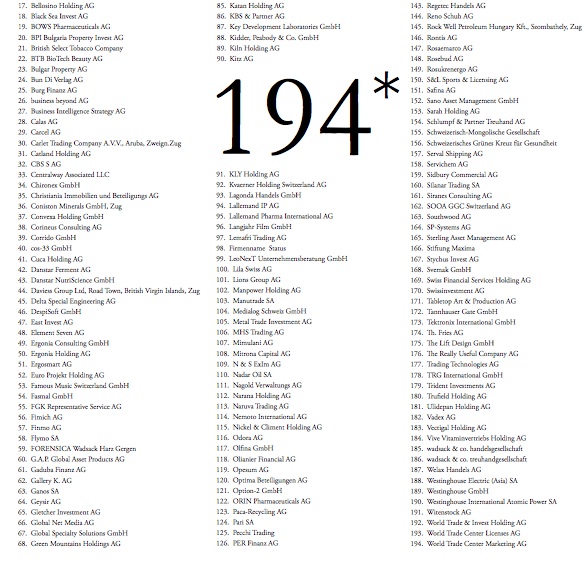
At 7 Bahnhofstrasse in Zug, there are companies listed in 194 Post Office Boxes.  One of these belongs to Firtash.  Arrested in Austria on a warrant from the FBI, Firtash is off on 125 million dollars bail, peanuts to this Russian oligarch, a pal of Putin’s who has enriched himself through gas deals.

Companies with post office boxes is Switzerland.

Companies with post office boxes is Switzerland.

Firtash Company Switzerland

Firtash Company Switzerland

Steueroasenbuch (Tax Haven Report, Page 29)

Ukrainian Women Entrepreneurs

Difficult times in the Ukraine.  But women entrepreneurs are more important than ever.

Female-owned companies have a special place in transitioning economies.  They employ other women more frequently, which reduces the effect of discrimination against women in the labor market.  Employing women helps reduce the trafficking of women, a big problem in transitioning countries. Third, female business owners are role models for the next generation.  Women Entrepreneurs in Ukraine

Ukranian Business Women

Is the US Misreading China as the First Lady Travels?

Our China correspondent Donna Charbone calls attention to this important insight:

The Rosett Report notes:  As First Lady Michelle Obama heads to China, reportedly on a mission to charm the Chinese government. She will be traveling without the president, but with her two daughters and her mother.

Reuters describes the trip:  U.S. First Lady Michelle Obama is expected to steer clear of controversial issues such as human rights when she visits China this week but her trip could help advance a top item on her husband’s foreign policy agenda: deepening Washington’s ties with Beijing.

The article goes on to cite someone who worked as an aide to former First Lady Laura Bush, praising the prospects of this ethics-lite excursion, noting that it will be good optics, and play well in China, to have Michelle Obama meet with China’s first lady, drop by schools, take the kids to visit the Terra Cotta warriors, and so forth. The message is that by declining to rock the boat, Michelle will be honoring her motto of “do no harm.”

While the intentions here may be good, this is a terrible misreading of China, of international politics and of America’s vital place in the world. China is one of the world’s worst violators of human rights, and its government holds sway over more than 1.3 billion people — more than one-sixth of humanity. The State Department’s latest report on human rights practices in China talks about the coercion, repression, censorship, enforced disappearances, torture, coerced confessions, discrimination and more.

The Chinese are not fools. Both the people and the government know how this system works. Plenty of them know that it is wrong. That is precisely why Beijing crushes dissent, and tries to paper over these violations on the world stage. Ignoring the Chinese government’s abuses of its own people might make for a more pleasant chat over tea with China’s first lady. But it will not inspire China’s government to treat America with respect, nor will it deepen Chinese-American ties.

Rather, it will underscore the perception that America is a shrinking power — less and less willing to stand up for its own values, and ever more willing to ignore profoundly troubling realities in hope of gaining favor. What plays as politeness over tea will be read as weakness in the global theater. It is just such messages that helped embolden Russia’s Vladimir Putin to move into Ukraine. He has evidently calculated he can defy America and get away with it. And while an American first lady is not an official maker of policy, her manner of visiting China does send a message. To whatever extent it affects U.S.-China ties, it also goes some distance toward defining the terms on which those ties evolve.

China’s rulers do not make their geostrategic decisions based on pleasantries over tea. They weigh the real, massive, concrete costs and benefits of dealing with America. And while they might like the idea of an America unconcerned with human rights, they will quite likely also read into that the message that America is growing weak, and increasingly deferential — and that, too, will affect their political math. They are well aware that the global rules of the game are shifting as America retreats. They are surely contemplating the terms on which they wish to deal with the U.S. — and part of that calculation involves what they, like Putin, might be able to get away with — not only at home, but abroad. For America’s first lady to bring human rights into the equation would be an important move — showing both strength on the part of America, and far more respect for the people of China than any agenda of ignoring human rights in the improbable hope of doing no harm.

Michelle Obama

Bulgarian Entrepreneurs Join Forces

Selena was formed to promote and aid entrepreneurship in Bulgaria. Their purpose is:

To support women entrepreneurs and professionals in their professional and entrepreneurial development, through training courses, information exchange and business meetings, through intensification of international contacts and business internationalization, exchanges within the best European practices and participation in projects financed by the EUTo adopt and administer professional ethics, to create the conditions needed for women entrepreneurs to contribute effectively toward solving problems regarding the development of women’s entrepreneurship, at a national and European level

To collaborate with all the competent institutions in order to promote support activities for the development of women’s entrepreneurship, to enable women to join any public or private local, national or international organization, to collaborate with bodies, movements or associations with which it is considered useful to have contacts

To promote the professional training and goals of the Association through information dissemination, the organization of conferences, seminars, publications and professional modernization aimed at enhancing women’s knowledge of enterprise innovation

To promote partnership initiatives at a national and international level with associations having analogous activities and aims, and to implement the European projects and programmes

Selena

California Attorney Imprisoned for Hiding Money in Swiss Accounts

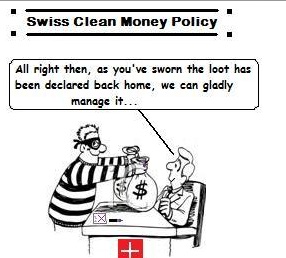
WASHINGTON – California attorney Christopher M. Rusch was sentenced to serve 10 months in prison for helping his clients Stephen M. Kerr and Michael Quiel, both businessmen from Phoenix, hide millions of dollars in secret offshore bank accounts at UBS AG and Pictet & Cie in Switzerland, the Justice Department and the Internal Revenue Service (IRS) announced today. U.S. District Judge James A. Teilborg also ordered Rusch to serve three years of supervised release following his prison sentence. On Feb. 6, 2013, Rusch pleaded guilty to conspiracy to defraud the government and failing to file a Report of Foreign Bank and Financial Accounts (FBAR). Kerr and Quiel were sentenced in September 2013 to each serve 10 months in prison after both were tried and convicted of filing false income tax returns for 2007 and 2008. The jury also convicted Kerr of failing to file FBARs for 2007 and 2008.  Hiding Money in Swiss Accounts

Swiss Banks

Women In Finance Have A Bright Future

LAHORE: Women are sometimes intimidated by the idea of accounting as a career.  Yet the field has a bright future and a huge scope for those who want to take part and lead the corporate sector of Pakistan. The perception of how difficult accounting is for women needs to change now.

This was the crux of a round table discussion of senior female finance experts who looked at ways to enable more women enter the world of finance with the event being organised by the Association of Chartered Certified Accountants (ACCA).  While a great many women have entered the finance profession, they account for only 20% of the most senior posts held in the sector.
“There are proven economic benefits of female participation in the work force, which in turn have a direct impact on gross domestic product (GDP) and other economic indicators. Our research shows that the benefits of having women on board include the belief that women protect business interests, and that they ensure the boards make more balanced decisions,” said Jenny Gu, ACCA Council Member. “Despite these perceptions, there is still much more that needs to be done to ensure boards are more diverse, and discussions such as these will help raise these issues up the agenda.”
Women in Finance Have a Bright Future

Women in finance have a bright future

U.S. Should Seek Swiss Banker Extradition, Senators Say

U.S. lawmakers push authorities to seek extradition against Swiss residents who were charged with helping Americans evade taxes.

Our correspondent Andreas Frank reports: In an open letter, Sen. Carl Levin and Sen. John McCain, who lead the Senate’s Permanent Subcommittee on Investigations, urged the Justice Department to “at least attempt” extradition proceedings against indicted Swiss bankers. The U.S. Senators seek extradition of about 30 Swiss bankers and others who are charged with enabling offshore tax evasion and haven’t appeared in federal courts. Most of them “apparently live openly in Switzerland, having avoided trial on their alleged crimes for years,” Messrs. McCain and Levin said.

A Justice Department official said extradition proceedings would be a poor use of resources. Because aiding tax evasion is not considered a crime in Switzerland, the country is unlikely to honor U.S. extradition requests, the official said. Instead, the department is focused on other ways of pursuing tax evasion cases, the official said citing the October arrest in Italy of former UBS AG banker Raoul Weil.

Weil, who was arrested Oct. 19 after checking into a hotel in Bologna, Italy, waived extradition. Raoul Weil was released on $10.5 million bail in December after appearing in a Florida courtroom to face a 2008 indictment.

Even if the extradition request is denied, Messrs. McCain and Levin wrote, “it will inform both Switzerland and its citizens that the United States is ready to make full use of available legal tools to stop facilitation of U.S. tax evasion and hold alleged wrongdoers accountable.”

The letter is the latest criticism from lawmakers, who say they’ve grown impatient with the pace of U.S. investigations against Swiss banks. At a Senate hearing last month, Mr. McCain faulted the Justice Department for being “incredibly slow” in pursuing Swiss bankers. In 2011, the Justice Department indicted seven Credit Suisse Group AG bankers on tax evasion charges, but none had yet faced trial until very recently.

There are signs that the Justice Department is preparing to get tougher with Swiss banks. Last week, in a surprise development, former Credit Suisse banker Andreas Bachmann returned to the U.S. to face a 2011 tax evasion indictment. Mr. Bachmann admitted to helping Americans hide their assets, in exchange for leniency and being allowed to return to Switzerland before sentencing.
Senate Levin & McCain Letter

US Should Seek Swiss Banker Extradition, Senators Say