US first lady Michelle Obama is expected to steer clear of controversial issues such as human rights when she visits China this week but her trip could help advance a top item on her husband’s foreign policy agenda: deepening Washington’s ties with Beijing. The week-long trip marks only the third foreign solo trip for Obama, who has cultivated a self-described “mom-in-chief” image, putting her energy into raising her daughters Malia, 15, and Sasha, 12, and signature domestic policy issues such as combating childhood obesity. Michelle Obama Visits China
Bitcoin ATMs Surround Harvard
Boston Business Journal reporting: The second ATM dispensing the online currency was unveiled in Cambridge’s Harvard Square. After launching what was billed as the first bitcoin kiosk in the U.S. at Boston’s South Station last month, Liberty Teller recently added the second machine in Cambridge in partnership with Clover Food Lab.
“In less than three weeks, over 500 customers have used our Liberty Teller bitcoin kiosk,” said Liberty Teller co-founder Chris Yim. “Building off of the amazing community reception and volume we have seen from Boston’s South Station, we are expanding across the river to Cambridge. We have received many requests from the Harvard Square community and are pleased to announce the placement of our second machine with partner and food entrepreneur Ayr Muir of Clover Food Labs.”
The online currency, which has been newsworthy for its volatility, has been controversial since its creation in 2009. More recently, the largest bitcoin exchange, Mt. Gox revealed that 850,000 in bitcoins — or about $474 million — had disappeared. Mt. Gox has filed for bankruptcy.
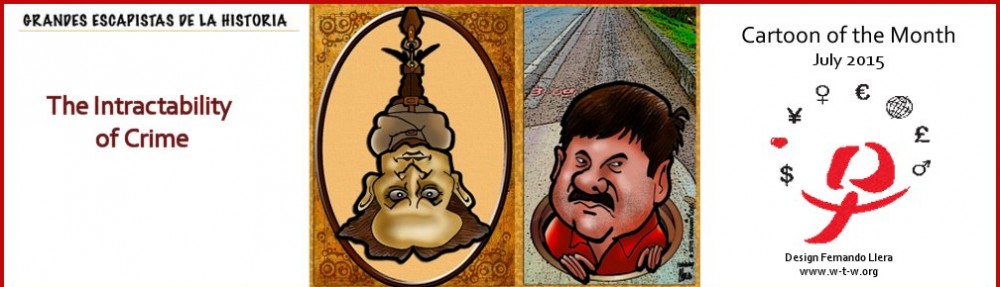
Austrian Court Rules on Firtash Extradition
Ukraine’s Foreign Ministry said that a court in Vienna has ruled to extradite Ukrainian businessman Dmytro Firtash to the United States. The FBI has been mounting its case since 2006 and is focused on a deal in India.
Last fall, after ousted Ukrainian leader Yanukovych turned for help to Russia as protests against him started to swell, Gazprom offered Ukraine a 35 percent discount on the condition that Firtash return as middle man.
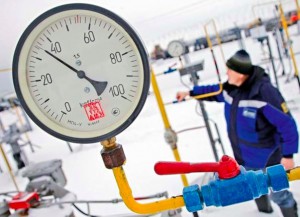
Most of the natural gas that Russia sells to Europe travels across Ukraine, providing one of the largest sources of revenue for the Russian government. Firtash’s company also has a role in those sales.
Women Entrepreneurs in the Nordic Countries
Women entrepreneurs are one third of all people involved in entrepreneurial activity. Since entrepreneurship is considered a key driver for growth, the Nordic Innovation Center explored a Nordic initiative on women entrepreneurship. Their aim was to identify obstacles that prevent women businesses to grow and to learn from other countries initiatives and their best practices.
Nordic countries differ in their policies and strategies towards women entrepreneurs. Denmark has no specific policy for women entrepreneurship. Sweden launched a massive 100 million SEK. project for Women Entrepreneurship.
Though the performance differs between the Nordic countries investments does not seem to be the only factor explaining gender gaps. Diversity, networking, access to role models and mentors seem to effect entrepreneurial success. Nordic Entrepreneurship
Can Money Laundering Be Stopped?
Oligarchs the world over grab money from public and criminal coffers. They are not dumb. They want their money where it will be safe, private and well cared for. They want their money in Western democracies. Western democracies have welcomed this tainted money. Governments avert their gaze. Bankers feather their own nests. What will it take to stop the flow? Do we have the political will to do this? Money Laundering
Indian Women’s Businesses Face Significant Financing Gap
The financing gap for women-owned micro, small and medium enterprises (MSMEs) businesses in India is about Rs.6.37 lakh crore ($116 billion) or 73 per cent of their total demand, according to a study by World Bank Group member IFC.
The study, in partnership with the Government of Japan, said that financial institutions (FIs) meet only 27 per cent of the financing demand of women-owned MSMEs in India. “The total supply of formal finance to women-owned MSMEs in 2012 was around Rs.2.31 lakh crore ($42 billion).This resulted in a finance gap of Rs.6.37 lakh crore ($116 billion), or 73 per cent of total demand,” the report said. FIs can meet the demand through products and services tailored for women entrepreneurs, it said. The total financing demand was $158 billion (Rs.8.68 lakh crore) for women-owned businesses. The formal sources of credit supply included public sector banks, non-banking financial companies, and self-help group-bank linkage programs There are an estimated 3 million women-owned enterprises across industries, representing about 10 per cent of all MSMEs in India and employing over 8 million people. Collectively, these enterprises contribute 3.09 per cent of industrial output. Approximately, 78 per cent of women enterprises belong to the services sector. Women entrepreneurship, the report said, is largely skewed towards smaller sized firms, as almost 98 per cent of the businesses are micro-enterprises.
“Over 90 percent of finance requirements being met through informal sources,” the IFC report added. The study further said that FIs can tap this ‘profitable segment’ with products and services tailored to the needs of women-owned MSMEs. It also said FIs should consider options such as advisory desks at selected bank branches to offer information on products and services tailored to women-owned enterprises. Providing non-financial services (NFS) and training, along with access to financial products, will offer holistic growth opportunities to women entrepreneurs, it added.
The financing gap for women-owned MSME businesses in India is about Rs.6.37 lakh crore ($116 billion) or 73 per cent of their total demand, according to a study by World Bank Group member IFC.
The study, in partnership with the Government of Japan said that financial institutions (FIs) meet only 27 per cent of the financing demand of women-owned micro, small and medium enterprises (MSMEs) in India.
This resulted in a finance gap of Rs.6.37 lakh crore ($116 billion), or 73 per cent of total demand,” the report said. The formal sources of credit supply included public sector banks, non—banking financial corporations, and self—help group—bank linkage programs
Women entrepreneurship, the report said, is largely skewed towards smaller sized firms, as almost 98 per cent of the businesses are micro-nterprises. “As with the broader MSME sector, access to formal finance is a key barrier to the growth of women—owned businesses, leading to over 90 percent of finance requirements being met through informal sources,” the IFC report added.

In US, Male Babysitters Make More than Females?
Is it the scarcity principle? The Atlantic reports: If scarcity imparts value, male babysitters have it all figured out. Less than 3 percent of all babysitters are men, but they still earn $15 an hour. Females going rate is $14.50.more than their female counterparts. The gender-wage gap penetrates even the most feminine of feminized professions. Even female administrative assistants, teachers, and nurses—three fields that are dominated by women—still make less than their male colleagues by about 10 percent.
Is it because men are more confident and can command higher wages? Or because there are so few male babysitters that the ones who are drawn to this sort of work are uniquely qualified in some way—maybe they’re beloved, master fort-builders, for example, or actual child-rearing specialists.
The best paid babysitters are actually in their late 20s, rather than their teens or 30s. And if you want to make some serious change watching other peoples’ kids on occasion, move to New York, where the going rate is $17.50 an hour, which is more than the average income Mississippi and nine other states.
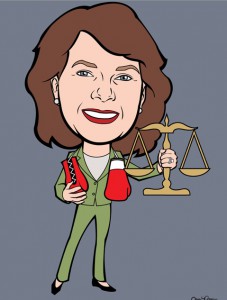
Women Lawyers Become Entrepreneurs
Angela Priestley reporting from Australia in Women’s Agenda:
Measuring productivity by time rather than work achieved can be difficult for the flexible worker, especially when such billable units are expected to be completed during traditional work hours. According to a major report released by the Law Council of Australia on Friday, women have accounted for almost 60% of all solicitors admitted over the past decade, yet are still half as likely as men to reach partnership. The billable hour still drives them away.
Fiona McLeod SC went so far as to describe the profession as a “men’s only club” while discussing the new research, with the report also highlighting an alarming rate of bullying, discrimination and harassment.
Nimble women lawyers are forming start-ups in the legal space. Many are being formed by women who’ve rejected the big law structure to work their own way. Others by those who’ve recently had children and are looking to supplement part-time work or earn an income while managing the bulk of the child caring duties.
Lawyers Jane Wright and Lauren Barel launched Workdynamic Australia in 2013. They jobshare in their firm specializing in workplace investigations, employment and advisory work. Laura VIckers launched an online law firm run from her kitchen table. She meets clients on Skype and drafts will and does conflict resolution. Technology has long been evening the playing field for those looking to run businesses on their own time and in their own way.
In Australia, the legal profession is finally catching up – and women are leading the change. Legal Profession Report
Who Is The Most Prized Woman In Saudi Arabia Today?
About Equal Rights For Saudi Women
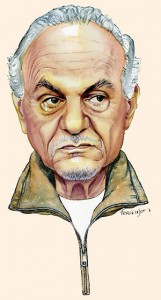
Edward Luce lunches with Prince Turki al-Faisal, the man who headed Saudi Arabia’s intelligence service for 24 years. The Prince talks about equal rights for Saudi women.
Who is the most prized woman in Saudi Arabia today? A woman with a job.
“When I was growing up, the head of a family considered it shameful to ask his wife or daughter to get a job. He thought he should take care of his womenfolk. Because of education, the woman with a job became something of a prize and she brings in more income to her parents, she’s looked up to by her siblings, and she’s sought after by suitors. But what I hear from people in my entourage, the women in my family, is that driving is not that important. What is important to them is equal legal rights, whether it is inheritance, divorce, childcare, things that affect women’s livelihood. They say let us concentrate on improving these things first and not expend our energy on driving, because that will come by itself.”
Focus on Financing Women Entrepreneurs
Introducing Astia, Astia is a curated, global community of experts committed to the success of world class women-led, high-growth startups. For over 14 years the 4000+ members of Astia’s connected community have provided startups with access to capital, business networks, and opportunities to become dominant market players. The organization is a non-profit with distinct focus and mission.
Research indicates that if women were to fully participate in high-growth entrepreneurship we would see a significant and measurable benefit to the economy, innovation, and society. Astia’s mission is to provide access to the networks and expertise that women high-growth entrepreneurs need to succeed, and ultimately to impact today’s global economy.