Crowdfunding for International Women’s Day

In celebration of International Women’s Day, Indiegogo will launch an initiative to promote and support campaigns that empower women. Beginning March 3rd, Indiegogo will engage in partnerships, host events and showcase campaigns in health, entertainment, cause and technology on each day of the week. On the first day of the initiative, Indiegogo will give $1 for every $25 raised by partnering campaigns–with no limit.

“Our International Women’s Day initiative will seek to further expand the opportunities we work to provide women each and every day. International Women’s Day is perfectly aligned with Indiegogo’s global reach and mission of democratizing funding for all, and I am thrilled to support the movement.”

In order to qualify as an International Women’s Day partner on Indiegogo, campaigns must be either female-led, support a female individual or advocate for a non-profit, organization or company that identifies as empowering women. Anyone can launch a campaign for International Women’s Day through March 8.  Details here.

Indiegogo’s equal opportunity platform continues to play a crucial role in supporting women with approximately 47 percent of fully-funded campaigns on Indiegogo being run by women. Compared to the 13 percent of female-owned businesses that receive venture capital funding, women are nearly four times more successful when crowdfunding than raising capital through traditional means. Indiegogo’s participation in International Women’s Day marks the platform’s ongoing celebration of achievements made by women, and for women, around the world.

“As a female entrepreneur, I know first-hand the difficulty that can accompany being a woman looking to turn a dream into a reality,” said Indiegogo Founder and Chief Development Officer Danae Ringelmann. “Our International Women’s Day initiative will seek to further expand the opportunities we work to provide women each and every day. International Women’s Day is perfectly aligned with Indiegogo’s global reach and mission of democratizing funding for all, and I am thrilled to support the movement.”

The weeklong celebration for International Women’s Day on Indiegogo includes the following:

  • March 3: Indiegogo providing $1 for every $25 contributed to campaigns associated with #WomensDay
  • March 4: “Women in Health” showcase of campaigns
  • March 5: “Women in Entertainment” showcase of campaigns
  • March 6: “Women for Change” showcase of campaigns
  • March 7: “Women in Technology” showcase of campaigns
  • March 8: International Women’s Day 2014
Crowdfunding

Honda Helps a Woman Bump the Glass Ceiling

Japanese car manufacturer Honda has appointed its first female board member, following in the footsteps of General Motors that appointed its first female CEO in December last year.

Hideko Kunii, a professor of engineering, was named as the newest board member for Honda earlier this week, and she is set to take office in June, pending a shareholder meeting.

She is the first female director at one of the big three Japanese carmakers; neither Toyota or Nissan have any women on their boards. Japanese companies have come under fire with their focus on hiring and promoting only Japanese males to senior positions. Putting women in leadership positions is a pillar of Prime Minister Shinzo Abe’s policies to revive the fading Japanese economy.

Kunii is a former corporate senior vice president of Japanese electronics giant Ricoh Co. She is also a software specialist and has a doctorate in philosophy from the University of Texas in Austin, and is in charge of promoting gender equality at the University of Tokyo.

Companies in Japan are being encouraged to tap into diversity, with Prime Minister Shinzo Abe declaring last year that refortifying Japan’s economy lies heavily with making the workforce accessible to women.

While Honda has made headway in appointing its first female director, Carlos Ghosn, chief executive of Renault-Nissan, announced in January that his company had introduced strict quotes to encourage more women to apply, but they have yet to appoint a women to its board.Corporate vice president, Asako Hoshino, is among the top Nissan executives, and the highest ranking female within the company.

Honda isn’t the first auto-company to shatter glass ceilings. Mary Barra took the CEO position at General Motors last year, making her the first woman ever to run a major automaker.

 Shattering

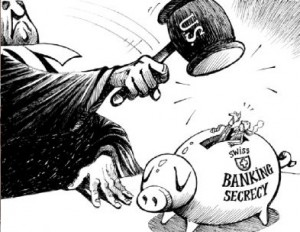
US and Switzerland Battle over Bank Account Secrecy


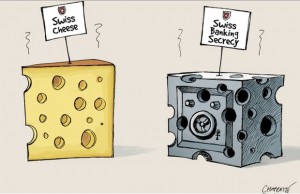
SWISS POINT OF VIEW

Banking is 20% of the GNP of Switzerland

Can the Swiss make up for a shortfall in banking GNP with candy, watches and cheese?  Not without lowering their standard of living.

What can the Swiss do to keep foreigners banking in their country?

Pretend to support international standards, but in reality support the old system: provide a shelter for money.  Provide absolute bank secrecy.

Some international banks have seen the future and are trying hard to comply with US and other foreign countries’ demands that the Swiss deal above board with their nationals’ money, so that a country can collect taxes owed.

Between 2006 and 2008 when it was clear that the US Department of Justice would go after Swiss banks, many former asset mangers at banks become independent asset managers and took their clients with them.

The Swiss banks consented to this exodus because, fearful of penalties, they wanted to get rid of accounts targeted by the US Department of Justice.

To protect their US clients from investigation by the DOJ the independent money managers converted the accounts of US citizens into other nationalities by transferring ownership to an offshore shell company and/or using so called trust and company service providers.  Now the account is no longer a US citizen’s account.  It returns to the original Swiss bank under the changed ownership.

The beneficial owner is still the US citizen. The Swiss are happy to report they no longer have US citizens’ accounts.  They are even happier that they still have US citizens’ money under another name.  In an as yet unsigned treaty, no information on US accounts before 2008 can be retrieved by the Department of Justice.

US POINT OF VIEW

For decades, acting under Swiss privacy laws, the money of US citizens has been exempt from taxation because it has been hidden in Switzerland.

Beginning in 2008, the US decided to stop this tax evasion.  They have called the harboring of offshore assets to the world’s attention.  As a result, billions of dollars have been added to the US tax coffers.

The US has entered into a treaty with the Swiss government, which requires that privacy considerations be overridden by discovery demands.  The Swiss have fought hard to resist the treaty, which they accuse the US of failing to sign.  The US has not signed this treaty because it leaves too many loopholes for Swiss bankers to slip through as the promise their clients privacy/secrecy.

Furthermore, the department of Justice, litigating against people who do not comply unless they are facing a jail sentence, have had difficult amassing evidence which will hold up in US courts.  Things have recently taken a turn for the better in a California case, and in the Armein indictment in US Southern District in New York.

As matters stand now, only when an insider turns coat and traces the money trail for litigators is there any hope for success.  But the DOJ seems to be targeting more useful individuals and has begun to win cases.

What is perfectly clear from the US point of view is that the Swiss are going to do whatever they can under the umbrella of the law to keep a business that is 20 percent of their gross national product.

Will the Swiss br Left with Cheese?

Kaloti Case Lifts Curtain On Dubai Gold Trade

Why Dubai’s first conflict gold audit never saw the light of dayGlobal witness

Our correspondent Andreas Frank points out. Dubai has long had a reputation as a destination for African gold tainted by conflict and a hub for smuggling through the Middle East and Asia. A report by Global Witness provides a rare glimpse into how the city’s bustling gold trade works – and how local regulators and auditors allegedly tried to cover up at least one instance where supply-chain due diligence was lacking.

At the center of the report, based on documents handed to Global Witness by an Ernst & Young whistleblower, lies a gold refiner called Kaloti Jewellery Group. The company is run by the Jordanian Kaloti family, who have a refinery near Dubai and are building another capable of processing up to 2,000 tons of gold and silver a year, making it the largest such facility in the world.

Gold trading and refining seem to pose a high money laundering risk. On November 4, 2013 a Swiss gold refiner was accused of money laundering
Kaloti case lifts curtain on Dubai Gold Trade
City of Gold  Why Dubai’s first conflict gold audit never saw the light of day
Dokuments

Worlds largest shoes store at Dubai Mall now selling 600 pairs a dayKaloti suffers reputation damage

How the US President Can Help Bridge the Political Divide over “Inequality”

The problem lies with Barack Obama’s solutions, which are too timid and reliant on left-wing rostrums, such as a big increase in the minimum wage and more spending. He lambasts a tax code that benefits “special interests”, but has not pushed for tax reform. He wants to invest more in the poor, but has shown no appetite to overhaul America’s welfare state, many elements of which—from disability insurance that discourages work to ineffective training schemes—do nothing to boost economic opportunity, and often undermine it.

If he wants to counter America’s economic stratification rather than just rail against it, Mr Obama needs to think again. He must get tougher with the Democrats in Congress, who see any reform of social spending as an attack on the poor. And he must reach out to the handful of prominent Republicans who have moved beyond their party’s stale mantra that tax cuts are the answer to all ills, and produced clever proposals to help the working poor and reform the tax code. This year’s budget, due to be unveiled on March 4th, would be a good place to start.  Where to Start to Help the Poor and Encourage the Rich to Pay In

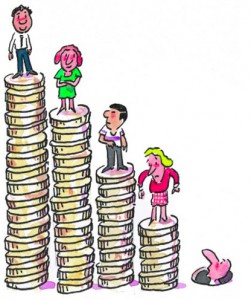
Closing the Income Gap

Using Quotas to Achieve Gender Equality

In the media, meritocracy governs.  Men can be a woman’s chief of staff.  Usually it is in the interest of an employer to hire the best person.  But this does not seem to govern the world of business.

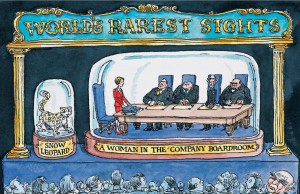
In Australia 17.6 percent of non-executive directors in top 200 companies are women.  But 62 of these companies have no women at all.

The reality is that many men, and some institutionalised corporate women, have a bias against women.   Quotas may be necessary to enforce a behaviour change. It isn’t possible to change attitudes as easily but it’s the outcome that matters in the short term.  What would Silicon Valley make of quotas?

Women to the Board

Addressing Inequality: Transparency in Offshore Deposits

Senator Carl Levin has been probing Swiss banks compliance with US demands for transparency.  Over and over again Senators asked, “Why would someone who lives in the US deposit money offshore?”

The Department of Justice notes its investigations have helped spur voluntary disclosures by U.S. taxpayers through an Internal Revenue service program, started in 2009, that offers reduced penalties for people who owe back taxes, interest and penalties.

“The prospect of U.S. prosecution has been forceful enough to cause 43,000 taxpayers to self-report and pay nearly $6 billion in taxes and penalties,” the Justice Department said.

This is the kind of probe and litigation that will help reduce inequality.


The Prospect of Jail

Online Learning Trial in Rwanda

Facebook and edX are teaming up to see if online education works in a new pilot program.  The new initiative will provide students in Rawnada wth free aces of eduation.  The program will be under he umbrella of Internet.org, a program bringing the internet to two-thirds of teh world now living without it.

The platform developed by Harvard and MIT will allow students to ask questions, interact with teachers, participate in group discussions and engage with their peers. What’s more, the Rwandan government will work with edX to adapt the course materials, thereby creating more locally-relevant content, as well as expand its free Wi-Fi in campuses throughout the East African country.

Remote Learning

Indian Female Executives Thrive in Banking

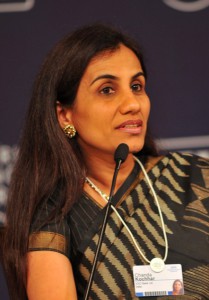
Chanda Kochhar of ICICI told the BBC that women executives in India rise to the top purely on merit and must make sacrifices to succeed. “When you have an organization that is gender-neutral, and when you have a woman who is willing to give to her job whatever it takes, whether it’s long hours, whether it’s commitment to travel, irrespective of the fact that she’s a woman, I think women get that opportunity to rise,” she said. “What it required on my part was to really give to the job whatever it took. So yes, there were children at home, but if the job demands travel, hard work, long hours of work, I think you need to give it.”

But on a happier note, Bank of India’s Iyer observed: “Once they [male colleagues] know that here is a person [female] who is good, the sailing becomes very smooth.”

One distinct advantage that Indian women in the professions enjoy over their Western counterparts is that they don’t have to worry as much about child care – most young Indian mothers can leave their kids at home in the care of grandparents or other relatives who live with them, whereas a rising female executive in London or New York must often deal with costly child care services when they go to work. In addition, virtually all middle-class women in India have (or can easily hire) domestic help to work for them at household duties.

But now comes the hard part – having climbed to the summit of India’s banking hierarchy, these women have to perform. State-owned banks in India are currently facing a multitude of problems, placing enormous pressure on their chief executives – female or male. Business Today reported that many state banks suffer from falling profits and large pools of non-performing assets. Bhattacharya of State Bank of India has stated her main thrust will be to deal with its bad loans – which amounted to 2.91 percent of total loans at the end of September 2013, the highest such level in four years. Iyer’s Bank of India is also marred by bad loans on its books (2.35 percent of loans for 2012/13), while its capital adequacy ratio of 11.02 percent is the lowest among all Indian large banks. Also, Bhargava’s Allahabad Bank had a non-performing asset percentage of 3.19 percent of total loans.

Chanda Kochar ICICI

Senate Takes on the Swiss Banks

During a Senate hearing, Credit Suisse bank laid out a detailed defense, saying that the perpetrators were a small group of Swiss-based bankers, and that while it wanted to hand over more client names, it was caught between U.S. and Swiss law.

“Credit Suisse is ready to provide the additional information requested by the U.S. authorities on U.S. account holders, but we have been unable to do so,” the bank said in a statement provided at the hearing.

Credit Suisse had provided as much information as allowed under Swiss law, it said, and while it wanted to provide more client names, the U.S. Senate had not ratified a bilateral treaty with Switzerland that would allow it to do so.

Subcommittee Chair Carl Levin, a Michigan Democrat, poured cold water on that argument, saying the treaty will only expose U.S. accounts at Swiss banks after 2009, when it was signed.

If U.S. customers closed their accounts before 2009, they could evade detection and years of U.S. tax bills, Levin said, which Credit Suisse bankers acknowledged.

“We can’t collect taxes owed by those folks, which is what the heart of the problem is. … Don’t tell us the treaty is going to get us what we want,” he said. “It won’t.”

Levin also scolded the Justice Department for only having retrieved 238 client names from Credit Suisse – and none from the other banks under investigation. But the Justice Department officials said their work did show good progress.

Credit Suisse said it was a “demonstrably inappropriate assumption” that all 20,000 U.S. clients were tax cheats, saying many U.S. clients, such as expatriates living in Switzerland, had a valid reason to hold a Swiss bank account.   Senators accused the Department of Justice of dragging its feet.  Department of Justice Testimony
Member Statements for Download

Swiss Banking Secrecy