StartUpBusiness Suggestions for China

Babson Business School students visiting Shang Hai suggested the following businesses for development in China.

Sandeep Alluri – Data analytics

Richard Baker – Online raffles

Delainna Burton –Online training

Julian Duggin – Independent film distribution

Derek Fritz – Investment funds

Maria Gagne – Women’s style bars

Brian Matt – Intellectual property partnerships

Chris McGowan – Fraud investigation

Abhishek Moudgil – Business data

Eriko Nishimoto – Mobile auction

Tenzin Norzin –NGOs

Jennifer Rekemeyer – Online expat training

Jillian Scaife – Stylish facial masks

Hardie Stevens – Solar energy

Vishnu Venkatesh – Plastic bottle recycling

Nicholas Walton – Tidal energy

Ashley Walsh – Craft beer

June Zinck – Amusement parks

Craft Beer

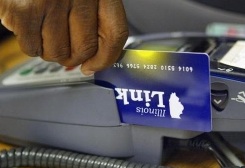
Banks in Electronic Benefits Delivery Business

Electronic benefits delivery is such a rewarding business that banks seem to fear only two things: policy changes and bad publicity. The publicity problems of EBT programs became obvious over the last three months of 2103 when three major EBT system failure scandals erupted. The threat of policy change is perhaps less visible. New regulations could take distribution of these benefits out of the hands of for-profit banks, limit the fees they are able to collect, or mandate a switch from EBT cards to different kinds of electronic funds transfer with fewer opportunities for generating revenue, such as direct deposit. But banks have nothing to fear in the new Agricultural Act; it’s only good news for the finance sector.  Banks in the Benefits Business
Banks Profit on Food Stamps

Is Working for Apple the Dream Job?

Jordan thought Apple would be the best job in the world.  One day, he reports “I wiped the iPad data clean, put the files I had been working on neatly on the server, left all their belongings on my desk, and I got in my car and drove home. I left a message for my boss and told him he’s the worst boss I had ever encountered in my entire professional career and that I could no longer work under him no matter how good Apple might look on my resume. The third party company that contracted me is furious because I’ve jeopardized their relationship with Apple, and of course they feel that I’ve acted highly unprofessionally by walking out. I’m not really proud of myself for doing that, and I do feel terrible for destroying the long relationship I had with the recruiter who helped me land the interview. This is all an especially difficult pill to swallow because I was so excited to work for Apple. I’m not sure if this will haunt me or not, but all I know is that I wanted to work at Apple really bad, and now not so much.”  Is Working for Apple the Dream Job

Is Apple Rotten ?


Swiss Bankers Association Reacts to Banking Standards

Our correspondent Andreas Frank reports;
The same day, the OECD published its “Standard for Automatic Exchange of Financial Account Information”, which allows for the exchange of tax information upon request, joining all major countries worldwide in addressing tax evasion, the Swiss Bankers Association (SBA) criticized the framework as very complex and too costly.

Reacting to this latest move by the OECD, which is mandated with setting global standards for framing policy to address tax evasion and related issues, SBA said in statement issued from Basel that it has been in favour of a global standard for automatic exchange of information for over a year and has also contributed constructively to the drafting process.  Terming the OECD recommendations a “general a step in the right direction”, SBA however said that an important positive point was confidentiality of the exchanged data, that is, adherence to strict data protection rules by the responsible authorities abroad.

The grouping of Swiss banks said that “what has still not been satisfactorily addressed is the question of a level playing field.  The basis to be used for client identification is domestic money laundering regulations. There are still different standards in this area. As a result thereof, countries with less strict regulations will be able to exchange less information than countries such as Switzerland.

Hitting out at the US, it further said that “it is becoming apparent that the US will not be prepared to offer full reciprocity” and said that there were chances that some provisions introduced in the US could be misused as a loophole for clients of US banks.

The SBA further said that the implementation of the new OECD standard is highly complex and will result in significant costs.  The SBA said: “Because it is a multilateral set of rules, the costs are estimated to reach between Swiss franc 500-800 million (Rs 3,500-6,000 crore), and therefore will be clearly higher than the costs of implementing FATCA (the US law for addressing offshore tax evasion).

“… Due to the complexity, the SBA estimates that a proper implementation will require at least two years from the date that the standard comes into effect,” it added.

The association continues to expect that all concerned issues are addressed before an automatic exchange of information comes into effect.

On October 2013, Switzerland signed the OECD convention, which allows for the exchange of tax information upon request, joining all major countries worldwide in addressing tax evasion.

In Switzerland, the convention will still have to be submitted for consultation before heading for ratification by parliament. It could also potentially go to a nationwide vote before being implemented.   Swiss Bankers Association Statement

Swiss Banking

The Case for Shareholder Activists

Empirical proof that activists exacerbate short-termism is strangely elusive. Indeed, such evidence as there is suggests the opposite. “The Long-Term Effects of Hedge-Fund Activism”, a recent paper by Lucian Bebchuk of Harvard Law School and others, examined the roughly 2,000 interventions at companies by activist funds from 1994 to 2007. Over the five years following an intervention both the share price and the operating performance of the target company improved, on average. The operating performance got stronger towards the end of the five-year period, not weaker.

This is the sort of evidence that has convinced Mary Jo White, the chairman of America’s Securities and Exchange Commission, to argue in a recent speech that activist shareholders should no longer be automatically viewed negatively. These days, she said, “There is widespread acceptance of many of the policy changes that so-called ‘activists’ are seeking to effect.”  Shareholder Activists

Carl Icahn

Are Companies Serious About Work Flexibility

Diversity Consulting firm Symmetra recently released the results of an international study of senior executives that exposes the bias against employees who take up flexible work options. While many large businesses make flexible work policies available to their workforces, the study found that attitudes exhibited by senior management demonstrate a lack of genuine belief in and support for flexible work.

The study revealed that flexible workers were perceived by management to be less serious about their careers, less credible and less likely to be able to build effective relationships and to develop others. In fact, a bias was found against flexible workers in 11 out of 14 attributes measured, with the only attribute that was found as having a positive bias for flexible workers was that they were perceived as having better work-life balance.

Findings like these go a long way in explaining the immense inconsistencies found in organisations between the desire for flexible work arrangements by employees and the actual uptake of those arrangements. Unfortunately, even when employers have a policy in place that supports flexible work, there is often a significant career disadvantage (both perceived and experienced) for those who choose to work flexibly. Consequently, many employees (both male and female) who would like to work flexibly do not request to do so, because they believe they will be taken less seriously in the workplace and their career will suffer.

The ever increasing reach and capability of technology provides a range of options for flexible workers, and while some core time in the office is usually a necessity, there are many tasks that do not require people to be in the office to deliver great results. When I think about how regularly many executives travel both domestically and internationally on business, it strikes me as interesting that rarely, if ever, does anyone question whether this time spent out of the office means these executives are not performing their jobs to a high standard. It is an interesting observation that regular absences from the office during business hours are often considered completely acceptable, but it is the reasons for which people are out of the office that some people find difficult to accept, with those working flexibly to balance work and other commitments (including family) being associated with negative traits and therefore held back.

Unfortunately because it is women who engage in flexible work most often, the biases revealed in the Symmetra study apply to a larger number of women than men and ultimately result in a gender bias. That said, I have a high degree of sympathy for men who would like to work flexibly but feel they would be disadvantaged as a result. I recently heard of a man who had taken parental leave to be the primary carer for his new baby, and during that time his leader resigned leaving a vacancy for which he applied. The hiring executive made the comment that “he obviously is not serious about his career” with reference to him taking parental leave. This is unfortunately an all too common but out-dated attitude that has no place in a modern workplace.

To truly move from a flexibility policy mindset towards an embedded culture of flexible work organisations need their most senior leaders to lead by example, adopting flexible work practices themselves and ensuring those working flexibly have a viable career path and access to the same opportunities as those who do not work flexibly. It is time for a courageous generation of male and female leaders who understand the vast talent that is available through the pool of flexible workers and who will challenge historical sacred cows about job design and outdated work practices to advocate and lead progressive change in this area.  Attitudes Toward Work Flexibiliy

Attitudes Toward Work Flexibility Work Flexibility

Taper, QE, OMT Around the World

The signal that the Fed has got its eyes on Europe came from the Minneapolis Fed.  Its President,  Narayana Kocherlakota has become a convert to perpetual QE. Kocherlakota resembles the worst kind of reformed smoker, who will not tolerate smokers in his house even if they smoke outside. His last egregious act was to fire personnel with dissenting economic opinions to his own. Now it appears that he has taken a step to promote the global remit of his dogma. In a pamphlet, similar to ones that can be imagined to have advised Presidents Woodrow Wilson and FDR, the Minneapolis Fed asked the rhetorical question:  Is it Too Late to Bail Out Troubled Countries in the Eurozone.  Narayana Kocherlakota Speech

QE, OMT and Taper


Outright Monetary Transactions

Russian Bank Cleanup

Our correspondent Andreas Frank reports:  Russia’s central bank has withdrawn the licences of two small Moscow-based banks, as part of its widening campaign to clean up the banking system and crack down on money laundering.

Russia has more than 900 banks, mostly small, and many are suspected of servicing the shadow economy. Since taking up her position as central bank head last year, Elvira Nabiullina, has made it clear she wants to tighten banking supervision and shore up large-scale capital flight to boost the flagging economy.

The central bank it had withdrawn Eurotrust bank’s licence because of a failure to meet obligations to its creditors and depositors, and to create sufficient reserves to cover potential losses on loans.

LINK Bank also failed to create provisions against risk and both banks were involved in “dubious operations”, such as money laundering, the central bank said in a statement.

Both banks are part of Russia’s system of retail deposit insurance, under which the state guarantees small savings if a bank fails. Last year, the withdrawal of Master Bank’s licence cost the state about 30 billion roubles ($890 million).  CBR Eurotrust Statement

Russian Banks

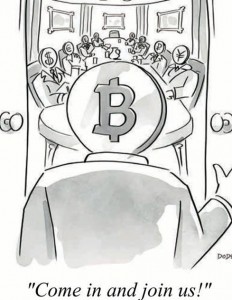
Bitcoin Value Plunges

Glitch in technology frightens off investors.  Our correspondent Andreas Frank states:  Bitcoin prices plunged again Monday morning after Mt.Gox, the major exchange for the virtual currency, said technical problems require it to continue its ban on customer withdrawals.

Mt.Gox said it has discovered a bug that causes problems when customers try to use their account to make a transfer or payment of bitcoins to a third party. It said the problem is not with Mt.Gox software but affects all transfers of bitcoins to third parties.

The exchange said it was suspending withdrawals and third-party payments until the problem is fixed, although trading in bitcoins continues.

A bug is allowing a third party receiving a bitcoin transfer to make it look as if the transfer did not go through, which can lead to improper multiple transfers, Mt.Gox said. Mt.Gox tried to put the best face on the technical problems in its latest statement, noting that the technology is “very much in its early stages.”  MtGox on Bitcoins

MtGox Bitcoins