Crowdfunding in Real Estate

The crowdfunding movement has long flown a patchwork banner. There’s the Kickstarter variety, in which funders give money to worthy projects, sometimes for rewards.  Peer-to-peer lending is sometimes described as crowdfundingi for loans, and some companies have already used crowdfunding to sell shares to accredited (aka wealthy) investors. Others await U.S. Securities and Exchange Commission rules to open equity crowdfunding to a broader pool of investors.  Crowdfunding for Real Estate


Crime, Corruption And Tax Evasion Still Out Of Controll

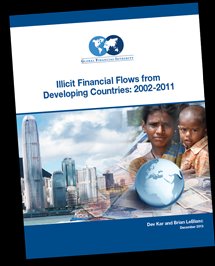
Crime, corruption and tax evasion drained USD 946.7 billion from the Gfintegritydeveloping world in 2011, up more than 13.7 percent from 2010, when illicit financial outflows totalled USD 832.4 billion – a dramatic increase from 2002, when illicit outflows totaled just USD 270.3 billion.

Cumulative illicit financial outflows from developing countries added up to € 5.9 trillion between 2002 and 2011.

“As the world economy sputters along in the wake of the global financial crisis, the illicit underworld is thriving… siphoning more and more money from developing countries each year,” GFI said.

Anonymous shell companies, tax haven secrecy, and trade-based money laundering techniques drained nearly a trillion dollars from the world’s poorest in 2011, at a time when rich and poor nations alike are struggling to spur economic growth.

The report said six of the top 15 exporters of illicit capital are in Asia (China, Malaysia, India, Indonesia, Thailand and the Philippines), two are in Africa (Nigeria and South Africa), four in Europe (Russia, Belarus, Poland and Serbia), two are in the Western Hemisphere (Mexico and Brazil) and one is in the MENA region (Iraq). In the last 10 years, China topped the list with USD 1.08 trillion in black money outflow, followed by Russia (USD 880.96 billion), Mexico (USD 461.86 billion) and Malaysia (USD 370.38 billion). “It’s extremely troubling to note just how fast illicit flows are growing,” said GFI Chief Economist Dev Kar.

Over the past decade, illicit outflows from developing countries increased by 10.2 per cent each year in real terms-significantly outpacing GDP growth. This underscores the urgency with which policymakers should address illicit financial flows.
“While global momentum has been building over the past year to curtail this problem, more must be done. This study should serve as a wake-up call to world leaders: the time to act is now,” GFI said.

Disputing the GFI figures, critics say the estimates of illicit outflow was overstated as the estimates in the report of trade mispricing had not been taken into consideration. The GFI estimates were essentially unrecorded financial flows, which were not necessarily synonymous with illicit financial outflows.

GFI chief economist Dev Kar said they had taken all data into consideration and made the necessary adjustments before calculating the estimated illicit outflows.
“The estimates provided by our methodology are still very conservative. They do not include trade ‘misinvoicing’ in services, same invoice trade ‘misinvoicing’, ‘hawala’ transactions or bulk cash transactions.

“This means that much of the proceeds from drug trafficking, human smuggling and other criminal activities, which are often settled in cash, are not included in these estimates.”
Press Release – Illicit Financial Flows from Developing Countries
GFI IFF Developing Countries

Crime, Coruption And Tax Evasion Still Out Of Controll

The US Corporate Tax Debate

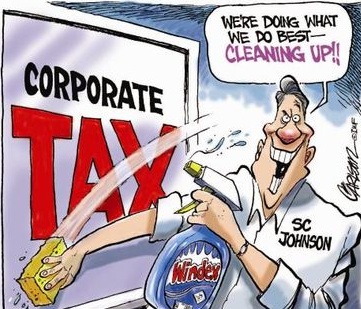
Clearly corporate taxes need to be revised in the US.  Our resident policy guru, attorney and political activist Lloyd McAulay, weighs in on the goals of revision and how they should be received.

Here are the goals McAulay thinks should be the beacons of reform:   (i) encouraging investment and job creation, (ii) maintaining a mathematically progressive personal tax code in which higher income individuals pay a higher percentage of income as taxes and (iii) minimizing the regressive impact on the cost of goods and services of high corporate profit taxes.   Corporate Taxes

Corporate Taxes

A Locavore Food Woman

The decentralized 19th-century agricultural model, in which farms and food production were integrated into communities, may be one ironically progressive solution to righting the wobbly petroleum-wheeled food cart. And if the peak-oil scenarios are right, and $300-a-barrel oil is in our imminent future, a 2,000-mile salad from the Salinas Valley of California will be considered a luxury food item, right up there with Perigord black truffles and foie gras. The environmental awakening of the past decade has been encouraging,   Doing Good by Doing Good in the Food Business

Locavores

Run Run Shaw, Hong Kong Film Mogul, Dies

The Hong Kong entertainment magnate and philanthropist Run Run Shaw, who died today at 106 or 107, isn’t that well known in the West. But his fans, from Quentin Tarantino to the Wu-Tang Clan, sure are.

Shaw was the producer of many a classic of the wuxia, or martial-arts, genre: Come Drink with Me, The One-Armed Swordsman and The 36th Chamber of Shaolin. Ang Lee’sCrouching Tiger, Hidden Dragonsurprised Western viewers in 2000, but Asian filmgoers had seen it all before, in movies directed by King Hu and produced by Shaw.

Shaw also invested in some Western movies, notably 1982’sBlade Runner, in which director Ridley Scott offered a vision of Asianized future.

The entrepreneur’s Shaw Brothers Studio declined in the 1970s, after he guessed wrong on the commercial prospects of a guy named Bruce Lee. But by then he had already founded Television Broadcasts Limited, a successful company he ran until 2011. It launched the careers of many performers who became movie stars, including Chow Yun-fat, Maggie Cheung, Stephen Chow and Leslie Cheung.

Like many of Hong Kong’s leading cinematic figures, Shaw was born in mainland China. (The date was in 1906 or 1907, confusion engendered by differences between Chinese and Western calendars of the time.) Then known as Shao Ren Leng, he entered the movie distribution business in Singapore in 1927, when he was 19, working for one of his older brothers.

The family had started making movies in 1924 — Run Run Shaw directed one,Country Bumpkin Visits his In-Laws, in 1937 — and moved the operation from Shanghai to Hong Kong in 1936. After World War II, Shaw claimed, he restarted the company with $4 million in gold, jewelry and cash he and a brother had buried in their backyard.

When Shaw Movietown opened in Hong Kong in 1961, it was the world’s largest privately owned film production facility. At Shaw Brothers’ 1974 peak, it made 50 movies annually.

Over the years, Shaw donated billions to arts, education and medicine, and endowed the Shaw Prize, an Asian counterpart to the Nobels. Generous as it was, though, his philanthropy may never eclipse such landmark cinematic moments as the multi-level teahouse brawl in Come Drink with Me.

Run Run Shaw

Does the Cloud Drive Growth?

The cloud levels the playing field in today’s fast-changing economic environment. Increasingly small- and medium-sized businesses are turning to the technology and may even be taking the lead in cloud computing adoption.

And the technology is becoming easier to adopt and more useful out of the box. More services are being layered on, from mobile to social media. And new options for signing up for the cloud are emerging. All of which means that small- and medium-sized companies (SMBs) can spend less time and resources managing technology and more time growing their businesses.   Does the Cloud Drive Growth

Cloud Computing

Future US Fed Policy

As Janet Yellen assumes the chairmanship of the Federal Reserve Bank, her main competitor for the job, Larry Summers, comments on the current US economy.   The questions he raises will surely have to be addressed by Yellin.

Summers’s argument is that there are deeper problems afoot in the U.S. economy, and that so long as the Fed keeps trying to coax growth through easy money policies, without corresponding efforts by fiscal policymakers to increase demand in the economy or structural reforms to boost the country’s longer-term economic potential, we are consigned to a cycle of endlessly expanding credit and asset bubbles.

“If the United States were to enjoy several years of healthy growth under anything like current credit conditions, there is every reason to expect a return to the kind of problems of bubbles and excess lending seen in 2005 to 2007,” Summers writes, “long before output and employment returned to normal trend growth or inflation picked up again.”  Future Fed Policy

Infrastructure


Trading Algorithms Get Smarter

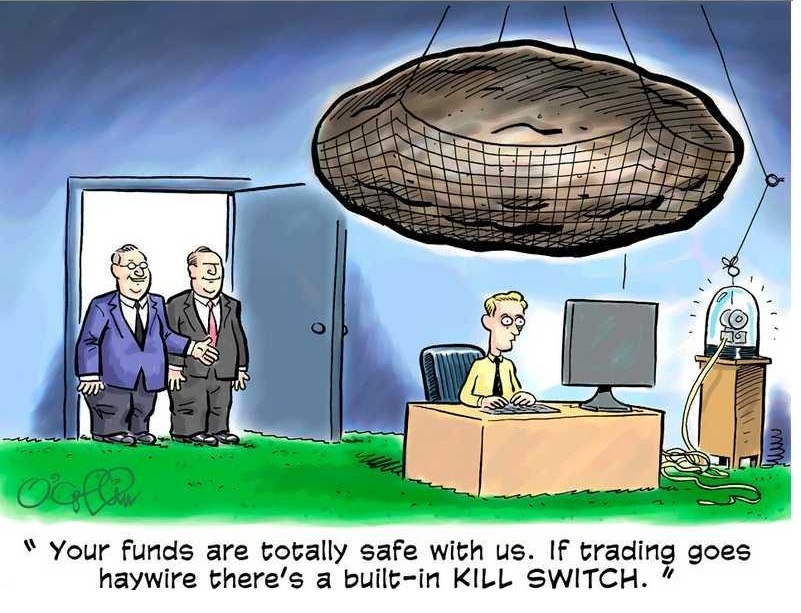
Blinding speed and low latency are giving way to instrumentation and fine-tuning as the objective of algorithm users.  “Speed is changing from being a competitive edge to being a requirement of the trading platform,” said Hazem Dawani, chief executive of OptionsCity, provider of the Freeway platform. “The trend is to build intelligent trading strategies that use predictive analytics.”  Algorithms Get Smarter

Algorithms