Reserve Bank of India

Mumbai: The Reserve Bank of India (RBI) warned on Monday that India’s Rs. 81 trillion banking industry faces higher risks because of increasing bad loans and restructuring of debt by stressed corporate borrowers. Stubbornly high inflation, too, remains a major concern, the central bank said in its biannual financial stability report (FSB).

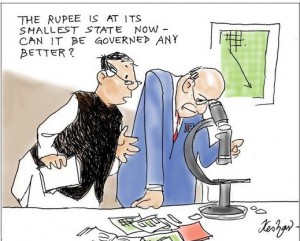
Risks to the banking sector have increased since the previous FSB was published on 27 June, RBI said.  “All major risk dimensions captured in the banking stability indicator show increase in vulnerabilities in the banking sector,” the report said. “Asset quality continues to be a major concern for scheduled commercial banks (SCBs). The gross non-performing assets (NPA) ratio of SCBs as well as their restructured standard advances ratio have increased.”    Reserve Bank of India Looking at Grim Future

India Rupee

Nigeria : Separate Micro-Finance Bank For Women Farmers

Abuja, Small Scale Women Farmers Organisation in Nigeria NANhas called on the Federal Government to establish a separate micro-finance bank run by and for women only, to address gender disparity among other challenges.

Mrs Sarah Yapwah, the National President of the organisation, made the call in an interview with the News Agency of Nigeria (NAN) on Tuesday in Abuja. According to her, the way agriculture-related policies are being implemented in the country does not favour women.

She advised that government should emulate the Government of India to address the bottlenecks in the present process. “In India, the government has established a micro finance bank for women only and it is a woman that is charge. “Our government can do the same for us because of all the monies they have released to various commercial banks to assist farmers. “These monies have not gotten to the hands of most women farmers because of the bottlenecks but with the micro-finance bank for women, I know we will be able to access it.”

She argued that micro- finance banks were more effective than public banks in giving loans to alleviate poverty. Yapwah said that her organisation had met with members of the legislature to present its case, so that government policies in the agriculture sector could begin to favour women.

The president also said that the organisation was  working alongside the Nigeria Incentive Based Risk-Sharing System for Agricultural Lending (NIRSAL) of the CBN, to facilitate access to loans for its members who had applied. She commended the efforts of Actionaid Nigeria, an NGO, for consistently building the capacity of smallholder farmers through organisations like hers and also advocating for their interest at various local and international fora. She said that the agency had also facilitated various training programmes on agricultural and agronomic practices for smallholder farmers, thereby empowering them, adding that government should emulate such the gesture.

NAN reports that the Small-Scale Women Farmers Organisation in Nigeria is a National Platform for smallholder women farmers, created by Actionaid Nigeria, to increase the voice of the smallholder women farmers and their engagement with agricultural policies. It is also meant to create a space for women farmers to advocate for their needs with regard to investments and development of the sector.
Body Canvasses Separate Micro-Finance Bank For Women Farmers

Nigerian Observer


Computer Chaos Congress Celebrates 30th Anniversary

Freelance journalist Glenn Greenwald spoke at the opening day of the 30th annual Chaos Computer Club meeting, which is being called “30C3,” a short form for “30th Chaos Communication Congress.” Organizers attributed record attendance of around 8,000 people to this year’s revelations from Greenwald’s most famous source, former National Security Agency (NSA) contractor Edward Snowden.

Greenwald, one of the people with access to some of Snowden’s leaked documents, appealed to other governments “who have been the biggest beneficiaries of his revelations” to offer him asylum.   Computer Chaos Congress

Glenn Greenwald

30th Chaos Communication Congress

The 30th Chaos Communication Congress (30C3) is an annual four-day conference on technology, society and utopia. The Congress offers lectures and workshops and various events on a multitude of topics including (but not limited to) information technology and generally a critical-creative attitude towards technology and the discussion about the effects of technological advances on society.
Livestream on you tube:

Official website: http://events.ccc.de/  / http://www.ccc.de/
Twitter: #30c3 @ccc
Berliner Zeitung
Kongress des Chaos Computer Clubs Das Woodstock der Anti-NSA-Hacker

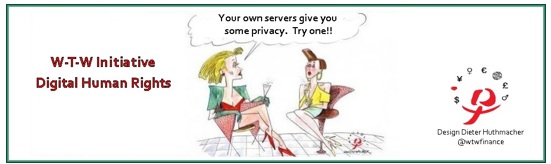
Digital Human Rights


More Women on Silicon Valley Boards?

Silicon Valley is the nation’s hub for technology advancement, innovation, dynamic thinking and progressive politics. But when it comes to America’s leading technology companies in Northern California, the composition of their board of directors is anything but diverse.

Does the boys’ club atmosphere of the corporate boards impact on businesses?  And would the presence of women and minorities change matters?  Do shareholders care enough to effect this?  Women on Silicon Valley Boards

The Credit Suisse Research Institute found that, from 2005 to 2011, the shares of companies with at least one woman on the board outperformed those without any women.  The New Yorker Reports


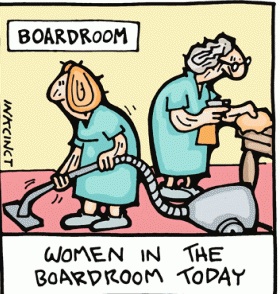
Women in the Boardroom

Women in High Tech Worldwide

IT workplaces can become hostile or even toxic environments for women. Not only are they more male-dominated than other types of firms but they also tend to be governed by “cultures of engineering” in which male technical prowess is an organizing principle for social relations. The following project seeks to expand on this important theoretical field to address the implications of these cultures of engineering in an increasingly global era. Little attention has been directed, first of all, to the issue of whether there might be different kinds of discriminating environments across national contexts. Common types of discrimination experienced by women engineers in the Global North may be less prevalent in other parts of the world. Moreover, there may be hidden advantages for women engineers in Global South settings, which are useful in alleviating tensions in the Global North, and vice versa. Second, there has been surprisingly little research attention given to the global dynamics of IT workplaces, even though the high tech industry is in a stage of rapid change.   Global Circuits of Gender- Women and High Tech Work

Women in High Tech

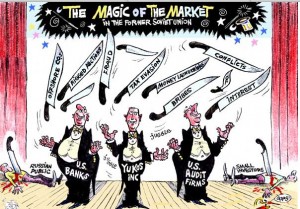
Trailing the Yukos Money from Russia to the World

President Vladimir Putin’s Russia waged an all-out war against  President Vladimir Putin’s Russia waged an all-out war against him and his partners, and if they managed to hold on to their substantial resources, that is an encouraging sign for other wealthy Russians fearing that the state might confiscate their assets. It is also a strong argument for continued capital flight from Russia: Much of Khodorkovsky’s hypothetical remaining wealth would come from the foreign investments of his now-defunct oil company, Yukos, once Russia’s biggest oil company.  Khodorkovsky and his partners, and if they managed to hold on to their substantial resources, that is an encouraging sign for other wealthy Russians fearing that the state might confiscate their assets. It is also a strong argument for continued capital flight from Russia: Much of Khodorkovsky’s hypothetical remaining wealth would come from the foreign investments of his now-defunct oil company, Yukos, once Russia’s biggest oil company.  Follow the Yukos Oil Money

Yukos

Women in Philippines Unlock $300B in Resources

Of the more than a dozen women Philippine President Benigno Aquino appointed to senior administration posts since gaining power in June 2010, one of the most diplomatically sensitive was Miriam Coronel-Ferrer.

Coronel-Ferrer’s credentials for the position of chief negotiator with rebels from the embattled island of Mindanao were excellent: A member of the peace panel since 2010, she was a political-science professor at the University of the Philippines in Quezon City near Manila and an advocate of a negotiated settlement for more than a decade. The problem was whether her gender would be an issue with the rebels.

“I’m not anti-women, but is your counterpart ready?” Coronel-Ferrer, 54, recalls Aquino saying. At that time, the all-male team of the Moro Islamic Liberation Front, or MILF, assured Aquino it would accept anyone he appointed.

Success after four decades of conflict would help reintegrate the Muslim-majority region with the largely Catholic nation and boost incentives for investment in an estimated $300 billion of minerals and resources. Failure would risk a resurgence of fighting that has cost as many as 200,000 lives. Coronel-Ferrer has won agreements in the past year on the key issues of wealth- and power-sharing and aims for a final accord with the biggest rebel group in talks scheduled for next month.   Women Unlock 300 Billion in Resources in the Phillipines

Islam Rebels in Philippines

Further Comments on Patent Trolling in the US

Our resident sage Lloyd McAulay, a patent attorney and political activist, comments on the patent trolling controversy:   Much concern has been expressed by studies showing that over half the patent litigation is brought by non practicing entities (NPE).  They are called trolls if you don’t like them.  Some, perhaps most, of recent doctrinal “refinements” by the Courts seem to be informed by a concern with the abuse of NPE litigation.

Much patenting is to protect a company’s financial investment in developing, testing and marketing new technology.  Few would dispute the value of such. Patents that give exclusivity to  a company encourages investment in research, development and marketing.

A significant amount of patenting is by research individuals and other entities (often university based) for the purpose of developing new technology for license or sale to others.  Few would dispute the value of such.  Let us call them “non practicing inventive entities” (NPIE)

What raises concern is the use of patents by NPEs that are not NPIEs in contexts.  There are too many cases where a patent owned by a NPE inhibits further improvement.  Such patents often  represent a low level of investment development in which a smart guy lays out a novel approach in a computer assisted method of doing business.  Often the patent gets a scope of claim protection  beyond what is taught and contributed.  That is, if there is any invention at all, the claim scope goes too far.  In such cases, the award of patent coverage inhibits further development by an amount that is not worth the value to society of the invention on which the patent is based .

Ideally, the courts should look to what patent exclusivity is  necessary, or even useful, to encourage the investment required to develop, test and market the invention.  As a practical matter that is too demanding in time and cost to warrant such an inquiry.   We basically have doctrines which can be used for that economic evaluating purpose.  They need to be used with that purpose in mind.

I suggest that in considering (a)  claim scope (validity and infringement), (b) infringement damages and (c) appropriateness of an injunction, the following factors be part of what is  considered.  Many of the following have at times been termed secondary factors of non-obviousness.  They are all relevant to the purpose of encouraging  investment:

  1. Whether or not the product has been marketed by the patent owner or licensee
  2. Whether or not there has been industry or professional recognition of the invention.
  3. The amount spent to develop, test and market the invention.
  4. Determining whether or not the invention would have been developed and marketed without the lure of patent exclusivity.
  5. Whether or not others have licensed the patent
  6. The dollar amount of product sold that incorporates the patent.
  7. The degree to which the alleged infringer has copied the invention; either by copying the teachings in the patent or by copying the product manufactured by the patent owner.
  8. The importance of the problem addressed by the inventor
  9. The length of time that the problem addressed has been recognized as a problem.
  10. The extent to which the invention employs or requires new technology.


Patent Troll