How to Keep the World Trade Organization Relevant

The WTO is the central pillar of the system established after World War II to prevent a reversion to 1930s-style protectionism and trade wars. It is intended to keep a lid on member countries’ import barriers, and allows its 159 member states to take their trade disputes to WTO tribunals rather than imposing tit-for-tat sanctions.

Now it must address two critical problems which have arisen in recent decades.  One is currency manipulation  Should countries — China being an obvious example — be allowed to hold down their currencies’ exchange rates to gain competitive advantages? Another is climate change: Should countries that strictly curb their carbon emissions be allowed to impose countervailing tariffs on imports from countries that lack similar controls?  WTO Struggles

WTO Splitting in Bali


Bank of America Weighs in on Bitcoins

Analysts at Bank of America Merrill Lynch issued the bank’s first research report today on Bitcoin, the virtual currency that approximates cash on the internet, concluding that the currency has the potential to become a “major means of payment for ecommerce” as well as a “serious competitor to traditional money transfer providers.”

Assuming Bitcoin becomes mainstream, Bank of America currency strategists estimate it is worth $1,300 apiece. But with the value at $1,000 today and increasing rapidly, it is in danger of “running ahead of its fundamentals,” they write.

The report also notes that the rapid jump in Bitcoin’s value — which was just $100 in August — correlates with interest in the currency coming from China.

Bitcoin’s disadvantages according to the report are the same as those regularly discussed in the Bitcoin community: its price volatility disincentivizes its use for trade, transactions take 50 minutes to process, and its legal status is still undetermined. Governments will have an incentive to “crack down” on Bitcoin if it gets too big, the report says.

BANK OF AMERICA ESTIMATES BITCOIN COULD BE WORTH $1,300 APIECE

The researchers also note that security at the exchanges where people buy and sell Bitcoin has been historically unreliable, as evidenced by thefts and hacks in the past.

Bank of America is the first major Wall Street bank to issue an opinion on the virtual currency, which has grown in prominence since it debuted in January of 2009.

The report is a positive sign for those who hope that Bitcoin will become a universal currency, but it’s ironic considering the technology was designed to empower individuals over banks. The last time Bitcoin made a splash in the financial district was probably 2011, when the Occupy Wall Street protest became one of the first major efforts to accept donations in the currency. But now that the total Bitcoin economy is worth $13 billion, it seems everyone wants a slice.    Bank Of America on Bitcoins

Bitcoins Value?

Obama Tiptoes Toward the Inequality Issue in the US


Robert Reich, former Secretary of Labor, comments:

The president’s speech yesterday on inequality avoided the “R” word. No politician wants to mention “redistribution” because it conjures up images of worthy “makers” forced to hand over hard-earned income to undeserving “takers.”

But as low-wage work proliferates in America, so-called takers are working as hard if not harder than anyone else and often at more than one job.

Yet they’re still not making it because the twin forces of globalization and technological change have reduced their bargaining power and undermined their economic standing — while bestowing ever greater benefits on a comparative few with the right education and connections (and whose parents are often best able to secure these advantages for them).

Without some redistribution, our ever-increasing number of low-wage workers won’t have enough money to keep the economy going.

Better education and training for those on the losing end is critically important, as are several of the other proposals the president listed. But they will only go so far.

The number of losers is growing so quickly and so much of the economies’ winnings are going to a small group at the top  – since the recovery began, 95 percent of the gains have gone to the richest 1 percent — that some direct redistribution of the gains is necessary.

Without some redistribution, the losers are likely to react in ways that could hurt the economy. They’ll demand protection from global markets they believe are taking away good jobs and even from certain technological advances that threaten to displace them (rather than smash the machines, as did England’s 19th-century Luddites, they’ll seek regulations that preserve the old jobs).

Without some redistribution, our ever-increasing number of low-wage workers won’t have enough money to keep the economy going. (This is one reason why the current recovery has been so anemic.) And without some redistribution, America’s growing army of low-wage workers may fall prey to demagogues on the right or left who offer convenient scapegoats for their frustrations.

One way we already redistribute is through the Earned Income Tax Credit (EITC), a wage subsidy for the working poor, which, at about $60 billion a year, is the nation’s largest anti-poverty program. It’s like a reverse income tax — larger at the bottom of the wage scale (now around $3,000 for incomes around $20,000) and gradually tapering off as incomes rise (vanishing at around $35,000).

The EITC subsidy should be enlarged and extended further up the wage scale before tapering off. How to pay for this? By cutting subsidies and special tax breaks for the oil and gas industries, big agribusiness, military contractors, hedge-fund and private-equity partners and Wall Street banks. And by capping individual tax deductions (deductions are the economic equivalent of government subsidies) for gold-plated health care plans, lavish business junkets and interest on giant mortgages.

In other words, we can finance much of this redistribution to the working poor by ending unnecessary redistributions to the wealthy.


Kaloti Suffers Reputation Damage

Kaloti Group ‘compliant with Dubai Kaloti
gold audit? Tradearabia

Mr. Munir R. Kaloti, President of Kaloti Jewellery International DMCC stated: “The DFSA confirmed that neither I nor the Kaloti Group of Companies are or were part of the DFSA’s investigation of Deutsche Bank. The manner in which my name was cited in the claim was extremely damaging to my reputation and my lawyers are investigating why this was the case. I was given no prior warning that I would be named and had at no time been contacted by either party regarding my account.”

“Nonetheless, I want to make it clear that I have authorised my office to submit all documents in my possession should they be requested by the DFSA,” he said.

On November 17, 2013 DFSA had announced that it had commenced proceedings in the DIFC Courts to enforce compliance by Deutsche Bank DIFC Branch (DBDIFC), with a notice requiring information.On November 21, 2013 DFSA confirmed that neither Munir Kaloti nor the Kaloti Group of Companies are or were the subject of the DFSA’s investigation of Deutsche Bank DIFC branch.

Kaloti Group of Companies published on November 27, 20013 a self-evaluation titled “DMCC Responsible Sourcing of Precious Metals Guidance Compliance Report” and a report Ernst & Young Dubai commissioned from Kaloti Group of Companies titled “Independent Reasonable Assurance Report”.

Katloit’s “Compliance Report” outlines the steps taken by Kaloti Jewellery International DMCC (KJI) and Kaloti Jewellers Faclory Ltd. (KJF) to achieve full compliance with the DMCC’s Responsible Supply Chain Guidance as well as following all international regulations covering Anti Money Laundering and Terrorist Financing.

Katoti Jewellery International DMCC (K]I), which is based in Dubai, is responsible for the management of all aspects of the physical precious metals business in the United Arab Emirates. It is the licensed entity that faces clients and counterparty service providers such as international bullion banks, security and logistics companies, insurance and airline firms. Kaloti Jewellers Factory Ltd. (KIF), an independent entity based in Sharjah, is the refinery service provider of the Kaloti’s United Arab Emirates operations and is the entity that enjoys Dubai Good Oelivery accreditation. References to systems, procedures and controls in this refinery report collectively cover both KJI and KJF.

Not surprisingly, the self-evaluation comes to the conclusion:

  • We have fully implemented all aspects of the Practical Supply Chain Guidance issued by the Dubai Multi Commodity Centre (DMCC) which is based on the OECD Due Diligence Guidance for Responsible Supply Chains of Minerals from Conflict-Affected and High-Risk Areas. We are fully committed to adopting any future guidelines, rules or regulations with res pect to the responsible supply of gold and precious metals and all other international rules relating to anti-money laundering and the fighting of terrorist financing.
  • We will continue to strive to upgrade and improve our risk classification and risk mitigation processes and educate our staff and our suppliers on an on-going basis to ensure that the highest possible standards of responsible supply chains a re maintained.

Ernst & Young Report “Independent Reasonable Assurance Report on Kaloti Jewellers Factory Ltd’s Refiner’s Compliance report”

As can be expected, the commissioned Ernst & Young report resulted in EY’s opinion, that the Refiner’s Consolidated Compliance Report dated 27 November 2013 in all material respects. describes fairly the activities undertaken during the period from 1 June 2012 to 31 December 2012 and in cases where high and medium risks deviations were noted, the subsequent corrective action plan implemented to demonstrate compliance and management’s overall conclusion contained therein is in accordance with the requirements of the DMCC’s Practical Guidance for Market Participants in the Gold and Precious Metals Industry, version 1 April 2012 and with the DMCC Review Protocol on Responsible Sourcing of Precious Metals in issuance as at the date of this report.

However the EY report made the following caveat:

Without modifying our conclusion, we draw attention to

  • the respective instances of deviations noted for the period from 1 June 2012 to 31 December 2012 set out in the Refiner’s Consolidated Compliance Report at the end of Steps 1 and 2 that have been subject to a subsequent corrective action plan; and
  • the description at the end of Step 2 of the Consolidated Compliance Report of the corrective actions on assisting suppliers in moving away from cash settlement that was remediated in November 2013 subsequent to the implementation of the corrective action plan

The German financial watch-dog BaFin had hired Ernst & Young in August 2013 to investigate Deutsche Bank’s alleged AML/CFT deficiencies. This is another disturbing example that the auditors, the so-called gate keepers, have a conflict of interest by indiscriminately serving all parties.
Kaloti_Compliance_Statement_27.11.13
EY_Kaloti_Evaluation_27.11.13
Kaloti Suffers Reputation Damage


Back to Basics Like Infrastructure Important Investments

Kenneth Rogoff, a former chief economist of the IMF, is professor of economics and public policy at Harvard University writes:  Is today’s slow growth in advanced economies a continuation of long-term secular decline, or does it reflect the normal aftermath of a deep systemic financial crisis? More important, do we need to answer that question definitively in order to boost the pace of economic recovery?   Should We Be Focusing on Fundamental Investments

Infrastructure Invetment?

Is Investment Imperiled by Energy Shortages in South Africa

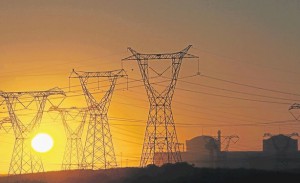
The power supply in South Africa has become stretched at a time when commerce is listless. Figures published on November 26th showed that GDP grew between June and September at its slowest rate since 2009. It is strange that a country whose exports depend heavily on energy-intensive industries, such as carmaking and mining, has been so careless about power. Fitful electricity may now be as much a turn-off to much-needed investment by foreign companies as red tape and strikes. But then South Africa is a strange country.  Electricity Short in South Africa

Electrical Failures in South Africa

Illegal Mining and Forestry in the Venezuelan Amazon

Illegal mining is destroying the forest and polluting the water in the Venezuelan Amazon.  The armed forces, whose duties include environmental protection, are accused by the Amerindians of complicity with the illegal miners and with the guerrillas of Colombia’s FARC, who have shifted their camps to Venezuela to evade military pressure at home.

“The guerrillas ordered the villagers not to go out at night,” says Uriel Blanco of OPIJKA, an organisation that defends the rights of the Jivi tribe. In the early hours, community leaders claim, boats laden with fuel and food head upriver to guerrilla camps. Neither these boats nor the miners seem to have problems with checkpoints run by Mr Maduro’s National Guard. But the guard seizes game from Amerindian hunters, as well as any fuel or processed food for which they lack receipts. The state’s Catholic bishop, José Angel Divasson, says that for the FARC, Amazonas is more than just a refuge: “It’s clear that they are trafficking drugs. Why else would they need 500-metre airstrips? The light planes go over [to Colombia] with guns and they come back with drugs.”

The cocaine business, along with illegal mining of gold and coltan, a mineral used in the manufacture of electronic devices, creates an almost insatiable demand for petrol and diesel, which are heavily subsidised by the Venezuelan government.   Illegal Forestry and Mining in the Venezuelan Amazon

Illegal Timber in the Venezuelan Amazon