Deutsche Börse To Pay $152M To Settle Iran Allegations

Deutsche Börse, Europe’s largest exchanges operator by market value, has agreed to pay $152m to settle allegations by Washington that its Clearstream settlement business may have violated US sanctions on Iran.

The Frankfurt-based group accepted an offer made last week by the Office of Foreign Assets Control, part of the US government, to end an investigation. The sum is less than half the $340m Deutsche Börse had indicated to investors in January the settlement could total.

The OFAC had been examining Deutsche Börse’s Clearstream settlement and custody business, which settles trades for customers by swapping assets for cash. The agency, which enforces economic and trade sanctions, was looking at transfers within an omnibus account in the US run by Clearstream after it decided to close its Iranian customers’ accounts.

It is the latest settlement levied by the OFAC on financial institutions around the world over alleged sanctions violations. Last year Standard Chartered, the British bank, paid $132m to settle allegations.

The OFAC had offered Deutsche Börse a choice of receiving a “pre-penalty notice” – often a prelude to a civil financial penalty – of $168.8m. Alternatively, it would apply a 10 per cent discount for a total settlement. In response last week, the exchanges operator said: “A settlement with OFAC would not constitute a final determination that a violation has occurred.”

Deutsche Börse made a provision of €114.8m in its third-quarter results last week. Clearstream is central to its growth strategy as tighter regulations require more derivatives trades to be backed by collateral, or insurance for trading. Clearstream has more than €11tn of assets under custody.

Deutsche Börse 07.11.2013.doc

Clearstream settlement

Small Business Opportunities in Africa

The international aid for Africa is a $40-billion-a-year industry.  Smart startups, suggests an African entrepreneur, would be wise to explore the needs of this huge international organizations full of people in search of someone to do their job for them or make their life easier. Here is a list of 10 ideas to create customized services or application for their use:  Small Business Possibilities in Africa
Small Business

5 Most Powerful Indian Women In Financial Institutions


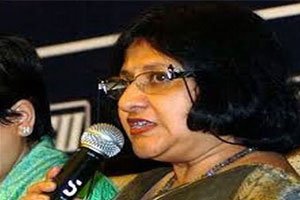
Bangalore: In the previous union budget, when Finance Minister P. Chidambaram proposed an idea to have exclusive banks for women he never thought he would appoint Arundhati Bhattacharya as the chairperson for the country’s biggest bank- State Bank of India. There has been increased number of women in the banking sector that was previously a male dominated industry.


Here is a list of those women achievers in the world of government-run financial institutions, compiled by Economic Times.
5 Most Powerful Indian Women In Financial Institutions

Arundhati Bhattachary chairperson of State Bank of India.

Endless Natural Resources in Africa

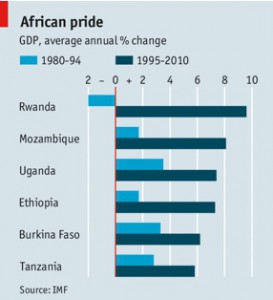
  A study published by the International Monetary Fund (IMF) finds that eight of the 12 fastest-growing economies in Africa in recent years did not rely on natural resources. Together these economies grew more quickly even than the group of oil producers.     The climate for private business is also much improved. Price controls and state-backed monopolies have been swept away. Rwanda stands out for its progress. Its coffee farmers once had little incentive to produce for export. The state set a single price for beans and took the lion’s share of any profits. But from the mid-1990s it granted private enterprise a bigger role. Now gourmet coffee from Rwanda is sold in posh grocery stores around the world.       Free exchange

Improvement in Africa

Gender Gap in Wages: US

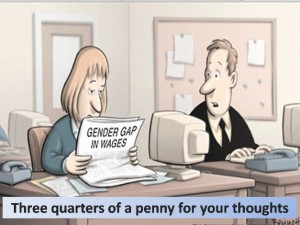
Men still get paid more than women for doing the same work.  Some industries and businesses are more discriminatory than others.  Sometimes the wage gap has to do with work done:  Male doctors are often surgeons who work longer hours than internists who keeps regular office hours.  But even factoring in real differences, men still get paid more than women for the same work.  Gender Wage Gap

Gender Gap in Wages

Are Bitcoins Inevitable?

New Silk Road drug bazaar opens a month after FBI bust

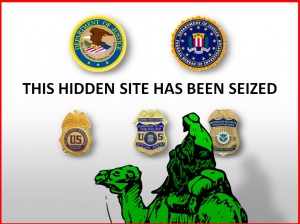
A new anonymous Internet marketplace for illegal drugs debuted on Wednesday, with the same name and appearance as the Silk Road website shut down by U.S. law enforcement authorities a month ago.

Like its predecessor, the new Silk Road listed hundreds of advertisements for marijuana, cocaine, ecstasy and other illegal drugs available for purchase from independent sellers using the anonymous Bitcoin digital currency.

On October 1, the Federal Bureau of Investigation shut down the original Silk Road and arrested its alleged mastermind, Ross William Ulbricht, 29, known online as “Dread Pirate Roberts,” in San Francisco.

“It took the FBI two-and-a-half years to do what they did … but four weeks of temporary silence is all they got,” a site administrator wrote, also using the “Dread Pirate Roberts” moniker.

The FBI declined to comment on the new version of the Silk Road. For more than two years, the original site acted like an eBay of vice, allowing users to buy and sell illegal goods and services on the assumption that they were safe from the law. Deliveries were made through the mail in discrete packages.

U.S. authorities also say Ulbricht had tried to call out a hit on a user who had threatened to expose the identities of thousands of Silk Road users.

Ulbricht’s lawyer on Wednesday said his client would plead not guilty to drug trafficking, hacking and money laundering charges.

The charges against Ulbricht said his website generated sales of more than 9.5 million Bitcoins, roughly equivalent to $1.2 billion.

The new website improves on technology from the previous Silk Road meant to keep identities secret, including measures to keep users from losing their Bitcoins in case the site shuts down, according to the new Dread Pirate Roberts.

Senator Tom Carper, a top lawmaker on the Homeland Security committee, who plans to hold a hearing on digital currencies this month, said the new Silk Road site shows that government needs to adapt to fast-moving technology.

“Rather than play ‘whack-a-mole’ with the latest website, currency, or other method criminals are using in an effort to evade the law, we need to develop thoughtful, nimble and sensible federal policies that protect the public without stifling innovation and economic growth,” Carper said in a statement.

A week after authorities shut down the Silk Road, British police said they arrested four men accused of being significant users of the site.

Two weeks ago, federal prosecutors said 144,336 Bitcoins were discovered on Ulbricht’s confiscated computer, adding to more than 30,000 Bitcoins previously seized.

With the digital currency trading at an all-time on Wednesday, those Bitcoins were worth close to $50 million, according to the Mt Gox trading website.

Like the original Silk Road, users access the new site using a no-cost, anti-surveillance service known as the Tor network instead of traditional web browsers.

The relaunched Silk Road will soon hire staff to handle marketing for the site, the administrator mentioned in his post.

“The Silk Road has risen once more. … Open communication with your old suppliers and customers, let this wonderful news be taken to all corners of the Tor Network and beyond,” the person wrote.

Bitcoins Silk Road Rises Again

Venezuela Tightens Currency Control

Venezuelan President Nicolas Maduro is tightening control of the foreign exchange system to fight what he calls an “economic war” being waged against his government.

Maduro is creating a centralized agency to administer the nation’s dollars to ensure the supply of needed imports and prevent speculation by those he refers to as the “parasitic bourgeoisie.”

He is also creating a joint civilian-military task force of inspectors that will be given the job of stamping out what the government alleges is price gouging and the hoarding by businesses of scarce goods like toilet paper and milk.

Since Maduro took over from the late Hugo Chavez in April, inflation in Venezuela has soared to 49 percent while the bolivar has plunged on the black market to a sixth of its official value.

Price Gouging