Does Britain Lead the World in Tax Havens?

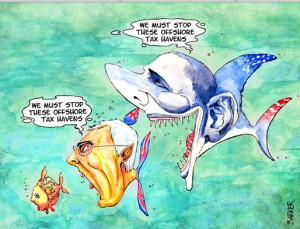
TJN’s appeal to the Queen seeks to draw a link between the contrasting prospects of those Commonwealth nations battling against poverty and those UK-linked tax havens that have attracted capital oversea because of the low tax and secrecy on offer.

“The victims of this secrecy include, among others, 2 billion Commonwealth citizens,” Christensen tells the Queen. “A recent study of 33 African countries found that they lost over $1tr in capital flight since the 1970s, of which $640bn came from 16 Commonwealth countries. These losses dwarf the external debts of ‘just’ $190bn for the 33 countries.”

The Queen is known to take a particular interest in her crown dependencies and overseas territories, which operate as largely self-governing jurisdictions. UK ministers have long been aware of the reputational risks of association with pariah tax havens but have frequently looked the other way, claiming their constitutional powers to intervene are negligible.  Does the UK Lead Financial Secrecy Havens


Tax Havens?

Getting into Oil and Gas in Kenya

Gina Din-Kariuki is the local shareholder of CAMAC Energy, a US-based New York Stock Exchange-listed company involved in the exploration, development and production of oil and gas.  “We are going to be exploring for oil in this region. So one of these days you will see me with a hard hat.”  Her entry into the energy sector makes Din-Kariuki one of very few women in Africa to actively invest in the energy sector.

“Maybe I will bring a little bit of glamour to the oil industry,” she says with a chuckle.  But beyond bringing glamour, Din-Kariuki hopes to influence policies that will see Kenyans benefit from the country’s resources. This is also a serious long-term investment for her.   Entrepreneurship in Kenya

Into Oil and Gas in Kenya

Ireland and the EU: Austerity Works?

The Irish have a long history of being tyrannized, exploited, and oppressed-from the forced conversion to Christianity in the Dark Ages, to slave trading of the natives in the 15th and 16th centuries, to the mid-nineteenth century “potato famine” that was really a holocaust. The British got Ireland’s food exports, while at least one million Irish died from starvation and related diseases, and another million or more emigrated.

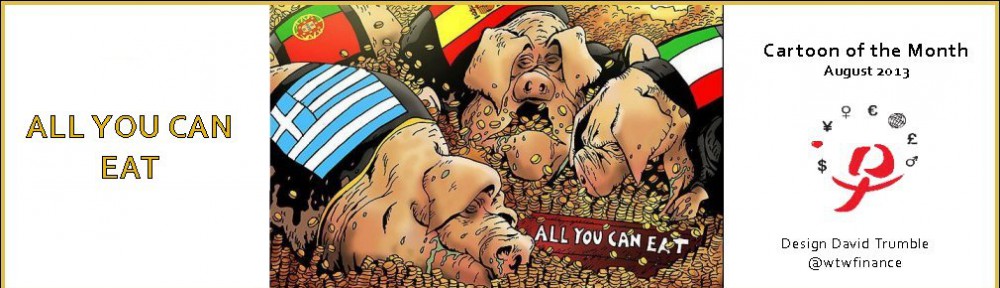
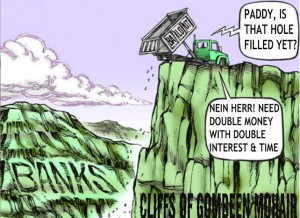
Today, Ireland is under a different sort of tyranny, one imposed by the banks and the troika-the EU, ECB and IMF. The oppressors have demanded austerity and more austerity, forcing the public to pick up the tab for bills incurred by profligate private bankers.  Bank Guarantee Bankrupts Ireland

Bailout

Swiss Gold Refiner Accused Of Abetting Congo War Via Money Laundering

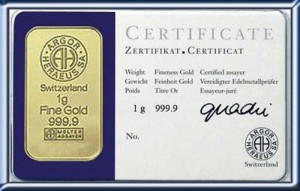
Swiss Gold Refiner Accused Of Abetting Congo War Via Money LaunderingThe war in the Democratic Republic of the Congo has been a terrible ordeal, costing an estimated 6 million lives since 1997. Part of what funded the long conflict was gold mined illegally in the resource-rich Congo. So far the parties that have been sanctioned by the United Nations for illegal mining and exploitation of the gold have all been African.

Now the net has widened. The Swiss NPO TRIAL announced that it was targeting a Swiss gold refinery part owned by Commerzbank and the Austrian mint for refining gold from the Congo. TRIAL said it filed a criminal complaint against gold refiner Argor-Heraeus, accusing the firm of refining 3 tons of gold ore pillaged from the Democratic Republic of the Congo. TRIAL suspects Argor-Heraeus “of being guilty of the crime of laundering the proceeds of a major crime … and handling goods pillaged during an armed conflict,” it said in a statement.
Swiss Gold Refiner Accused Of Abetting Congo War Via Money Laundering

Trial_Stop_Pillage_NewsRelease
Tria_Pillage_E-Congo
ArgorHeraeus_Commercial_Register
ArgorHeraeus_Comp_Presentation

Swiss Gold Refiner Accused Of Abetting Congo War Via Money Laundering2

Growth Factors in Africa: You Don’t Have to Dig

Good news for entrepreneurs.  The governments in many African countries, including Burkina-Faso, Ethiopia, Mozambique, Rwanda, Tanzania, and Uganda, are providing a solid base for startups.  You don’t have to mine or dig to get to profits.

With such a massive resource extraction industry on the African continent, an economic success story in Africa is often viewed as the result of an oil boom or large investments in the mining industry.

Take Zambia, where copper mining is credited with helping the country boost its GDP 6% between 2005 and 2012.

But according to the Economist, a recent report on sub-Saharan African economies by the International Monetary Fund (IMF) is challenging the perceived value of the resource extraction industry on African economies.

Eight of the 12 fastest-growing economies in Africa in recent years did not rely on natural resources.  These economies grew more quickly even than the group of oil producers.

In six countries, Burkina-Faso, Ethiopia, Mozambique, Rwanda, Tanzania, and Uganda, all low-income states, GDP growth was at least 5% a year on average from 1995 to 2010, and growth in GDP per head of at least 3% a year. according to the IMF figures.

Some key drivers were improved macroeconomic management, stronger institutions, increased aid, and higher investment in human and physical capital. These measures translated into controlled inflation and public finances and higher tax revenues.

Based on World Bank data, these nations are generally less corrupt, enjoy more stable politics and are better governed than their African peers.

In spite of the “robust growth” achieved so far, the report notes that these countries still face “low productivity and capital stocks, significant infrastructure gaps, and limited structural transformation.”

Although the IMF classified these countries as “not resource intensive” during the years examined in the study, this is not the case today. Gold now accounts for a significant portion of Burkina-Faso’s economy.

Meanwhile, investment in Mozambique’s natural resource sector is expected to fuel significant economic growth over the next few years as natural gas and coal become major industries.Fertile Ground for Business
Uzbekistan: The Dictator’s Daughter Circles Power

Gulnara Karimova covers up her business interests. Four of her associates have recently been implicated in related money-laundering investigations in Sweden and Switzerland. In July she was suddenly removed from her post as ambassador to the UN in Geneva, and so forfeited her diplomatic immunity. What is up?  The Economist reports.  Uzbekistan: Glitz and Sorcery in a Powerful Woman

Karimov's Footsteps

The GINI Problem World Wide

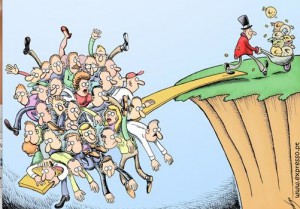
While this article focuses on inequality issues in the US, every country in the world is having or will have similar problems.  Whether countries are adjusting to post-industrial economies or speeding through their industrial phase at rapid rates caused in large part by technology, training people for the jobs societies can offer is a huge problem.  The solution to the GINI problem, for people of both right and left persuasion, lies in jobs.  Lloyd McAulay, a US lawyer and politician, examines the issues in the US.  The GINI Problem in the US

Inequality

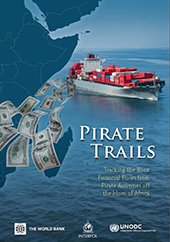
Pirate Trails: Tracking the Illicit Financial Flows from Piracy off the Horn of Africa

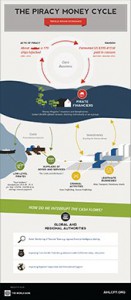
Piracy Money CycleMore sophisticated than you thought

A new study reveals how Somali piracy is financed
Ransoms Total Over US$339 Million, Says new research

Washington, November 1 — Between US$339 million and US$413 million was taken in ransom from the hijacking of ships off the coast of Somalia and the Horn of Africa between 2005 and 2012, according to a report released today. The study – carried out by the World Bank, the United Nations Office on Drugs and Crime (UNODC) and INTERPOL – reveals that much of the ransom money was used to fuel a wide range of criminal activities on a global scale.

PIRACY remains a concern for ships passing the Horn of Africa, The Piracy Money Cycle
even though the number of incidents has plummeted since 2011, when armed protection was beefed up on board many large vessels. The topic grips the public imagination. Witness the success of “Captain Phillips”, a film in which a vessel captained by the actor Tom Hanks is hijacked by Somalis. Yet the pirate economy is poorly understood. A report*, to be released on November 4th by the World Bank, the UN and Interpol sheds new light.
A new study reveals how Somali piracy is financed

Pirate Trails World Bank UNODC Interpol reportPirate TrailsMore Corruption Reports