Asia losing $89bn a year by failing to recognise women’s economic worth

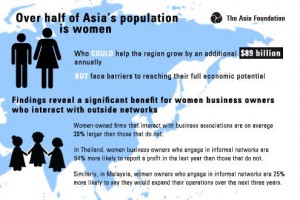
Over half of Asia’s population is women who, according to UN estimates, could be helping the region grow , but instead face barriers that keep them from reaching their full economic potential.

FOR entrepreneurs like Rusmala Dewi from Palembang on the Indonesian island of Sumatra, the need to earn money for the family means they don’t even finish secondary education. Dewi left school at 14 because her parents could no longer afford the fees. With about $20 in capital, she started making hand-woven Indonesian brocades called songket, completing about one a month.
Asia losing $89bn a year by failing to recognise women’s economic worthNetworking Essential to Women Entrepreneurs in Asia

Women and Finance

Big Money: On women in economics

It’s odd to hear from a female economist.

In Australia, Melbourne University economist Judith Sloan stands alone among female economists with a large public profile.

It’s not that female economists don’t exist. But they are few. And as most economists work in obscurity on topics worthy of little media attention, the odds of them breaking through are slim.

The funnel starts small too. When I studied economics at university, my first-year classes, held jointly with the accounting, commerce and finance majors, were full of women. But by second year, when classes focused just on economics, I became a small minority. By final year, it was not uncommon for me to be the only woman in my tutorials.
Big Money: On women in economicsWomen and Finance

International Trade in Lumber Transnational Organized Crimes?

At the Commission on Crime Prevention and Criminal Justice (CCPCJ) in April 2013, the heads of two United Nations bodies had called on countries to recognize wildlife and forest crimes as a serious form of organized crime and strengthen penalties against criminal syndicates and networks profiting from such illegal trade.

If wildlife and forest offences were treated as serious transnational organized crimes the above acts could be treated as predicate offences. The buyers in China and the US could be accused of Money Laundering.

Today, rogues cut down timber in Siberia and sell the timber to China.  China may or may not refine the timber, which is then sent to the US.  Prices for this lumber in the US are lower than any legitimate businessman can charge.  So the tainted lumber is undercutting legitimate businesses.

Publicly available information from NGOs’ reports and press articles can be prolific sources for suspicious ML/FT activities.

The act – which carries criminal penalties of up to $500,000 per violation – was amended in 2008 to include wood types to curb illegal logging.

Liquidating the Forests. Hardwood Flooring and Organized Crime

Corruption in the Siberian ForestsMore: Hardwood Flooring and  Organized Crime


Catherine Austin Fitts’ Book on Dillon Read

Fitts writes:  We are so financially entangled in the federal government and large corporations and banks that we cannot see our complicity in everything we say we abhor. Our social networks are so interwoven with the institutional leadership — government officials, bankers, lawyers, professors, foundation heads, corporate executives, investors, fellow alumni — that we dare not hold our own families, friends, colleagues and neighbors accountable for our very real financial and operational complicity. While we hate “the system,” we keep honoring and supporting the people and institutions that are implementing the system when we interact and transact with them in our day-to-day lives. Enjoying the financial benefits and other perks that come from that intimate support ensures our continued complicity and contribution to fueling that which we say we hate.

This important book is not available on Amazon, Abe Books or the New York Public LIbrary.  Online Book

Catherine Austin Fitts

Japanese Bank Tied to Criminal Groups

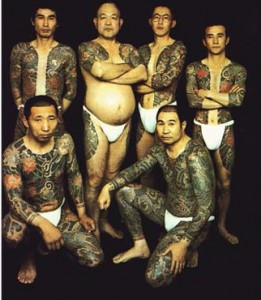
Officials at Mizuho Financial Group, Japan’s second-biggest bank, admitted top management knew at least three years ago about loans to criminal groups, highlighting the entrenched position of organized crime in the Japanese business world.

ties between yakuza gangs and the Japanese financial industry six years after the Financial Services Agency punished Mitsubishi UFJ Financial Group Inc. for doing business with the groups for decades. Sato apologized today, saying he bears responsibility even though he was only made aware of the loans in March during the FSA’s probe.   Mizhuo Financial Group Tied to Crime  Reported on Frank-cs.org

Yakusa Gangs


Swiss Vote to Cap Executive Pay

The Swiss people are showing that citizens can organize and take action to address growing income inequality by placing restrictions and caps on executive salaries. Since the 2008 global financial crises Swiss citizens have set their sights on excessive corporate pay and rising income inequality.

Already public activism by the Swiss people on executive pay has forced two referendums and efforts are underway to force a third referendum. Under Swiss law citizens are able to organize popular initiatives whereby the Swiss Parliament must hold a referendum on any initiative that has gathered more than 100,000 signatures.  In March 2013 the Swiss voted overwhelmingly to pass some of the strictest controls on executive pay, requiring that public company shareholders vote on compensation for executives.

In November 2013 the Swiss people will get a vote on another proposal to to cap and limit executive pay. The 1:12 initiative will limit executive pay to no more than 12 times the salary of the lowest paid worker. Compare that to the USA which has among the highest levels of income inequality in the world with a CEO to worker pay ratio of 185:1 and in Australia where the CEO to worker pay ratio is 100:1

Unsurprisingly, corporations and business groups oppose the Swiss  1: 12 initiative claiming that it will abolish prosperity  and is an attack on freedom. Global multinational corporations like GlencoreXstrata  threaten to move their headquarters out of Switzerland if the proposal is passed.

Now Swiss citizens are trying to establish a guaranteed basic income for all citizens.

On Friday Swiss citizen activists submitted over 130,000 signatures to the Swiss Parliament- enough to call a vote over whether or not to approve the proposal-  to create a law guaranteeing all Swiss nationals a guaranteed basic income of around $2800 per month.  In a public display of support, advocates of the measure tipped over a truck full of 8 million 5-cent coins (one for each citizen of the country.)Swiss Vote

The Dangers of Willful Blindness

In Margaret Heffernan’s brilliant book, Willful Blindness, she describes her first direct encounter with the state was in the Judge’s instructions at the end of the Enron trial.   “You may find that the defendant deliberately closed his eyes to what would otherwise have been obvious to him.  Knowledge can be inferred if the defendant deliberately blinded himself to the existence of a fact.”

Heffernan notes that many of the greatest crimes are not committed in the dark, but in full view of people who chose not to look and not to question.   The Catholic Church, the SEC, Nazi Germany, Madoff’s funds, the embers of British Petroleum’s refinery, and the dog-eat-dog world of sub-prime lenders, all willfully blind.    Willful Blindness

Willful Blindness

Verdi’s 200th Birthday Celebrated Around the World

The big event originated in Chicago. 
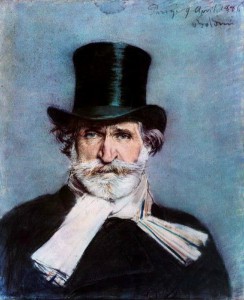
Verdi portrait

A bang-up birthday celebration for Giuseppe Verdi.  Streamed worldwide, Samuel Raimi was host.  The Maestro spoke in Italian, although he doesn’t ever have to display his chops.  The greatest living conductor of Verdi, and arguably the greatest living conductor, lit all the candles on Verdi’s cake in Chicago on October 10th.  In his pre-concert talk, the Maestro explained why the Requiem was a perfect way to celebrate a birthday.  It is after all about life and living.  The wrenching glories of life are on full display.

The masterful CSO responds to Muti not at all like putty in his hands.  They are making music with him, the most important undertaking.  Charming piccolo solos and surprising beats from the slim Cynthia Yeh on the drums, Richard Chen the concert master whispering and digging deep into his instrument.  The name of every orchestra member is displayed at the concert’s end, a tribute to the Muti resorgimento.

Even if you are not familiar with this Requiem, you appreciate all of its details polished like marble by the Maestro.  But they are not cold like stone, but rather warm, and often hot, in Muti’s hands.  The Requiem thrills.

Since a member of the concert committee in Milan wrote about the Libera Me, “You have written the most beautiful, the greatest, the most colossally poetic page that can be imagined, and Brahms followed up, “Only a genius could write such a work,” the Requiem has been performed as a celebration of life.

While the piece had started as a tribute to Giacomo Rosssini, when his celebration was cancelled, Verdi tucked the score away.  Verdi’s publisher kept begging for performance rights, but the composer replied the piece had no meaning without a Rossini commemoration.

Allesandro Manzoni was a famous 19 century author, who like Cervantes, gained fame by the publication of one book: I Promessi Sposi.  Verdi started to read his poetry at 16, and immediately composed an Ode.  Verdi wrote of Manzoni, “his was not only the great book of our epoch, but one of the greatest to emerge from the human brain.  It is…a consolation for humanity.”   The newly minted Requiem was dedicated to him.

Verdi chose the San Marco Church in Milan for its first performance, probably because its acoustics were wonderful.  Verdi was anticlerical and an agnostic throughout his life, but clearly his music is one path to a God.

He had studied the requiems of Cherubini, Berlioz and Mozart in Paris.  No one had used soloists as an integral part of their compositions.  Mozart composed for four, but made scant use of them.

The soloists take on new importance and in this performance they were to a one magnificent.  Muti takes such care in the blending of the voices.  Ildar Abdrazakov had smoothness to his bass role, sometimes singing from the head and sometimes the chest with a softly yearning quality.

Mario Zefferi, a tenor termed bel canto, pierced through the orchestra with every note in delivered.  Singing through the mask, with a ping that contrasted with his partners on stage, his tone was perfectly beautiful.  Verdi’s own choice for this role was a tenor who had a beautiful voice, but was notably stupid. Zefferi is no ‘pumpkinhead.’  With each entrance and particularly in the consummate Ingemisco, he shone.

Verdi picked contralto Maria Waldman for the role between soprano and tenor.  Daniela Barcellona had that wonderful, rich chest voice often associated with contraltos.  She was billed as a mezzo, and perhaps this is her range: she had some trouble in the lower and upper registers, but in this most demanding of the solo roles, was magnificent.

Both Barellona and Tatiana Serjan, the soprano phenom, have vibratos that match a stringed instrument’s. In some moments Muti conducts, he seems to be fingering a stringed instrument to bring forth texture.  He has clearly picked the two female soloists in marked contrast to their male counterparts: the purity of Zefferi and Abdrazakov’s rounded edges.  The mixture was delicious.

The renown of the Chicago Symphony Chorus is well deserved.  Everyone watching around the world could enjoy a fascinating precision.  The Orchestra collaborates with the Maestro in music making.  When Verdi conducted the Requiem, he welcomed applause between numbers which gave him an opportunity to have encores of the Recordare, Hostias and Agnus Dei.  No such luck in Chicago.  We will have to be content with encore listening to this performance over and over again at cso.org.