Zimbabwe at the Crossroads

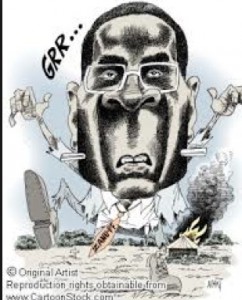
The United States and European Union also questioned the election, but observers from the 15-nation Southern African Development Community (Sadc) said the vote had reflected the “will of the people”. But whatever the politics, of immediate importance to ordinary Zimbabweans is whether the country’s frail economy can survive the end of the MDC and Zanu-PF unity government and the return to Zanu-PF rule.  Before the coalition was formed in 2009, the country had gone from being one of Africa’s strongest economies to one of its weakest – as Zimbabweans grappled with hyperinflation, mass unemployment and widespread poverty.  Zimbabwe After the Elecction

Zimbabwe

Women in Banking and Finance / Australia

I’m delighted to announce the appointment of Amanda Dobbie as WiBF’s first Chief Executive Officer. Amanda joins us having most recently been the Managing Director of Bloomberg in Australia, a position that she held for over 10 years. She devised and led the strategies that leveraged Bloomberg’s technical strengths and built it into what it is today – the dominant information distribution platform within the Australian financial industry. That experience aligns perfectly with our approach at WiBF – which is about leveraging strengths into success – for our organisation and our members..
WiBF appoints first CEO

Amanda Dobbie

Should Insider Trading Result in Forfeiture of Proceeds

The recent charges against insider trading at SAC Hedgefund and the government’s prosecution to seize the proceeds raises a very important question for the government coffers.  No need for austerity is these funds were available to societies.

The Federal Action Task Force says: It is critically important that governments include all relevant voices in developing a national anti-money laundering programme. They should, for example, bring law enforcement and financial regulatory authorities together with the private sector to enable financial institutions to play a role in dealing with the problem. This means, among other things, involving the relevant authorities in establishing financial transaction reporting systems, customer identification, record keeping standards and a means for verifying compliance.

Here is a report from Zambia. Definitions of Finance and Money Laundering

Insider Trading


GSK and the China Market

A China-born scientist was the first of 18 authors on the 2010 paper, which included graphs later shown to have incorrectly labeled healthy human cells as being those from multiple sclerosis patients. Liu says he opposes a retraction of the paper.  “It was an honest mistake, and it doesn’t affect the findings,” he said, sipping a cappuccino. “I can confidently say that I can recreate the result in any laboratory.”

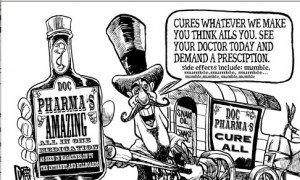
The disputed research isn’t part of the investigation of Glaxo China announced in late June by the nation’s Public Security Ministry of alleged economic crimes involving 3 billion yuan  ($489 million) of spurious travel and meeting expenses, and trade in sexual favors. Glaxo’s head of emerging markets of Abbas Hussain said on July 22 after meeting with government officials in Beijing that some of its employees may have broken China’s laws. The drugmaker has said it’s cooperating with the government’s investigation.

Race to Publish Shows Glaxo Zeal to Get Leg Up in China

Big Pharma


Tax Heavens: How to loot a country (and get away with it)

Secretive offshore tax havens help funnel billion of dollars out of the poorest countries and into the bank accounts of their corrupt officials. This video shows a how a dodgy politician could hypothetically abuse this shadowy financial network to enrich himself, and explains why we need greater financial transparency in the fight against international corruption.


More on Thomson Reuters Foundation 

Money laundering allows gangsters, terrorists and corrupt politicians to profit from their crimes.

The offshore financial system makes it too easy for these criminals to hide their wealth and too difficult for the police to catch them.

Here is an example of how a politician could use the secrecy of tax havens to steal from a developing country rich in natural resources.

If you want to move dirty money then you need a shell company in a tax haven. Our politician chooses the Seychelles, where you can register a new firm online in under 10 minutes for just 690 euros.

This company needs directors, so he pays residents in another tax haven, such as the British Virgin Islands, to use their names on all official documents.

This practice is completely legal in the UK and its overseas territories. A recent investigation into these nominee directors found a group of 28 individuals who collectively controlled more than 21,500 companies worldwide.

The next step is to set up a corporate bank account somewhere with strict secrecy laws.

The crooked politician picks Panama, where the authorities makes life very difficult for anyone requesting information.

This creates another valuable layer of secrecy, letting money launderers stay one step ahead of the authorities.

The politician can then use the shell company to open a high street bank account, buy a fleet of supercars or invest in the prime real estate markets of London, Paris and New York.

Even if his bank questioned how a civil servant could afford a Bugatti Veyron, it would be next to impossible to prove he had stolen the money.

Offshore tax havens have made sure his name never appeared on a public register.

Until these secret jurisdictions become more transparent, corrupt politicians will be able to loot developing countries with little risk of being caught.

Design Rachel Gold @wtwfinance
Design Rachel Gold
@wtwfinance

China is Making Business Easier for International Small Businesses

Research studies usually identify three key success factors behind the internationalization of small firms: effective networking, management motivation and low psychological distance. In my experience, spanning some 20 years, with China’s smaller business contingent, it is the latter of these three that represents the greatest obstacle to international success.  Small Firms Should Think Global

Small Think Global

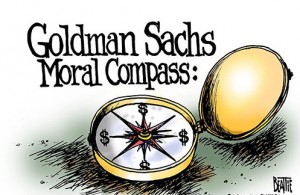
Has the Financial Community Lost Its Moral Compass?

A recent report by Labaton Sucharow suggests that many young people coming into finance regard corporate wrongdoing as the cost of doing business.  Here are the main points of the report.

• Despite the many reforms put in place in the wake of the financial crisis, only 36% of respondents felt that Wall Street has changed for the better since Dodd-Frank’s passage in 2010.

• More than half of respondents–52%–felt it was likely that their competitors have engaged in unethical or illegal activity to gain an edge in the market; 24% felt employees at their own company likely have engaged in misconduct to get ahead.

• Misconduct is still widespread in the financial services industry; 23% of respondents indicated that they had observed or had firsthand knowledge of wrongdoing in the workplace.

• 29% of respondents believed that financial services professionals may need to engage in unethical or illegal activity in order to be successful.

• More than one-quarter of all financial services professionals–26%–believed the compensation plans or bonus structures in place at their companies incentivize employees to compromise ethical standards or violate the law.

• An alarming number of financial services professionals, 24% of respondents, likely would engage in insider trading to make $10 million if they could get away with it.

• Shockingly, and consistent with recent and high-profile criticism of the culture within the financial services industry, a full 28% of respondents felt that the financial services industry does not put the interests of clients first.

• Building on this seemingly endemic culture problem, a concerning number of financial services professionals indicated that their leadership may put profits above ethics; 17% felt their leaders were likely to look the other way if they suspected a top performer engaged in insider trading. Equally concerning, 15% doubted that their leadership,upon learning of a top performer’s crime, would report it to the authorities.

• As enforcement actions are on the rise and new reforms have strengthened financial regulators and law enforcement authorities, the court of public opinion is following suit; 62% of financial services professionals felt the SEC is an effective watchdog and 57% felt that FINRA is effective.

• Despite the encouraging 89% of financial services professionals who indicated a willingness to report wrongdoing given the protections and incentives such as those offered by the SEC Whistleblower Program, 40% of respondents were still unaware of the SEC’s Whistleblower Program. Financial Services Survey July 2013

Moral Compass