RBS has faced a storm of criticism after being bailed out when they paid big bonuses and remuneration package. Public outrage was sparked when a former executive received a £16.9m pension. Now RBS is embarrassed by the hire of a putative bond salesman who wasn’t. Bloomberg reports. The Bond Salesman Who Wasn’t
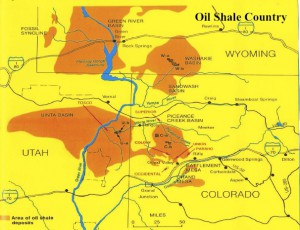
Oil, Shale and the Future
Four days ago we published an in depth report on the history of energy development in the US. Energy Dependency This week’s Economist gives two reports on the state of energy, which present diverging views on the future of Exxon and oil. Overview-The Future of Oil Exxon may be over. Is the Day of the Huge, Integrated Oil Company Drawing to a Close
Audette Exel Profits and Philanthropy
While Exel downplays her sacrifices, they won her a standing ovation when Lazard Asset Management invited her to give a presentation on Isis’s business and foundation work to its young analysts in Sydney last year, says Rob Prugue, a Singapore-based Lazard senior managing director. “Audette shows that you can be passionate about what you do in finance yet maintain an equal integrity and compassion behind that,” Prugue says. Audette Exel Profits and Philanthropy
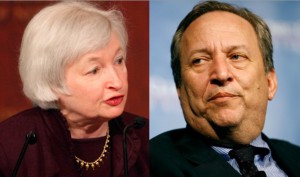
Is Lawrence Summers a Streetwalker like Greenspan?
The Idaho Statesman writes: A senior Fed official I knew nearly 20 years ago once compared Alan Greenspan to a streetwalker in his tireless campaigning for the Reagan administration to appoint him to replace Paul Volcker as Federal Reserve chairman. With the possible exception of Arthur Burns cottoning up to Richard Nixon, there was no precedent for such self-nomination. Now we have Summers. Yellen V Summers Soap Opera
Zambia: Access to Finance Key Barrier to Women SMEs Growth
According to the Zambia National Women’s Lobby (ZNWL), women are at a greater disadvantage in comparison with their male counterparts because very few of them own property they could present to banks and financial lending institutions as collateral…. Access to Finance 
Discrimination Based on Sex, Weight and Gender?
In at Atlantic City‟s Borgata Hotel Casino & Spa, cocktail waitresses are not just drink servers. They are, in the opinion of New Jersey judge Nelson Johnson, “sex objects.” The casino calls its waitresses the “Borgata Babes.” Their job description is “part fashion model, part beverage server, part charming host and hostess. All impossibly lovely.” When the Borgata hires a new babe, it puts her on the scale, then requires her to weigh in periodically throughout her career to ensure that her weight does not increase by more than 7 percent of her initial poundage. If it does, the casino reserves the right to suspend the babe until she slims down. Discrimination Based on Sex, Weight and Attractiveness
Do Regulations Help or Hinder?
A hot debate in the US. With the financial debacle of 2008, it is clear that the banks need regulation, or a more clear definition of just what they are as institutions. Small businesses and manufacturing plans may not need regulation. In fact, it is argued, excessive regulations cause job losses, prevents new jobs from being created, and destroys human
capital. Regulatory reform that ensures a proper weighing of the costs and benefits of proposed rules is desperately needed to make American manufacturers globally competitive, allowing them to hire more Americans, and improve economic growth. Regulations Dampen Manufacturing
Organised Crime – More Pervasive, More Powerful Than Ever
ORGANISED CRIME – MORE PERVASIVE, MORE POWERFUL AND MORE COMPLEX
THAN EVER BEFORE
“Organised crime worldwide makes more than $870 billion every year. That’s bigger than the GDP of Indonesia. If organised crime was a country it would be in the G20” the Australian Minister for Home Affairs and Minister for Justice, Jason Clare said when he released the Australian Crime Commission’s report “Organised Crime in Australia 2013 Report“. 
The Australian Crime Commission estimates that organised crime costs the Australian economy alone $15 billion each year.
In the two years since the publication of the last Organised Crime in Australia assessment, organised crime has become more pervasive, more powerful and more complex.
Globalisation has been embraced and exploited by organised crime, which capitalises on the way in which globalisation has greatly facilitated international communication, cross-border links, commerce and trade. Although organised crime now seems to have no borders or geographical constraints, combating organised crime and illicit trade has remained in many ways constrained by jurisdictional, legislative and state borders – a fact that is not lost on sophisticated criminals.
The rapid development of technology, and the increasing availability of that technology to users throughout the world, have significantly increased the dynamics, profile and reach of organised crime. The Internet enables global virtual networking and social interaction between criminals, and has enabled the establishment of ‘virtual marketplaces’ for illegal and illicit goods such as drugs, firearms, identification documents and child exploitation material.
The combination of globalisation and rapid technological development has had a profound effect on the new and emerging drug markets (the drug analogues and other novel substances markets) and on sophisticated organised fraud. The Internet is the key driver of the new and emerging drug markets, enabling entrepreneurial individuals, rather than traditional organised crime groups, to become significant players within these markets. Organised fraud can now target victims around the world from any location, with the delivery of scams via the Internet or via voice-over-Internet protocols, meaning that those behind these schemes can easily and cheaply reach increasingly large pools of possible victims.
The emergence of entrepreneurial individuals in some key illicit markets is challenging the traditional paradigms of organised crime dominance or control. With serious harms now being wrought by actors outside the traditional organised crime structures, these individuals can, in some instances, be as worthy targets for law enforcement attention as organised crime groups. Importantly, while the Internet has brought buyers and sellers of illicit commodities together, it has also made it possible for organised crime to introduce itself into the homes or lives of all Australian Internet users. Organised criminals increasingly exploit the online environment to perpetrate crimes such as stealing sensitive personal identification information exchanged over the Internet to commit frauds or identity crime, or delivering mass marketed fraudulent schemes such as advance fee fraud and fake investments to unsuspecting victims.
Organised crime as it affects Australia is inextricably linked to international organised crime. Serious and organised criminals operating in Australia necessarily have international links to facilitate their activities – particularly the movement of illicit goods into Australia – and overseas-based organised criminals actively target Australia. This means that strong and trusted partnerships with overseas law enforcement agencies are now more fundamental to combating organised crime than they have ever been.
Organised criminals who may once have been involved in traditional illicit markets, such as drugs, are now expanding their interests – often across a range of illicit activities or sectors – in order to maximise their profits. Although most organised crime activities in Australia are focused on illicit drug markets, organised crime is increasingly diversifying its activities, with convergences being observed between legitimate or licit markets and illicit markets.
Of concern is the diversification of organised crime into legitimate business to conceal its illicit Activities. The infiltration of legitimate business by organised crime can be particularly insidious when that infiltration is used to pursue anti-competitive practices. Internationally, perhaps the most publicised example of this is the involvement of Russian organised crime in big business in critical sectors within Russia and the other countries of the former Soviet Union. This involvement allows criminal monopolies to develop, squeezes legitimate business out of key sectors, and gives significant political influence to organised crime figures as a result of their control of businesses that are fundamental to the economy.
The anonymity offered by cyber-based criminal methodologies can also mask the underlying motivations for attacks on individuals, organisations and governments. In this respect, it is often difficult to distinguish cybercriminals from ‘State-based’ actors. Alleged State-based cyber activity around the world between 2008 and 2011 reportedly targeted everything from nuclear reactors and International Monetary Fund (IMF) data holdings to defence contractors and the Google and Hotmail email accounts of individuals.
The scope and nature of contemporary organised crime mean that, domestically, the relationships between law enforcement, national security, government, regulatory and compliance agencies, private industry and community groups will be more important than they have ever been in identifying and dealing with threats. Internationally, Australia’s diplomatic and law enforcement partnerships will be fundamental to containing organised crime.
In the same way that organised crime is now recognised as a global threat, there is a general acceptance of the threat that organised crime poses to national security. National security incorporates, but is not limited to, concepts of sovereignty, border integrity, political and economic strength, strong institutions of State, the safety and wellbeing of citizens, and the strength and depth of relationships and alliances with other nations.
Frank-cs.org / More on Organised Crime
Hervey Priddy on US Energy Dependency or What’s Good for Exxon Is Not Necessarily Good for the Country
In an important paper on the history of the financing and politics of energy production in the US, Dr. Priddy casts new light in dark corners of American history. The jumping off point for President Jimmy Carter’s famous address often called “The Malaise Speech,” was a sermon on the problems of our nation. Journalists and historians have often dissected this part of the speech. The second half has been ignored. Dr. Hervey Priddy, an expert in the energy industry, took it up as the subject of his dissertation. Carter suggested solutions focused on US energy independence. When Al Gore faced off against George W. Bush in the 2000 campaign, Gore was billed as an energy guru. But not once during the campaign, which some billed as Big Oil against New Energy, was the subject of our captivity to the volatile and dangerous nations of the Middle East mentioned. The then venerable NY Times would not touch the subject.
Energy independence is still crucial to the US. We are a huge country with a dilapidated infrastructure. You can go anywhere in the EU by train. In the US you risk falling bridges, old equipment and irrelevant schedules: most trains arrive late, whether or not you pay extra for Acela. Americans are bound to their cars. The Ford Motor Company, publicly held but fortuitously manned (or womanned) by over thirty members of the Ford family, is creating cars that make sense. They are fuel efficient, but comfortable and convenient. The Wall Street Journal recently ran a piece by a gentleman who had replaced his Mercedes with a Ford. Tesla cars, which are battery driven, have become a hot item.
But in the meanwhile we need domestic fuel to control costs and to free our foreign policy from the demands of oil. In Dr. Priddy’s paper you can read how we once had an opportunity to do this and why it was lost. In sum, the price of oil dictates our policy. When OPEC cut us off, we had to look elsewhere for supplies. Exxon was a crucial part of the new plan. They backed off when oil again became affordable. The industry is not concerned about the dangerous politics of this matter. Profits are enough to pursue any policy. What’s good for Exxon is not necessarily good for the country.Is there a lesson for entrepreneurs entering the fields of solar batteries and shale oil? Dr. Priddy’s paper is a brilliant case study of how business and government both face off and merge.
“The United States Synthetic Fuels Corporation was a superb idea. Its objective was a bold step by a president to address America’s addiction to imported crude oil, which had made the nation vulnerable to the vagaries of an unstable region of the world. Unfortunately, a vacuum of presidential leadership, congressional meddling, and embarrassingly poor management cursed the SFC from its very creation.” Dr. Priddy writes.
“Once elected, President Carter wasted no time in taking up the energy issue, acknowledging the great importance of establishing “limits.” Believing the nation could no longer “bear any burden or pay any price,” the president stated in his inaugural address, “[W]e have learned that ‘more’ is not necessarily ‘better’, that even our great nation has recognized limits, and that we can neither answer all questions nor solve all problems. We cannot afford to do everything . . . . So, together, in a spirit of individual sacrifice for the common good, we must simply do our best.”19 Carter’s “primary thought on Inauguration Day was about the potential shortage of energy supplies” affecting the nation.”
Dr. Priddy’s dissertation is available in full on thie site. US Synthetic Fuels
What follows is an excerpt, in which Exxon commits and backs out of a shale project with impunity. Why? The price of oil declined. What’s Good for Exxon?