Entrepreneur Alert: Extra Virgin Olive Oil?

Two Spanish businessmen were sentenced to two years in prison in Cordoba for selling hundreds of thousands of litres of supposedly extra virgin olive oil that was, in fact, a mixture of 70-80% sunflower oil and 20-30% olive.

In 2008, Italian police arrested over 60 people and closed more than 90 farms and processing plants across the south after uncovering substandard, non-Italian olive oil being passed off as Italian extra virgin, and chlorophyll and beta-carotene being added to sunflower and soybean oil with the same aim.

Most alarmingly, a study last year by researchers at the University of California, Davis and the Australian Oils Research Laboratory concluded that as much as 69% of imported European olive oil (and a far smaller proportion of native Californian) sold as extra virgin in the delicatessens and grocery stores on the US west coast wasn’t what it claimed to be.

Extra virgin oil is mixed with a lower grade olive oil, often not from the same country. Meanwhile, the chemical tests that should by law be performed by exporters of extra virgin oil before it can be labelled and sold as such can often fail to detect adulterated oil, particularly when it has been mixed with products such as deodorized, lower-grade olive oil in a sophisticated modern refinery.

The olive, in more than 700 varieties or cultivars, has been grown for its oil in the Mediterranean since 3000 BC. Unlike most vegetable oils, which are extracted from seeds or nuts, good olive oil is made using a basic hydraulic press, or more modern centrifuge, so it is more a fruit juice than an industrial fat.

Like any fresh product, olive oil deteriorates over time. The public are just not aware of what’s going on. There’s plenty of oil out there that’s rubbish: last year’s oil or older. Or not even olive oil.

How to buy olive oil: Find a seller who stores it in clean, temperature-controlled stainless steel containers.   topped with an inert gas such as nitrogen to keep oxygen at bay, and bottles it as they sell it. Ask to taste it before buying.  Favor bottles or containers that protect against light, and buy a quantity that you’ll use up quickly. Don’t worry about color. Ensure that your oil is labelled “extra virgin.”  Try to buy oils only from this year’s harvest – look for bottles with a date of harvest. Failing that, look at the “best by” date which should be two years after an oil was bottled..
 

Bringing the Islamic World Into the Banking System

Kyrgyzstan will open a new bank, operating on Islamic principles of financing, the National Bank of the Kyrgyz Republic reported.

During an international financial conference “Islamic Finance: Response to the global aspirations” the meeting of the head of the National Bank Tolkunbek Abdygulov and the President of the Islamic Development Bank (IDB) Ahmad Mohamed Ali Al-Madani was held. They discussed prospects for the development of the economy of the Kyrgyz Republic, the establishment of a joint commercial bank which will work according to the principles of Islamic finance and the possible opening of IDB representative office in Kyrgyzstan.

“Tolkunbek Abdygulov and the Managing Director of the International Monetary Fund Christine Lagarde also discussed directions of further cooperation between Kyrgyzstan and the IMF. Christine Lagarde noted the concerted actions of the National Bank and the Government of the Kyrgyz Republic in the conduction of monetary and fiscal policy. A plan of possible joint actions amid the crisis was drawn up,” the National Bank of the Kyrgyz Republic says.

Islamic Banking

Migration: A Global Issue for the Group of 20

The Rocky Road to Globalization

As the Group of Twenty leaders gather in Turkey this weekend, they will have on their minds heartbreaking images of displaced people fleeing countries gripped by armed conflict and economic distress.  The surge of refugees in the last few years has reached levels not seen in decades. And these numbers could increase further in the near future. 

The immediate priority must be to help the refugees — who bear the heaviest burden, and too often tragically — with better access to shelter, health care and quality education.

No country can manage the refugee issue on their own. We need global cooperation.

Cross-border migration, of course, comes in several forms. It includes both refugees who are forced to leave their country and economic migrants who voluntarily leave in search of opportunities. This total number of migrants has risen significantly in recent years, now accounting for over three percent of the global population.

Regardless of the motivation, the decision to uproot and leave one’s home is difficult and can be risky. But once people pass through the journey, resettle and find stability, migration can — with the right policies — have an overall positive economic impact: for migrants, their host country, and their country of origin (as shown in forthcoming staff analysis).

Migrants can boost a country’s labor force, encourage investment and boost growth. Preliminary IMF calculations show a modest positive impact on growth from migrants in EU countries, for example.

More importantly, migration can also help address the challenges from aging populations in a number of advanced countries.  What about countries experiencing an outflow of migrants?  Certainly, these countries often lose their youngest and brightest, with important implications for growth. This has been the case in Caribbean countries, for instance, which lost over 50 percent of their high-skilled labor between 1965 and 2000.

Remittances help to counterbalance some of these effects.  Indeed, they can be a very important source of income — which has been shown to lead to higher education and health spending.  In 2014, remittance flows to developing countries amounted to $436 billion, more than half of total net foreign direct investment and well over three times as much as official development assistance.


What does a well-designed integration policy include?

  • First, strengthening the ability of labor markets to absorb migrants — by enabling immediate ability to seek work and providing better job matching services.
  • Second, enhancing access to education and training — by providing affordable education, language and job training.
  • Third, improving skill recognition — by adopting simple, affordable and transparent procedures to recognize foreign qualifications.
  • Finally, supporting migrant entrepreneurs — by reducing barriers to start-ups and providing support with legal advice, counseling and training.

In Sweden, for instance, an introduction program for refugees provides employment preparation and language training for up to 24 months, together with financial benefits. The program is beginning to help the latest inflow of refugees to find jobs — even though it will inevitably take time to fully succeed.

Demographic forces, globalization and environmental degradation mean that migration pressures across borders will likely increase in the coming decades.  And cross-border challenges demand cross-border solutions.

Global policy efforts, therefore, must focus on better cooperation and dialogue among the affected countries.

The IMF will also do its part, including through our financing and capacity building. In addition, over the next few months, our analysis on this issue will feed into our policy advice to countries in Africa, Europe and the Middle East dealing with massive population movements.

Migration is a global issue. We must all work together to address it.

Drug Pricing: Market Conundrum?

Pricing in the pharmaceutical markets is dicey.

When the new owners of a life-saving AIDS drug raised its price by 5,000%, an online backlash forced the CEO to change his mind. While the public might have been outraged, this was hardly the first time the pharmaceutical industry the failed to make a cheap-to-produce but essential medicine easily available to those who need it.

Experts warned that a vital snakebite antidote had been withdrawn from the market by its manufacturers and that soon there would be no equivalent treatment available at all.

Too often the knowledge and the means to save lives are put at risk by problems with the pharmaceutical market. When these medicines are already developed and can be produced at modest cost, it is all the more frustrating and morally questionable.

We live in a world where the economic system can generally be relied upon to produce things that people want or need – even when those wants and needs could be viewed as trivial.

The arrangements in the markets for life-saving medicines – – especially those that target diseases prevalent in low-income countries – – are complex. They are characterised by powerful interests, on the sides of both producers and purchasers.

One obvious way we can see this is in how a drug’s developer is granted a legal monopoly over its sale through patents and licenses, preventing other companies from reproducing the same drug at a cheaper price. Producers then can (and do) sometimes target very high prices.

Some producers point to the very high costs and substantial risks associated with developing new drugs to justify these prices. They argue the patent system is a means of generating the necessary finance for these risky investments.

Through the patent system we are inherently relying on prices to generate incentives for investments. This makes life-saving drugs often unaffordable and skews investment in favour of those drugs that can command the highest prices rather than those that may save the most lives.

More is spent on R&D for minor ailments in high-income countries, such as for hair loss, than for major global killers afflicting mainly the poor, such as malaria.

Against this backdrop, big purchasers such as governments and aid agencies try to steer a course between negotiating lower prices and encouraging investment in new drugs – and keeping existing ones on the market. They too have limited budgets and cannot know for sure what prices they can afford in the long run.

This means the availability of drugs and the direction of R&D expenditures depend upon the actions of multiple agencies across different countries. If the negotiations go wrong or buyers don’t signal enough demand to manufacturers, vital drugs such as snakebite antidotes may cease to exist.

Drug Pricing

Resurrecting Dodd Frank?

After reportedly finding that partial repeal of Dodd-Frank Act language allows banks to keep trillions in risky trades on the books, U.S. Sen. Elizabeth Warren, D-Mass., called on the Securities and Exchange and Commodity Futures Trading Commissions Monday to implement rules that protect taxpayers and the financial system.

Warren, who joined Maryland Rep. Elijah Cummings in investigating the risks posed to taxpayers following the 2014 partial repeal of the law, also asked the Government Accountability Office to analyze the impact of the modified Dodd-Frank provision.

According to Warren and Cummings’ review, rollback of the section of the law designed to prevent taxpayer bailouts of federally insured banks with risky swaps holdings, now allows banks to keep nearly $10 trillion in swaps trades on their books. The Democrats also found that regulators have failed to analyze the financial and taxpayer risks posed by the repeal.

In a letter to the CFTC and SEC, Warren and Cummings urged the federal agencies to “act quickly to mitigate the risks posed by uncleared swap activities by imposing strong margin requirements for swaps between bank affiliates and other entities under (their) authority.”

Warren and Cummings urged the GAO Comptroller of the total value of swaps U.S. banks originally would’ve been required to “push out” under the provision; an estimate of the total value of swaps U.S. banks will now be required to “push out” under the revised language; and a quantified assessment of the risks implementation of the section would’ve created for U.S. banks.

“The failure to assess the impact on banks and the economy of the repeal of Section 716 raises critical questions about whether federal policymakers are sufficiently attentive to the risk posed by nearly $10 trillion in risky swaps now primary held – and allowed to be traded and held on an ongoing basis – by a handful of the country’s largest FDIC-insured banks,” they wrote. “Understanding this risk is critical as policymakers continue to make decisions about how banks are regulated.”

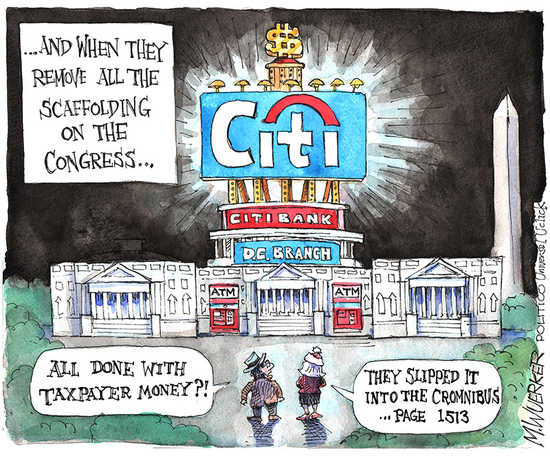
The 2015 Consolidated and Further Continuing Appropriations Act modified the Dodd-Frank Act section.

Warren and Cummings, who contended that the change was made without debate and after intense lobbying from the financial industry, launched their own investigation into its potential impacts.

Securing Dodd Frank

State-Controlled Institutions in Qatar Under Review

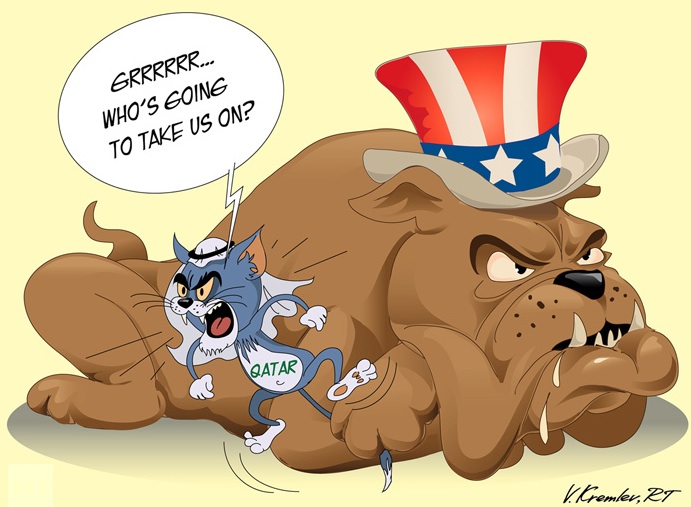
Declining oil prices in the Mid-East require close supervision of state budgets and state-controlled institutions.

The Minister of Finance Ali Sharif Al Emadi confirmed that the operational spending in the state-controlled institutions is subject to an ongoing review by the Ministry of Finance, in the context of the actions carried by the State of Qatar to face declining oil prices.

At a joined press conference with the Director of the International Monetary Fund (IMF) Christine Lagarde, following the joint meeting of the GCC Finance Ministers with the Governors’ committee and the IMF Director, held in Doha today, HE the Minister of Finance pointed out that this review began nearly two years ago. There would be a reduction in the operating budgets of most government agencies through the 2016 budget, he stressed.

HE Ali Al Emadi went on saying that the new budget will focus on the key projects which will continue at the same pace and at reasonable cost, pointing that Qatar is studying a number of options for tackling the projected deficit in the 2016 budget. Technical committees are examining these options,

With regard to the options of tackling the 2016 budget deficit, HE Al Emadi said that financing of this deficit will be through internal sources or borrowing from the domestic and foreign market, ruling out possibility of withdrawing from the State’s cash reserves or resorting to Qatar Investment Authority (QIA).

HE the Minister reviewed the topics discussed at the meeting, saying that discussions focused on the strong financial status enjoyed by the Gulf states, and large financial surpluses, they achieved in the past years.

IMF Director Christine Lagarde praised Qatar’s policies for facing the issue of declining oil and gas prices.

She added that Gulf states should review the fiscal and monetary policies in accordance with global developments, especially with the decline in oil prices, noting the importance of supporting the private sector and its participation in the development as well as the rationalization of public expenditures and the development of markets to allow more foreign investment.

Qatar

Islamic Finance to Benefit Women and Everyone Else

Christine Lagarde speaks about possibilities for Islamic finance.

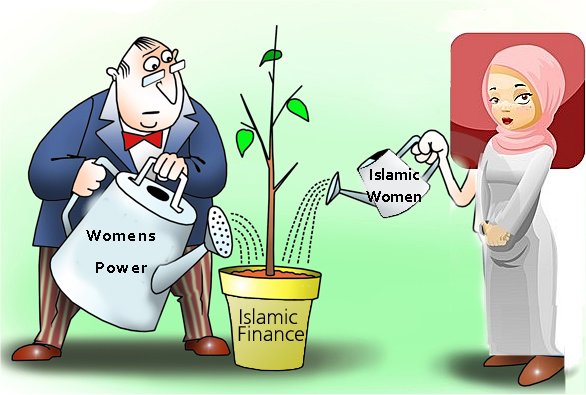
Lagarde, the head of the International Monetary Fund, says Islamic finance offers the possibility of extending banking services to many who are underserved in the Muslim world.

Lagarde told an audience in Kuwait City that only a quarter of Muslim adults have access to a bank account.

Lagarde said on Wednesday that “Islamic finance has the potential to contribute to higher and more inclusive economic growth by increasing access of banking services to underserved populations.”

Lagarde took no questions at the end of her speech.

She has recently said that Kuwait should consider imposing taxes on commercial profits and address the massive subsidies the oil-rich tiny country offers its citizens in the wake of low global oil prices.   Lagarde Speech 11/11/2015

Possibilities for Islamic Finance

Anti Austerity in Portugal

Anti-austerity backlash

Anti-austerity lawmakers forced Portugal’s center-right government to resign Tuesday by rejecting its policy proposals at the start of what was supposed to be a second consecutive term in office — and four more years of cutbacks and economic reforms.

The government’s dramatic collapse came less than two weeks after it was sworn in and raised questions about debt-heavy Portugal’s commitment to the fiscal discipline demanded of countries sharing the euro currency.

The moderate Socialist Party forged an unprecedented alliance with the Communist Party and the radical Left Bloc to get a 122-seat majority in the 230-seat Parliament, which it used to vote down the proposals. The defeat brought the government’s automatic resignation.

The government’s fall was also a political setback for the 19-nation eurozone’s austerity strategy. The policy of cutbacks was demanded by Germany and the others as a remedy for the bloc’s recent financial crisis.

Eurozone leaders had pointed to Portugal, and Ireland, as examples of how austerity paid off as their economies improved. Now, the progress Portugal made is in doubt, and some fear the country could go down the same road as Greece, which has needed three bailouts since 2010.

The triumph of the leftist alliance will likely give heart to anti-austerity forces in much bigger neighbor Spain, where a general election is scheduled for Dec. 20.

After four years in power the government lost its parliamentary majority in an Oct. 4 general election, which saw a public backlash against austerity measures adopted following an $84 billion bailout in 2011.

Socialist leader Antonio Costa is expected to become prime minister in coming weeks, supported by the Communists and Left Bloc.

Costa criticized the government for being “submissive” in its dealings with the rest of Europe and making more cutbacks than those demanded by the bailout creditors. “The Portuguese want change,” he said.

Outside Parliament, demonstrators at an anti-austerity protest by labor groups shouted “Victory!” as the news of the vote spread.

The leftist alliance intends to reverse cuts in pay, pensions and public services, as well as tax increases that have brought widespread hardship, street protests and strikes in recent years. Some 400,000 Portuguese left to seek work abroad.

Mario Centeno, the Socialist Party’s leading economic expert, sought to soothe eurozone and market fears about the next government’s plans, saying it would “abide by its European responsibilities and honor all its commitments.”

Centeno, who has a PhD in Economics from Harvard University and is a special adviser at the Bank of Portugal, is widely expected to be the country’s next finance minister.

The current political upheaval has its roots in years of low growth and borrow-and-spend policies that weakened Portugal and compelled it to ask for the 2011 bailout amid the eurozone’s debt crisis.

Portugal’s budget deficit in 2010 was more than 10 percent but the European Union estimates it will be around 3 percent by the end of this year. Unemployment, which surged to a record 17 percent after the bailout, has fallen to 12 percent.

“Portugal today is incomparably better than it was four years ago,” outgoing Finance Minister Maria Luis Albuquerque told Parliament during the debate.

Among the measures planned by the leftist alliance are giving back government workers cut pay; unblocking pension increases; spending more on the national health service; providing free nursery schools for all 3-year-olds and free school books for all; reducing sales tax at restaurants from 23 percent to 13 percent; and restoring four public holidays that were scrapped to improve productivity.

The three parties in the alliance have in the past had hostile relations, however, and will be watched closely for any signs of friction.

The speaker of Parliament was due to inform President Anibal Cavaco Silva of the vote later Tuesday. The head of state, who has no executive power but oversees the government, will then consult the political parties in coming days before deciding whether to invite Costa to form a government. Cavaco Silva could choose to appoint a caretaker government, but analysts believe that is unlikely.

Anti Austerity Portugal

Bank Hackers Accused in US

U.S. prosecutors on Tuesday unveiled criminal charges against three men accused of running a sprawling computer hacking and fraud scheme that included a huge attack against JPMorgan Chase & Co and generated hundreds of millions of dollars of illegal profit.

Gery Shalon, Joshua Samuel Aaron and Ziv Orenstein, all from Israel, were charged in a 23-count indictment with alleged crimes targeting 12 companies, including nine financial services companies and media outlets including The Wall Street Journal.

Prosecutors said the enterprise dated from 2007, and caused the exposure of personal information belonging to more than 100 million people.

“By any measure, the data breaches at these firms were breathtaking in scope and in size,” and signal a “brave new world of hacking for profit,” U.S. Attorney Preet Bharara said at a press conference in Manhattan.

The alleged enterprise included pumping up stock prices, online casinos, payment processing for criminals, an illegal bitcoin exchange, and the laundering of money through at least 75 shell companies and accounts around the world.

Tuesday’s charges expand a case first announced in July, and according to U.S. Attorney General Loretta Lynch target “one of the largest thefts of financial-related data in history.”

The charges are also the first tied to the JPMorgan attack, which prosecutors said involved the stealing of records belonging to more than 83 million customers, the largest theft of customer data from a U.S. financial institution.

Authorities said Shalon and Aaron executed that hacking, using a computer server in Egypt that they had rented under an alias that Shalon often used.

Hacking

WalMart Profits Up After Raising Wages

Wal Mart has surprising result after raising wages.

Retailers quickly responded to Wal-Mart’s announcement of a higher minimum wage this spring. They were concerned that higher wages would mean lower profits.

Those retailers don’t appear to be hurting.

Here’s a report from the 1920s in the US.

The money was all appropriated for the top in the hopes that it would trickle down to the needy. Mr. Hoover didn’t know that money trickled up. Give it to the people at the bottom and the people at the top will have it before night, anyhow. But it will at least have passed through the poor fellows hands – Will Rogers

Trickle Up!