Despite Slowdown in Economy, 10,000 New Startups are Registered Every Day

With shaky stock markets, a devalued currency and decreasing foreign investment, everyone agrees the Chinese economy is not the bright spot it used to be.

But according to the government, young entrepreneurs are a source of optimism.

Some 10,000 new businesses are registered every day, according to Premier Li Keqiang.

Jerry Wong founded Tech Temple of aid young entrepreneurs.

In an old factory among the hutongs near Beijing’s city center lies a temple. No, it’s not the kind of temple where you worship deities or pay respects to your ancestors. The people there do wish for longevity and good fortune, though.

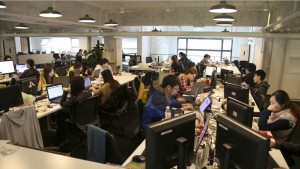
This is Tech Temple, Beijing’s biggest coworking space yet. Sponsored by China- and Japan-based VC firm Infinity Ventures Partners, the 1,800 square meter two-story space — about the size of seven tennis courts — has already filled 240 of its 280 seats since opening just last month. Tech Temple boasts an open air office area, event space for up to 100 people, breakout and meeting rooms, a dining area, and a cafe. “The only thing you need to bring is your laptop and you can start working,” says co-founder Akio Tanaka, a VC from Infinity.

Infinity sunk half a million US dollars into the project. Tanaka says his team spent the whole summer renovating the former electronics factory with the help of some French architects. The minimalistic and efficient design looks great, as a result. He says, “I know startup places don’t need to be luxurious, but it also doesn’t need to be a dump.” Tanaka says the atmosphere and location are what have drawn about two dozen Chinese startup teams to the new space. While most tech firms are located in the city’s northwest Zhongguancun district (AKA the Silicon Valley of China), most of the angels and VCs live on the inner east side, so Tech Temple’s central location is ideal.

Infinity Ventures vets every startup on an individual basis, and Tanaka says they prefer people whom they already know. Sometimes they refer to the expertise of local Chinese startup news website 36kr, which has also set up shop there. Tanaka says the space is aimed at early stage internet startups.

Tech Temple China

SEC Asks Offenders to Cough Up Individuals

Yves Smith writes:  The Department of Justice may face an early test of its long-overdue policy change, that the government will seek to prosecute individuals, including executives, along with those of corporations. As Sally Yates, Deputy Attorney and author of the memo setting forth the new policy, put it, “We mean it when we say, ‘You have got to cough up the individuals.’”

Private plaintiffs have filed two suits alleging bid-rigging by the 22 primary dealers, adding pressure to an ongoing Department of Justice investigation.

The same analytical technique that uncovered cheating in currency markets and the Libor rates benchmark — resulting in about $20 billion of fines — suggests the dealers who control the U.S. Treasury market rigged bond auctions for years, according to a lawsuit….

The plaintiffs built their case against the 22 primary dealers who serve as the backbone of Treasury trading — including Goldman Sachs Group Inc., JPMorgan Chase & Co. and Morgan Stanley — using data from Rosa Abrantes-Metz, an adjunct associate professor at New York University who has provided expert testimony in rigging cases.

Bear in mind that investigations and litigation is underway, and no charges have yet been proven. However, in the last major Treasury bid-rigging scandal, in 1991, the Fed didn’t bother to wait for the Department of Justice to act.  SEC Says- Cough Up Individual Wrongdoers

Too Big to Jail

Central Bank Independence?

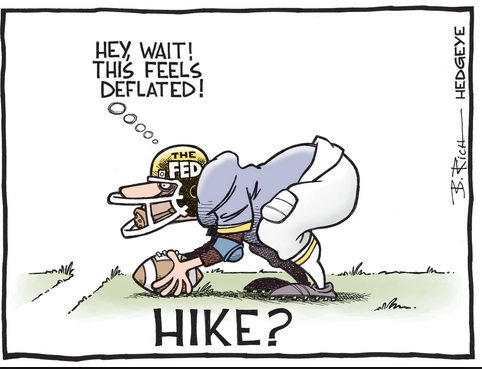
Howard Davies writes:  In 1993, the economists Alberto Alesina and Larry Summers published a seminal paper that argued that central bank independence keeps inflation in check, with no adverse consequences for economic performance. Since then, countries around the world have made their central banks independent. None has reversed course, and any hint that governments might reassert political control over interest rates, as happened recently in India, are met with alarm in financial markets and outrage among economists.
In truth, however, there are many degrees of independence, and not all nominally independent central banks operate in the same way. Some monetary authorities, like the European Central Bank, set their own target. Others, like the Bank of England (BoE), have full instrument independence – control over short-term interest rates – but must meet an inflation target set by the government.

There are differences, too, in how central banks are organized to deliver their objectives. In New Zealand, the bank’s governor is the sole decision-maker. At the US Federal Reserve, decisions are made by the Federal Open Market Committee (FOMC), whose members – seven governors and five presidents of the Fed’s regional reserve banks – enjoy varying degrees of independence.  The Independence of Central Banks


Tspiras and Syriza Can Form Coalition

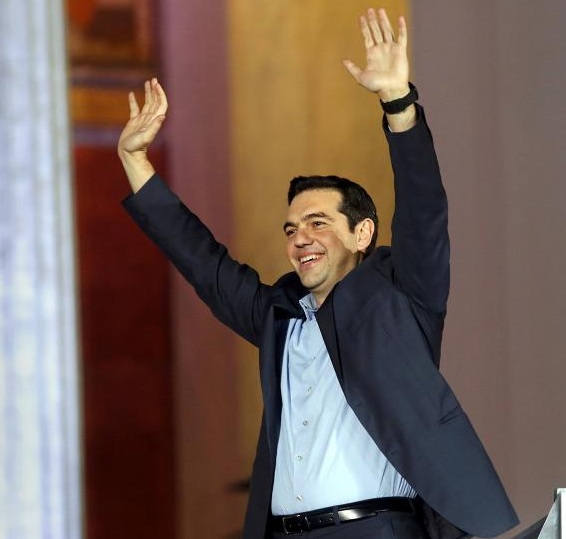
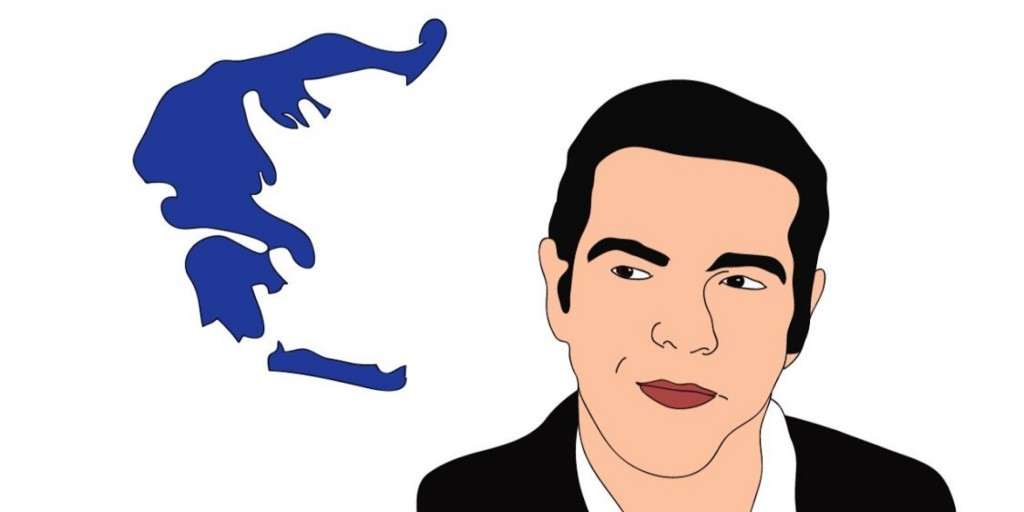
Larry Elliott writes: The fresh dose of deflationary measures in Greece’s new €86bn (£62bn) bailout programme, agreed in July after Tsipras folded under pressure from creditors, will deepen a depression similar in its severity to those that afflicted Germany and the United States in the 1930s.

The Greek economy has contracted by 29% since 2009 and is still shrinking after months of financial turmoil. Yet Greece remains part of a single currency that has emerged bloodied but intact. All the main parties contending the election were committed to continuing with the bailout that Tsipras negotiated in the summer.

Even so, the election will have consequences. Syriza has done well enough to form a workable coalition, thereby avoiding the need for another election and removing one of the hurdles before Greece has the first review of its bailout some time before the end of the year.

Tsipras Can Go Forward

Outlook: Mexico

Dallas Fed reports:

 by Jesus Canas and Emily Gutierrez

Mexico is a country of contrasts, its geography varying from deserts to jungles, mountains to beaches. Such differences extend to the economic characteristics of Mexico’s four regions: the manufacturing north, the agrarian north-central, the service-based central and the energy-producing south.

Such economic specialization has contributed to significantly different levels of development – evident in persistent and often worsening disparities in standards of living.

Mexico’s affluent north is characterized by a large manufacturing base, which sharply diverges from the poverty-stricken south, a hub of energy activity. The central region benefits from the sprawling reach of Mexico City, one of the world’s largest metropolitan areas and the heart of the Mexican economy, while the agriculturally driven northcentral zone makes a much smaller economic contribution.  Outlook Mexico

Deposit Insurance Not Good for Banks?

Asli Demirgüç-Kunt and Enrica Detragiache, World Bank, Development Research Group, and International Monetary Fund, Research Department write:

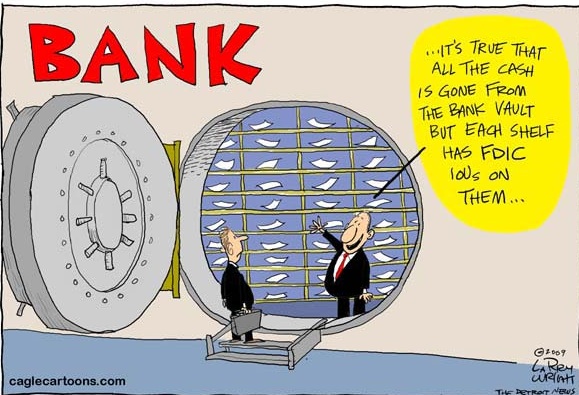
In a system without deposit insurance depositors have a big incentive to monitor their banks behaviour, to ensure they do not act in a manner which may endanger their solvency. (If the government didn’t promise to repay your money in the case that your bank fails, would you not be a little more concerned about how the bank uses your money?). In a system with deposit insurance this incentive is removed. Economists call this moral hazard. Moral hazard is when the provision of insurance changes the behaviour of those who receive the insurance in a undesirable way. For example, if you have contents insurance on your house you may be less careful about securing it against burglary than you otherwise might be.

Deposit insurance removes depositors incentive to monitor bank lending decisions because they are guaranteed to receive their money back. Instead, depositors are incentivised by the interest rate offered. Of course, those banks offering the highest interest rate will be those taking the greatest risks, and so banks are incentivised to finance the highest risk, highest return projects.

While higher interest rates may seem to benefit depositors due to higher returns (but not taxpayers – due to greater risks leading to more financial crisis and bailouts) it reality they do not. Instead of offering a higher rate of interest the private bank can offer a lower rate, because the deposit is risk free. This results in a subsidy to the banking sector – the value of which reached over £100bn in 2008.

So despite the fact that deposit insurance is intended to increase the stability of the banking system by preventing bank runs it may in fact make it more dangerous by encouraging risky behaviour from banks:

The U.S. Savings & Loan crisis of the 1980s has been widely attributed to the moral hazard created by a combination of generous deposit insurance, financial liberalization, and regulatory failure… Thus, according to economic theory, while deposit insurance may increase bank stability by reducing self-fulfilling or information-driven depositor runs, it may decrease bank stability by encouraging risk-taking on the part of banks.   Banks are Different from Other Businesses

Bank Deposit Insurance

Big Guys Beat Pao Down

Ellen Pao is not going to pursue an appeal.  In a case that has captivated audiences well beyond the tech industry, Pao filed suit in 2012 against the storied Silicon Valley venture capital firm, where she had been a junior partner. Had the jury found in her favor, she could have won as much as $160 million. Through 24 grueling days in a downtown San Francisco courthouse, she exposed stories of all-male company ski trips and sexual harassment of another partner at the firm.

She also brought up smaller slights: Double standards in how aggressive women are allowed to be and how their success in investments translates into promotions.

Kleiner Perkins came back with a brutal, and ultimately successful, attack on her performance and personality, which they said was just not right for “Team KP.”

While Pao’s story may have helped provoke a broader conversation about gender imbalance and bias outside of the courtroom, in court she lost on all counts.

Ellen Pao’s statement on her decision:

I have decided to end my lawsuit against Kleiner Perkins.

I feel gratified that my actions have encouraged others to speak up about discrimination in venture capital and technology more broadly. I am encouraged that companies are taking more action to quantify and address the disparity of opportunities for women and minorities.

To resolve the lawsuit, I will pay Kleiner Perkins for its legal costs as awarded by the court, although I firmly believe people who bring employment discrimination claims in good faith should not be forced to pay their employer’s legal bills. I will also drop my appeal, since I cannot afford the risk of even more costs to fight against a firm with tremendous financial resources and massive legal and PR armies.

To be clear, Kleiner and I have not reached any agreement to settle this matter. Settlement might have provided me with financial benefits, but only at the great cost of silence. To quote their lawyer, “KP is not interested in a settlement without a non disparagement provision,” meaning I would not be free to speak the truth about my experiences. I refuse to be silent on these important issues.

This battle has been painful for me personally and professionally, and also for my family. It is time to move on. I look forward to continuing the conversation about workplace equality and to building great companies in the technology industry.

Ellen Pao

Greek Elections

Megan McArdle writes:  Greece is having an important election on Sunday, and nobody seems to care.  No one has exhibited any notable enthusiasm for the upcoming vote; some of them hadn’t even decided whether they were going to bother casting a ballot, or if so, who they would be voting for. People seem weary of elections.

Besides, there’s only one real issue in the election: the bailout agreement that was most recently negotiated (after a summer referendum resoundingly rejected the previously proposed bailout agreement).

The anti-establishment vote has few outlets these days.  It’s not clear that Popular Unity is even going to get 3 percent of the vote, the threshold needed to take seats in parliament, and at best, they’ll be a small presence. For that matter, even the Communists are being almost disgustingly reasonable about the whole thing. The biggest concern is that the anti-establishment vote will boost the totals for Golden Dawn, the far-right party which this week took “political responsibility” for the murder of a rapper by one of its supporters. But even a big boost in its vote tally, while worrying, will not put Golden Dawn into the government.

So the only real issue is who is going to implement the deal. This actually does matter, a lot. But it’s not entirely clear which option would be better: New Democracy, which staunchly opposes Grexit, but which wasn’t exactly a model of zealous reform the last time they were in office; or Syriza, whose prior grandstanding ended in the current deal, and also a banking crisis from which the country is still struggling to recover.

Would it be better for Syriza to run things, since after all, they’re the ones who created the latest crisis and negotiated the current deal; they should pay the political price for its results. And if they’re not in the government, then they’ll be in the opposition, where they’ll be free to snipe from the sidelines and whip up voter discontent over painful but utterly necessary reforms.

The other theory is that Syriza needs to take a black eye over the events of the last few months, and that while New Democracy is going to have the same problems implementing reforms that they did the last time they were in office, they’re still better than the alternative.

Though no one seems to think that Syriza would be exactly ideal in the opposition, losing the election would probably throw the party into some disarray, making it harder for them to mount an effect campaign against the program during the critical coming months when the banking system must be recapitalized, and another round of fiscal and structural adjustment must be undertaken in order to demonstrate good faith to the creditors. So perhaps it’s more important to send a message than to keep them inside the tent.

More people predict a victory for Syriza than New Democracy, including some New Democracy supporters.

If Tsipras does win, it will be a pretty amazing testimony to his political skills. He came to office campaigning for a tougher line against Europe, caused a banking crisis, then caved and ended up signing an unfavorable agreement to avoid a Greek exit from the euro. Even a shrunken majority would be a pretty remarkable achievement under those circumstances.

GREEK-ELECTIONS

German Redemption?

For Germany in particular, government and civil society’s welcoming of Syrian refugees continues the country’s quest for redemption from the unspeakable crimes of their grandparents and great-grandparents. The German people’s attempt at redemption is a secular cause played out on a Biblical scale, because the Holocaust was a crime against not only humanity, but against human civilization itself. For religious believers, it was a crime against God. In some sense, “Germany” may never redeem its crimes, but “Germany” is not today’s German people, difficult as that may be for some people to accept.

Germans for decades shied away from international political leadership. Its leaders made of Germany’s economic success and generosity in financing European integration (plus its unyielding political support of Israel) the basis of its international influence. During these decades Germany’s foreign economic generosity was its foreign policy. With the French, Germany organized the complexities of the European Union’s internal contradictions into a vision of Europe’s renewal, the possibilities of resurrection. German money underwrote France’s political leadership. The two countries produced leaders of vision on the scale of history: Konrad Adenauer and Charles de Gaulle; Helmut Kohl and François Mitterrand. Today no other country’s political and business elites, not even those in France, are thinking as deeply as Germany’s about how to move European integration forward in a strategy that combines national interests and Europe’s necessities. Germany’s partner countries want more rather than less German leadership, an astonishing international recognition of redemption. Germany’s willingness to accept large numbers of refugees is only the most recent act of this attempt to prove that the “German problem” is history.

Accepting large numbers of refugees is also good for Germany itself. Along with Europe’s other demographically withered countries, Germany, whose birth rate is among the lowest in the world, needs significant immigration to finance its future, while doubters and racism have rendered it thus far impossible. From the point of view of German interests, Syrians (and many opportunist refugees) are an educated population, willing, indeed desperate, for jobs and acceptance. Ties to the Syrian homeland will remain strong, but gratitude to Germany will be real. America’s experience, despite current electoral posturing, shows that immigration is a boon to national vibrancy. Why not for Germany and Europe as well? Furthermore, a significant Syrian minority population will increase social pluralism, among other things diluting domestic focus on Germany’s Turkish minority.

A few hundred thousand or even a few million new immigrants won’t solve Germany’s or Europe’s demographic problems. But the irrepressible urgency of the current refugee crisis is accomplishing what politics failed to do — lancing a boil, unlocking a self-defeating national stalemate. In contrast, Germany’s reception of hundreds of thousands of asylum seekers fleeing former Yugoslavia’s wars in the 1990s was not an economic necessity, because the demographic deficit was not so evident then. Taking in Croats, Serbs, Bosnians, and others was a political act of redemption and, for Germans themselves, an act of national catharsis. Yet strong internal opposition to immigrants did not abate.

Accepting Syrians inevitably increases the need for German leadership in Europe’s response. Germany’s government, led by the indomitable Mrs. Merkel, is stepping up to the task successfully. (It will accept at least 800,000 asylum seekers in the coming year, far more than any other EU country and probably not the end of what Germany will do.) The trouble with German redemption, however, is that dealing with a problem may not solve it but increase it. I often wondered during years of teaching European politics how long the German Problem would endure, at least in people’s minds. When would redemption be complete? I don’t know the answer, but at a certain distance from the event, history makes such questions irrelevant.

German Redemption