Solar Power Up in Hawaii. Pricing Bias?

Brittany Lyle writes:  Hawaii’s electricity prices are higher than anywhere else in the nation. The burdensome cost of power, paired with the island state’s plentiful sunshine, has led to an unparalleled adoption of residential rooftop solar energy. On the island of Oahu, where 80 percent of the state’s population lives, more than 12 percent of Hawaiian Electric Co. (HECO) customers have rooftop solar systems — about 20 times the solar penetration rate of any mainland utility. As homes increasingly morph into mini power plants, some residents are winding down their HECO bills to net zero.

The problem is this: When solar customers provide their own power, they don’t pay for the fixed costs the utility has outside of electricity generation. As more and more people switch to solar, an ever-shrinking pool of utility customers still connected to the grid are left to cover these operating and maintenance expenses. This causes bills to spike for traditional customers, which incentivizes even more people to switch to solar, raising bills for nonsolar customers even more. Every new rooftop solar installation added to the grid contributes to this cost shift.

‘It could be that all of the people living in apartments are going to be subsidizing the millionaires with their huge estates covered in rooftop solar. I don’t think we’re quite at that point yet, but we need to change or that’s where we’re headed.’
Oahu’s solar energy boom is unleashing what’s known in the industry as the utility death spiral. The prediction is that it will overwhelmingly hurt the most vulnerable people — namely those without control over their roof space, such as renters and apartment and condominium owners, as well as low- and moderate-income homeowners who can’t afford the high up-front cost of a rooftop solar installation.

“It could be that all of the people living in apartments are going to be subsidizing the millionaires with their huge estates covered in rooftop solar,” said Michael Roberts, an economics professor who studies electricity pricing at the University of Hawaii at Manoa. “I don’t think we’re quite at that point yet, but we need to change or that’s where we’re headed.”

In 2014, HECO’s nonsolar customers picked up the tab for an extra $53 million in operating and maintenance costs because so many people switched to solar. It is estimated that they will pay an additional $80 million in 2015.

As the island grapples with the task of making a biased energy pricing system more equitable, mainland utilities with large and growing solar energy bases in states like California, Arizona, New Jersey and Colorado are looking at Oahu and watching their future unfold.

In the basement of the faded 1934 cottage where he was raised, Kong thumbed through a filing cabinet in search of his utility bill records. Vintage Hawaiian slack key guitar music buzzed on an old radio. A small electric fan circulated warm air in the room.

A retired Pearl Harbor security guard, Kong inherited his childhood home. But he lives next door in a newer, five-bedroom house that he shares with his wife, two daughters, son-in-law, grandson and the occasional foreign exchange student. The house stands on a corner lot in Honolulu’s Kaimuki section, once an ostrich farm owned by the Kingdom of Hawaii’s royal doctor. Bordering the iconic Diamond Head volcano, it is one of the city’s oldest neighborhoods.

He pulled from his files his HECO bill from February. In time with the music, he tapped a finger next to the figure for the total due: $336. That’s a 53 percent increase from his bill for the same month two years earlier.

“I think about shutting the power down, putting the two refrigerators on a generator and using flashlight and candles,” Kong said. “If it wasn’t for the refrigerators, I’d shut the power off now when we go to sleep.”

solar panels, hawaii


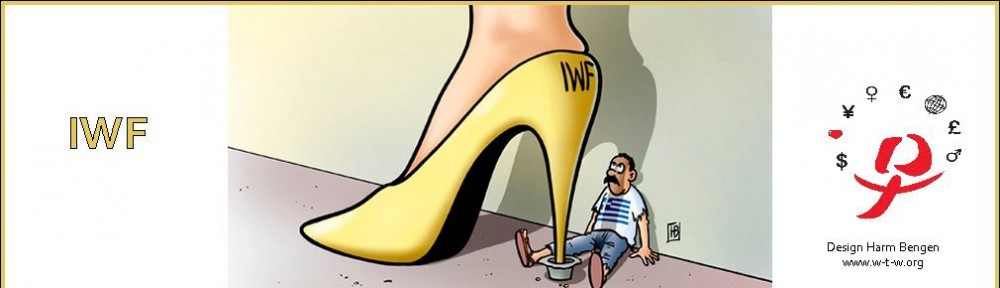
IMF and Indonesia

The International Monetary Fund managing director Christine Lagarde warned that greater resilience would be needed from the world’s emerging economies to handle China’s slowdown, warning the road ahead could be “somewhat bumpy”.

The IMF chief also cautioned that global growth this year would be “likely weaker” than previously anticipated, less than two months after the IMF cut its global forecast for 2015 to 3.3%.

Emerging markets from Indonesia to Brazil have been bruised by the slowdown in the world’s second largest economy.

Lagarde’s two-day visit has nothing to do with the financial market turbulence and the steep rupiah depreciation Indonesia has been experiencing for the past few weeks. This visit has been in preparation since last year in light of a high-level international conference on the future of Asia’s finance that the IMF jointly organizes with the central bank, Bank Indonesia.

President Jokowi and the economics ministers may seize this opportunity for sharing views about the current turbulence in the global financial market and reiterate the urgent need for the IMF to be more responsive to regional needs. They should bring home a stronger message to Lagarde that three major emerging Asian economic powerhouses should be given a greater share of the spotlight in managing the multilateral agency.

The IMF’s  shortcomings may be the market still trusts this institution more than the Indonesian government when it comes to economic, especially monetary, management. The IMF remains an opinion leader for creditors and investors. This is the market perception, however painful it may appear to the country’s political leaders.

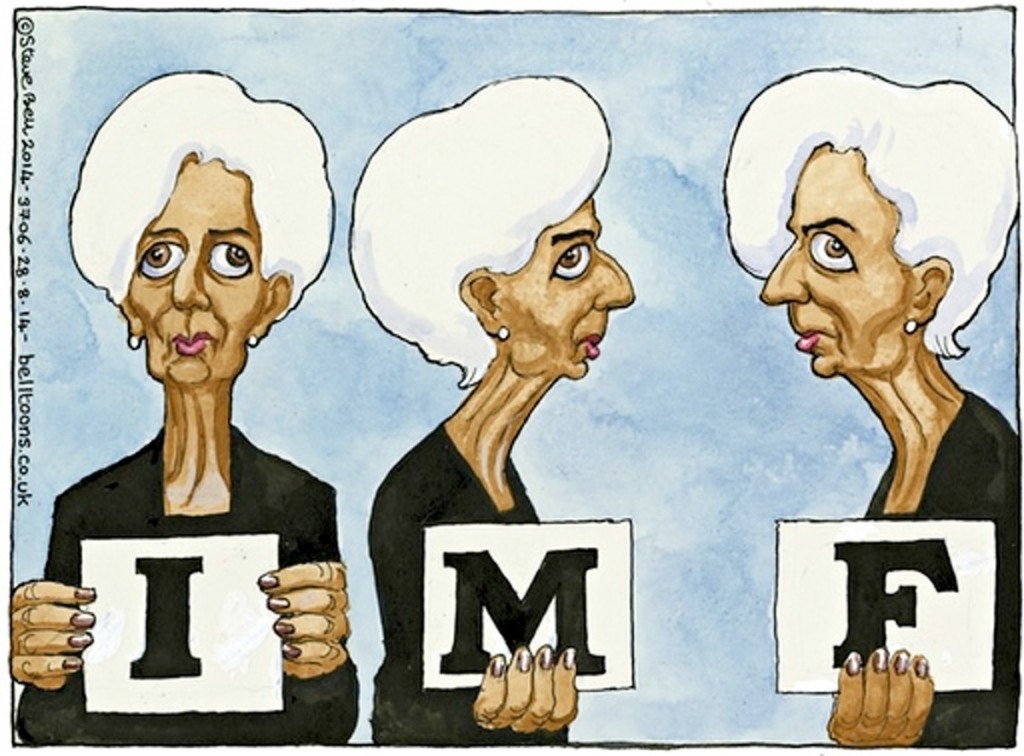
Lagarde

Corruption Rife in Latin America

Mac Margolis writes: At the height of the commodities bonanza, Latin Americans seemed willing to shrug at officials with sticky hands. Tolerance is thinking as regional gross domestic product is expected to expand by just 0.4 percent this year, the worst performance since 2009.

Brazilian President Dilma Rousseff is mired in a political payola scheme that has pillaged the state oil company, sent a moguls and politicians to prison and put her own job on the line. Chile’s Michelle Bachelet is in a corner, and Mexico’s Enrique Pena Nietro may already have succumbed to a graft and influence peddling scandal that has tainted the president, his wife, the finance minister and government contractors.

And yet of all the Latin leaders under scrutiny, Perez Molina seems closest to the brink. Five of his cabinet ministers and the ambassador to the United Nations had resigned over the customs scheme, which comptrollers believe defrauded Guatemala of more than $300,000 a month. His vice president is in jail.

A green light from a parliamentary committee, the full congress will weigh stripping Perez Molina of his executive immunity, which could land him in a court of common law.

What happens from there is less certain in Guatemala’s lopsided justice system, where political manipulation and powerful interests often prevail, at times threatening to convert the country into an almost Mafia state.

Consider generalissimo Efrain Rios Montt, the former dictator who was condemned for genocide by a special court in 2013, saw that verdict overturned on a technicality days later.

Perez Molina, a respected former general, made no secret of his distaste for the prosecution of Rios Montt, whom he served during the bloody Guatemalan civil war and credited with rescuing the country from chaos. Still, he had taken care to avoid interfering directly in court decisions.

Faith in his impartiality was shaken last year when the constitutional court ruled abruptly to shorten the mandate of the Attorney General Paz, a combative prosecutor who was key to bringing his former comandante to justice.

Whatever lingering prestige Perez Molina might have enjoyed, it now has evaporated in the heat of the customs scandal.

Cartoon by Fernando Llera

Cartoon by Fernando Llera

Fiat Embracing GM?

Edward Niedermeyer  writes:  Fiat Chrysler would normally be prey for a larger competitor. But its audacious chief executive officer, Sergio Marchionne, has seen a flash of weakness in the eye of one of the great whales, and seems intent on attempting to reverse the natural order by forcing a takeover of General Motors. What once seemed to be Marchionne’s search for a love match has revealed itself to be far more about fear than attraction. With his advances to just about every automaker in the industry going unanswered, Marchionne has settled on the target that shows the most managerial weakness.

Though General Motors is far bigger and more profitable than Fiat Chrysler, its plodding leadership has revealed a lack of strategic creativity and tendency to buckle to shareholder pressure. Forget the industrial logic that Marchionne says makes a GM-FCA tie-up inevitable; he is pursuing the much larger firm because he thinks he can get away with it. This weakness starts at the top: After her initial laudatory tour of the press as the industry’s first female CEO, GM’s Mary Barra has shrunk from the public eye as GM’s massive quality and safety crisis has overtaken its image. Unable to defuse concerns about a GM culture that she has never been outside of, and battered by opportunistic investors seeking to raid GM’s giant post-bailout cash pile, Barra’s media appearances have been markedly controlled by her PR people. Sensing weakness, Marchionne has asked repeatedly to meet with Barra about a merger, yet her handlers have refused to let the two CEOs into the same room.

Through sheer audacity, Marchionne the squid may yet bag his whale, yet the struggle is likely send both firms sinking to the depths, teeth and tentacles wrapped in a deadly embrace.

Fiat's Embrace of GM

Currencies: China, US and Japan

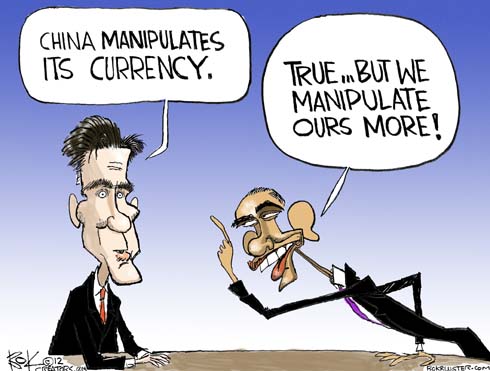
William Pesek writes:  In recent years, China’s relationship with the U.S. has resembled nothing so much as a hostage situation. Beijing’s enormous holdings of US treasuries  gave it immense leverage over Washington, which lived in perpetual fear of China choosing to not finance any new debt, or sell off its current holdings.

Beijing has been trimming its holdings of Treasuries in recent months in order to prop up the yuan. Over the past year, its overall foreign-exchange reserves have fallen by about $315 billion to $3.7 trillion. But the scale of these sales have been relatively modest. And there are at least three reasons that a more massive Chinese selloff of Treasuries is exceedingly unlikely.

The first reason is China’s rickety economy. In the current economic environment, as Chinese growth sputters and traders begin to short Shanghai stocks. China needs every growth engine it can muster. And that means enticing U.S. consumers to spend by ensuring their government enjoys low interest rates.

The second reason China will hesitate to sell off Treasuries is Japan. Beijing knows that if it ends its unique relationship with the U.S., Tokyo would gladly step in to take its place. With about $1.2 trillion of Treasuries, Japan is already only marginally behind China in the dollar-leverage department. And two of Prime Minister Abe’s signature policies are especially relevant in this context: keeping the yen weak and Barack Obama happy.

If Abe’s economic revival program has experienced any measure of success, it’s because of the yen’s 30 percent drop since late 2012. That’s why Abe will want to make sure the yen doesn’t rise on a trade-weighted basis against the recently devalued yuan. If that means offsetting Chinese dollar sales, then so be it.

Abe has been as compliant a Japanese partner as Washington has encountered in decades.  In the wake of a major Chinese selloff, Abe is sure to oblige any request from Washington that Tokyo do something to save the U.S. bond market.

The third reason that China won’t sell Treasuries is there’s nothing else it can buy. It turns out the Pentagon was right in 2012 when it concluded “China has few attractive options for investing the bulk of its large foreign exchange holdings out of U.S. Treasury securities.”

China and US Treasuries

Should Bribery be Legalized?

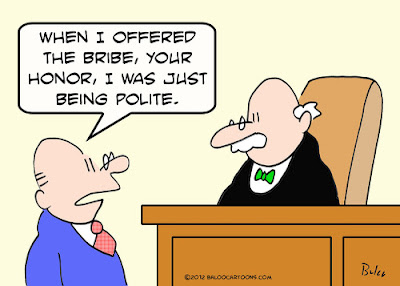
Should bribery be legalized?   Leonid Bershidsky writes:  The first step toward getting rid of bribery may be to legalize it. Romania could soon try that controversial approach with its underfunded health care system. For the many countries without the money to finance modern public services, or the political will to privatize them, it will be an important case to watch.

Romania is one of the European Union’s most corrupt countries, according to Transparency International. Informal payments seem to be especially widespread in health care, with about a quarter of Romanians reporting that they’ve recently been asked for a bribe by a doctor or nurse. A recent court decision declared gratitude payments to doctors illegal, because the medics are government employees. Subsequent protests by doctors and nurses forced the government to give them a 25 percent raise in salary, but everyone knows that won’t be enough to stop envelopes from changing hands.

That is a common problem for post-Communist countries, which have inherited vast, centralized health care systems that they could only afford when their governments had full control of the economy. Privatization seems an obvious answer, and it has worked in some countries such as Georgia, where most hospitals are now privately owned and the government only subsidizes the treatment of relatively poor citizens. Yet it’s not always politically feasible, and running a private hospital in a poor country isn’t a particularly attractive business proposition, either.

So some reformers have relied on the formalization of informal payments. In Cambodia, out-of-pocket payments made up 82 percent of all health spending in 1999. After the government introduced an official fee schedule, locals soon found medical services were more cheaply available than before. The cost of surgical hospitalization, for example, dropped from a minimum of $40 to $26.70. Doctors welcomed the system because it guaranteed them higher incomes without having to engage in ad hoc negotiations with their patients. In Albania in the early 2000s, the introduction of official price lists quadrupled doctors’ official incomes in some hospitals.

In 2012 Anders Sundell of the University of Gothenburg described how Sweden — now one of the world’s least corrupt countries — went from a system based on bureaucrats’ right to charge direct fees, or sportler, for their services to one that established official schedules for such fees, then one that imposed stamp taxes for specific actions, before arriving at its contemporary system of entirely tax-financed government. Every stage logically followed the previous one, with bureaucrats gradually giving up their freedom to charge as much as they wanted for a slightly smaller but officially mandated income.


The radicalism of this idea goes further than Indian economist Kaushik Basu’s 2011 proposal  to decriminalize bribe-giving in order to encourage whistleblowing among people with first-hand knowledge about corrupt officials. Basu, who went on to become chief economist of the World Bank, was still thinking in terms of monitoring and punishment, and his idea, if anyone ever implemented it, would probably have struggled to overcome the long-term relationships between bureaucrats and the business people who enable their corruption.

The biggest problem in taking this approach beyond health care is that it would require a government to inventory its services and decide which ones are unnecessary. Otherwise citizens could be forced to pay one bureaucrat for a certificate required for no good reason by another one or purchase licenses to breathe state-owned air. Health care is a convenient place to start because the list of necessary services is well-known. Even a government that doesn’t really know what it’s doing can work out a reasonable price list. And that’s guaranteed to work better than trying to jail doctors who are simply trying to make ends meet.

Legal Bribery?


Poaching Wildlife Big Problem in Africa

Ed Stoddard writes:  The poaching of rhinos has risen in South Africa’s Kruger National Park this year but is on the decline elsewhere in the country, Environment Minister Edna Molewa said on Sunday.

The Kruger Park, South Africa’s main tourist draw, is on the frontlines of a surge in rhino poaching for the animal’s horn to meet demand in countries such as Vietnam, where it is a coveted ingredient in traditional medicine.

A record 1,215 rhino were poached in South Africa last year, almost triple the 448 killed in 2011.

Molewa said at a news briefing that as of Aug 27, 749 rhinos were known to have been illicitly killed in South Africa so far in 2015, 544 of them in Kruger. At this time last year, the nationwide total was 716, with 459 killed in Kruger.

Molewa said Kruger was still the epicentre of the crisis.

“Kruger remains a magnet because of numbers. You won’t walk 2 kms in Kruger without coming across a rhino,” she said.

Kruger has the largest concentration of rhinos on the planet, with an estimated 8,000 to 9,000 white rhinos, about half of South Africa’s population of the species.

South Africa has more than 80 percent of the world’s rhino population with about 18,000 white rhinos and close to 2,000 black rhinos.

Fundisile Mketeni, the chief executive of South African National Parks, also pointed to Kruger’s size and topography as attractions to poachers. Kruger is the size of Israel and much of its terrain is remote, making it tough to police.

The park also shares a 450 km (300 mile) border with Mozambique, from where many of the Kruger poachers come.

While incidents are falling elsewhere, the rhino war in Kruger is escalating.

So far in 2015, Molewa said there has been a “27 percent increase in poachers entering the Kruger National Park to attempt to kill rhino.”

There were 12 active poacher groups at any given time somewhere on the 2 million hectares of the Kruger National Park.

Arrests of suspected rhino poachers in the park are also up to 138 so far in 2015 compared to 81 in the same period last year.

US Trade deal could limit poaching..The pact would, for the first time, integrate species conservation with trade access by requiring the 12 countries that sign it to adopt conservation laws, or live up to commitments they’ve already made yet routinely ignore.

The TPP would also require international law enforcement agencies, customs and border patrol officials, and wildlife inspectors to coordinate more effectively. If an African country informs Vietnam that one of its citizens has paid a poacher for rhino horns, for example, the Vietnamese can’t ignore the tip-off.

Rhino Poaching

Stock Markets Still Boomeranging?

The Economist writes:   The ability to make stockmarkets boomerang is usually reserved for central bankers. But on August 24th, hours into a global market rout that had started in Asia and was sweeping its way through Europe and then America, Tim Cook, the boss of Apple, turned his hand to it. “I can tell you that we have continued to experience strong growth for our business in China through July and August,” he wrote in an e-mail to CNBC, a financial-news channel. “I continue to believe that China represents an unprecedented opportunity over the long term.”

By the time Mr Cook felt it necessary to opine on the state of the world’s second-biggest economy, plenty had started to question its prospects. Following weeks of wobbling, the Shanghai stock exchange had just cratered. A government once credited with near-magical powers to browbeat its economy into growth looked to have misplaced its wand. Suspicions abounded that a decades-long era of superlative—if recently softening—economic expansion might be coming to an end. So the news that Chinese consumers were still in the mood for new iPhones and whizzy watches did more to assuage nerves than reams of official pronouncements from Beijing ever could.

Apple shares reclaimed the $66 billion they had lost; the Dow Jones blue-chip index, having opened down a calamitous 1,000 points, rebounded. But that was a precursor for days of volatility. Many markets around the world crossed the line into “correction” territory, having fallen more than 10% from recent peaks.   China’s Market Impacts

Image by Claudio Munoz

Image by Claudio Munoz

Is a 4-Year Liberal Arts College for Everyone

John Cassidy writes: Promoters of higher education have long emphasized its role in meeting civic needs.

In the fast-growing for-profit college sector, which now accounts for more than ten per cent of all students, vocational degrees are the norm.

No idea has had more influence on education policy than the notion that colleges teach their students specific, marketable skills, which they can use to get a good job. Economists refer to this as the “human capital” theory of education, and for the past twenty or thirty years it has gone largely unchallenged.

So what purpose does college really serve for students and employers?

And, while college graduates are still doing a lot better than nongraduates, some studies show that the earnings gap has stopped growing. The figures need careful parsing. If you lump college graduates in with people with advanced degrees, the picture looks brighter.

Many students and their families extend themselves to pay for a college education out of fear of falling into the low-wage economy. That’s perfectly understandable. But how sound an investment is it? One way to figure this out is to treat a college degree like a stock or a bond and compare the cost of obtaining one with the accumulated returns that it generates over the years. (In this case, the returns come in the form of wages over and above those earned by people who don’t hold degrees.)

So what purpose does college really serve for students and employers? Before the human-capital theory became so popular, there was another view of higher education—as, in part, a filter, or screening device, that sorted individuals according to their aptitudes and conveyed this information to businesses and other hiring institutions. By completing a four-year degree, students could signal to potential employers that they had a certain level of cognitive competence and could carry out assigned tasks and work in a group setting. But a college education didn’t necessarily imbue students with specific work skills that employers needed, or make them more productive.
Kenneth Arrow, one of the giants of twentieth-century economics, came up with this account, and if you take it seriously you can’t assume that it’s always a good thing to persuade more people to go to college. If almost everybody has a college degree, getting one doesn’t differentiate you from the pack. To get the job you want, you might have to go to a fancy (and expensive) college, or get a higher degree. Education turns into an arms race, which primarily benefits the arms manufacturers—in this case, colleges and universities.

Increasingly, the competition for jobs is taking place in areas of the labor market where college graduates didn’t previously tend to compete. As Beaudry, Green, and Sand put it, “having a B.A. is less about obtaining access to high paying managerial and technology jobs and more about beating out less educated workers for the Barista or clerical job.”
Obtaining a vocational degree or certificate is one strategy that many students employ to make themselves attractive to employers, and, on the face of it, this seems sensible. If you’d like to be a radiology technician, shouldn’t you get a B.A. in radiology? If you want to run a bakery, why not apply to Kansas State and sign up for that major in Bakery Science?

Perhaps the strongest argument for caring about higher education is that it can increase social mobility, regardless of whether the human-capital theory or the signalling theory is correct. A recent study by researchers at the Federal Reserve Bank of San Francisco showed that children who are born into households in the poorest fifth of the income distribution are six times as likely to reach the top fifth if they graduate from college. As the economist Lawrence Summers and two colleagues showed in a recent simulation, even if we magically summoned up college degrees for a tenth of all the working-age American men who don’t have them—by historical standards, a big boost in college-graduation rates—we’d scarcely change the existing concentration of income at the very top of the earnings distribution, where C.E.O.s and hedge-fund managers live.

Are College Degrees Worth It?

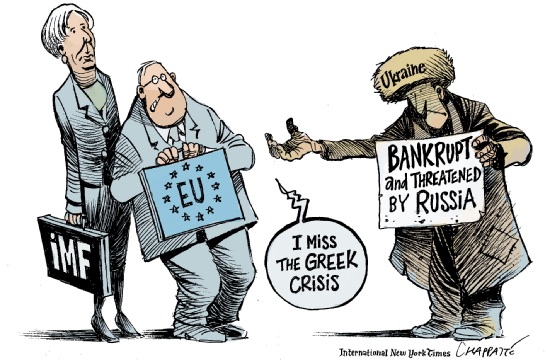
Solving Ukraine’s Debts?

Ukraine’s finance minister said a “win-win” deal for restructuring $18 billion of debt had been agreed with a group of its largest creditors. Poroshenko is looking to meet all the conditions of the emergency assistance from the International Monetary Fund.  Debt restructuring should save the country $15.3 billion through 2018, while attempting to end the worst recession of anywhere across Africa, Europe and the Middle East. The government will not have to make interest or principal payments until 2019.

The deal also includes a so-called GDP growth warrant that will kick in from 2021 through 2040.

Ukraine’s US-born finance minister Natalie Jaresko said she nailed the debt deal that pulled the ex-Soviet country back from the brink.

Ukraine agreed to raise its coupon rates to 7.75 per cent from 7.2 per cent while the lenders accepted slightly longer repayment terms.

German Chancellor Angela Merkel and French President Francois Hollande – co-sponsors of an increasingly tattered six-month-old truce – reaffirmed their support for the deal.

Ukraine started negotiations requesting a 40% haircut on the creditors’ holdings.

Franklin Templeton and three other global financial titans led to a 20-percent write-down or “haircut” to the face value of the bonds they hold, a deal that saves Ukraine 11.5 billion. The EU is brokering negotiations between Moscow and Kiev to secure gas supplies for the upcoming winter, but there has been little progress so far.

Still unresolved is the fate of the $3 billion Russian loan, given to prop up the regime of former president Viktor Yanukovych before he was ousted past year.

EU President Juncker  gave assurances on highly anticipated plans to lift visa requirements for citizens of Ukraine visiting the EU, and said he expects the commission to give a green light by the end of the year.

Moscow insists that the debt be treated as a sovereign obligation, while Kiev is treating it as a commercial debt.

Ukraine Debt