Zimbabwe: Women make easy prey for corrupt politicians

Politicians in Zimbabwe are taking advantage of the fact women face existing legal limitations. Research shows that women, who often have lower incomes, have limited access to basic public services because they are less likely to pay bribes to get the services. This makes it difficult for them to acquire registration documents like a mining licence or a permit to sell gold, especially in countries like Zimbabwe where corruption is endemic…articleIn Zimbabwe most of the women’s economic empowerment

China to Deal Positively with Online Anti-corruption Efforts…?

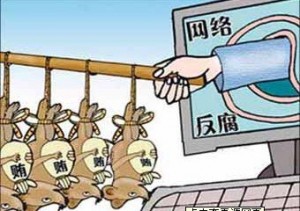
The Internet is an effective channel to fight against corruption and the government should deal positively with the anti-corruption clues offered by netizens, said Ma Wen, a deputy to the 12th National People’s Congress (NPC), on March 3, 2013…….

….”In future, China should regulate online acts so as to make the most of online anti-corruption efforts,” said Ma.  Ma also said that she often uses her micro-blog to gather information and suggestions from netizens…articleThe Internet is an effective channel to fight against corruption.

Mafia States? Gangsters in Paradise?

Around the world, criminal organizations and governments are fusing to an unprecedented degree, blurring the distinction between national interests and what suits the gangsters. Mafia states enjoy the unhealthy advantages of their hybrid status: they’re as nimble as gangs and as well protected as governments, and thus more dangerous than either.

The dark underside of the global economy is thriving. Globalization has been good not only for legitimate businesses but also for those who traffic in illegal drugs, evade sanctions or taxes, trade stolen goods and intellectual property on the black market, smuggle immigrants, and launder money. Some of these activities are merely policing headaches. But others pose major security challenges to governments around the world. Article

Swiss to crack down on Money Laundering?

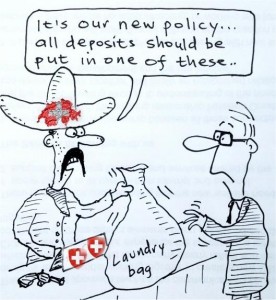
The Swiss Federal Council adopted two consultation drafts which are supposed to implement the revised international recommendations on combating money laundering and terrorist financing. In addition, untaxed assets will be blocked from financial intermediaries in Switzerland by extending due diligence requirements.

The Basel AML index attaches Switzerland a ML risk score of (is this 578) 5,78 (Status 28.2.2013) which places Switzerland on the ranking between Vanuatu and Mexico.

The key points of the proposed amendment bills are:

  • Introduction of a disclosure obligation for holders of bearer and registered shares of unlisted companies in order to enhance the transparency of legal entities, and extension of the due diligence requirement for establishing the identity of beneficial owners. The proposed measures should also meet the requirements of the Global Forum.
  • Duty to verify identity and risk-based due diligence requirements for politically exposed persons in Switzerland and international organisations.
  • Introduction of a new predicate offence to money laundering in the form of qualified tax fraud in the area of direct taxation and extension of the existing predicate offence in the area of indirect taxation.
  • Purchases of real estate and movables may be paid for in cash only up to a sum of CHF 100,000. It is mandatory for payments of larger sums to be processed via a financial intermediary subject to the Anti-Money Laundering Act (AMLA).